 Preview
 Send
Send Share
Share
 Details

 Download
 Similars
 X-Ray
X-Ray Diaporama
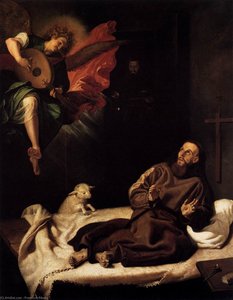
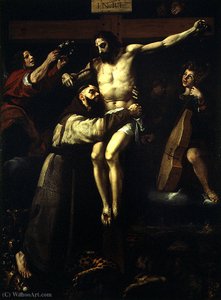
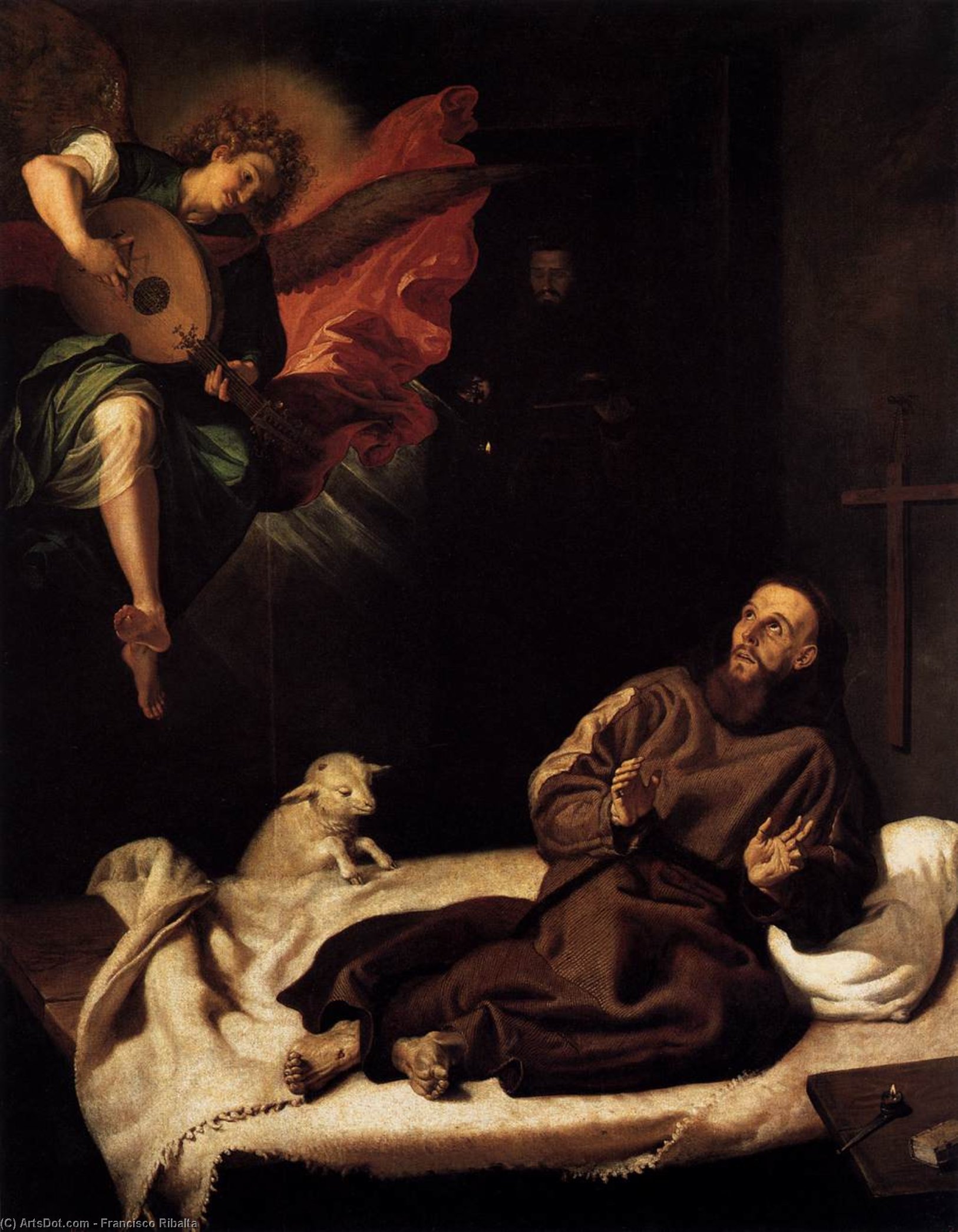
St Francis Comforted by an Angel
 Acrylic On Canvas
- WallArt
- Baroque
 1620
1620 204.0 x 158.0 cm
 Museo del Prado
 Read More
Hand Made Oil Reproduction
Hand-painted oil on canvas in your size and frame, made to order by our artists. ( Buy Print Buy Image)




P118B $10

P118H $10

P118W $10

P438Z $10

P508JH $12

P508YH $12

P805H $10

P805Z $10

P919BZ $10

P919G $10

P919XJ $10

P959ZH $10

P968JZ $12

W106C $8

W218G $10

W218JH $8

W218Y $10

W307PJ $10

W316G $10

W316PJ $8

W316Y $10

W398PJ $8

W4111J $10

W500HY $15

W500JH $15

W692G $12

W849H $8

W940BG $15

W953PJ $8




Pick from our preset sizes that match the artwork's original proportions.

You may enter your own dimensions to fit a specific frame or space. If your selected size does not match the original image's proportions, we will either crop the artwork or extend the painting with additional hand-painted elements. A digital mockup will be sent for your approval before production begins.
Please note that the on-screen preview does not reflect the actual cropping or extension. Only the mockup will accurately show the final composition.
While custom sizes are available, we recommend selecting a dimension from the predefined list to preserve the original proportions.
After order, ArtsDot.com team will email client for instructions and provide a mockup preview
Worldwide Delivery () in 3/4 weeks instead of standard 5 weeks. (20 August). No compromise on quality.

Free Worldwide Express Shipping

High-Quality Linen Canvas

Full Shipping Insurance

Customs Tax Refund Guarantee

True Color Matching Guarantee

60-Day Return Policy (Defects Only)

100% Money-Back Guarantee

Bulk Discount Offer
 Glass option is only available in size under 110 CM

St Francis Comforted by an Angel
Reproduction Medium
Reproduction Size
-


Total Price
$ 263
Artwork Description
St Francis Comforted by an Angel – A Baroque Masterpiece
Francisco Ribalta’s “Saint Francis Comforted by an Angel” stands as a testament to the profound spiritual fervor that characterized 17th-century Spain, specifically during the reign of Philip III. Painted in 1620, this monumental canvas exemplifies the dramatic aesthetic known as tenebrism—a stylistic innovation championed by Caravaggio—where stark contrasts between luminous highlights and impenetrable darkness dominate the composition. Ribalta’s masterful manipulation of light and shadow transcends mere visual representation; it seeks to evoke a visceral response from the viewer, mirroring the saint's inner turmoil and divine solace. ### Artistic Technique & Style – The Language of Darkness and Light Ribalta’s technique is undeniably rooted in Caravaggio’s influence, yet he possesses a distinctive sensitivity that imbues his work with an unparalleled emotional depth. He employs oil paint on canvas, applying thick impasto—a textured surface achieved by layering pigment onto the support—to sculpt form and convey palpable physicality. The tenebristic style isn't simply about darkness; it’s about strategically positioned pools of radiant light illuminating key figures and details within the scene. This dramatic chiaroscuro creates an atmosphere of solemn contemplation, guiding the eye towards St. Francis and emphasizing the angel’s benevolent presence. Ribalta skillfully utilizes color palettes dominated by muted browns and ochres, punctuated by splashes of gold—a deliberate choice reflecting the sanctity of the subject matter and hinting at divine grace. ### Historical Context & Religious Symbolism – Faith Illuminated The painting emerged during a period marked by intense religious piety within Spain’s Habsburg monarchy. Philip III actively fostered artistic patronage aimed at glorifying God and reinforcing Catholic dogma. “Saint Francis Comforted by an Angel” reflects this cultural preoccupation, depicting St. Francis kneeling in prayer before the angel Gabriel—a figure traditionally associated with divine revelation and spiritual guidance. The angel's outstretched wings symbolize protection and support, mirroring St. Francis’ yearning for divine comfort amidst suffering. Furthermore, the inclusion of two figures on the left side represents earthly companionships – a subtle reminder that faith is nurtured by human connection. The guitar in the background—a relatively uncommon element in Baroque interiors—may serve as a symbol of artistic expression and spiritual contemplation, suggesting that beauty itself can elevate the soul. ### Emotional Impact & Legacy – A Window into Spiritual Experience “Saint Francis Comforted by an Angel” transcends mere depiction; it aspires to communicate profound emotional experience. Ribalta’s masterful rendering captures the essence of faith—the vulnerability inherent in seeking divine solace and the unwavering belief in a higher power. The painting's enduring appeal lies in its ability to resonate with viewers across centuries, prompting reflection on themes of compassion, devotion, and transcendence. Its influence extended beyond Spain, inspiring subsequent Baroque artists like Velázquez and Murillo who embraced tenebrism as a means of conveying spiritual fervor and capturing the sublime beauty of religious iconography. Ribalta’s masterpiece remains a cornerstone of Spanish Baroque art—a luminous testament to the power of visual storytelling and the enduring legacy of Caravaggio's revolutionary style.Related Artworks
![Legend Of St Francis - [02] - St Francis Giving His Mantle To A Poor Man — Giotto Di Bondone, Gothic](/media/artworks/images/thumbnails/5d/05/5d05526e699746d995f6612041029121.jpg)
![Legend Of St Francis - [23] - St Francis Mourned By St Clare — Giotto Di Bondone, Gothic](/media/artworks/images/thumbnails/d9/a8/d9a8803f4ecd4b049507cc14e2371b42.jpg)
![Legend Of St Francis - [08] - Vision Of The Flaming Chariot — Giotto Di Bondone, Gothic And Proto-renaissance](/media/artworks/images/thumbnails/eb/77/eb7783794fc14b45848c95d6a54baff3.jpg)
![Legend Of St Francis - [11] - St Francis Before The Sultan (trial By Fire) — Giotto Di Bondone, Proto-renaissance](/media/artworks/images/thumbnails/34/e5/34e5f366254d43269d81112c719a6f9f.jpg)
![Legend Of St Francis - [24] - Canonization Of St Francis — Giotto Di Bondone, Gothic](/media/artworks/images/thumbnails/46/25/46258ba5eea24e14b12f138b9d3f90a3.jpg)
![Life Of Saint Francis - [04] - Death And Ascension Of St Francis — Giotto Di Bondone, Italian Renaissance](/media/artworks/images/thumbnails/e8/b6/e8b63a7fcb4a42ab89d26ae343d6f757.jpg)
![Legend Of St Francis - [20] - Death And Ascension Of St Francis — Giotto Di Bondone, Gothic Art](/media/artworks/images/thumbnails/a5/2a/a52a8d73656f4af9960dde10bcef8883.jpg)
Artist Biography
The Shadowed Soul of Spanish Baroque
Francisco Ribalta (1565 – 1628) stands as a pivotal figure in the artistic landscape of 17th-century Spain, recognized primarily for his mastery of tenebrism—a dramatic technique that prioritized stark contrasts between light and darkness to heighten emotional impact. Born in Lleida, Catalonia, Ribalta’s formative years were steeped in the artistic traditions of Northern Spain. While precise information regarding his formal training remains somewhat elusive, he undoubtedly absorbed the humanist ideals prevalent during his era. He honed his skills under the tutelage of José Luis Fiol Valero, a respected watercolorist who fostered Ribalta’s appreciation for serene landscapes and meticulous observation, a sensibility that would eventually permeate his entire oeuvre.
The essence of Ribalta’s genius lies in his ability to translate spiritual fervor into visual reality. His artistic breakthrough occurred during his period in Madrid, where he embraced the tenebrist style with profound fervor. Unlike many contemporaries who sought to emulate the flamboyant theatricality found in some Italian works, Ribalta prioritized subtlety and psychological depth. His canvases are characterized by pools of impenetrable darkness punctuated by sudden, radiant shafts of light. This deliberate strategy was designed to draw the viewer’s gaze toward key elements within a scene, evoking a visceral response that aligned perfectly with the intense religious devotion of the Spanish Counter-Reformation.
Technique and the Mastery of Light
Ribalta’s approach to illumination was revolutionary for his time. By eschewing opulent grandeur in favor of austere compositions, he created a space for profound spiritual contemplation. His work often features bodegones—still life paintings that possess a quiet, monumental dignity—alongside large-scale religious iconographies. The interplay of light and shadow in his work does more than just define form; it creates a narrative tension that breathes life into the subjects. Through the use of deep shadows, he was able to isolate figures, stripping away unnecessary distractions to focus on the raw, human emotion of saints, martyrs, and everyday objects alike.
The technical evolution of his style can be seen in how he transitioned from the more meticulous, observational qualities learned early in life toward a much more dramatic, chiaroscuro-heavy approach. This development allowed him to capture the textures of fabric, the weathered skin of elderly figures, and the cold stillness of inanimate objects with an almost tactile realism. His ability to manipulate light served as a bridge between the late Renaissance traditions and the burgeoning Baroque movement.
Legacy and Historical Significance
The historical significance of Francisco Ribalta cannot be overstated, as his influence rippled through the generations of Spanish masters that followed him. He acted as a vital precursor to the giants of the Spanish Golden Age. His stylistic innovations provided the foundation for several legendary artists, including:
- Francisco Velázquez: Who would further refine the use of light and atmosphere in the royal courts.
- Bartolomé Esteban Murillo: Who inherited a tradition of emotional depth and soft luminosity.
- Francisco de Zurbarán: Whose monastic, tenebrist compositions owe a profound debt to Ribalta’s austere mastery.
Ultimately, Ribalta remains a master of the shadows, an artist who understood that the most profound truths are often found where the light meets the dark. His legacy endures not just in the museums that house his works, but in the very DNA of Spanish Baroque art, marking him as one of the foremost practitioners of a revolutionary style that changed the course of art history.

Francisco Ribalta
1565 - 1628 , Spain
Quick Facts
- Artistic Movement Or Style: Tenebrism
- Artists Or Movements Influenced By This Artist:
- Zurbarán
- Velázquez
- Murillo
- Artists Who Influenced This Artist: ['Caravaggio']
- Date Of Birth: 1565 Lleida Spain
- Date Of Death: 1628
- Full Name: Francisco Ribalta
- Nationality: Spanish
- Notable Artworks:
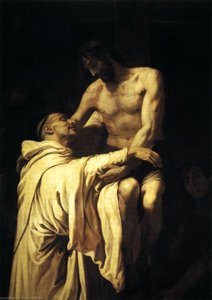
- Christ Embracing St Bernard
- The Deposition
- St Francis Comforted by an Angel
- Place Of Birth: Lleida Spain
Related Articles
Francis Bacon's Masterpieces: Exploring 25 Iconic Paintings | ArtsDot
Delve into the haunting world of Francis Bacon with ArtsDot. Explore 25 iconic paintings, from his visceral portraits to powerful triptychs. Discover the stories behind these masterpieces & find museum-quality art reproductions for your home. Explore the full collection online!
El Greco's Masterpieces: Explore 25 Iconic Paintings & Spiritual Visions | ArtsDot
Journey through El Greco's 25 most iconic paintings! Explore the spiritual depth & dramatic beauty of this Spanish Renaissance master. Discover art history, techniques & find museum-quality reproductions for your home at ArtsDot.com.

The Dramatic Flourish: Exploring the Baroque Movement's Enduring Legacy in Art History
Explore the dramatic world of Baroque art! Discover iconic artists like Caravaggio & Rubens, defining techniques, and its lasting impact on art history. Expert insights for collectors & enthusiasts at ArtsDot.
The Dramatic Flourish: Exploring Themes of Power, Faith & Emotion in Baroque Artworks
Explore the dramatic world of Baroque art! Discover masters like Zurbarán & the powerful influence of religious zeal on painting techniques. Expert insights for collectors and enthusiasts.

The Enduring Power of Painting: A Historical & Contemporary Exploration of Form and Emotion
Explore the rich history & enduring techniques of oil painting with ArtsDot. Discover masterpieces, learn about art collecting, and find authentic handmade reproductions crafted by skilled artists.