 Preview
 Send
Send Share
Share
 Details

 Download
 Similars
 X-Ray
X-Ray Diaporama
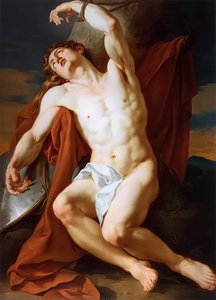
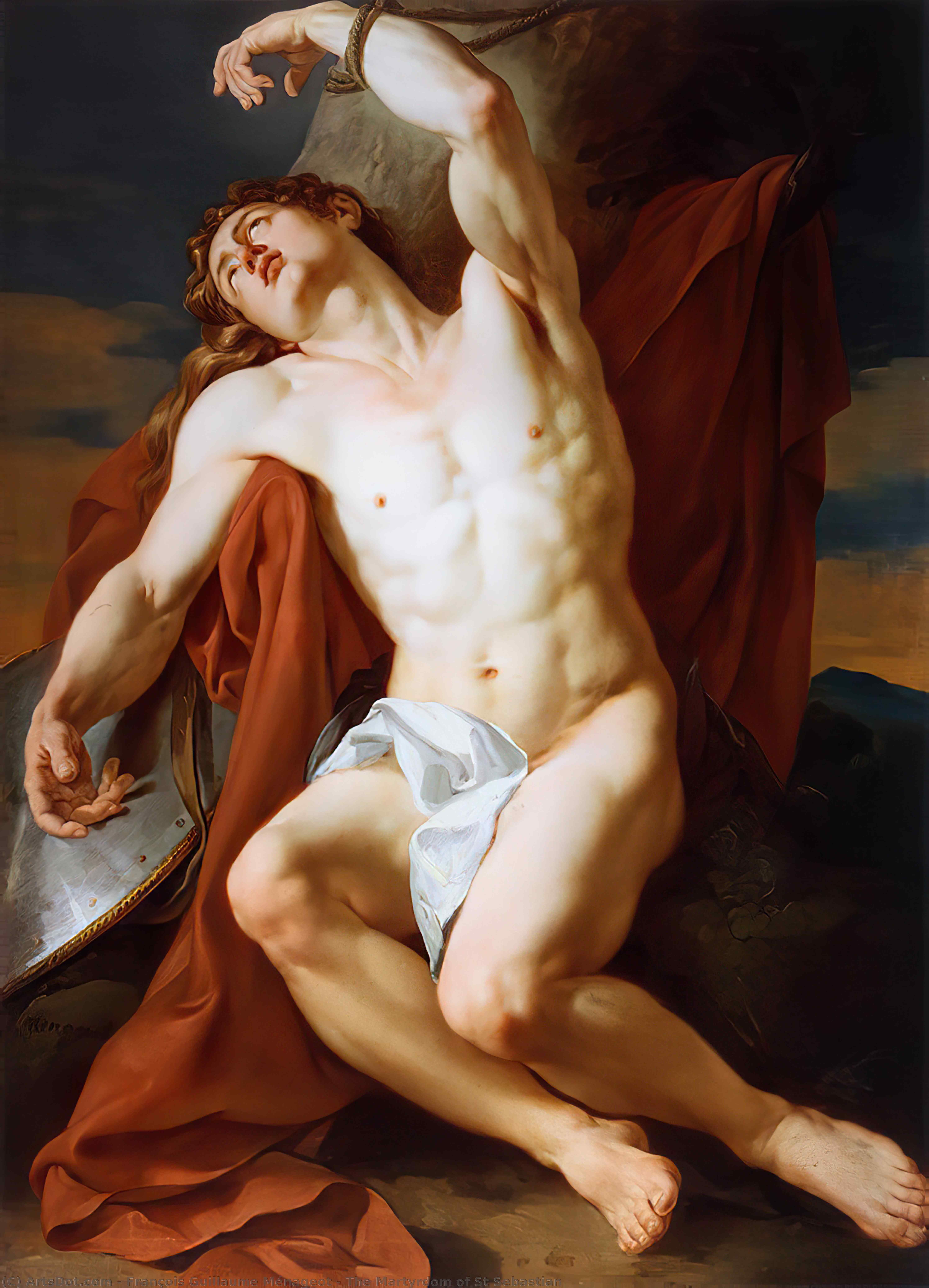
The Martyrdom of St Sebastian


 Read More
Hand Made Oil Reproduction
Hand-painted oil on canvas in your size and frame, made to order by our artists. ( Buy Print Buy Image)




P118B $10

P118H $10

P118W $10

P438Z $10

P508JH $12

P508YH $12

P805H $10

P805Z $10

P919BZ $10

P919G $10

P919XJ $10

P959ZH $10

P968JZ $12

W106C $8

W218G $10

W218JH $8

W218Y $10

W307PJ $10

W316G $10

W316PJ $8

W316Y $10

W398PJ $8

W4111J $10

W500HY $15

W500JH $15

W692G $12

W849H $8

W940BG $15

W953PJ $8




Pick from our preset sizes that match the artwork's original proportions.

You may enter your own dimensions to fit a specific frame or space. If your selected size does not match the original image's proportions, we will either crop the artwork or extend the painting with additional hand-painted elements. A digital mockup will be sent for your approval before production begins.
Please note that the on-screen preview does not reflect the actual cropping or extension. Only the mockup will accurately show the final composition.
While custom sizes are available, we recommend selecting a dimension from the predefined list to preserve the original proportions.
After order, ArtsDot.com team will email client for instructions and provide a mockup preview
Worldwide Delivery () in 3/4 weeks instead of standard 5 weeks. (16 August). No compromise on quality.

Free Worldwide Express Shipping

High-Quality Linen Canvas

Full Shipping Insurance

Customs Tax Refund Guarantee

True Color Matching Guarantee

60-Day Return Policy (Defects Only)

100% Money-Back Guarantee

Bulk Discount Offer
 Glass option is only available in size under 110 CM

The Martyrdom of St Sebastian
Reproduction Medium
Reproduction Size
-


Total Price
$ 263
Artwork Description
A Vision of Devotion and Agony
In the profound depths of François Guillaume Ménageot’s The Martyrdom of St Sebastian, viewers are transported to a moment of visceral spiritual struggle and physical endurance. This oil on canvas masterpiece, dating from approximately 1760, serves as a breathtaking window into the era of religious intensity. The painting captures the saint in a state of profound vulnerability; he lies prone, his body stretched across the foreground, bearing the heavy weight of his martyrdom. The presence of blood upon his skin and the cold iron of a chain around his neck serve as harrowing reminders of his sacrifice, yet there is an undeniable grace in his suffering that transcends mere pain.
The composition is masterfully orchestrated to guide the eye through a landscape of both physical and emotional turmoil. By positioning Saint Sebastian centrally, Ménageot ensures that the viewer cannot escape the saint's plight. The background, featuring distant, imposing mountains, creates a sense of vast isolation, suggesting that while the world continues its rotation, the saint exists in a singular, eternal moment of trial. This use of depth and scale emphasizes the loneliness of the martyr, making the piece an ideal focal point for those who appreciate art that explores the human condition through a grand, cinematic lens.
The Mastery of Light and Neoclassical Drama
Technically, the work is a triumph of chiaroscuro, the dramatic interplay between light and shadow. Ménageot, having studied under masters like Jean-Baptiste Deshays and the Rococo legend François Boucher, utilizes light not merely to illuminate, but to sculpt. The way the light catches the contours of the saint's muscular form and the glint of the metal chain creates a three-dimensional realism that is both startling and beautiful. This technique draws the viewer’s gaze directly to the focal points of suffering—the face and the wounded flesh—while allowing the executioners in the periphery to recede into a mysterious, shadowy presence.
The color palette is equally evocative, utilizing warm, earthy tones that ground the scene in a sense of historical reality, contrasted against the starker, more dramatic highlights of the saint's skin. For the discerning collector or interior designer, this painting offers a sophisticated balance of movement and stillness. It possesses a monumental quality that commands attention in any gallery setting, yet its rich textures and deep shadows allow it to integrate seamlessly into classical or even contemporary spaces that seek to evoke a sense of history, drama, and intellectual depth.
A Legacy for the Modern Collector
Beyond its aesthetic brilliance, The Martyrdom of St Sebastian stands as a testament to the transition of 18th-century art toward the more structured and emotionally resonant Neoclassical movement. Ménageot’s ability to blend the decorative elegance learned from Boucher with the gravity required for religious subjects makes this work a rare jewel in his oeuvre. It is a piece that does not merely decorate a wall; it tells a story of resilience, faith, and the enduring strength of the human spirit.
Owning a high-quality reproduction of such a significant work allows one to bring this historical gravity into a modern home. Whether placed in a study, a library, or a formal living area, the painting acts as a conversation piece that invites contemplation. It is an investment in art that transcends trends, offering a timeless connection to the masters of French history and the profound emotional landscapes of the 1700s.
Related Artworks
Artist Biography
The Grandeur of Neoclassicism: The Life and Legacy of François Guillaume Ménageot
François Guillaume Ménageot (1744–1816) stands as a monumental figure in the transition of European art, a painter whose brush captured the profound shift from the airy elegance of the Rococo to the stern, dramatic gravity of Neoclassicism. Born in London to Augustin Ménage or, as history remembers him, the son of an influential art dealer and advisor to the great Denis Diderot, François was destined for a life steeped in intellectual and aesthetic discourse. This early exposure to the leading minds of the Enlightenment provided the fertile soil from which his artistic vision would grow, blending a deep respect for classical antiquity with the technical rigor required by the French academic tradition. His formative years were shaped by a lineage of masters that defined the era's stylistic evolution. Initially training under Jean-Baptiste Deshays and Joseph Marie Vien, Ménageot first absorbed the nuanced play of light and color characteristic of their work. However, it was his apprenticeship with the legendary François Boucher that left an indelible mark on his early compositions. From Boucher, he inherited a mastery of warmth and fluid movement, yet Ménageot possessed a unique ambition to move beyond mere decorative beauty toward something more substantial and historically significant.A Triumph in Rome and the Pursuit of Academic Excellence
The trajectory of Ménageot’s career was irrevocly altered by his extraordinary success in the competitive arena of the French Academy. In 1766, he achieved the prestigious Grand Prix de Rome with his visceral and striking work, Tomyris Plunging the Head of Cyrus into a Bowl of Blood. This painting was more than a technical triumph; it was a declaration of intent, signaling his ability to handle intense, dramatic narratives with a sense of monumental scale. This victory granted him a transformative residency at the French Academy in Rome from 1769 to 1774, a period that allowed him to immerse himself directly in the classical ruins and Renaissance masterpieces that would become the bedrock of his style. During his Roman years, Ménageot’s work began to shed the lighter, more whimsical elements of his early training, replaced by a burgeoning interest in the structural clarity and emotional weight of the ancient world. His time in Italy solidified his reputation as a history painter capable of conveying complex human struggles through grand, architectural compositions. Upon his return to Paris, he was met with immediate acclaim, securing agréement from the Académie Royale and establishing himself as a vital voice in the Salon exhibitions that defined the cultural zeitopgraphy of late 18th-century France.Mastery of Narrative: Religious and Historical Vision
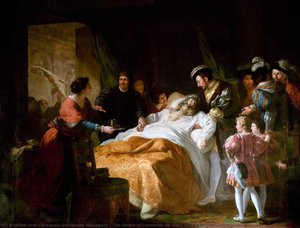
Ménageot’s oeuvre is characterized by its profound ability to breathe life into historical and religious chronicles. He possessed a rare talent for capturing the precise moment of highest tension—the breath held before a tragedy or the solemnity of a sacred event. His works often feature a sophisticated use of chiaroscuro, where deep shadows and piercing highlights serve to direct the viewer's eye toward the emotional core of the scene. Some of his most enduring contributions to the art world include:- The Death of Leonardo da Vinci in the Arms of Francis I: A poignant exploration of historical intimacy and the passing of a genius, rendered with profound dignity.
- The Martyrdom of St Sebastian: A powerful display of religious devotion and physical suffering, utilizing dramatic lighting to evoke a sense of spiritual transcendence.
- The Farewells of Polyxena to Hecuba: A masterpiece of narrative tension that showcases his ability to weave complex classical tragedy into a single, breathtaking canvas.
- Allegorical painting of the birth of Louis Joseph: A monumental work rich in symbolism, demonstrating his skill in blending political history with allegorical grandeur.
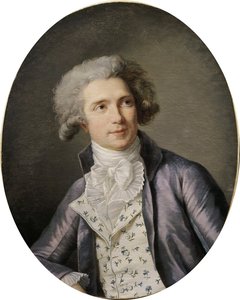
françois guillaume ménageot
1744 - 1816 , United Kingdom
Quick Facts
- Artistic Movement Or Style: Neoclassicism
- Artists Or Movements Influenced By This Artist: ['David']
- Artists Who Influenced This Artist: ['François Boucher']
- Date Of Birth: London, United Kingdom (1744)
- Date Of Death: 1816
- Full Name: François Guillaume Ménageot
- Nationality: French
- Notable Artworks:
- The Death of Leonardo da Vinci in the Arms of Francis I
- The Martyrdom of St Sebastian
- Allegorical painting of the birth of Louis Joseph
- Place Of Birth: London
Related Articles

El Greco's Masterpieces: Explore 25 Iconic Paintings & Spiritual Visions | ArtsDot
Journey through El Greco's 25 most iconic paintings! Explore the spiritual depth & dramatic beauty of this Spanish Renaissance master. Discover art history, techniques & find museum-quality reproductions for your home at ArtsDot.com.

Jacopo Tintoretto's Masterpieces: 25 Paintings That Define Venetian Drama | ArtsDot
Explore 25 breathtaking masterpieces by Jacopo Tintoretto, the Venetian master of drama and light. Discover the stories behind iconic Renaissance paintings & find museum-quality art reproductions to elevate your home decor on ArtsDot.com.

Chiaroscuro & Beyond: Exploring Dramatic Light & Shadow in Art History
Explore the captivating history of chiaroscuro – from Renaissance origins to Caravaggio & Rembrandt's mastery. Discover how light and shadow shaped art, and its enduring influence today.
Chiaroscuro & Emotional Resonance: Exploring Dramatic Light in Western Painting
Explore the captivating world of chiaroscuro & tenebrism! Discover Caravaggio's influence, Baroque masters, and the enduring power of dramatic lighting in art history. Learn about these techniques with ArtsDot.

The Golden Age Reforged: Dramatic Realism & Religious Zeal in Spanish Baroque Art
Explore the dramatic world of Spanish Baroque art! Discover masters like Zurbarán & the powerful influence of religious zeal on painting techniques – a guide for collectors and enthusiasts.