

 Preview
 Send
Send Share
Share
 Details

 Download
 Similars
 X-Ray
X-Ray Diaporama
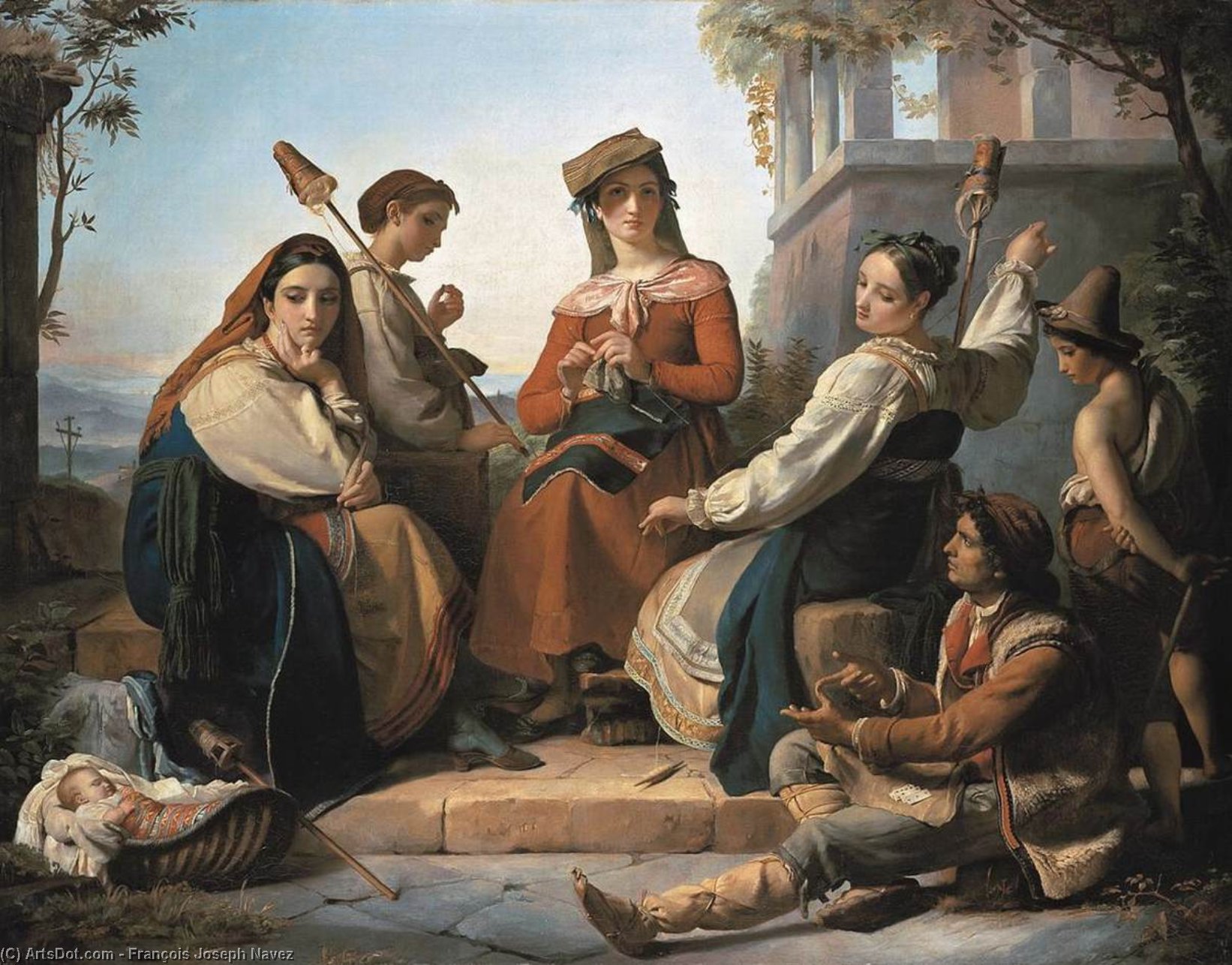
Women Spinning in Fondi
 Oil On Canvas
- WallArt
- Neoclassical Painting
 1845
1845 148.0 x 187.0 cm
 Neue Pinakothek
 Read More
Purchase a high-resolution, enhanced digital image, far superior to the online preview.
Each file is meticulously prepared by our in-house specialists using advanced tools and expert manual retouching. We ensure every image has exceptional clarity, precise color accuracy, and fine detail.
The final file is delivered via email within 72 hours, optimized for immediate use in professional, editorial, and print environments. This is the same quality trusted by top-tier design studios, publishers, and galleries.
Digital Image
Download a high-resolution file for personal display, printing, and creative projects. ( Buy Print Buy Hand Made Painting)
Included in Every Digital Image Order
Expert Digital Delivery, Guaranteed
When you choose ArtsDot.com, you're not just getting an image - you're receiving a professionally enhanced digital artwork, crafted with precision and backed by a satisfaction guarantee. Here's everything that comes with your order, automatically:

Fast Email Delivery
Your high-resolution digital image file will be emailed to you within 72 hours of ordering - ready for immediate use.

AI-Enhanced Digital File
Your artwork is professionally optimized using advanced AI tools and manual editing, ensuring maximum detail, clarity, and color accuracy.

Free Lifetime Re-Delivery
Accidentally deleted or lost your file? No worries - we'll resend it to you anytime, free of charge.

No Import Fees - Ever
Enjoy your artwork instantly with zero customs, duties, or delivery fees - digital downloads are always tax-free.

Color Accuracy Guarantee
We ensure your digital image reflects the original colors as closely as possible using professional tools and color management.

60-Day Satisfaction Guarantee
If you're not satisfied with your digital image, we'll revise it or refund 100% within 60 days - no questions asked.

100% Money-Back Guarantee
Not satisfied? Get a full refund within 60 days of receiving your digital file - no questions asked.

Bulk Order Discounts
Buy 3 images, save 10% - Buy 5, save 15% - Buy 10+, save 20%. Great for creative projects, galleries, and agencies.
Collectible Description
A Window into Belgian Life: “Women Spinning in Fondi” by François-Joseph Navez
François-Joseph Navez’s “Women Spinning in Fondi,” painted in 1845, isn't merely a depiction of rural labor; it’s a poignant snapshot of a bygone era, capturing the heart and soul of Belgian village life. The scene unfolds within a modest interior, bathed in the warm glow of candlelight – a deliberate choice that immediately establishes an atmosphere of intimacy and domesticity. Navez masterfully employs light and shadow to draw our attention to the central group of women, their faces etched with quiet concentration as they diligently spin wool into yarn. This wasn’t simply a task; it was the lifeblood of the community, providing warmth, clothing, and a sense of shared purpose.
The painting's style firmly resides within the Neoclassical tradition, yet Navez imbues it with a subtle Romantic sensibility. The figures are rendered with a remarkable degree of realism, their hands moving with practiced grace – a testament to generations of skill passed down through families. However, there’s an underlying softness in the brushstrokes and a gentle warmth in the color palette that elevates the scene beyond mere documentation. Navez avoids stark formality, opting instead for a relaxed composition that invites the viewer into this intimate tableau. The use of muted earth tones – browns, ochres, and creams – reflects the humble setting and reinforces the painting’s focus on everyday life.
The Significance of Fondi
The choice of “Fondi” as the setting for this scene is particularly noteworthy. Fondi, a small town in Lazio, Italy, was a frequent subject of artistic inspiration during the 19th century, representing a romanticized vision of rural simplicity and tranquility. Navez’s decision to set his scene here subtly connects the painting to broader European artistic trends—a desire to escape the bustle of urban life and find solace in the natural world. The village itself is depicted with an almost idealized quality, suggesting a harmonious relationship between its inhabitants and their surroundings.
Beyond the specific location, “Women Spinning” speaks to a universal theme: the dignity of labor. These women aren’t presented as objects of pity or charity; they are portrayed as skilled artisans engaged in a vital activity. Their faces convey a sense of contentment and self-sufficiency – a quiet pride in their work and their contribution to the community. The inclusion of a small child nestled near the bottom left corner further emphasizes this theme, suggesting that these traditions are being passed down to the next generation.
Symbolism and Emotional Resonance
The act of spinning itself carries significant symbolic weight. It represents not only practical necessity but also creativity, patience, and connection to the past. The rhythmic motion of the spindles evokes a sense of continuity – a link between generations and a celebration of traditional skills. Furthermore, the gathering of women around the table suggests a strong social fabric, highlighting the importance of community bonds in rural life.
“Women Spinning in Fondi” is more than just a painting; it’s an evocative portrait of a specific time and place. Navez's masterful use of light, color, and composition creates a deeply emotional experience for the viewer, inviting us to reflect on the values of hard work, community, and the enduring beauty of everyday life. It remains a powerful reminder of the simple pleasures and profound connections that can be found in the heart of rural Belgium.
Technical Details & Reproduction Considerations
Painted in oil on canvas measuring 148 x 187 cm, “Women Spinning in Fondi” showcases Navez’s meticulous attention to detail. The artist skillfully rendered the textures of the wool, the folds of the women's dresses, and the flickering candlelight – all contributing to a remarkably realistic portrayal of the scene. The painting’s scale allows for a rich tapestry of color and form, creating a sense of depth and immediacy.
When considering reproductions, it is crucial to select a high-quality print that accurately captures the nuances of Navez's original work. The subtle gradations of light and shadow, as well as the delicate brushstrokes, are best reproduced with archival inks on fine art paper. A carefully executed reproduction will not only enhance your interior décor but also serve as a beautiful reminder of this captivating glimpse into Belgian village life.
Related Artworks

Artist Biography
François-Joseph Navez: A Life in Neoclassical Art
Early Life and Education
- Born: Charleroi, Belgium, November 16, 1787.
- Navez came from a privileged background, allowing him to dedicate himself fully to artistic pursuits from a young age.
- He began his formal training at the Royal Academy of Fine Arts in Brussels from 1803 to 1808, studying under Pierre Joseph Célestin François.
- In 1810, he co-founded the “Société des amateurs d'arts,” demonstrating an early commitment to fostering artistic community.
Paris and Rome: Influences and Development
- Navez received first prize for history painting in 1812, which enabled him to travel to Paris.
- Key Influence: From 1813 to 1816, he studied with Jacques-Louis David, a pivotal figure in Neoclassical art. This mentorship profoundly shaped his style and approach.
- He continued his artistic journey in Rome from 1817 to 1822, where he encountered Jean-Auguste-Dominique Ingres and further refined his skills within the classical tradition.
- His time in Italy instilled a deep appreciation for classical forms and themes, which would become hallmarks of his work.
Career and Artistic Style
- Upon returning to Belgium, Navez established a successful studio and quickly gained recognition as a talented portraitist.
- Artistic Focus: He excelled in portraits, historical scenes, and mythological subjects, all executed with meticulous detail and elegant composition.
- His style is characterized by its clarity of form, balanced compositions, and restrained emotional expression – hallmarks of Neoclassicism.
- He was a master of capturing the likeness and character of his sitters in portraiture.
Leadership at the Royal Academy
- Navez’s influence extended beyond his own artistic practice. He became Director of the Académie Royale des Beaux-Arts in Brussels between 1835 and 1862.
- Educational Impact: In this role, he played a crucial part in shaping the next generation of Belgian artists.
- Among his notable pupils were Jean-François Portaels (who also became his son-in-law) and Jean Carolus.
Major Works and Legacy
- Notable Paintings: Some of his most celebrated works include “Massacre of the Innocents,” “The Nymph Salmacis and Hermaphroditus”, “Women Spinning in Fondi” and his portrait of Jacques-Louis David.
- His paintings are held in prominent museum collections, showcasing their enduring artistic value.
- Historical Significance: Navez stands as a leading figure in Belgian Neoclassical painting. He bridged the gap between the classical tradition and emerging Romantic tendencies of the 19th century.
- He died in Brussels on October 12, 1869, leaving behind a rich artistic legacy that continues to inspire and captivate audiences today.
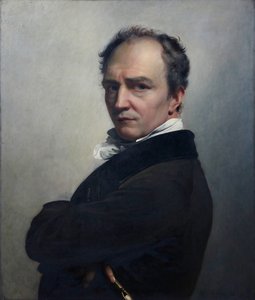
françois joseph navez
1787 - 1869 , Belgium
Quick Facts
- Birth Date: 1787
- Birth Place: Charleroi, Belgium
- Death Date: 1869
- Influenced:
- Jean-François Portaels
- Jean Carolus
- Influenced By: Jacques-Louis David
- Movement: Neoclassicism
- Name: François-Joseph Navez
- Nationality: Belgian
- Notable Works:
- Massacre of the Innocents
- The Nymph Salmacis and Hermaphroditus
- Portrait of Jacques-Louis David

