 Preview
 Send
Send Share
Share
 Details

 Download
 Similars
 X-Ray
X-Ray Diaporama
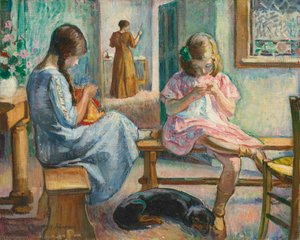
Women Sewing
 Oil On Canvas
- WallArt
- Post-Impressionism
 1922
1922- 19th Century
 46.0 x 61.0 cm
 Read More
Hand Made Oil Reproduction
Hand-painted oil on canvas in your size and frame, made to order by our artists. ( Buy Print Buy Image)




P118B $10

P118H $10

P118W $10

P438Z $10

P508JH $12

P508YH $12

P805H $10

P805Z $10

P919BZ $10

P919G $10

P919XJ $10

P959ZH $10

P968JZ $12

W106C $8

W218G $10

W218JH $8

W218Y $10

W307PJ $10

W316G $10

W316PJ $8

W316Y $10

W398PJ $8

W4111J $10

W500HY $15

W500JH $15

W692G $12

W849H $8

W940BG $15

W953PJ $8




Pick from our preset sizes that match the artwork's original proportions.

You may enter your own dimensions to fit a specific frame or space. If your selected size does not match the original image's proportions, we will either crop the artwork or extend the painting with additional hand-painted elements. A digital mockup will be sent for your approval before production begins.
Please note that the on-screen preview does not reflect the actual cropping or extension. Only the mockup will accurately show the final composition.
While custom sizes are available, we recommend selecting a dimension from the predefined list to preserve the original proportions.
After order, ArtsDot.com team will email client for instructions and provide a mockup preview
Worldwide Delivery () in 3/4 weeks instead of standard 5 weeks. (16 August). No compromise on quality.

Free Worldwide Express Shipping

High-Quality Linen Canvas

Full Shipping Insurance

Customs Tax Refund Guarantee

True Color Matching Guarantee

60-Day Return Policy (Defects Only)

100% Money-Back Guarantee

Bulk Discount Offer
 Glass option is only available in size under 110 CM

Women Sewing
Reproduction Medium
Reproduction Size
-


Total Price
$ 263
Artwork Description
A Serene Interlude on the Shore
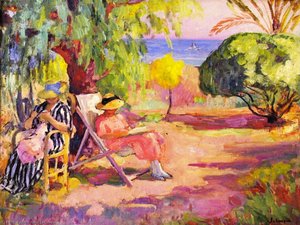
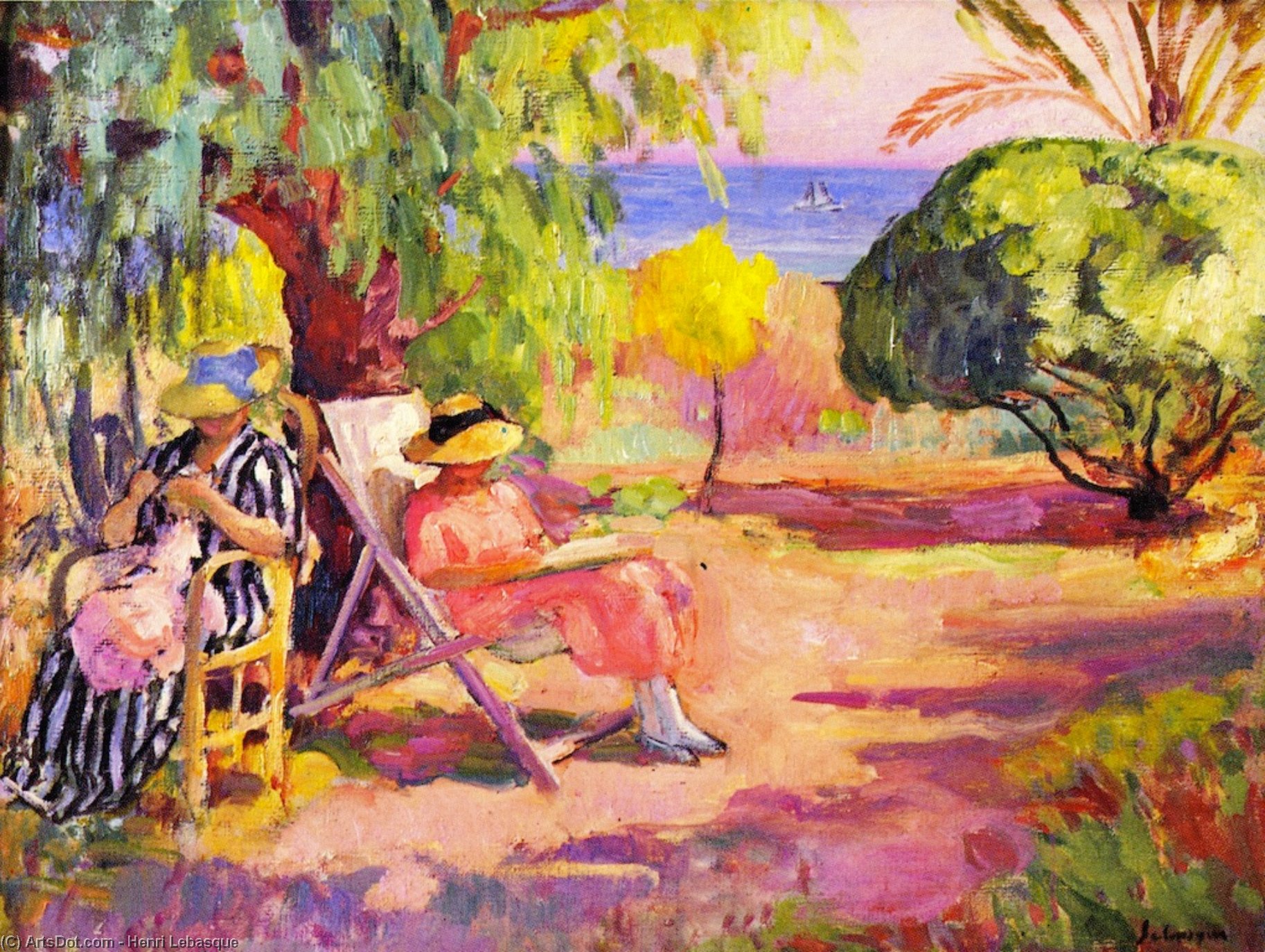
To gaze upon Henri Lebasque's "Women Sewing" is to be instantly transported to a sun-drenched afternoon by the gentle rhythm of the sea. This painting captures more than just two figures engaged in needlework; it encapsulates a moment suspended in time—a perfect tableau of leisure and quiet companionship. The scene unfolds on a tranquil beach, sheltered beneath the graceful canopy of a tree whose dappled shade provides both setting and mood. Two women are seated comfortably, their presence imbued with an effortless grace that speaks to the simple pleasures of life well-lived. In the background, the subtle suggestion of a boat anchors the composition in the vastness of the ocean, reminding us that while they are momentarily at rest, the world continues its gentle passage.
The Luminous Touch of Lebasque's Brush
Lebasque’s mastery is most evident in his handling of light and color. His signature style, characterized by soft hues and delicate brushstrokes, bathes the entire canvas in an atmosphere of profound serenity. The artist employs warm tones that seem to emanate from the very sand beneath their feet, creating a visual warmth that invites the viewer to settle into the scene. It is this luminous quality—the way light filters through leaves and catches on fabric—that elevates the piece beyond mere genre painting. His technique allows for an almost palpable sense of air and gentle breeze, making the oil paint feel less like pigment on canvas and more like captured sunlight.
Echoes of Parisian Leisure in 1922
Created in 1922, "Women Sewing" situates itself within a rich tapestry of early 20th-century French art. While the painting possesses an intimate, almost pastoral quality, it carries the echoes of the vibrant artistic currents that shaped Paris. Lebasque’s ability to capture everyday life with such elevated artistry connects him to masters who found profound beauty in the quotidian. The subject matter—women enjoying a moment together—speaks to enduring themes of friendship and domestic tranquility, resonating deeply with collectors who value narratives of connection.
Symbolism of Stillness and Craft
The act of sewing itself carries a quiet symbolism. It suggests patience, continuity, and the careful mending or creation of something beautiful—a metaphor perhaps for the enduring nature of human bonds. The women are not merely occupied; they are sharing an experience. The contrast between their focused activity and the expansive, open beach setting creates a wonderful tension: the intimacy of the moment set against the immensity of nature. This balance imbues the artwork with a contemplative depth, inviting reflection on what we choose to focus our attention upon.
Bringing Coastal Calm Home
For the discerning collector or designer seeking to infuse a space with artistry and calm, this reproduction offers an unparalleled opportunity. Owning "Women Sewing" is acquiring not just a painting, but a mood—a perpetual afternoon retreat. The soft palette and gentle composition make it a breathtaking focal point for any room, whether styled in a bright coastal aesthetic or within a more classically appointed interior. It serves as a visual balm, promising the quietude of a seaside escape with every glance.
Related Artworks

Artist Biography
A Painter of Joy and Light: The Life and Art of Henri Lebasque
Henri Lebasque, a name perhaps less immediately recognized than some of his Post-Impressionist contemporaries, nevertheless occupies a significant place in the artistic landscape of early 20th-century France. Born in Champigné, Maine-et-Loire, in 1865, Lebasque’s journey toward becoming a celebrated painter was one marked by diligent study, evolving influences, and an unwavering commitment to capturing beauty in everyday life. His early education at the École régionale des beaux-arts d'Angers provided a foundational grounding, but it was his move to Paris in 1886 that truly ignited his artistic development. There, under the tutelage of Léon Bonnat and through assisting Ferdinand Humbert with decorative murals at the Panthéon, he honed his technical skills while immersing himself in the vibrant Parisian art scene. This period proved crucial, bringing him into contact with pivotal figures like Camille Pissarro and Auguste Renoir, whose emphasis on light and color would profoundly shape his aesthetic sensibilities.Embracing Intimacy: Influences and Artistic Development
Lebasque’s artistic trajectory wasn't solely defined by the established masters; it was equally influenced by a younger generation of artists pushing the boundaries of painting. His association with Les Nabis, particularly Édouard Vuillard and Pierre Bonnard, proved transformative. These Intimist painters prioritized domestic scenes and intimate moments, fostering in Lebasque a similar inclination toward capturing the quiet poetry of everyday existence. The Nabis’ emphasis on flattened forms, decorative patterns, and subtle color harmonies resonated deeply with his own artistic inclinations. Simultaneously, exposure to the theories of Georges Seurat and Paul Signac introduced him to the principles of Chromoluminarism – the scientific application of complementary colors to create luminous effects. This knowledge became a cornerstone of his technique, allowing him to imbue his canvases with an extraordinary vibrancy and sense of light. He wasn’t merely replicating what he saw; he was interpreting it through a lens of color and emotion, creating scenes that felt both familiar and dreamlike.A Palette of Serenity: Themes and Techniques
The hallmark of Lebasque's work lies in its serene atmosphere and harmonious palette. He found inspiration in the simple pleasures of life – family portraits, leisurely moments in gardens, landscapes bathed in sunlight. His paintings are not grand historical narratives or dramatic allegories; instead, they offer glimpses into intimate domesticity and the beauty of the natural world. Madame Lebasque and Her Daughters, for example, exemplifies his ability to capture a tender moment with remarkable grace and sensitivity. The figures are rendered with soft brushstrokes and bathed in warm light, creating an atmosphere of peaceful contentment. His technique involved building up layers of thin, translucent paint, allowing the underlying colors to shimmer through, resulting in a luminous quality that is characteristic of his style. He skillfully employed complementary color pairings – blues and oranges, reds and greens – to create visual excitement while maintaining an overall sense of harmony. Works like Rest on the Banks of the Yaudet demonstrate his mastery of landscape painting, capturing the tranquility of nature with a delicate touch.Legacy and Recognition: A Lasting Impression
Throughout his career, Lebasque enjoyed considerable success, participating in prestigious exhibitions such as the Salon d'Automne – which he helped found alongside Henri Matisse – and the Salon des Indépendants. He even received commissions for decorative projects, including work at the Champs-Élysées theatre and on transatlantic liners. His paintings are now held in numerous prominent museum collections, including the Musée d’Orsay in Paris, the Petit Palais in Geneva, and museums in Lille and Nantes, attesting to his enduring artistic significance. While perhaps not as widely celebrated as some of his more avant-garde contemporaries, Henri Lebasque's contribution to Post-Impressionism is undeniable. He offered a unique vision – one that prioritized beauty, harmony, and the quiet joys of everyday life. His paintings continue to resonate with viewers today, offering a welcome respite from the complexities of the modern world and reminding us of the enduring power of art to uplift and inspire.Exploring Lebasque’s World Today
For those seeking to delve deeper into the world of Henri Lebasque, resources abound. Online databases like ArtsDot offer a comprehensive collection of his works, alongside biographical information and insights into his artistic process. Museum websites, such as that of the Musée d'Orsay, provide access to digitized collections and scholarly articles. Furthermore, platforms dedicated to art history, like Wikipedia and Artnet, offer valuable context and analysis of his career. The enduring appeal of Lebasque’s work lies in its ability to transport viewers to a realm of serenity and beauty – a testament to the power of art to transcend time and connect us to something truly timeless.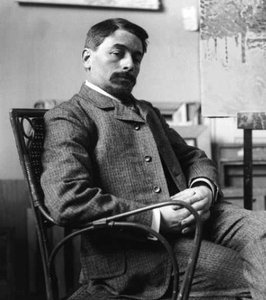
Henri Lebasque
1865 - 1937 , France
Quick Facts
- Artistic Movement Or Style: Post-Impressionism
- Artists Or Movements Influenced By This Artist: ['Nabis group']
- Artists Who Influenced This Artist:
- Camille Pissarro
- Auguste Renoir
- Date Of Birth: September 25, 1865
- Date Of Death: August 7, 1937
- Full Name: Henri Lebasque
- Nationality: French
- Notable Artworks:
- La cigarette
- Una joven en el bosque
- Place Of Birth: Champigné, France
Related Articles

The Enduring Legacy of Oil on Canvas: Technique, History & Aesthetic Impact
Explore the rich history & techniques of oil painting – from Renaissance masters to Impressionism. Discover pigments, layering methods, and why this timeless medium endures. Expert insights for artists & art enthusiasts.

Oil on Canvas: A Historical & Technical Exploration of a Timeless Artistic Medium
Explore the rich history & enduring techniques of oil painting on canvas. Discover the science behind its longevity, conservation practices, and contemporary relevance. Expert insights for art enthusiasts.

The Enduring Power of Painting: A Historical & Contemporary Exploration of Form and Emotion
Explore the rich history & enduring techniques of oil painting with ArtsDot. Discover masterpieces, learn about art collecting, and find authentic handmade reproductions crafted by skilled artists.
The Enduring Muse: Women as Subject & Symbol in Art History
Explore the rich history of women in art – from iconic muses to groundbreaking artists. Discover feminist movements, global perspectives & reclaim female narratives with ArtsDot.
Portrayals of Power & Perception: A Historical Survey of Women in Art
Explore the rich history of women in art – from iconic muses to groundbreaking artists. Discover feminist movements & reclaim female narratives with ArtsDot. Expert insights for discerning collectors.