 Preview
 Send
Send Share
Share
 Details

 Download
 Similars
 X-Ray
X-Ray Diaporama
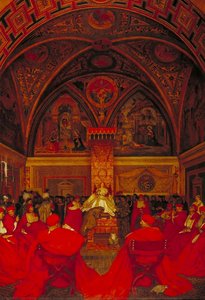
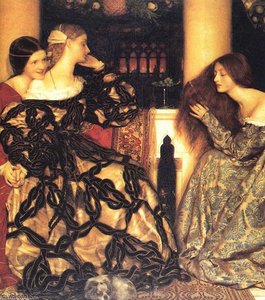
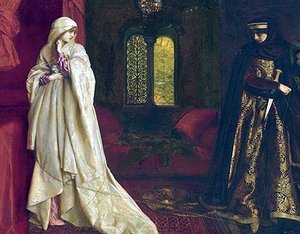
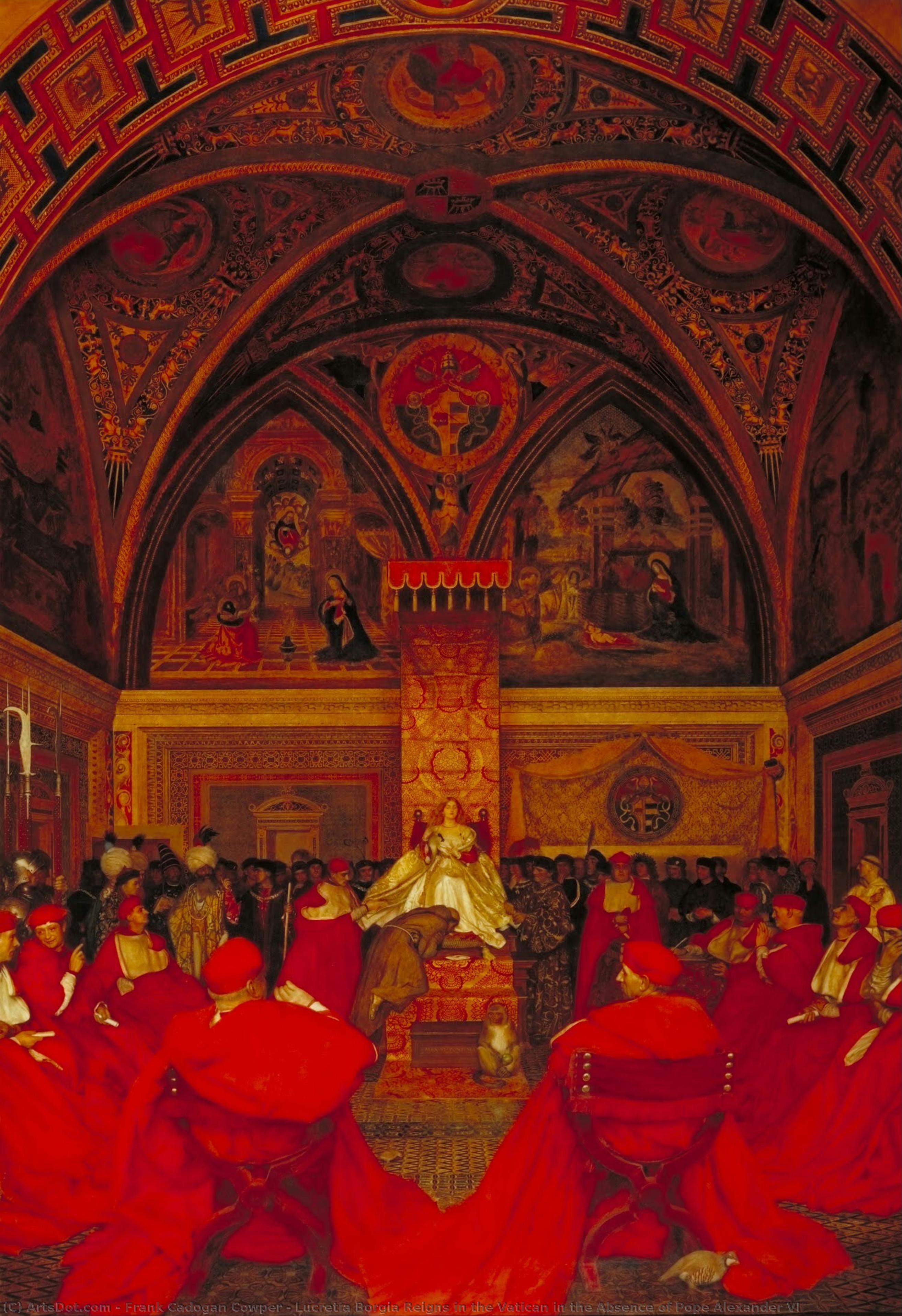
Lucretia Borgia Reigns in the Vatican in the Absence of Pope Alexander VI
 Oil On Canvas
- WallArt
- Romantic Revival
 1910
1910- 19th Century
 53.0 x 22.0 cm
 Tate Britain
 Read More
Hand Made Oil Reproduction
Hand-painted oil on canvas in your size and frame, made to order by our artists. ( Buy Print Buy Image)




P118B $10

P118H $10

P118W $10

P438Z $10

P508JH $12

P508YH $12

P805H $10

P805Z $10

P919BZ $10

P919G $10

P919XJ $10

P959ZH $10

P968JZ $12

W106C $8

W218G $10

W218JH $8

W218Y $10

W307PJ $10

W316G $10

W316PJ $8

W316Y $10

W398PJ $8

W4111J $10

W500HY $15

W500JH $15

W692G $12

W849H $8

W940BG $15

W953PJ $8




Pick from our preset sizes that match the artwork's original proportions.

You may enter your own dimensions to fit a specific frame or space. If your selected size does not match the original image's proportions, we will either crop the artwork or extend the painting with additional hand-painted elements. A digital mockup will be sent for your approval before production begins.
Please note that the on-screen preview does not reflect the actual cropping or extension. Only the mockup will accurately show the final composition.
While custom sizes are available, we recommend selecting a dimension from the predefined list to preserve the original proportions.
After order, ArtsDot.com team will email client for instructions and provide a mockup preview
Worldwide Delivery () in 3/4 weeks instead of standard 5 weeks. (3 September). No compromise on quality.

Free Worldwide Express Shipping

High-Quality Linen Canvas

Full Shipping Insurance

Customs Tax Refund Guarantee

True Color Matching Guarantee

60-Day Return Policy (Defects Only)

100% Money-Back Guarantee

Bulk Discount Offer
 Glass option is only available in size under 110 CM

Lucretia Borgia Reigns in the Vatican in the Absence of Pope Alexander VI
Reproduction Medium
Reproduction Size
-


Total Price
$ 263
Lucretia Borgia Reigns in the Vatican: A Romantic Echo of Scandalous Intrigue
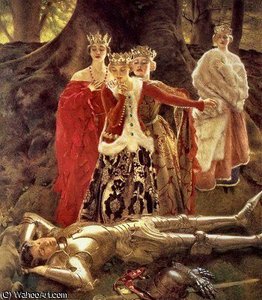
Frank Cadogan Cowper’s “Lucretia Borgia Reigns in the Vatican in the Absence of Pope Alexander VI” isn't merely a depiction of a historical event; it’s an exquisitely crafted tableau that captures the simmering tension and opulent grandeur of Renaissance Rome. Painted around 1908-14, this oil on canvas exemplifies the enduring legacy of the Pre-Raphaelite Brotherhood—a movement obsessed with meticulous detail, luminous color palettes, and narratives imbued with psychological depth.
- Subject Matter: The painting portrays a pivotal moment in papal history. Lucrezia Borgia, daughter of Pope Alexander VI, skillfully usurped his position during a meeting at St Peter’s Basilica when he was incapacitated by illness. This audacious act—a brazen assertion of power disguised as piety—became the subject of considerable scandal and fascination.
- Style: Cowper adheres faithfully to Pre-Raphaelite principles. The composition prioritizes dramatic lighting, casting shadows that heighten the emotional intensity of the scene. There’s a palpable sense of stillness amidst movement, reflecting the careful observation characteristic of the Brotherhood’s aesthetic.
- Technique: Cowper employed a masterful glazing technique—layering thin washes of color over underpaintings—to achieve remarkable tonal subtlety and luminosity. The resulting surface possesses an ethereal quality, mirroring the idealized beauty favored by Pre-Raphaelite artists.
The scene unfolds within a richly decorated church interior. A towering vaulted ceiling adorned with frescoes dominates the background, symbolizing divine authority and reinforcing the solemn atmosphere. Several chairs are strategically positioned—one central to the composition—suggesting deliberation and importance. The figures themselves are rendered with painstaking accuracy, capturing subtle expressions of emotion and conveying an air of aristocratic composure.
Symbolism:- Color Palette: Cowper’s palette leans heavily on reds and golds—colors traditionally associated with papal power and wealth. These hues contribute to the painting's dramatic impact, emphasizing the central figures and highlighting the opulent surroundings.
- The Chair: The prominent chair serves as a focal point, representing Lucrezia’s assumed role as Pope. Its positioning underscores her defiance of convention and symbolizes the usurpation of authority.
“Lucretia Borgia Reigns in the Vatican” transcends its historical subject matter to resonate with broader themes of ambition, deception, and the complexities of human desire. Cowper’s meticulous rendering—combined with his masterful use of light and color—creates an immersive experience for the viewer, transporting them back to a time of political intrigue and artistic brilliance. It remains a testament to the Pre-Raphaelite commitment to capturing not just what is seen but also what is felt.
Related Artworks
Artist Biography
A Lingering Echo of Romanticism: The Life and Art of Frank Cadogan Cowper
Frank Cadogan Cowper, often hailed as “The Last Pre-Raphaelite,” occupies a unique position in the landscape of British art. Born in 1877 in the tranquil village of Wickham, Northamptonshire, his life unfolded across an era of dramatic artistic shifts, yet he remained steadfastly devoted to the principles of beauty, narrative detail, and romantic sensibility championed by the Pre-Raphaelite Brotherhood. His father, Frank Cowper, a celebrated author and pioneer of yacht cruising, instilled in him a love for adventure and observation, while his lineage—descending from the Rector of Wicken—rooted him in a tradition of intellectual and spiritual contemplation. This blend of influences would profoundly shape both his life and artistic vision. From an early age, Cowper demonstrated a clear aptitude for art, embarking on formal training at St John's Wood Art School in 1896 before continuing his studies at the prestigious Royal Academy Schools until 1902. These formative years provided him with a solid foundation in technique and a deep understanding of artistic history, setting the stage for his emergence as a significant figure in the art world.Forging a Path Between Tradition and Modernity
Cowper’s early success was remarkable. He first exhibited at the Royal Academy in 1899, but it was “An Aristocrat Answering the Summons to Execution, Paris 1791” (1901) that truly established his reputation. The painting, a dramatic depiction of a scene from the French Revolution, showcased his mastery of composition, meticulous attention to detail, and ability to evoke powerful emotions. This initial acclaim opened doors for further study; in 1902, he spent six months under the tutelage of Edwin Austin Abbey, absorbing valuable insights into narrative painting and decorative techniques. A subsequent journey to Italy proved equally transformative, exposing him to the masterpieces of the Renaissance and solidifying his commitment to classical ideals of beauty and form. Cowper’s versatility extended beyond oils; he also excelled in watercolors and contributed significantly as a book illustrator, notably providing illustrations for Sir Sidney Lee’s comprehensive edition of Shakespeare's works. This diverse range of projects allowed him to hone his skills and explore different facets of artistic expression. He became known for his evocative depictions of historical and literary subjects, often imbued with a romantic sensibility that resonated deeply with audiences.Themes of History, Literature, and the Human Condition
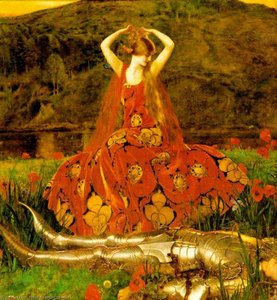
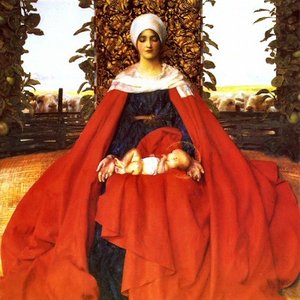
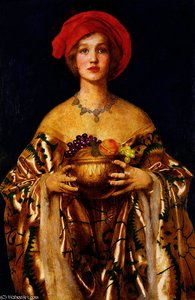
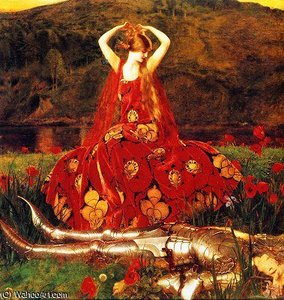
Throughout his career, Cowper gravitated towards themes steeped in history, literature, and mythology. Paintings like “Lucretia Borgia Reigns in the Vatican,” “La Belle Dame Sans Merci,” and “The Golden Bowl” demonstrate his fascination with complex characters, dramatic narratives, and moral ambiguities. He wasn’t merely illustrating stories; he was delving into the psychological depths of his subjects, exploring themes of power, love, betrayal, and redemption. His commitment to narrative painting set him apart from many of his contemporaries who were increasingly drawn towards abstraction and experimentation. In 1910, Cowper contributed to a monumental mural project in the Houses of Parliament alongside other prominent artists like Byam Shaw and Ernest Board, further cementing his position within the established art world. However, it was “Our Lady of the Fruits of the Earth” (1917) that brought him particular acclaim—and financial success—achieving a record price of £469,250 at Christie’s in London in 2011, a testament to its enduring appeal and artistic merit. As art fashions evolved, Cowper skillfully adapted, accepting portrait commissions while continuing to produce his signature historical and literary pieces, demonstrating both pragmatism and unwavering dedication to his artistic vision.The Last Bastion of Pre-Raphaelite Ideals
Cowper’s style is instantly recognizable—characterized by a meticulous attention to detail, rich and luminous colors, and a romantic sensibility that echoes the works of Dante Gabriel Rossetti, John Everett Millais, and Edward Burne-Jones. He earned the title “The Last Pre-Raphaelite” not simply because he painted in a similar style, but because he remained committed to the movement’s core principles—truth to nature, moral seriousness, and an emphasis on beauty—long after they had faded from mainstream popularity. His work represents a bridge between Victorian Romanticism and early 20th-century art, preserving a tradition of narrative painting and detailed realism in an era increasingly dominated by abstraction and modernism. He wasn’t merely imitating the Pre-Raphaelites; he was carrying their torch, adapting their techniques to his own unique vision and ensuring that their legacy would endure. In 2005, public recognition came again when his painting “The Ugly Duckling” was voted the favorite artwork by visitors to the Cheltenham Art Gallery & Museum, a heartwarming affirmation of his enduring appeal.A Legacy of Beauty and Narrative
In his later years, Cowper retired from London and sought solace in the picturesque countryside of Gloucestershire, where he continued to paint until his death in 1958. His final works retain the same technical skill, narrative power, and romantic sensibility that defined his earlier career. Though often overshadowed by more avant-garde movements, Cowper’s contribution to British art is significant. He stands as a testament to the enduring power of tradition, the importance of craftsmanship, and the timeless appeal of beauty. His paintings continue to captivate audiences with their intricate detail, evocative storytelling, and profound emotional resonance.- Cowper's work offers a window into a bygone era.
- His dedication to narrative painting is a refreshing counterpoint to the abstract trends of his time.
- He remains an important figure for those who appreciate the beauty and craftsmanship of Victorian Romantic art.
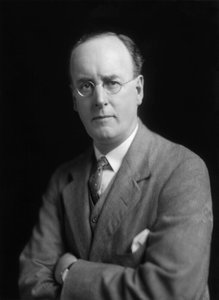
Frank Cadogan Cowper
1877 - 1958 , United Kingdom
Quick Facts
- Artistic Movement Or Style: Pre-Raphaelite
- Artists Or Movements Influenced By This Artist: ['Victorian Romanticism']
- Artists Who Influenced This Artist: ['Edwin Austin Abbey']
- Date Of Birth: 1877
- Date Of Death: 1958
- Full Name: Frank Cadogan Cowper
- Nationality: British
- Notable Artworks:
- An Aristocrat...
- Lucretia Borgia...
- La Belle Dame...
- The Golden Bowl
- Our Lady...
- Place Of Birth: Wickham, UK
Related Articles
Dante Gabriel Rossetti's 25 Masterpieces: A Journey Through Victorian Art & Symbolism | ArtsDot
Explore 25 iconic artworks by Dante Gabriel Rossetti, a leading Pre-Raphaelite artist. Discover the stories behind masterpieces like 'Proserpine' & 'Beata Beatrix'. Find museum-quality art reproductions and elevate your home decor with ArtsDot.com.
Sir John Everett Millais: Pre-Raphaelite Rebellion & Victorian Narrative Detail
Explore the revolutionary art of Sir John Everett Millais & the Pre-Raphaelite Brotherhood. Discover their radical realism, symbolic narratives, and lasting impact on Victorian aesthetics. A deep dive into 19th-century masterpieces.
Ford Madox Brown: Pre-Raphaelite Visionary & Victorian Social Commentary
Explore the life & art of Ford Madox Brown, a pivotal Pre-Raphaelite painter renowned for his powerful social commentary and masterpiece 'Work'. Discover his lasting influence on British art history.
The Pre-Raphaelite Brotherhood: Rebellion, Romance & Medieval Revival
Explore the captivating world of the Pre-Raphaelite Brotherhood! Discover their rebellious spirit, iconic masterpieces & lasting influence on art history. Learn about Rossetti, Millais & more.
Arthur Hughes: Pre-Raphaelite Visions of Beauty & Melancholy
Explore the captivating world of Arthur Hughes (1832-1915), a leading Pre-Raphaelite painter. Discover his dreamy landscapes, poetic narratives & iconic Victorian artworks. Learn about his life, style & collecting today.