 Preview
 Send
Send Share
Share
 Details

 Download
 Similars
 X-Ray
X-Ray Diaporama
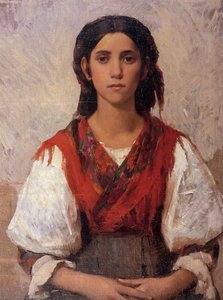
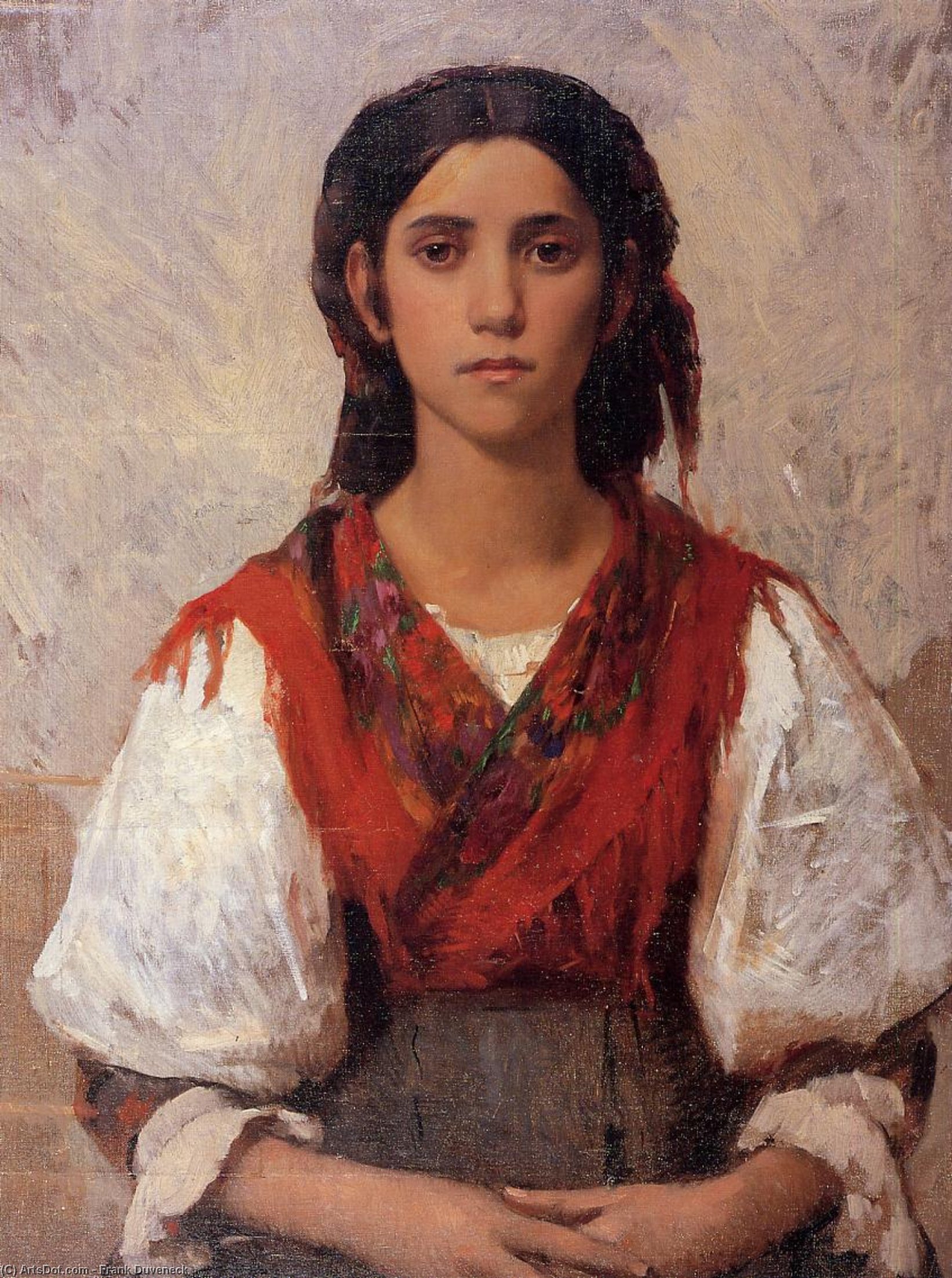
Florentine Flower Girl
 Oil On Canvas
- WallArt
 1887
1887- 19th Century
 31.0 x 23.0 cm
 Read More
Hand Made Oil Reproduction
Hand-painted oil on canvas in your size and frame, made to order by our artists. ( Buy Print Buy Image)




P118B $10

P118H $10

P118W $10

P438Z $10

P508JH $12

P508YH $12

P805H $10

P805Z $10

P919BZ $10

P919G $10

P919XJ $10

P959ZH $10

P968JZ $12

W106C $8

W218G $10

W218JH $8

W218Y $10

W307PJ $10

W316G $10

W316PJ $8

W316Y $10

W398PJ $8

W4111J $10

W500HY $15

W500JH $15

W692G $12

W849H $8

W940BG $15

W953PJ $8




Pick from our preset sizes that match the artwork's original proportions.

You may enter your own dimensions to fit a specific frame or space. If your selected size does not match the original image's proportions, we will either crop the artwork or extend the painting with additional hand-painted elements. A digital mockup will be sent for your approval before production begins.
Please note that the on-screen preview does not reflect the actual cropping or extension. Only the mockup will accurately show the final composition.
While custom sizes are available, we recommend selecting a dimension from the predefined list to preserve the original proportions.
After order, ArtsDot.com team will email client for instructions and provide a mockup preview
Worldwide Delivery () in 3/4 weeks instead of standard 5 weeks. (17 August). No compromise on quality.

Free Worldwide Express Shipping

High-Quality Linen Canvas

Full Shipping Insurance

Customs Tax Refund Guarantee

True Color Matching Guarantee

60-Day Return Policy (Defects Only)

100% Money-Back Guarantee

Bulk Discount Offer
 Glass option is only available in size under 110 CM

Florentine Flower Girl
Reproduction Medium
Reproduction Size
-


Total Price
$ 263
Artwork Description
A Moment Frozen in Florentine Light
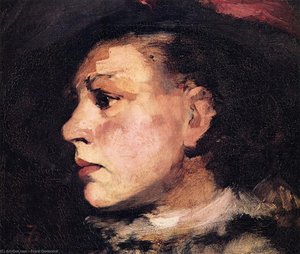
In the quiet corners of art history, few works capture the delicate intersection of human melancholy and vibrant life as poignantly as Frank Duveneck’s Florentine Flower Girl. Painted in 1887, this exquisite oil on canvas serves as a window into a bygone era, inviting the viewer to step into a sun-drenched yet introspective moment in Italy. The painting centers on a young woman, her presence commanding yet profoundly gentle. Draped in a striking red dress that pulses with warmth against a crisp white shawl, she sits in a pose of quiet contemplation. Her long hair cascades around her, framing a face that seems lost in a private sea of thought. There is an undeniable weight to her expression—a subtle shadow of sadness or perhaps a deep, wandering dream—that immediately establishes an emotional bridge between the subject and the observer.
Duveneck, an American master whose roots were deeply entwined with the realism of the Munich School, utilizes his brush to weave a narrative of texture and light. The technique employed here is a masterclass in the alla prima style, where bold, confident strokes meet meticulous attention to detail. Notice how the brilliant crimson of her attire creates a rhythmic contrast with the ethereal lightness of her shawl, a visual tension that keeps the eye dancing across the canvas. While the foreground subject holds our primary focus, Duveneck masterfully populates the background with secondary figures, their smaller scale and softer rendering providing a sense of depth and atmospheric perspective. These distant souls add a layer of social context, suggesting a bustling world that continues to move even as our protagonist remains anchored in her internal stillness.
The Soul of Realism and Timeless Elegance
Beyond the mere depiction of a scene, the Florentine Flower Girl embodies the essence of late 19th-century American Realism. Duveneck’s ability to capture the subtleties of human emotion allows the painting to transcend its historical period. For the discerning collector or interior designer, this piece offers more than just aesthetic beauty; it provides a focal point of profound character. The interplay of light and shadow—the chiaroscuro effect—lends the work a sculptural quality that makes it feel remarkably present, as if the air around the woman is still warm from the Florentine sun. It is a work that speaks to the resilience of the human spirit, finding beauty in moments of solitude and grace within the chaos of life.
Integrating a high-quality reproduction of this masterpiece into a curated space can transform an environment. Whether placed in a grand library, a contemporary living area, or a sophisticated study, the painting’s rich palette and emotive power act as a conversation starter. It brings with it a sense of history and a touch of Old World romance that complements both classical and modern decor. To own a piece inspired by Duveneck is to possess a fragment of the 19th-century's artistic soul, a testament to the enduring power of realism to capture the fleeting, beautiful, and sometimes sorrowful essence of our shared human experience.
Related Artworks
Artist Biography
A Life Forged in Tragedy and Realism
Frank Duveneck, born Frank Decker in 1848 amidst the burgeoning river town of Covington, Kentucky, was an artist whose life story is as compelling as his powerfully rendered canvases. His early years were shadowed by loss; the death of his father to cholera when he was barely a year old indelibly marked his trajectory. This formative tragedy, coupled with his mother’s subsequent marriage to Joseph Duveneck – from whom he adopted his enduring name – instilled within him a sense of resilience and perhaps, a heightened sensitivity that would later permeate his art. The blending of German heritage through his stepfather and the distinctly American landscape of his upbringing created a unique cultural foundation for the artist. Even as a young boy, an aptitude for drawing blossomed, leading to studies under local painter Johann Schmitt and an apprenticeship with a firm specializing in church decoration—a crucial period where he honed technical skills and absorbed the narrative power of visual imagery. This wasn’t merely about mastering technique; it was about understanding how art could evoke emotion and tell stories, lessons that would resonate throughout his career.The Munich Crucible: Embracing Dark Realism
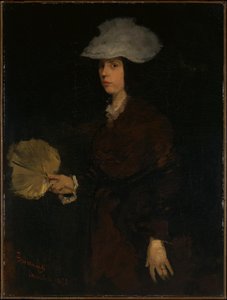
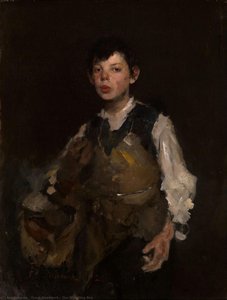
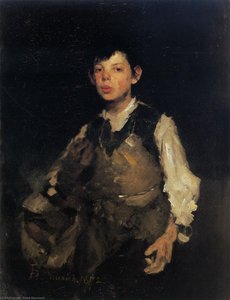
In 1869, Duveneck embarked on a transformative journey to Munich, Germany, seeking advanced artistic training at the Royal Academy. This move proved pivotal. The prevailing aesthetic in Munich was a stark realism—a deliberate rejection of academic idealism in favor of direct observation and unflinching honesty. It resonated deeply with Duveneck, who embraced a darker palette and a more vigorous, expressive brushstroke. He became captivated by the work of 17th-century Dutch master Frans Hals, whose lively portraits and masterful handling of light profoundly influenced his style. This influence is strikingly evident in paintings like Lady with Fan (1873), where slashing brushwork and a somber tonality echo Hals’s spirit while simultaneously establishing Duveneck's own distinctive voice. It was during these formative years that he began to develop the signature style for which he would become celebrated: a powerful realism imbued with psychological depth and emotional intensity, a departure from the polished surfaces favored by many of his contemporaries. The Whistling Boy (1872) exemplifies this early expressive power, capturing a fleeting moment of youthful exuberance with remarkable immediacy and a palpable sense of life.A Mentor’s Influence: The “Duveneck Boys” and Beyond
By 1878, Duveneck had established himself as a significant figure in the art world, not only as a painter but also as an educator. He opened his own school in Munich, attracting a cohort of ambitious American artists who became known as the “Duveneck Boys.” Among them were John Twachtman, Otto Bacher, Julius Rolshoven, and John White Alexander—artists who would themselves become prominent figures in American Impressionism and Realism. Duveneck’s teaching philosophy emphasized direct observation, bold brushwork, and a rejection of conventional academic constraints. He encouraged his students to forge their own artistic paths while grounding them in the principles of sound draftsmanship and expressive color. His influence extended back to America when he accepted a position at the Art Academy of Cincinnati, where he mentored another generation of artists including Ida Holterhoff Holloway, John Christen Johansen, and Russel Wright. He fostered a spirit of innovation and independence that helped shape the course of American art, leaving an indelible mark on those who studied under his guidance.Evolving Visions and Lasting Legacy
Duveneck’s artistic journey continued to evolve after his return to America. While he remained committed to realism, his palette began to lighten, influenced by Impressionism and his frequent travels to Italy and France. He explored landscape painting with increasing frequency, capturing the sun-drenched scenes of Venice and the rugged beauty of coastal Massachusetts. Despite these stylistic shifts, his work always retained a distinctive character—a blend of technical mastery, emotional depth, and psychological insight. The personal tragedy of losing his wife, Elizabeth Boott Duveneck, in 1888 cast a long shadow over his later years, perhaps contributing to the introspective quality of some of his subsequent works. Frank Duveneck passed away in Covington, Kentucky, in 1919, leaving behind a rich artistic legacy. His paintings are now held in prestigious collections such as the Metropolitan Museum of Art in New York City, the National Gallery of Art in Washington, D.C., and the Cincinnati Art Museum—testaments to his enduring contribution to American art. He remains a pivotal figure in the transition from academic tradition to modern realism, an artist who dared to challenge conventions and forge his own path with unwavering conviction.A Lasting Impact
- Pioneering Realism: Duveneck’s commitment to portraying life as it was, without idealization, paved the way for future generations of American realist painters.
- Influential Educator: His mentorship of the “Duveneck Boys” and subsequent students at the Cincinnati Art Academy had a profound impact on the development of American Impressionism and Realism.
- Technical Mastery: Duveneck’s skillful handling of brushwork, color, and composition continues to inspire artists today.
- Psychological Depth: His ability to capture the inner lives of his subjects adds a layer of complexity and emotional resonance to his work.
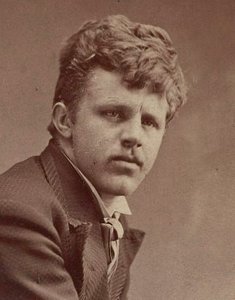
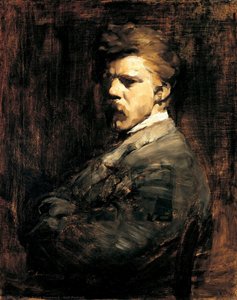
Frank Duveneck
1848 - 1919 , United States of America
Quick Facts
- Artistic Movement Or Style: Realism
- Artists Or Movements Influenced By This Artist: ['American Impressionism']
- Artists Who Influenced This Artist: ['Frans Hals']
- Date Of Birth: October 9, 1848
- Date Of Death: January 3, 1919
- Full Name: Frank Duveneck
- Nationality: American
- Notable Artworks:
- Lady with Fan
- Whistling Boy
- Place Of Birth: Covington, USA
Related Articles

White on Canvas: 10 Masterpieces & Timeless Elegance for Your Home Decor
Explore 10 iconic white paintings by Monet, Whistler & Rothko! Discover the stories behind these serene masterpieces and their impact on art history. Find museum-quality reproductions for your home decor at .
American Realism's Defining Works: 10 Masterpieces for Your Home
Explore 10 defining American Realism masterpieces – Hopper, Homer & more. Discover the stories behind these iconic paintings and bring timeless art to your home with ArtsDot's museum-quality reproductions. Explore the full collection online.

Crimson Threads of Narrative: Exploring Symbolism & Representation in Artworks Featuring the Red Dress
Explore the rich symbolism of the red dress in art history! From ancient power displays to iconic portraits like Cézanne’s 'Madame Cezanne', discover the cultural and artistic significance behind this captivating color. Expert analysis & insights.
American Realism: Social Commentary & Artistic Representation in Early 20th-Century Painting
Explore the powerful social commentary & artistic representation of American Realism. Discover key artists like Bellows & Sloan, and understand the movement's lasting impact on 20th-century art history.

Grant Wood & American Regionalism: Identity, Myth & the Rural Landscape
Explore the world of Grant Wood & American Regionalism with ArtsDot. Discover the symbolism behind 'American Gothic', recurring themes, and the movement's lasting impact on art history. High-quality reproductions available.