 Preview
 Send
Send Share
Share
 Details

 Download
 Similars
 X-Ray
X-Ray Diaporama
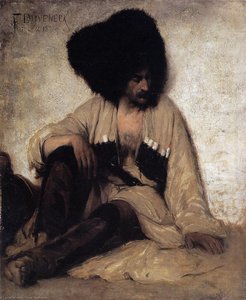
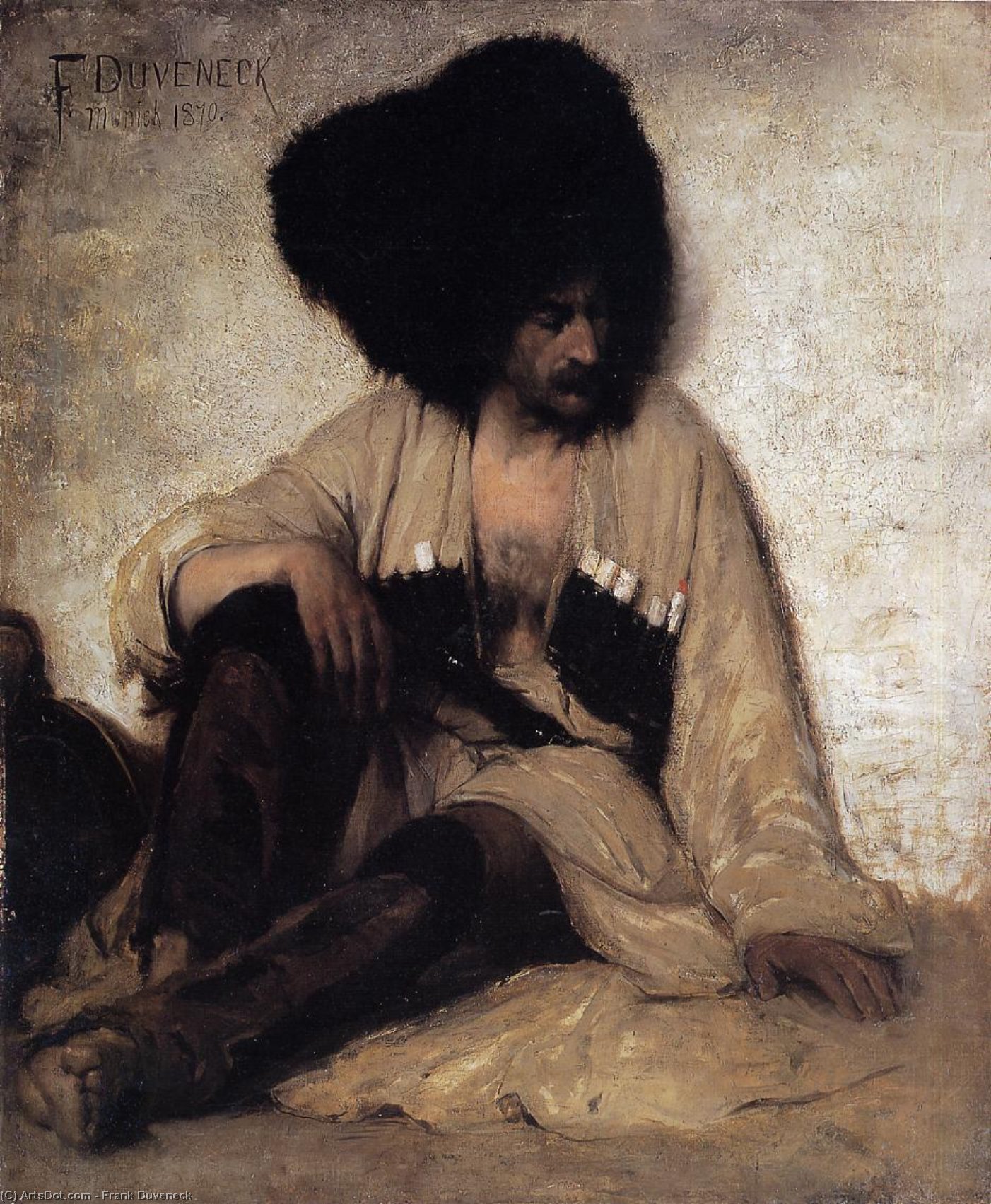
Caucasian Soldier


 Read More
Hand Made Oil Reproduction
Hand-painted oil on canvas in your size and frame, made to order by our artists. ( Buy Print Buy Image)




P118B $10

P118H $10

P118W $10

P438Z $10

P508JH $12

P508YH $12

P805H $10

P805Z $10

P919BZ $10

P919G $10

P919XJ $10

P959ZH $10

P968JZ $12

W106C $8

W218G $10

W218JH $8

W218Y $10

W307PJ $10

W316G $10

W316PJ $8

W316Y $10

W398PJ $8

W4111J $10

W500HY $15

W500JH $15

W692G $12

W849H $8

W940BG $15

W953PJ $8




Pick from our preset sizes that match the artwork's original proportions.

You may enter your own dimensions to fit a specific frame or space. If your selected size does not match the original image's proportions, we will either crop the artwork or extend the painting with additional hand-painted elements. A digital mockup will be sent for your approval before production begins.
Please note that the on-screen preview does not reflect the actual cropping or extension. Only the mockup will accurately show the final composition.
While custom sizes are available, we recommend selecting a dimension from the predefined list to preserve the original proportions.
After order, ArtsDot.com team will email client for instructions and provide a mockup preview
Worldwide Delivery () in 3/4 weeks instead of standard 5 weeks. (17 August). No compromise on quality.

Free Worldwide Express Shipping

High-Quality Linen Canvas

Full Shipping Insurance

Customs Tax Refund Guarantee

True Color Matching Guarantee

60-Day Return Policy (Defects Only)

100% Money-Back Guarantee

Bulk Discount Offer
 Glass option is only available in size under 110 CM

Caucasian Soldier
Reproduction Medium
Reproduction Size
-


Total Price
$ 263
Artwork Description
A Soulful Portrait: Frank Duveneck’s “Caucasian Soldier”
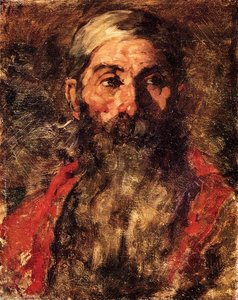
Frank Duveneck's "Caucasian Soldier," painted in 1870, is more than just a portrait; it’s a poignant distillation of hardship, resilience, and the quiet dignity of an individual caught within the currents of history. This arresting image, rendered in a style deeply rooted in the academic tradition yet imbued with a strikingly modern sensibility, invites us to contemplate themes of displacement, identity, and the weight of experience. The painting immediately draws the eye to its subject – a man of imposing stature, dominated by a magnificent, almost defiant afro that speaks volumes about his heritage and inner strength. His expression is one of profound melancholy, a subtle sadness that hints at untold stories and burdens carried with quiet grace.
Duveneck’s technique is masterful in its restraint and detail. He employs a realistic approach reminiscent of the 19th-century academic style, characterized by meticulously rendered features and a subdued color palette. Yet, he avoids mere imitation, injecting a palpable sense of immediacy into the scene. The artist's brushstrokes are visible, lending texture to the fabric of his clothing and the contours of his face – a deliberate choice that emphasizes the physicality of the subject and imbues the painting with a tactile quality. Notice how light is used—softly diffused, it casts gentle shadows that sculpt the man’s features, adding depth and volume without resorting to dramatic contrasts. The background, deliberately blurred and indistinct, serves not as a distraction but rather as a framing device, intensifying our focus on the solitary figure at the heart of the composition.
The Context of Conflict: A Soldier's Story
“Caucasian Soldier” emerged during a turbulent period in Russian history – the protracted Caucasian War (1834-1859). This conflict pitted the Russian Empire against various Caucasian peoples, including Chechens, Circassians, and Dagestanis, who fiercely resisted subjugation. The painting captures a moment of quiet contemplation amidst this ongoing struggle, offering a glimpse into the lives of those caught in the crossfire of imperial ambition. The subject himself is likely a soldier – perhaps a Circassian or another ethnic group involved in the conflict – conveying a sense of displacement and vulnerability. It’s important to note that Duveneck's work frequently engaged with themes of marginalization and social injustice, reflecting the realities faced by many individuals during this era.
Further research reveals that Frank Duveneck was deeply affected by his own family history, particularly the death of his father at a young age. This early loss undoubtedly shaped his artistic vision, fostering a sensitivity to human suffering and a desire to capture the complexities of the human condition. The painting’s somber mood and introspective gaze can be interpreted as an echo of this personal experience, lending it a profound emotional resonance.
Symbolism and Emotional Impact
The symbolism within “Caucasian Soldier” is layered and evocative. The man's posture—slumped slightly, his head bowed—suggests weariness, resignation, or perhaps even grief. His afro, a striking feature that defies conventional notions of beauty in the context of the time, can be seen as a symbol of cultural pride, resilience, and resistance against imposed norms. It’s a powerful visual statement asserting identity amidst adversity. The muted color palette—dominated by browns, grays, and ochres—reinforces the painting's mood of melancholy and quiet contemplation.
Ultimately, “Caucasian Soldier” is a deeply moving work that transcends its historical context to speak to universal themes of loss, displacement, and the enduring strength of the human spirit. It’s a testament to Duveneck’s artistic skill and his ability to capture not just likeness but also emotion—a rare and valuable achievement.
A Legacy in Oil: Reproduction & Appreciation
Reproductions of “Caucasian Soldier” offer an accessible way to experience the power and beauty of this remarkable painting. ArtsDot.com provides high-quality reproductions that faithfully capture Duveneck’s masterful technique and evocative imagery. Consider a custom print on canvas or archival paper – a tangible connection to a pivotal moment in art history and a poignant reflection on the human condition. The original, created with oil paints on canvas, showcases a rich layering of paint, creating texture and depth that is beautifully replicated in modern reproductions.
Explore the full artwork details at http://www.davidrumsey.com/amica/ for a deeper dive into its history, provenance, and artistic significance. Don’t miss the opportunity to own a piece of art that speaks volumes about resilience, identity, and the enduring power of human emotion.
Related Artworks
Artist Biography
A Life Forged in Tragedy and Realism
Frank Duveneck, born Frank Decker in 1848 amidst the burgeoning river town of Covington, Kentucky, was an artist whose life story is as compelling as his powerfully rendered canvases. His early years were shadowed by loss; the death of his father to cholera when he was barely a year old indelibly marked his trajectory. This formative tragedy, coupled with his mother’s subsequent marriage to Joseph Duveneck – from whom he adopted his enduring name – instilled within him a sense of resilience and perhaps, a heightened sensitivity that would later permeate his art. The blending of German heritage through his stepfather and the distinctly American landscape of his upbringing created a unique cultural foundation for the artist. Even as a young boy, an aptitude for drawing blossomed, leading to studies under local painter Johann Schmitt and an apprenticeship with a firm specializing in church decoration—a crucial period where he honed technical skills and absorbed the narrative power of visual imagery. This wasn’t merely about mastering technique; it was about understanding how art could evoke emotion and tell stories, lessons that would resonate throughout his career.The Munich Crucible: Embracing Dark Realism
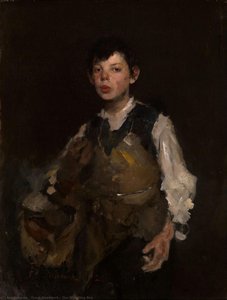
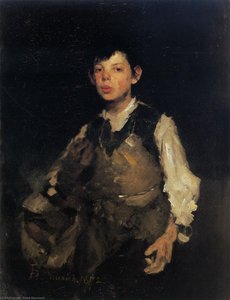
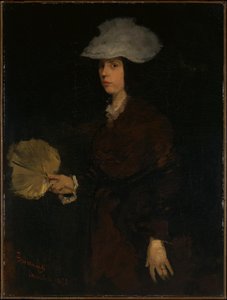
In 1869, Duveneck embarked on a transformative journey to Munich, Germany, seeking advanced artistic training at the Royal Academy. This move proved pivotal. The prevailing aesthetic in Munich was a stark realism—a deliberate rejection of academic idealism in favor of direct observation and unflinching honesty. It resonated deeply with Duveneck, who embraced a darker palette and a more vigorous, expressive brushstroke. He became captivated by the work of 17th-century Dutch master Frans Hals, whose lively portraits and masterful handling of light profoundly influenced his style. This influence is strikingly evident in paintings like Lady with Fan (1873), where slashing brushwork and a somber tonality echo Hals’s spirit while simultaneously establishing Duveneck's own distinctive voice. It was during these formative years that he began to develop the signature style for which he would become celebrated: a powerful realism imbued with psychological depth and emotional intensity, a departure from the polished surfaces favored by many of his contemporaries. The Whistling Boy (1872) exemplifies this early expressive power, capturing a fleeting moment of youthful exuberance with remarkable immediacy and a palpable sense of life.A Mentor’s Influence: The “Duveneck Boys” and Beyond
By 1878, Duveneck had established himself as a significant figure in the art world, not only as a painter but also as an educator. He opened his own school in Munich, attracting a cohort of ambitious American artists who became known as the “Duveneck Boys.” Among them were John Twachtman, Otto Bacher, Julius Rolshoven, and John White Alexander—artists who would themselves become prominent figures in American Impressionism and Realism. Duveneck’s teaching philosophy emphasized direct observation, bold brushwork, and a rejection of conventional academic constraints. He encouraged his students to forge their own artistic paths while grounding them in the principles of sound draftsmanship and expressive color. His influence extended back to America when he accepted a position at the Art Academy of Cincinnati, where he mentored another generation of artists including Ida Holterhoff Holloway, John Christen Johansen, and Russel Wright. He fostered a spirit of innovation and independence that helped shape the course of American art, leaving an indelible mark on those who studied under his guidance.Evolving Visions and Lasting Legacy
Duveneck’s artistic journey continued to evolve after his return to America. While he remained committed to realism, his palette began to lighten, influenced by Impressionism and his frequent travels to Italy and France. He explored landscape painting with increasing frequency, capturing the sun-drenched scenes of Venice and the rugged beauty of coastal Massachusetts. Despite these stylistic shifts, his work always retained a distinctive character—a blend of technical mastery, emotional depth, and psychological insight. The personal tragedy of losing his wife, Elizabeth Boott Duveneck, in 1888 cast a long shadow over his later years, perhaps contributing to the introspective quality of some of his subsequent works. Frank Duveneck passed away in Covington, Kentucky, in 1919, leaving behind a rich artistic legacy. His paintings are now held in prestigious collections such as the Metropolitan Museum of Art in New York City, the National Gallery of Art in Washington, D.C., and the Cincinnati Art Museum—testaments to his enduring contribution to American art. He remains a pivotal figure in the transition from academic tradition to modern realism, an artist who dared to challenge conventions and forge his own path with unwavering conviction.A Lasting Impact
- Pioneering Realism: Duveneck’s commitment to portraying life as it was, without idealization, paved the way for future generations of American realist painters.
- Influential Educator: His mentorship of the “Duveneck Boys” and subsequent students at the Cincinnati Art Academy had a profound impact on the development of American Impressionism and Realism.
- Technical Mastery: Duveneck’s skillful handling of brushwork, color, and composition continues to inspire artists today.
- Psychological Depth: His ability to capture the inner lives of his subjects adds a layer of complexity and emotional resonance to his work.
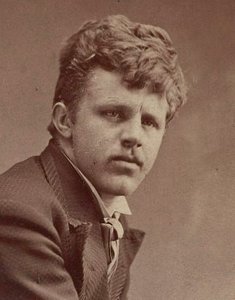
Frank Duveneck
1848 - 1919 , United States of America
Quick Facts
- Artistic Movement Or Style: Realism
- Artists Or Movements Influenced By This Artist: ['American Impressionism']
- Artists Who Influenced This Artist: ['Frans Hals']
- Date Of Birth: October 9, 1848
- Date Of Death: January 3, 1919
- Full Name: Frank Duveneck
- Nationality: American
- Notable Artworks:
- Lady with Fan
- Whistling Boy
- Place Of Birth: Covington, USA
Related Articles

The Enduring Legacy of Oil on Canvas: Technique, History & Aesthetic Impact
Explore the rich history & techniques of oil painting – from Renaissance masters to Impressionism. Discover pigments, layering methods, and why this timeless medium endures. Expert insights for artists & art enthusiasts.

Oil on Canvas: A Historical & Technical Exploration of a Timeless Artistic Medium
Explore the rich history & enduring techniques of oil painting on canvas. Discover the science behind its longevity, conservation practices, and contemporary relevance. Expert insights for art enthusiasts.

The Enduring Power of Painting: A Historical & Contemporary Exploration of Form and Emotion
Explore the rich history & enduring techniques of oil painting with ArtsDot. Discover masterpieces, learn about art collecting, and find authentic handmade reproductions crafted by skilled artists.
19th Century Masterpieces: 10 Paintings That Defined an Era | ArtsDot
Journey through 19th century art with ArtsDot! Explore 10 iconic paintings – from Monet & Renoir to Courbet – and discover the stories behind Romanticism, Realism & Impressionism. Find museum-quality reproductions for your home decor. Explore the full collection online!

The Enduring Legacy of Oil on Canvas: Technique, History & Contemporary Practice
Explore the rich history & enduring techniques of oil painting on canvas. Discover the science behind its longevity, conservation practices, and contemporary relevance. Expert insights for art enthusiasts.