 Preview
 Send
Send Share
Share
 Details

 Download
 Similars
 X-Ray
X-Ray Diaporama
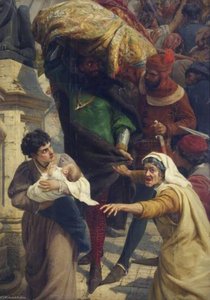
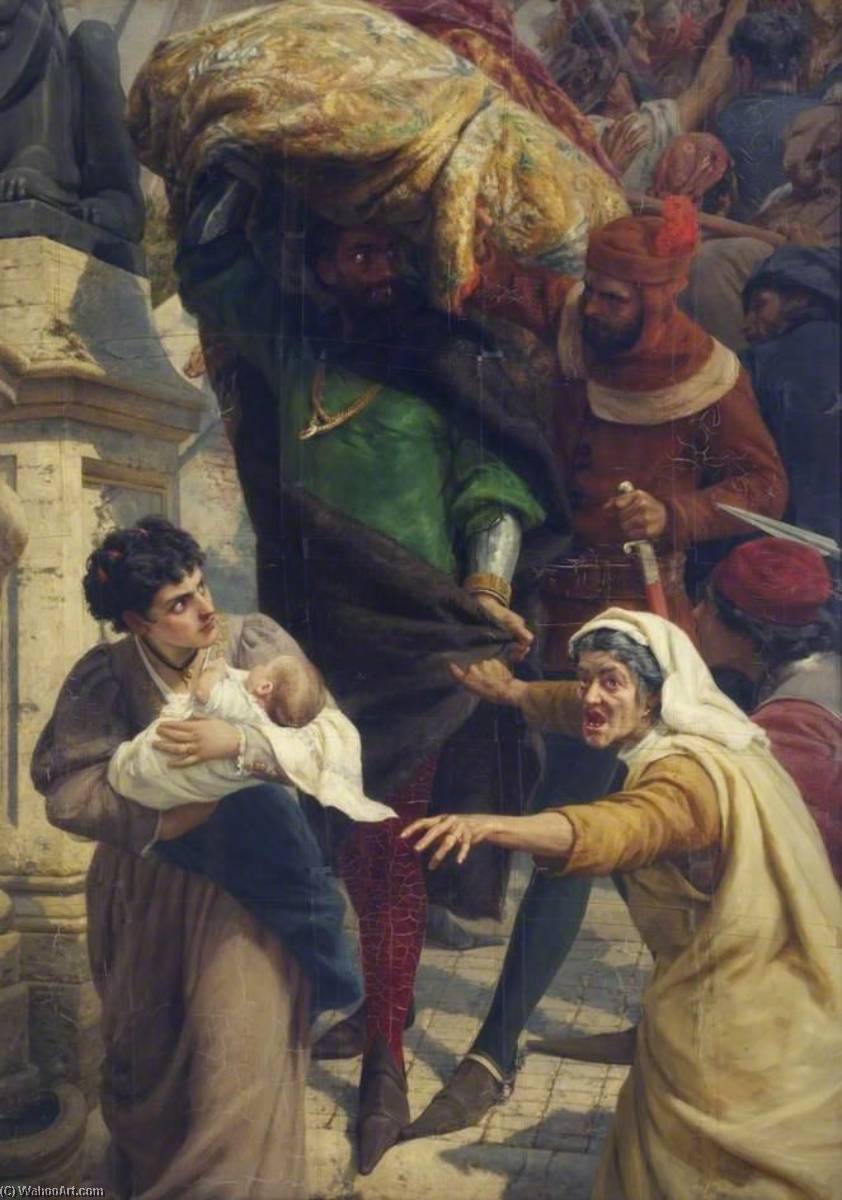
The Fall of Rienzi, the Last Roman Tribune

 Read More
Hand Made Oil Reproduction
Hand-painted oil on canvas in your size and frame, made to order by our artists. ( Buy Print Buy Image)




































Pick from our preset sizes that match the artwork's original proportions.

You may enter your own dimensions to fit a specific frame or space. If your selected size does not match the original image's proportions, we will either crop the artwork or extend the painting with additional hand-painted elements. A digital mockup will be sent for your approval before production begins.
Please note that the on-screen preview does not reflect the actual cropping or extension. Only the mockup will accurately show the final composition.
While custom sizes are available, we recommend selecting a dimension from the predefined list to preserve the original proportions.
After order, ArtsDot.com team will email client for instructions and provide a mockup preview
Worldwide Delivery () in 3/4 weeks instead of standard 5 weeks. (3 September). No compromise on quality.

Free Worldwide Express Shipping

High-Quality Linen Canvas

Full Shipping Insurance

Customs Tax Refund Guarantee

True Color Matching Guarantee

60-Day Return Policy (Defects Only)

100% Money-Back Guarantee

Bulk Discount Offer
 Glass option is only available in size under 110 CM

The Fall of Rienzi, the Last Roman Tribune
Reproduction Medium
Reproduction Size
-


Total Price
$ 263
Related Artworks








Artist Biography
Early Life and Apprenticeship
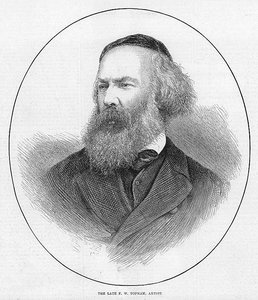
Francis William Topham, born in Leeds, Yorkshire on April 15th, 1808, embarked on a creative journey that would see him capture the essence of Victorian life through delicate watercolors and intricate engravings. His initial path wasn’t one directly leading to artistic expression; he was first apprenticed to an uncle working as a writing engraver. This early training, however, proved foundational, instilling in him a meticulous attention to detail and a mastery of line that would become hallmarks of his later work. Around 1830, the allure of London beckoned, and Topham sought opportunities within the bustling art world of the capital.
His first engagements involved engraving coats-of-arms, a task demanding precision but perhaps lacking the artistic freedom he craved. A shift to employment with Fenner & Sears, followed by James Sprent Virtue, proved pivotal. It was at Virtue’s that Topham honed his skills as an engraver, reproducing landscapes after renowned artists like William Henry Bartlett and Thomas Allom. This period wasn't merely technical; it exposed him to diverse artistic styles and subject matter, broadening his visual vocabulary and fueling a nascent desire to create original works.
The Rise of a Watercolourist
While establishing himself as an engraver, Topham simultaneously nurtured a passion for watercolour painting. His development as a watercolourist appears largely self-taught, refined through dedicated practice alongside fellow artists at the Artists' Society in Clipstone Street. This informal setting fostered experimentation and peer learning, allowing him to cultivate his unique artistic voice. In 1832, he exhibited his first work, “The Rustic’s Meal,” at the Royal Academy—a modest beginning that signaled a growing confidence and ambition.
Topham's early paintings often depicted scenes of rural life, imbued with a quiet dignity and realism. He wasn’t merely recording what he saw; he was striving to capture the *spirit* of his subjects, their daily routines, and the subtle beauty of the English countryside. This commitment to authenticity resonated with an audience increasingly fascinated by the lives of ordinary people.
Irish Landscapes and Spanish Light
A turning point in Topham’s career came with his first visit to Ireland in 1844 and 1845, accompanied by Frederick Goodall and Alfred Fripp. The rugged beauty of the Irish landscape and the vibrant culture of its people profoundly impacted his artistic vision. He became particularly known for his evocative depictions of Irish peasant life, portraying scenes with sensitivity and a keen eye for detail. These works weren’t romanticized portrayals; they offered glimpses into the realities of rural existence, capturing both hardship and resilience.
Later in life, Topham sought inspiration further afield, traveling to Spain in 1852 and again in 1876. The sun-drenched landscapes and lively customs of Andalusia captivated him, leading to a series of watercolors that celebrated the warmth and vibrancy of Spanish culture. He masterfully captured the play of light and shadow, imbuing his Spanish scenes with an atmosphere of exoticism and romance.
Beyond Painting: Dickens and Theatrical Pursuits
Topham’s talents extended beyond the realm of painting and engraving. In 1850, he unexpectedly found himself part of Charles Dickens's amateur theatrical company—the “splendid strollers.” He participated in productions of Douglas Jerrold’s “The Rent Day” and Bulwer Lytton’s “Not so Bad as We Seem,” demonstrating a surprising aptitude for performance. This experience, while brief, reveals a multifaceted personality and a willingness to embrace new challenges.
Throughout his career, Topham also contributed illustrations to numerous publications, including editions of the Waverley novels, *Pictures and Poems*, and works by Mrs. S.C. Hall and Robert Burns. His designs were characterized by their clarity, precision, and sensitivity to narrative detail.
Legacy and Historical Significance
Francis William Topham’s career spanned a period of significant artistic change in Victorian England. He died in Córdoba, Spain on March 31st, 1877, leaving behind a body of work that offers valuable insights into the social and cultural landscape of his time. While perhaps not as widely celebrated as some of his contemporaries, Topham’s watercolors and engravings remain admired for their technical skill, atmospheric quality, and sensitive portrayal of everyday life.
- Masterful Technique: Topham's meticulous attention to detail, honed through years of engraving, is evident in the precision of his watercolor washes and the clarity of his line work.
- Social Commentary: His depictions of Irish peasant life offer a nuanced perspective on rural existence, capturing both hardship and resilience.
- Cultural Exploration: Topham’s travels to Ireland and Spain broadened his artistic horizons and resulted in evocative paintings that celebrated the diversity of European culture.
- Versatility: His ability to excel as a watercolourist, engraver, and illustrator demonstrates a remarkable range of talent.
Topham’s work serves as a testament to the power of observation, the beauty of everyday life, and the enduring appeal of capturing fleeting moments in time. He remains an important figure in the history of Victorian art, offering a glimpse into a world that is both familiar and distant.
Quick Facts
- Artistic Movement Or Style: World Goes Pop
- Artists Or Movements Influenced By This Artist: ['Influenced by pop art and contemporary social commentary']
- Artists Who Influenced This Artist: ['Influenced by diverse artists within the World Goes Pop movement']
- Date Of Death: Living
- Notable Artworks: ['Various works featured in The World Goes Pop exhibition']
- Place Of Birth: WahooArt