 Preview
 Send
Send Share
Share
 Details

 Download
 Similars
 X-Ray
X-Ray Diaporama
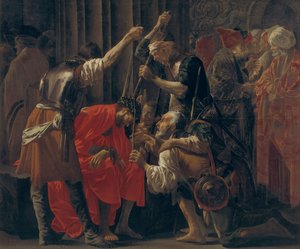
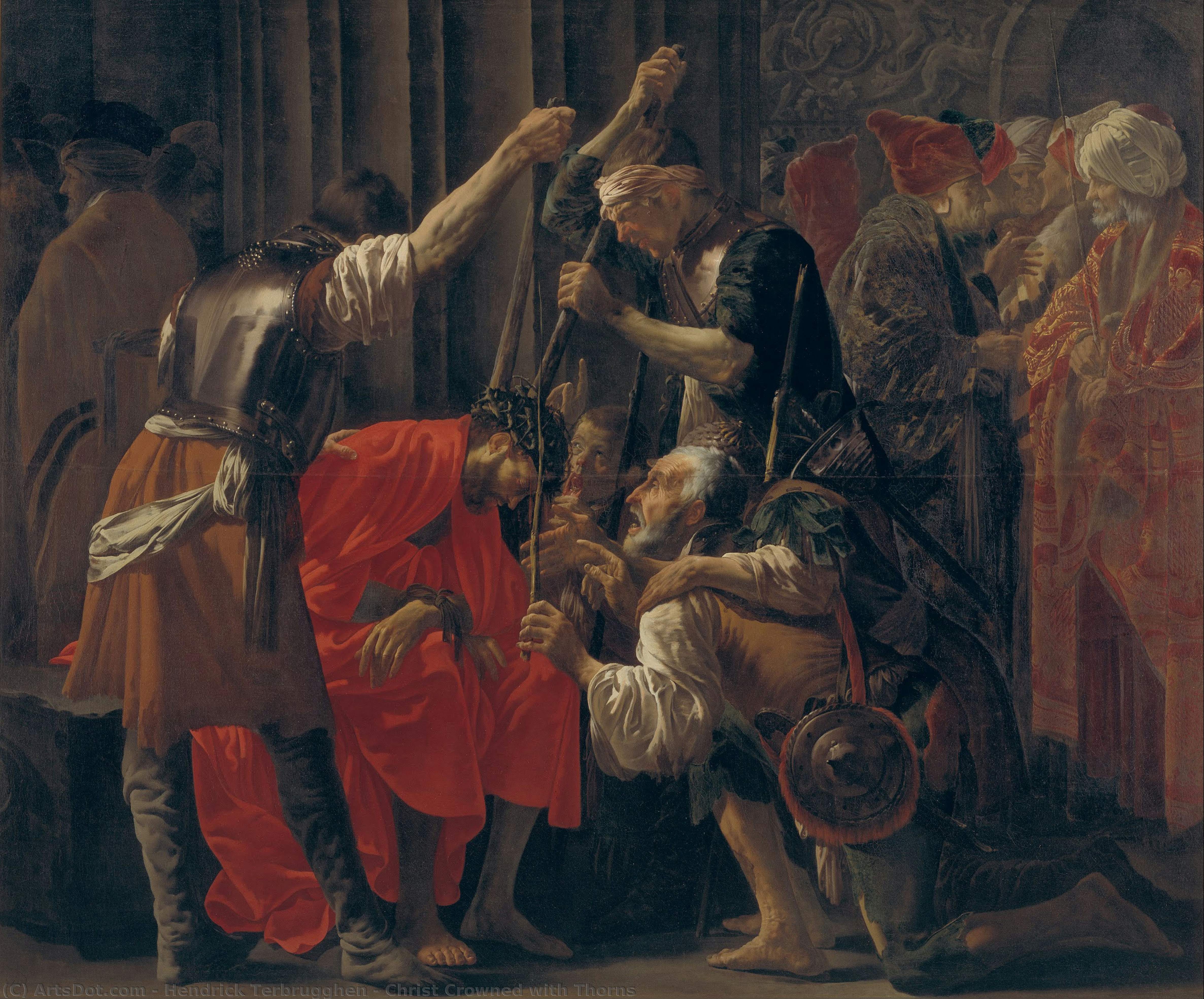
Christ Crowned with Thorns
 Oil On Canvas
- WallArt
- Baroque
 1620
1620 240.0 x 207.0 cm
 National Gallery of Denmark
 Read More
Hand Made Oil Reproduction
Hand-painted oil on canvas in your size and frame, made to order by our artists. ( Buy Print Buy Image)




P118B $10

P118H $10

P118W $10

P438Z $10

P508JH $12

P508YH $12

P805H $10

P805Z $10

P919BZ $10

P919G $10

P919XJ $10

P959ZH $10

P968JZ $12

W106C $8

W218G $10

W218JH $8

W218Y $10

W307PJ $10

W316G $10

W316PJ $8

W316Y $10

W398PJ $8

W4111J $10

W500HY $15

W500JH $15

W692G $12

W849H $8

W940BG $15

W953PJ $8




Pick from our preset sizes that match the artwork's original proportions.

You may enter your own dimensions to fit a specific frame or space. If your selected size does not match the original image's proportions, we will either crop the artwork or extend the painting with additional hand-painted elements. A digital mockup will be sent for your approval before production begins.
Please note that the on-screen preview does not reflect the actual cropping or extension. Only the mockup will accurately show the final composition.
While custom sizes are available, we recommend selecting a dimension from the predefined list to preserve the original proportions.
After order, ArtsDot.com team will email client for instructions and provide a mockup preview
Worldwide Delivery () in 3/4 weeks instead of standard 5 weeks. (16 August). No compromise on quality.

Free Worldwide Express Shipping

High-Quality Linen Canvas

Full Shipping Insurance

Customs Tax Refund Guarantee

True Color Matching Guarantee

60-Day Return Policy (Defects Only)

100% Money-Back Guarantee

Bulk Discount Offer
 Glass option is only available in size under 110 CM

Christ Crowned with Thorns
Reproduction Medium
Reproduction Size
-


Total Price
$ 263
Artwork Description
Hendrick Terbrugghen’s Dramatic Vision of Suffering and Majesty
The Utrecht Caravaggist painter Hendrick Jansz. Terbrugghen stands as a pivotal figure in Dutch Baroque art, embodying the fervent spiritual fervor of his era while simultaneously mastering the revolutionary chiaroscuro technique championed by Michelangelo Merisi da Caravaggio. His masterpiece, “Christ Crowned with Thorns,” transcends mere depiction; it’s an immersive experience into the psychological torment and regal dignity inherent within Christian iconography. Painted circa 1620, this monumental canvas—measuring 240 x 207 cm—holds its place in the National Gallery of Denmark as a testament to Terbrugghen's artistic prowess and Caravaggio’s enduring influence.A Synthesis of Gothic Tradition and Baroque Innovation
Terbrugghen’s formative years were spent absorbing the grandeur of Rome, where he encountered Caravaggio’s groundbreaking approach to painting—a dramatic interplay of light and shadow designed to evoke visceral emotion. Unlike the prevailing Northern European aesthetic of his time, Terbrugghen deliberately retained elements of late Gothic altarpiece tradition, notably in the subtly angular body language of Christ and the solemn expressions of several figures surrounding him. However, this grounding in older styles is skillfully countered by Caravaggio’s stylistic hallmarks: a heightened realism achieved through meticulous observation and an uncompromising commitment to chiaroscuro—the stark contrast between light and dark—which dominates the composition. This technique isn't merely decorative; it serves as a conduit for conveying profound spiritual truths.The Scene of Humiliation and Divine Majesty
The painting portrays Christ kneeling before Pilate’s palace, surrounded by jeering Roman soldiers. The central figure is depicted with his head bowed in sorrowful submission, accepting the thorny crown offered by one soldier—a poignant symbol of his suffering during Holy Thursday. This gesture underscores the immense humility demanded by faith and contrasts sharply with the haughty demeanor of the soldiers who attempt to mock Christ’s kingship. A scarlet cloak draped over Christ's shoulders signifies his royal status, emphasizing the paradoxical juxtaposition of humiliation and majesty that defines the narrative. The artist’s masterful use of light directs attention to Christ’s face—illuminated by a radiant glow—creating an emotional focal point for the viewer.Symbolism and Artistic Technique: A Detailed Examination
Terbrugghen's meticulous brushwork contributes significantly to the painting’s impact. He employs impasto—thickly applied paint—to sculpt textures and heighten visual depth, particularly evident in the folds of Christ’s robe and the soldier’s tunic. The artist’s palette is rich with earthy tones—browns, reds, and ochres—creating a subdued yet emotionally resonant atmosphere. Furthermore, Terbrugghen skillfully utilizes atmospheric perspective, subtly blurring distant figures to convey a sense of space and heighten the drama of the scene. The painting's composition—centered around Christ—is carefully balanced, ensuring that every element contributes to the overarching narrative of sacrifice and redemption.A Legacy Enduring Through Reproduction
The Utrecht Caravaggist’s “Christ Crowned with Thorns” continues to inspire artists and collectors alike. Its powerful imagery and masterful execution exemplify the apex of Baroque painting—a genre characterized by its expressive dynamism and profound spiritual contemplation. Reproductions of this iconic artwork offer a captivating glimpse into Terbrugghen's artistic vision, allowing viewers to appreciate the enduring beauty and emotional depth of a masterpiece that transcends time.Related Artworks
Artist Biography
**early life and influences**
hendrick jansz ter brugghen, a prominent figure in the dutch golden age painting, was born in 1588 in overijssel, netherlands. his father, jan egbertsz ter brugghen, served as secretary to the court of utrecht under prince william the silent. this exposure likely influenced hendrick's early interest in art.**artistic career and style**
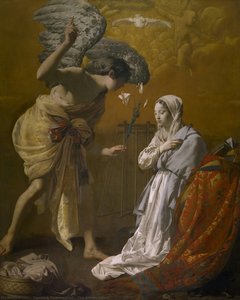
ter brugghen's artistic journey began with his study under abraham bloemaert, a mannerist painter. he later became one of the leading members of the utrecht caravaggisti, a group of dutch painters inspired by caravaggio. his work is characterized by its dramatic use of light and shadow, as seen in his paintings like the annunciation (alte pinakothek, munich, germany) and the reveller (alte pinakothek, munich, germany).**notable works and legacy**
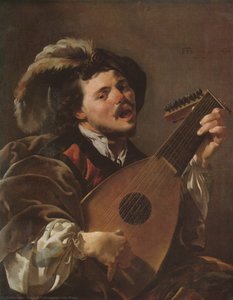
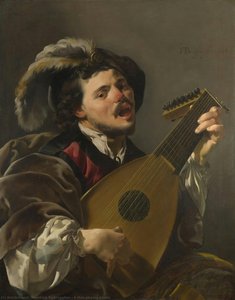
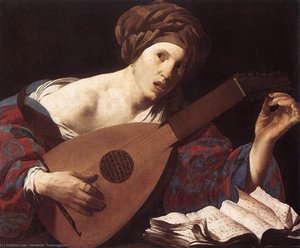
* the singing lute player (the kremer collection, amsterdam, netherlands), an autograph replica of a painting in the national gallery, london, showcasing his rich coloration. * the annunciation, a masterpiece reflecting his mastery of caravaggio's style. **influence on later artists:** ter brugghen's work had a profound impact on later artists, including rembrandt van rijn, whose famous painting the night watch (rijksmuseum, amsterdam, netherlands) is a testament to the enduring influence of the utrecht caravaggisti.**museums and collections featuring ter brugghen's work**
* mauritshuis (the hague, netherlands), featuring works like nymph and satyr by sir peter paul rubens. * the kremer collection (amsterdam, netherlands), housing ter brugghen's the singing lute player.- explore more of ter brugghen's works on ArtsDot.com
- discover the dutch golden age painting and its influences on ArtsDot.com's art history section
- learn about other artists like dirck van baburen, a fellow utrecht caravaggisti, on ArtsDot.com
**conclusion**
ter brugghen's enigmatic life and his significant contributions to the dutch golden age painting have left an indelible mark on art history. his dramatic use of light and shadow continues to inspire artists and art enthusiasts alike, making him a fascinating figure in the world of art.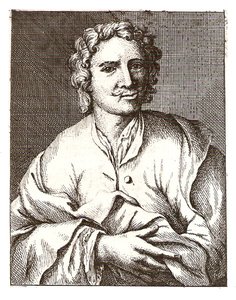
Hendrick Terbrugghen
1627 - 1629 , Netherlands
Quick Facts
- Artistic Movement Or Style: Caravaggisti Painting
- Artists Or Movements Influenced By This Artist: Rembrandt van Rijjn
- Artists Who Influenced This Artist: Abraham Bloemaert
- Date Of Birth: 1588
- Date Of Death: November 1629
- Full Name: Hendrick Jansz Terbrugghen
- Nationality: Dutch
- Notable Artworks:
- The Singing Lute Player
- Annunciation
- David Praised by the Israelite Women
- Place Of Birth: Overijssel, Netherlands
Related Articles

Dutch Masters: 10 Golden Age Paintings That Still Inspire |
Journey into the Dutch Golden Age! Explore 10 iconic paintings by Rembrandt, Vermeer & Hals. Discover the stories behind these Baroque masterpieces and find museum-quality art reproductions to elevate your home decor on .
Hendrick Terbrugghen: Caravaggism, Spirituality & the Dutch Golden Age Painter's Evolving Style
Explore the captivating world of Hendrick Terbrugghen, a leading Dutch Golden Age painter influenced by Caravaggio. Discover his dramatic use of light, spiritual depth & lasting legacy. Learn more at ArtsDot.

Golden Age Reflections: Dutch Baroque Painting & Cultural Innovation
Explore the Dutch Golden Age of painting! Discover key artists like Vermeer & ter Borch, their innovative techniques, and the rich cultural context behind these Baroque masterpieces. Learn about collecting & appreciating this iconic art period.

Illuminating Innovation: Exploring the Dutch Golden Age of Painting
Explore the Dutch Golden Age of painting with ArtsDot. Discover Rembrandt, Vermeer & other Masters. Learn about key characteristics, iconic artworks, and lasting influence. Expert insights for collectors & enthusiasts.
Illuminating Realism: Exploring the Dutch Golden Age of Painting (1600-1700)
Explore the Dutch Golden Age of painting (1600-1700) with ArtsDot. Discover Rembrandt, Vermeer & other masters. Learn about techniques, history & find museum-quality reproductions.