 Preview
 Send
Send Share
Share
 Details

 Download
 Similars
 X-Ray
X-Ray Diaporama
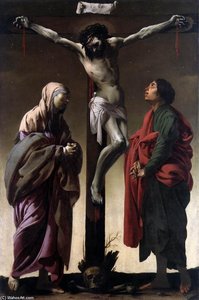
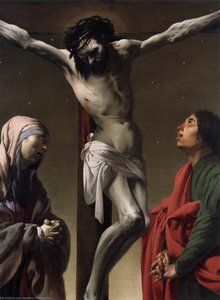
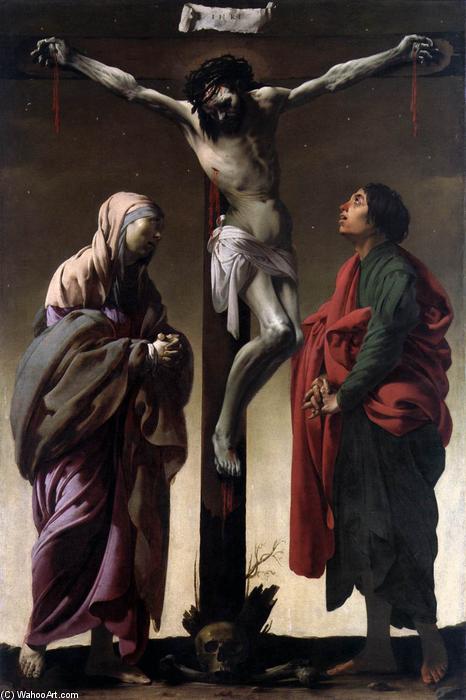
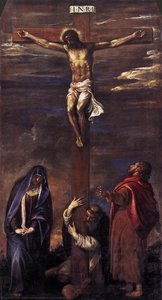
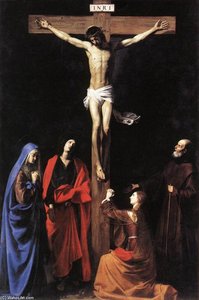
The Crucifixion with the Virgin and St John
 Oil On Canvas
- WallArt
- Utrecht Caravaggism
 1624
1624 155.0 x 102.0 cm
 Metropolitan Museum of Art
 Read More
Hand Made Oil Reproduction
Hand-painted oil on canvas in your size and frame, made to order by our artists. ( Buy Print Buy Image)




P118B $10

P118H $10

P118W $10

P438Z $10

P508JH $12

P508YH $12

P805H $10

P805Z $10

P919BZ $10

P919G $10

P919XJ $10

P959ZH $10

P968JZ $12

W106C $8

W218G $10

W218JH $8

W218Y $10

W307PJ $10

W316G $10

W316PJ $8

W316Y $10

W398PJ $8

W4111J $10

W500HY $15

W500JH $15

W692G $12

W849H $8

W940BG $15

W953PJ $8




Pick from our preset sizes that match the artwork's original proportions.

You may enter your own dimensions to fit a specific frame or space. If your selected size does not match the original image's proportions, we will either crop the artwork or extend the painting with additional hand-painted elements. A digital mockup will be sent for your approval before production begins.
Please note that the on-screen preview does not reflect the actual cropping or extension. Only the mockup will accurately show the final composition.
While custom sizes are available, we recommend selecting a dimension from the predefined list to preserve the original proportions.
After order, ArtsDot.com team will email client for instructions and provide a mockup preview
Worldwide Delivery () in 3/4 weeks instead of standard 5 weeks. (17 August). No compromise on quality.

Free Worldwide Express Shipping

High-Quality Linen Canvas

Full Shipping Insurance

Customs Tax Refund Guarantee

True Color Matching Guarantee

60-Day Return Policy (Defects Only)

100% Money-Back Guarantee

Bulk Discount Offer
 Glass option is only available in size under 110 CM

The Crucifixion with the Virgin and St John
Reproduction Medium
Reproduction Size
-


Total Price
$ 263
Artwork Description
A Glimpse into Utrecht Caravaggism: Hendrick Terbrugghen’s Dramatic Vision
Hendrick Jansz ter Brugghen, a figure often shrouded in the mists of early 17th-century Dutch art history, emerges from the shadows as a master of evocative religious painting. His “The Crucifixion with the Virgin and St John,” now residing within the Metropolitan Museum of Art in New York City, is not merely a depiction of Christ’s sacrifice; it's a profound exploration of grief, faith, and the interplay between past and present artistic traditions. Born in Utrecht around 1588, Ter Brugghen was deeply influenced by the burgeoning Caravaggist movement – a group of Dutch painters who sought to emulate the dramatic lighting, intense emotion, and dynamic compositions of the Italian master, Michelangelo Merisi da Caravaggio.
The painting’s immediate impact is one of stark realism and unsettling beauty. Ter Brugghen eschews the idealized forms often associated with earlier religious art, opting instead for a more grounded approach. Christ, nailed to the cross, is rendered with a palpable sense of suffering – his body contorted in agony, his face etched with pain. The artist’s masterful use of chiaroscuro—the dramatic contrast between light and dark—intensifies this effect, drawing the viewer's eye directly to the central figure while simultaneously enveloping the scene in an atmosphere of profound gloom. This technique, a hallmark of Caravaggio’s style, creates a powerful sense of immediacy and emotional resonance.
The Composition: A Dialogue Between Generations
What immediately sets this Crucifixion apart is its carefully constructed composition, which speaks volumes about Ter Brugghen's artistic intentions. The scene unfolds within a dimly lit landscape, reminiscent of the biblical account of Golgotha—the place of Christ’s crucifixion. The horizon line is low, emphasizing the vastness and desolation of the setting. Above, a star-studded sky hints at both the divine and the earthly realms, creating a visual metaphor for the intersection of faith and mortality. The figures surrounding the cross – Mary, St. John, and the skeletal figure representing Adam—are arranged in a triangular composition that directs the viewer’s gaze towards Christ’s suffering.
Notably, Ter Brugghen subtly incorporates elements from earlier artistic traditions. The archaic depiction of Christ's body echoes Late Gothic and Early Renaissance devotional paintings, suggesting a deliberate attempt to bridge the gap between these styles. The inclusion of Adam—a memento mori, or reminder of death—further reinforces this connection to the past, reminding viewers of humanity’s shared fate. The placement of the skeletal figure at the base of the cross is particularly striking, serving as a potent symbol of mortality and the consequences of sin.
Symbolism and Emotional Depth
Beyond its formal elements, “The Crucifixion” is rich in symbolic meaning. Mary’s sorrowful gaze and outstretched hand convey her profound grief at witnessing her son's suffering. St. John, depicted with a look of anguish and compassion, embodies the role of the faithful witness—a figure who observes and endures alongside Christ. The lamb grasped by Christ represents his sacrifice and foreshadows his resurrection. The overall mood is one of intense emotionality – a palpable sense of sorrow, despair, and ultimately, hope. Ter Brugghen masterfully captures the psychological complexity of faith, presenting not just a historical event but also a deeply personal experience.
A Legacy in Utrecht Caravaggism
Hendrick ter Brugghen’s “The Crucifixion with the Virgin and St John” stands as a pivotal work within the Utrecht Caravaggist movement. His ability to synthesize the dramatic intensity of Caravaggio with the stylistic conventions of Northern European art resulted in a uniquely powerful and emotionally resonant body of work. The painting's discovery in London in 1956, after decades of obscurity, cemented its place as a cornerstone of Dutch Baroque art. Today, it continues to captivate viewers with its dramatic lighting, evocative symbolism, and profound exploration of the human condition – a testament to Ter Brugghen’s enduring artistic vision.
Related Artworks
Artist Biography
**early life and influences**
hendrick jansz ter brugghen, a prominent figure in the dutch golden age painting, was born in 1588 in overijssel, netherlands. his father, jan egbertsz ter brugghen, served as secretary to the court of utrecht under prince william the silent. this exposure likely influenced hendrick's early interest in art.**artistic career and style**
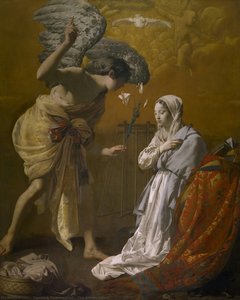
ter brugghen's artistic journey began with his study under abraham bloemaert, a mannerist painter. he later became one of the leading members of the utrecht caravaggisti, a group of dutch painters inspired by caravaggio. his work is characterized by its dramatic use of light and shadow, as seen in his paintings like the annunciation (alte pinakothek, munich, germany) and the reveller (alte pinakothek, munich, germany).**notable works and legacy**
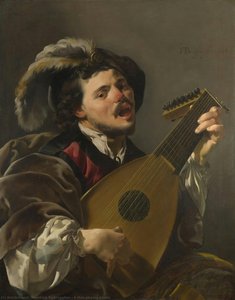
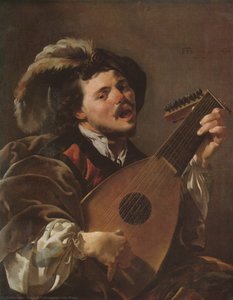
* the singing lute player (the kremer collection, amsterdam, netherlands), an autograph replica of a painting in the national gallery, london, showcasing his rich coloration. * the annunciation, a masterpiece reflecting his mastery of caravaggio's style. **influence on later artists:** ter brugghen's work had a profound impact on later artists, including rembrandt van rijn, whose famous painting the night watch (rijksmuseum, amsterdam, netherlands) is a testament to the enduring influence of the utrecht caravaggisti.**museums and collections featuring ter brugghen's work**
* mauritshuis (the hague, netherlands), featuring works like nymph and satyr by sir peter paul rubens. * the kremer collection (amsterdam, netherlands), housing ter brugghen's the singing lute player.- explore more of ter brugghen's works on ArtsDot.com
- discover the dutch golden age painting and its influences on ArtsDot.com's art history section
- learn about other artists like dirck van baburen, a fellow utrecht caravaggisti, on ArtsDot.com
**conclusion**
ter brugghen's enigmatic life and his significant contributions to the dutch golden age painting have left an indelible mark on art history. his dramatic use of light and shadow continues to inspire artists and art enthusiasts alike, making him a fascinating figure in the world of art.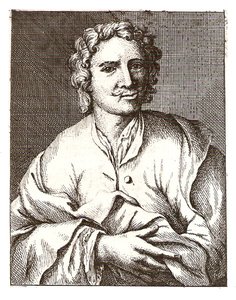
Hendrick Terbrugghen
1627 - 1629 , Netherlands
Quick Facts
- Artistic Movement Or Style: Caravaggisti Painting
- Artists Or Movements Influenced By This Artist: Rembrandt van Rijjn
- Artists Who Influenced This Artist: Abraham Bloemaert
- Date Of Birth: 1588
- Date Of Death: November 1629
- Full Name: Hendrick Jansz Terbrugghen
- Nationality: Dutch
- Notable Artworks:
- The Singing Lute Player
- Annunciation
- David Praised by the Israelite Women
- Place Of Birth: Overijssel, Netherlands
Related Articles

Dutch Masters: 10 Golden Age Paintings That Still Inspire |
Journey into the Dutch Golden Age! Explore 10 iconic paintings by Rembrandt, Vermeer & Hals. Discover the stories behind these Baroque masterpieces and find museum-quality art reproductions to elevate your home decor on .
Hendrick Terbrugghen: Caravaggism, Spirituality & the Dutch Golden Age Painter's Evolving Style
Explore the captivating world of Hendrick Terbrugghen, a leading Dutch Golden Age painter influenced by Caravaggio. Discover his dramatic use of light, spiritual depth & lasting legacy. Learn more at ArtsDot.

Golden Age Reflections: Dutch Baroque Painting & Cultural Innovation
Explore the Dutch Golden Age of painting! Discover key artists like Vermeer & ter Borch, their innovative techniques, and the rich cultural context behind these Baroque masterpieces. Learn about collecting & appreciating this iconic art period.

Illuminating Innovation: Exploring the Dutch Golden Age of Painting
Explore the Dutch Golden Age of painting with ArtsDot. Discover Rembrandt, Vermeer & other Masters. Learn about key characteristics, iconic artworks, and lasting influence. Expert insights for collectors & enthusiasts.
Illuminating Realism: Exploring the Dutch Golden Age of Painting (1600-1700)
Explore the Dutch Golden Age of painting (1600-1700) with ArtsDot. Discover Rembrandt, Vermeer & other masters. Learn about techniques, history & find museum-quality reproductions.