 Preview
 Send
Send Share
Share
 Details

 Download
 Similars
 X-Ray
X-Ray Diaporama
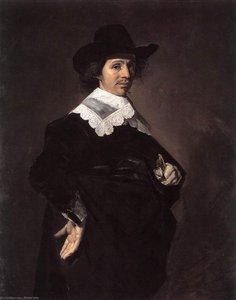
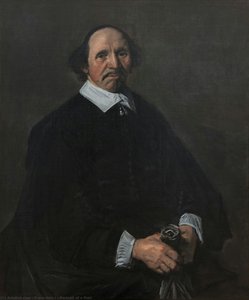
Portrait of a Man
 Oil On Canvas
- WallArt
- Dutch Golden Age Portraiture
 1654
1654 64.0 x 46.0 cm
 Museum of Fine Arts
 Read More
Hand Made Oil Reproduction
Hand-painted oil on canvas in your size and frame, made to order by our artists. ( Buy Print Buy Image)




P118B $10

P118H $10

P118W $10

P438Z $10

P508JH $12

P508YH $12

P805H $10

P805Z $10

P919BZ $10

P919G $10

P919XJ $10

P959ZH $10

P968JZ $12

W106C $8

W218G $10

W218JH $8

W218Y $10

W307PJ $10

W316G $10

W316PJ $8

W316Y $10

W398PJ $8

W4111J $10

W500HY $15

W500JH $15

W692G $12

W849H $8

W940BG $15

W953PJ $8




Pick from our preset sizes that match the artwork's original proportions.

You may enter your own dimensions to fit a specific frame or space. If your selected size does not match the original image's proportions, we will either crop the artwork or extend the painting with additional hand-painted elements. A digital mockup will be sent for your approval before production begins.
Please note that the on-screen preview does not reflect the actual cropping or extension. Only the mockup will accurately show the final composition.
While custom sizes are available, we recommend selecting a dimension from the predefined list to preserve the original proportions.
After order, ArtsDot.com team will email client for instructions and provide a mockup preview
Worldwide Delivery () in 3/4 weeks instead of standard 5 weeks. (17 August). No compromise on quality.

Free Worldwide Express Shipping

High-Quality Linen Canvas

Full Shipping Insurance

Customs Tax Refund Guarantee

True Color Matching Guarantee

60-Day Return Policy (Defects Only)

100% Money-Back Guarantee

Bulk Discount Offer
 Glass option is only available in size under 110 CM

Portrait of a Man
Reproduction Medium
Reproduction Size
-


Total Price
$ 263
Artwork Description
A Portrait of Quiet Confidence: Frans Hals’s “Portrait of a Man”
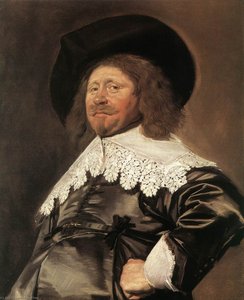
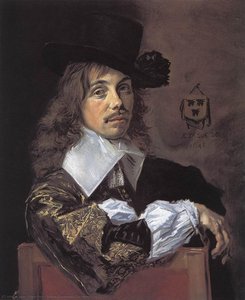
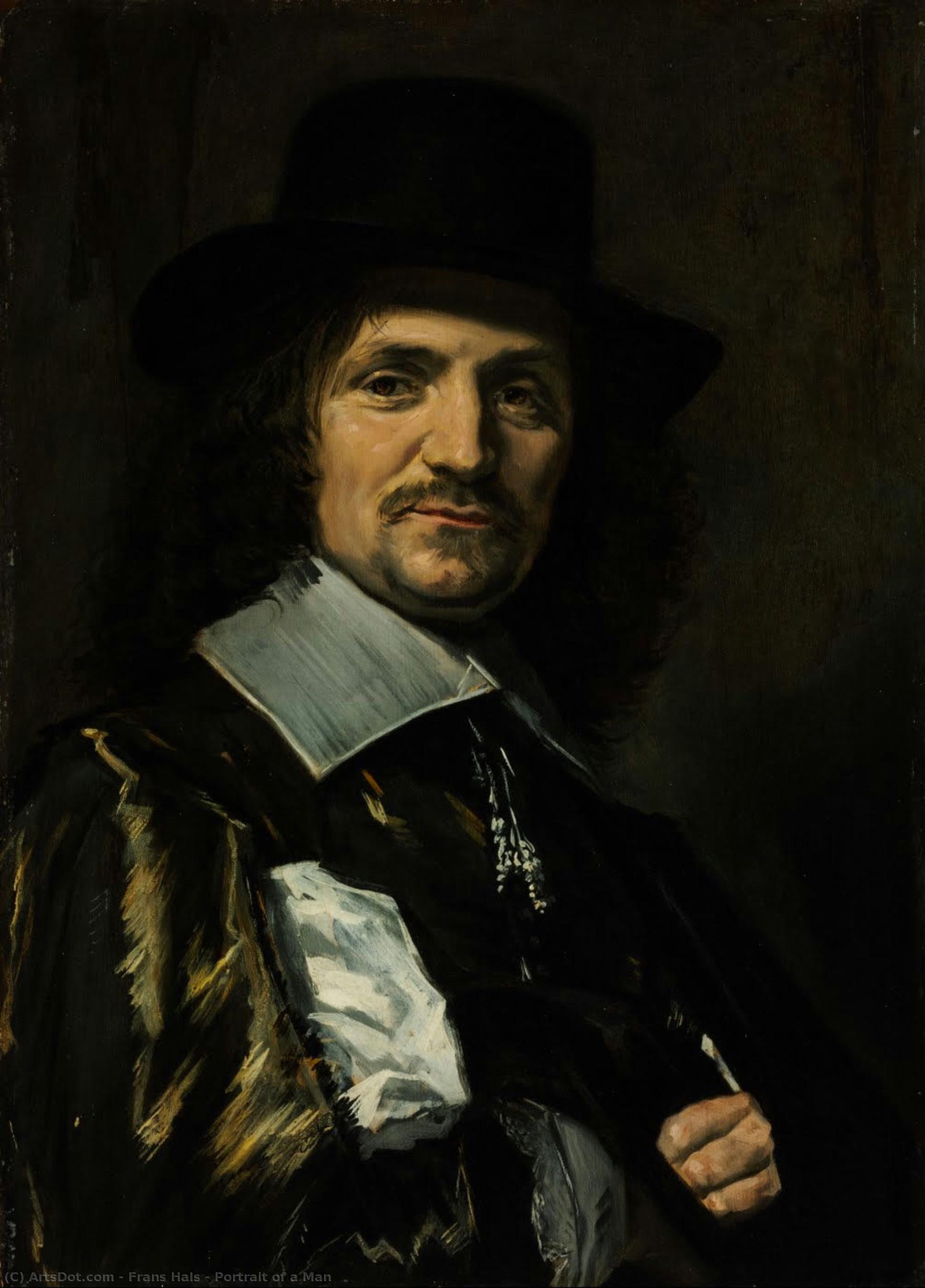
Frans Hals' "Portrait of a Man," painted around 1654, isn’t merely a depiction of an individual; it’s a carefully constructed embodiment of status, intellect, and a subtle, almost defiant, self-assurance. This remarkable work, housed within the intimate confines of a dark background—a deliberate choice that amplifies the figure's presence—offers a rare glimpse into the world of 17th-century Haarlem, where Hals reigned as the preeminent portrait painter. More than just a likeness, it’s a testament to his innovative approach: a masterful blend of spontaneity and meticulous observation, capturing not just outward appearance but also an underlying sense of character.
The subject himself is presented in a three-quarter pose, his gaze meeting the viewer with directness that feels remarkably contemporary. He's dressed in the formal attire of the era – a dark robe accented by a luxurious fur collar and a meticulously rendered hat—elements that immediately signal wealth and social standing. Yet, it’s not simply ostentation; there’s an underlying dignity about him, conveyed through the subtle tilt of his head and the confident set of his shoulders. Hals masterfully avoids the stiff formality often associated with aristocratic portraits, instead imbuing the man with a relaxed, almost casual demeanor that invites the viewer into his world.
The Dance of Brushstrokes: Technique and Style
Hals’s signature style is immediately apparent in the painting's vibrant energy. He employs loose, expressive brushstrokes—a radical departure from the smooth, polished surfaces favored by many of his contemporaries. These aren’t carefully planned lines; they are a spontaneous dance of color and texture, creating an immediate sense of movement and immediacy. Notice how the fabric seems to ripple with light, and how the fur collar appears soft and inviting. This technique wasn't simply about speed; it was a deliberate choice to capture the essence of his subject – his personality, his spirit—rather than merely replicating his physical form.
The dark background serves as a crucial element in highlighting the figure’s presence. It’s almost entirely devoid of detail, creating an atmospheric depth that draws all attention to the man within. Hals utilizes subtle tonal variations to suggest space and volume, further emphasizing the subject's commanding presence. The lighting is dramatic, originating from the upper left, casting strong shadows across his face and collar – a technique that adds both realism and visual interest.
A Window into Haarlem: Historical Context
To understand “Portrait of a Man,” it’s essential to consider the context in which Hals worked. The mid-17th century was a period of immense prosperity for the Dutch Republic, fueled by trade and burgeoning artistic patronage. Haarlem, as a major commercial center, became a hub for innovation and creativity. Hals's portraits weren't simply commissioned likenesses; they were investments in social standing, carefully crafted to reflect the wealth and status of their subjects.
Hals’s focus on capturing individual character—his “portrait-like character,” as described by art historians—was a significant departure from the more formal, idealized portraits prevalent at the time. He was interested in portraying his subjects not just as they appeared, but as they *were*, imbuing them with personality and emotion. This approach cemented his reputation as one of the most engaging and insightful portrait painters of his era.
Symbolism and Emotional Resonance
Beyond its technical brilliance, “Portrait of a Man” is rich in symbolic meaning. The direct gaze establishes an immediate connection between the viewer and the subject—a rare intimacy in portraits of this period. The fur collar signifies wealth and status, while the hat suggests authority and social standing. But perhaps most powerfully, the painting conveys a sense of quiet confidence – a subtle defiance against convention. It’s not a boastful display of power; rather, it's an understated assertion of self-assuredness.
The overall impression is one of dignified composure, suggesting a man who possesses both intelligence and a certain degree of worldly wisdom. Hals has captured not just a portrait, but a moment in time—a fleeting glimpse into the life and character of a remarkable individual. Reproductions of this work continue to resonate with viewers today, offering a timeless reminder of the power of art to capture the essence of human experience.
Related Artworks
Artist Biography
Frans Hals I: A Life in Paint
Frans Hals I was a Dutch painter born in Antwerp, Belgium, around 1580. Though his early life remains somewhat shrouded in mystery, he rose to become one of the most important figures of the Dutch Golden Age, celebrated for his innovative portraiture and genre scenes.
Early Life and Training
Details surrounding Hals’s formative years are scarce. It is believed he received initial artistic training in Antwerp, a prominent center for painting at the time. However, due to religious and political turmoil, his family relocated to Haarlem in the Netherlands. He became a member of the Haarlem Guild of St. Luke in 1610, marking the formal beginning of his professional career.
Artistic Style and Development
Hals distinguished himself through a remarkably fresh and spontaneous style. Unlike many of his contemporaries who favored meticulous detail, Hals employed a loose and expressive brushstroke. This technique imbued his paintings with a sense of immediacy and vitality, capturing the personality and character of his subjects in a way that was revolutionary for its time.
- His portraits weren’t simply likenesses; they were psychological studies.
- He excelled at depicting fleeting moments – laughter, conversation, or contemplation.
- Hals's use of light and shadow added depth and drama to his compositions.
Notable Works
While Hals produced a wide range of works, he is best known for his portraits. Some of his most celebrated paintings include:
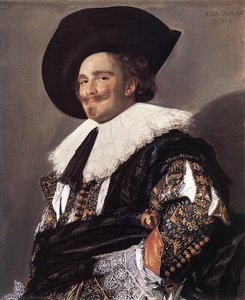
- The Laughing Cavalier (1624) – A quintessential example of his ability to capture character and movement.
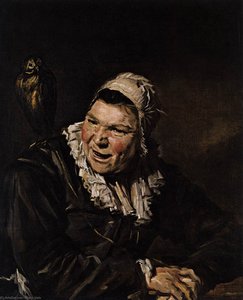
- Malle Babbe (c. 1633-1635) – A striking portrayal of an elderly woman, showcasing Hals’s skill in depicting age and personality.
- Portraits of the Regents of the Old Men's Home in Haarlem (1664) - Demonstrating his mastery of group portraiture.
He also created compelling genre scenes – depictions of everyday life – that offered glimpses into Dutch society.
Influences and Legacy
Determining Hals’s direct influences is challenging, as he developed a highly individual style. However, it's likely he was aware of the work of earlier Flemish painters like Pieter Bruegel the Elder. His innovative approach to portraiture profoundly impacted subsequent generations of artists.
- He influenced artists such as Adriaen Brouwer and Johannes Vermeer.
- His emphasis on capturing personality paved the way for more intimate and psychological portraits.
- Later artists, including the Impressionists, admired his loose brushwork and focus on light.
Historical Significance
Frans Hals I played a crucial role in shaping Dutch painting during the Golden Age. His work reflects the burgeoning prosperity and individualism of the Netherlands at that time. He moved away from rigid formality towards a more naturalistic and expressive style, leaving an enduring legacy on the art world.
Today, his paintings are highly sought after and can be found in major museums worldwide, including the Frans Hals Museum in Haarlem, which houses the largest collection of his work. His contributions continue to inspire artists and captivate audiences centuries later.
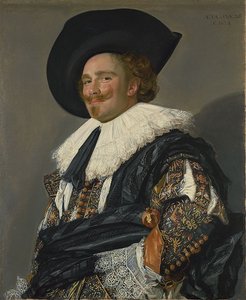
frans hals i
1580 - 1585 , Belgium
Quick Facts
- Birth Date: 1580
- Birth Place: Antwerp, Belgium
- Death Date: 1585
- Movement: Dutch Golden Age
- Name: Frans Hals I
- Nationality: Dutch
- Notable Works: Portraits and genre scenes
Related Articles
Frans Hals I: Innovation, Intimacy & the Dutch Golden Age Portrait
Explore the revolutionary portraiture of Frans Hals I, a master of the Dutch Golden Age. Discover his innovative techniques, captivating character studies & lasting impact on art history. Learn more at ArtsDot.

Dutch Masters: 10 Golden Age Paintings That Still Inspire |
Journey into the Dutch Golden Age! Explore 10 iconic paintings by Rembrandt, Vermeer & Hals. Discover the stories behind these Baroque masterpieces and find museum-quality art reproductions to elevate your home decor on .

Illuminating Innovation: Exploring the Dutch Golden Age of Painting
Explore the Dutch Golden Age of painting with ArtsDot. Discover Rembrandt, Vermeer & other Masters. Learn about key characteristics, iconic artworks, and lasting influence. Expert insights for collectors & enthusiasts.
Illuminating Realism: Exploring the Dutch Golden Age of Painting (1600-1700)
Explore the Dutch Golden Age of painting (1600-1700) with ArtsDot. Discover Rembrandt, Vermeer & other masters. Learn about techniques, history & find museum-quality reproductions.

Golden Age Reflections: Dutch Baroque Painting & Cultural Innovation
Explore the Dutch Golden Age of painting! Discover key artists like Vermeer & ter Borch, their innovative techniques, and the rich cultural context behind these Baroque masterpieces. Learn about collecting & appreciating this iconic art period.