Preview
 Send
Send Share
Share
 Details

 Download
 Similars
 X-Ray
X-Ray Diaporama
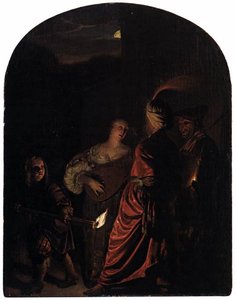
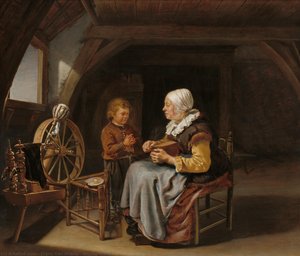
The Serenade
 Oil On Canvas
- WallArt
- Baroque Drama
 1678
1678- Early Modern
 15.0 x 11.0 cm
 Metropolitan Museum of Art
 Read More
Hand Made Oil Reproduction
Hand-painted oil on canvas in your size and frame, made to order by our artists. ( Buy Print Buy Image)




P118B $10

P118H $10

P118W $10

P438Z $10

P508JH $12

P508YH $12

P805H $10

P805Z $10

P919BZ $10

P919G $10

P919XJ $10

P959ZH $10

P968JZ $12

W106C $8

W218G $10

W218JH $8

W218Y $10

W307PJ $10

W316G $10

W316PJ $8

W316Y $10

W398PJ $8

W4111J $10

W500HY $15

W500JH $15

W692G $12

W849H $8

W940BG $15

W953PJ $8




Pick from our preset sizes that match the artwork's original proportions.

You may enter your own dimensions to fit a specific frame or space. If your selected size does not match the original image's proportions, we will either crop the artwork or extend the painting with additional hand-painted elements. A digital mockup will be sent for your approval before production begins.
Please note that the on-screen preview does not reflect the actual cropping or extension. Only the mockup will accurately show the final composition.
While custom sizes are available, we recommend selecting a dimension from the predefined list to preserve the original proportions.
After order, ArtsDot.com team will email client for instructions and provide a mockup preview
Worldwide Delivery () in 3/4 weeks instead of standard 5 weeks. (21 August). No compromise on quality.

Free Worldwide Express Shipping

High-Quality Linen Canvas

Full Shipping Insurance

Customs Tax Refund Guarantee

True Color Matching Guarantee

60-Day Return Policy (Defects Only)

100% Money-Back Guarantee

Bulk Discount Offer
 Glass option is only available in size under 110 CM

The Serenade
Reproduction Medium
Reproduction Size
-


Total Price
$ 263
Artwork Description
A Nocturnal Symphony of Light and Shadow
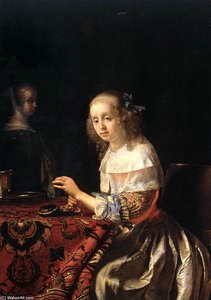
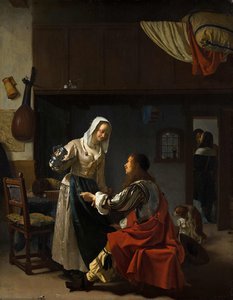
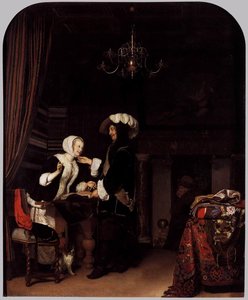
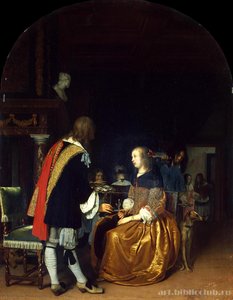
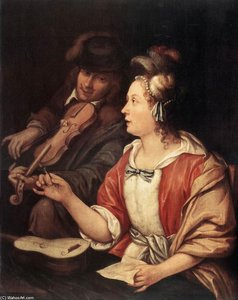
In the quietude of a 17th-century Dutch evening, Frans van Mieris the Elder invites us into a world of whispered secrets and melodic intimacy. His masterpiece, The Serenade, is far more than a mere depiction of musical performance; it is a profound exploration of the human connection, captured through the lens of the legendary fijnschilder technique. As the eye wanders across the canvas, one is immediately struck by the dramatic interplay of light and darkness—a masterful use of chiaroscuro that pulls the viewer into a private, candlelit moment. The scene unfolds with a palpable sense of tension and tenderness, where the soft glow of a single flame illuminates the focused faces of musicians, casting long, evocative shadows that suggest a world existing just beyond the reach of the light.
The narrative heart of the painting beats within the delicate interaction of its three figures. In the foreground, the meticulous detail of the lute player’s hands and the flickering warmth of the candle held by his companion create a sense of profound devotion. This is not just music being played; it is an offering. The presence of a third figure, observing from the periphery, adds a layer of quiet grandeur and voyeuristic intrigue, transforming the musical act into a clandestine romantic gesture. For the collector or interior designer, this piece offers a window into the Baroque soul, providing a focal point that commands attention through its emotional depth and historical resonance.
The Mastery of the Leiden Fine Painters
To understand the brilliance of The Serenade, one must appreciate the technical lineage of Frans van Mieris. Trained under the great Gerrit Dou, Mieris inherited the mantle of the Leiden fijnschilders—the "fine painters" who sought to push the boundaries of realism to their absolute limits. Every inch of this work reflects a painstaking devotion to texture and luminosity. Through the application of incredibly thin, translucent glazes over carefully prepared underpaintings, Mieris achieved a surface so smooth that brushstrokes all but vanish, leaving behind only the breathtaking illusion of silk, skin, and polished wood.
This technical virtuosity serves a higher symbolic purpose. The way the candlelight catches the edge of a sleeve or reflects off the curve of the lute is not merely a display of skill; it is an attempt to capture the ephemeral nature of time and emotion. In the context of the Dutch Golden Age, such precision was a way of honoring the beauty of the everyday. For those seeking to adorn a space with art that inspires contemplation, this reproduction offers the exquisite tactile quality of the original, bringing the sophisticated elegance of 1678 into the modern home.
An Enduring Legacy for the Discerning Collector
Beyond its technical merits, The Serenade possesses an atmospheric quality that transcends centuries. It evokes a sense of nostalgia for an era of craftsmanship and slow, deliberate beauty. The painting’s composition—an intimate tableau set against a void-like dark background—makes it an exceptionally versatile piece for high-end interior curation. Whether placed in a study filled with leather-bound books or as a sophisticated accent in a contemporary gallery-style living room, its ability to anchor a space with warmth and mystery is unparalleled.
Owning a reproduction of such a significant work allows one to participate in the preservation of Dutch heritage. It is an invitation to experience the quiet drama of the Baroque period every day—to feel the pulse of the music and the flicker of the flame. For the art lover, it is a piece of history; for the designer, it is a tool of atmosphere; and for the collector, it is a timeless investment in the enduring power of visual storytelling.
Related Artworks




Artist Biography
A Life Immersed in Detail: The World of Frans van Mieris the Elder
Frans van Mieris the Elder, a name synonymous with meticulous detail and refined artistry, occupies a significant position within the Dutch Golden Age. Born in Leiden in 1635, his path diverged from the family trade of goldsmithing—a craft practiced by his father, Jan Bastiaensz van Mieris—towards the captivating world of painting. This early inclination for drawing set the stage for a career that would define the “fijnschilder” style and offer an intimate glimpse into 17th-century Dutch society. His initial training under Abraham Toorenvliet, followed by crucial instruction from the esteemed Gerrit Dou, laid a solid foundation upon which he built his distinctive artistic voice. These formative years instilled in him not only technical skill but also an appreciation for narrative nuance and the power of subtle observation.The Rise of a ‘Fijnschilder’
Van Mieris quickly became celebrated as a master of *fijnschilder*—a Dutch term denoting “fine painting.” This technique was characterized by an almost obsessive attention to detail, smooth and polished brushwork, and a preference for small-scale canvases. It wasn't merely about replicating reality; it was about elevating it through painstaking precision. The surfaces in his paintings seem to shimmer with life – the lustrous sheen of satin, the delicate texture of velvet, the glint of metal—all rendered with astonishing accuracy. He didn’t simply paint a room; he recreated the very atmosphere within it, inviting viewers into scenes of domesticity and affluence. His subject matter frequently revolved around the lives of the wealthy: elegant gatherings, elaborate interiors, portraits that captured not just likeness but also character. Recurring motifs like oyster luncheons, doctors attending to patients, and women engaged in everyday tasks provided windows into the habits and social rituals of the upper classes. While initially heavily influenced by Gerrit Dou’s style, Van Mieris gradually developed his own unique approach. He moved away from an overabundance of detail towards a greater emphasis on interaction between figures and the unfolding narratives within his compositions. Later works sometimes display darker tonal qualities compared to the brighter palettes of his earlier paintings, reflecting a growing maturity and artistic exploration.Significant Works and Enduring Legacy
Several key works stand as testaments to Van Mieris’s skill and evolving style. Doctor's Visit (1657), considered one of his earliest dated and most important pieces, showcases his emerging independence from Dou’s influence. The painting is a masterclass in capturing the quiet tension of a medical examination, rendered with an astonishing level of realism. His Self-Portrait with a Cittern is equally compelling, demonstrating his ability to depict opulent attire while simultaneously conveying a sense of personality and introspection. Portrait of the Artist's Wife, Cunera van der Cock, exemplifies his mastery of portraiture, highlighting both technical skill and an understanding of *chiaroscuro*—the dramatic interplay of light and shadow. Beyond genre scenes and portraits, Van Mieris also ventured into allegorical paintings, such as those depicting vices like drinking, smoking, and gambling, demonstrating the breadth of his artistic capabilities. The impact of Frans van Mieris extended far beyond his own lifetime. His influence resonated within his family; his son Willem van Mieris (1662–1747) and grandson Frans van Mieris the Younger (1689–1763) both became accomplished genre painters, continuing the artistic tradition. The popularity of his style also spawned numerous imitators, most notably A. D. Snaphaan, who worked in Leipzig and enjoyed patronage from the court of Anhalt-Dessau.A Lasting Contribution to Dutch Art
Frans van Mieris played a pivotal role in shaping the *fijnschilder* movement within Dutch Golden Age painting. His dedication to meticulous detail, realistic depictions of everyday life and upper-class society, and technical brilliance contributed significantly to an era already renowned for its artistic innovation. He enjoyed patronage from prominent figures, including Archduke Leopold and Cosimo III de' Medici, a testament to the international recognition of his talent. Even today, his works continue to captivate audiences with their exquisite craftsmanship and insightful portrayal of 17th-century culture. The theft of a self-portrait from the Art Gallery of New South Wales in Sydney serves as a poignant reminder of the enduring value and appeal of his art—a legacy that continues to inspire and intrigue collectors and art enthusiasts alike. His paintings are not merely historical artifacts; they are windows into a bygone era, meticulously crafted and imbued with a timeless beauty.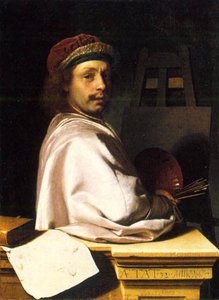
Frans van Mieris
1635 - 1681 , Netherlands
Quick Facts
- Artistic Movement Or Style: Fijnschilder, Genre painting
- Artists Or Movements Influenced By This Artist:
- Willem van Mieris
- Frans van Mieris the Younger
- A. D. Snaphaan
- Artists Who Influenced This Artist:
- Gerrit Dou
- Abraham van den Tempel
- Date Of Birth: 1635
- Date Of Death: 1681
- Full Name: Frans van Mieris the Elder
- Nationality: Dutch
- Notable Artworks:
- Doctor's Visit
- Self-Portrait with a Cittern
- Musical Company
- Duet
- Place Of Birth: Leiden, Netherlands
Related Articles

Golden Age Reflections: Dutch Baroque Painting & Cultural Innovation
Explore the Dutch Golden Age of painting! Discover key artists like Vermeer & ter Borch, their innovative techniques, and the rich cultural context behind these Baroque masterpieces. Learn about collecting & appreciating this iconic art period.

Dutch Masters: 10 Golden Age Paintings That Still Inspire |
Journey into the Dutch Golden Age! Explore 10 iconic paintings by Rembrandt, Vermeer & Hals. Discover the stories behind these Baroque masterpieces and find museum-quality art reproductions to elevate your home decor on .

Dutch Baroque Masters: 10 Paintings That Shaped an Era | ArtsDot
Journey through the Golden Age with our guide to the Top 10 Dutch Baroque masterpieces! Explore iconic paintings by Rembrandt, Vermeer & Frans Hals. Find museum-quality art reproductions and elevate your home decor at ArtsDot.com.

Illuminating Innovation: Exploring the Dutch Golden Age of Painting
Explore the Dutch Golden Age of painting with ArtsDot. Discover Rembrandt, Vermeer & other Masters. Learn about key characteristics, iconic artworks, and lasting influence. Expert insights for collectors & enthusiasts.

Illuminating Realism: Exploring the Dutch Golden Age of Painting (1600-1700)
Explore the Dutch Golden Age of painting (1600-1700) with ArtsDot. Discover Rembrandt, Vermeer & other masters. Learn about techniques, history & find museum-quality reproductions.