 Preview
 Send
Send Share
Share
 Details

 Download
 Similars
 X-Ray
X-Ray Diaporama
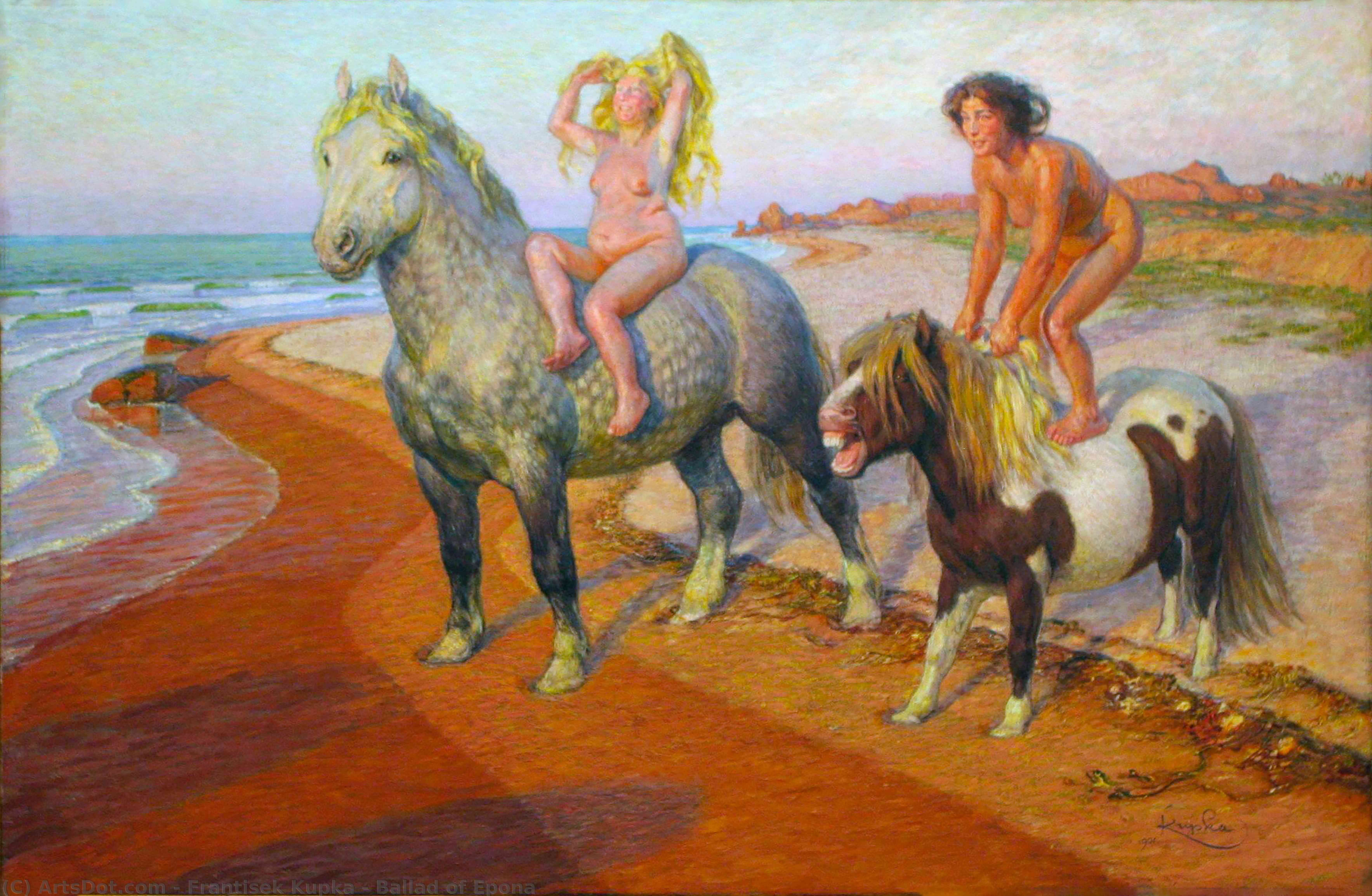
Ballad of Epona
 Oil
Oil- WallArt
- Symbolism
 1900
1900- 19th Century
 79.0 x 126.0 cm
 Read More
Hand Made Oil Reproduction
Hand-painted oil on canvas in your size and frame, made to order by our artists. ( Buy Print Buy Image)




P118B $10

P118H $10

P118W $10

P438Z $10

P508JH $12

P508YH $12

P805H $10

P805Z $10

P919BZ $10

P919G $10

P919XJ $10

P959ZH $10

P968JZ $12

W106C $8

W218G $10

W218JH $8

W218Y $10

W307PJ $10

W316G $10

W316PJ $8

W316Y $10

W398PJ $8

W4111J $10

W500HY $15

W500JH $15

W692G $12

W849H $8

W940BG $15

W953PJ $8




Pick from our preset sizes that match the artwork's original proportions.

You may enter your own dimensions to fit a specific frame or space. If your selected size does not match the original image's proportions, we will either crop the artwork or extend the painting with additional hand-painted elements. A digital mockup will be sent for your approval before production begins.
Please note that the on-screen preview does not reflect the actual cropping or extension. Only the mockup will accurately show the final composition.
While custom sizes are available, we recommend selecting a dimension from the predefined list to preserve the original proportions.
After order, ArtsDot.com team will email client for instructions and provide a mockup preview
Worldwide Delivery () in 3/4 weeks instead of standard 5 weeks. (16 August). No compromise on quality.

Free Worldwide Express Shipping

High-Quality Linen Canvas

Full Shipping Insurance

Customs Tax Refund Guarantee

True Color Matching Guarantee

60-Day Return Policy (Defects Only)

100% Money-Back Guarantee

Bulk Discount Offer
 Glass option is only available in size under 110 CM

Ballad of Epona
Reproduction Medium
Reproduction Size
-


Total Price
$ 263
Artwork Description
A Vision of Primal Freedom: The Spirit of Epona
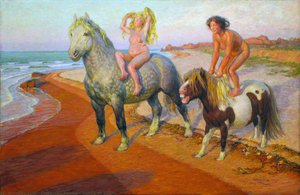
In the twilight of the nineteenth century, as the world stood on the precipice of modernity, František Kupka captured a moment of profound, unadulterated liberty in his masterpiece, Ballad of Epona. This evocative work transcends mere landscape or portraiture, inviting the viewer into a dreamlike realm where the boundaries between humanity, animal, and nature dissolve. The painting presents a breathtaking tableau: a woman, draped only in the simplest of necklaces, rides atop a majestic horse, her nakedness serving as a symbol of purity and an untamed connection to the earth. Beside her, a companion follows on a donkey, their rhythmic movement toward the viewer creating a sense of inevitable, forward-moving grace. The presence of a loyal dog at the periphery completes this intimate circle of companionship, grounding the ethereal scene in a sense of domestic peace amidst the wild.
The composition is masterfully orchestrated to evoke an atmosphere of adventure and boundless exploration. Kupka utilizes the positioning of the horses to draw the eye inward, creating a kinetic energy that feels as though the subjects are stepping out from the canvas and into our own reality. The brushwork, while retaining a certain classical elegance characteristic of his early period, hints at the rhythmic vitality that would later define his transition into abstraction. There is a palpable sense of movement in the way the light interacts with the figures, suggesting a sun-drenched afternoon where time itself has slowed to match the steady, peaceful gait of the animals.
Symbolism and the Dawn of a New Aesthetic
To understand Ballad of Epona is to understand the deeper currents of symbolism flowing through Kupka’s early career. The title itself references the Celtic goddess of horses, a deity associated with fertility, protection, and the cycle of life. By placing a nude figure in this context, Kupka invokes a sense of primordial innocence—a return to a state of grace before the complexities of industrial civilization took hold. The interplay between the powerful horse and the humble donkey serves as a poetic metaphor for the balance of strength and gentleness, or perhaps the duality of the human spirit: our capacity for grand, sweeping journeys and our need for quiet, grounded companionship.
For the discerning collector or interior designer, this piece offers more than just visual beauty; it provides a narrative anchor for a sophisticated space. The painting’s palette and subject matter make it an ideal centerpiece for rooms designed to inspire contemplation and tranquility. Whether placed in a sunlit library or a grand salon, the Ballad of Epona acts as a window into a more romantic era, offering a sense of escapism that is both intellectually stimulating and emotionally soothing. It is a work that does not merely decorate a wall but breathes life into an environment, reminding all who behold it of the enduring allure of freedom and the eternal bond between living beings.
Related Artworks
Artist Biography
A Pioneer of Abstraction: The Life and Art of František Kupka
František Kupka, a name resonating with the dawn of abstract art, was born in 1871 in Opočno, Bohemia—a landscape that would subtly inform his later explorations of form and color. His journey from academic training to radical abstraction wasn’t a swift leap but rather a gradual unfolding, deeply influenced by spiritual currents and a relentless pursuit of visual truth. Initially steeped in historical and patriotic themes during his studies at the Academy of Fine Arts in Prague and then Vienna, Kupka's early work demonstrated technical skill yet lacked the distinctive voice that would soon define him. It was his move to Paris in 1894 that proved pivotal, immersing him in a vibrant artistic milieu where he briefly attended the Académie Julian and later studied with Jean-Pierre Laurens at the École des Beaux-Arts. However, it wasn’t merely formal training but the intellectual ferment of fin-de-siècle Paris—the burgeoning interest in symbolism, Neo-Impressionism, and Fauvism—that truly ignited his artistic evolution.The Path to Pure Abstraction: Influences and Innovations
Kupka’s artistic trajectory wasn't solely driven by aesthetic considerations; it was profoundly shaped by philosophical and spiritual inquiries. His engagement with Theosophy, a mystical system blending Eastern religions and Western esotericism, proved particularly influential. This belief system posited an underlying unity to all things and sought to reveal hidden realities beyond the visible world—a concept that resonated deeply with Kupka’s artistic aspirations. He began to believe that art could transcend mere representation and access these deeper truths through the manipulation of color, form, and line. This conviction led him away from depicting recognizable objects and towards a more subjective, internal exploration of visual experience. His early experiments involved blurring the boundaries between figuration and abstraction, as seen in works like *The Beginning of Life*, where symbolic imagery intertwined with emerging abstract elements. He wasn’t alone in this quest; Kupka engaged with contemporary scientific theories regarding color and light, seeking to understand their psychological effects on the viewer. This fusion of spiritual inquiry and scientific observation became a hallmark of his approach. He began to see color not as a descriptive element but as an independent force capable of evoking emotion and conveying meaning directly.Orphic Cubism and Beyond: A Unique Visual Language
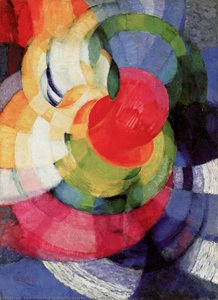
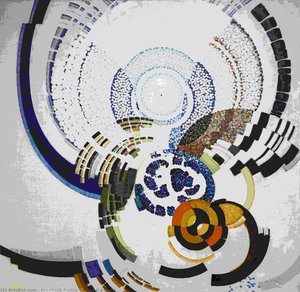
By the early 1910s, Kupka had embarked on a path that would lead him to become one of the pioneers of abstract art. His paintings from this period, such as *Amorpha: Fugue in Two Colors* (1912), were among the first truly non-representational works exhibited publicly, challenging conventional notions of artistic representation. He wasn’t interested in simply dismantling form—as some Cubists were doing—but rather in creating a new visual language based on pure abstraction. This led to his association with Orphic Cubism (also known as Orphism), a movement spearheaded by Robert Delaunay that emphasized the dynamic interplay of color and light. However, Kupka’s approach differed from Delaunay's; while both explored abstract forms, Kupka often retained a sense of underlying structure and rhythm, evoking musical compositions in his paintings—hence the frequent use of terms like “fugue” and “disks.” His *Disks of Newton* series exemplifies this exploration, depicting circular forms that seem to vibrate with energy and suggest the forces governing the universe. He wasn’t merely creating aesthetically pleasing arrangements; he was attempting to visualize underlying cosmic principles.Legacy and Lasting Influence
František Kupka's contributions extended beyond his individual paintings. As a founding member of Abstraction-Création in 1931, an international group dedicated to promoting abstract art, he played a vital role in shaping the course of modernism. His work was recognized internationally, featured in landmark exhibitions like “Cubism and Abstract Art” at the Museum of Modern Art in New York in 1936. Though often overshadowed by more prominent figures like Kandinsky or Mondrian, Kupka’s pioneering spirit and unique visual language have secured his place as a crucial figure in the history of abstract art. His legacy continues to inspire artists today, reminding us that abstraction isn't merely about eliminating representation but about unlocking new possibilities for expression and revealing hidden dimensions of reality. He sought not to depict what he saw, but what he felt—and in doing so, he opened up a universe of visual experience. His dedication to exploring the fundamental elements of art – color, form, line – remains profoundly relevant, demonstrating that true innovation lies in questioning established norms and embracing the power of pure abstraction.Museums Featuring Kupka’s Work
- Solomon R. Guggenheim Museum (New York, United States)
- The Paris Museum of Modern Art (Paris, France)
- Galerie Manés (Prague, Czech Republic)
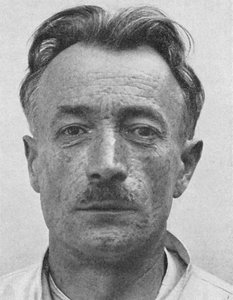
František Kupka
1871 - 1957 , Czech Republic
Quick Facts
- Artistic Movement Or Style: Abstract art, Orphic Cubism
- Artists Or Movements Influenced By This Artist: ['Orphism']
- Date Of Birth: September 23, 1871
- Date Of Death: 1957
- Full Name: František Kupka
- Nationality: Czech
- Notable Artworks:
- The Colored One
- Around a Point
- Place Of Birth: Opava, Czech Republic
Related Articles
The Noble Steed on Canvas: A Historical & Artistic Exploration of Horse Painting Across Cultures
Explore the rich history of horse painting! Discover masterpieces from Stubbs to Munnings & learn about symbolism, techniques & artists. Find museum-quality reproductions at ArtsDot.
The Equine Muse: A Historical & Artistic Exploration of Horses in Painting
Explore the captivating history of horses in painting! Discover Renaissance masterpieces, Baroque grandeur & expert insights for collecting equestrian art. Learn about symbolism, techniques & lasting value with ArtsDot.
The Noble Steed: A Historical and Artistic Exploration of Horses in Fine Art
Explore the rich history of horses in fine art! From ancient depictions to Renaissance masterpieces & beyond, discover iconic artworks and artists. Learn about symbolism, techniques, and find museum-quality reproductions at ArtsDot.
German Expressionism's 10 Defining Masterpieces | Art for Your Home
Explore 10 defining German Expressionism masterpieces – from Munch's 'The Scream' to Kandinsky’s abstracts. Discover the artists, stories & bold colors behind this powerful art movement. Find museum-quality reproductions at ArtsDot.com.

Sir Alfred Munnings' Masterpieces: 25 Paintings That Define Equine Art | ArtsDot
Explore 25 iconic Sir Alfred Munnings paintings! Discover the beauty of British Impressionism, equine art & rural England. Find museum-quality reproductions and elevate your home decor with ArtsDot. Explore the full collection online.