

 Preview
 Send
Send Share
Share
 Details

 Download
 Similars
 X-Ray
X-Ray Diaporama
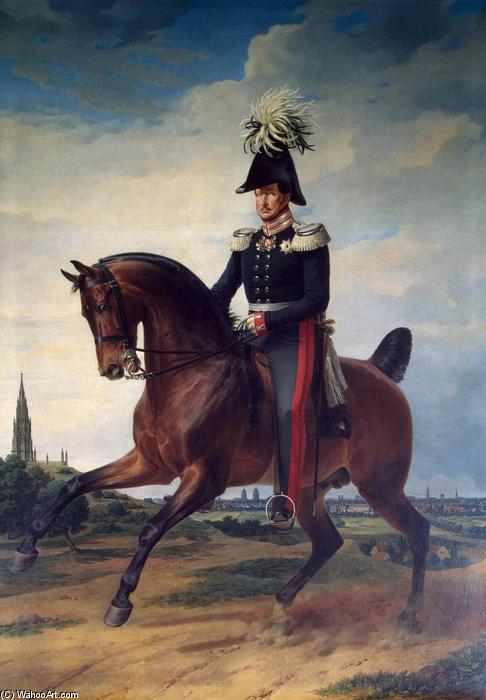
Equestrian Portrait of Frederick William III
 Oil On Canvas
- WallArt
- Romanticism
 1830
1830- 19th Century
 361.0 x 258.0 cm
 Hermitage Museum
 Read More
Purchase a high-resolution, enhanced digital image, far superior to the online preview.
Each file is meticulously prepared by our in-house specialists using advanced tools and expert manual retouching. We ensure every image has exceptional clarity, precise color accuracy, and fine detail.
The final file is delivered via email within 72 hours, optimized for immediate use in professional, editorial, and print environments. This is the same quality trusted by top-tier design studios, publishers, and galleries.
Digital Image
Download a high-resolution file for personal display, printing, and creative projects. ( Buy Print Buy Hand Made Painting)
Included in Every Digital Image Order
Expert Digital Delivery, Guaranteed
When you choose ArtsDot.com, you're not just getting an image - you're receiving a professionally enhanced digital artwork, crafted with precision and backed by a satisfaction guarantee. Here's everything that comes with your order, automatically:

Fast Email Delivery
Your high-resolution digital image file will be emailed to you within 72 hours of ordering - ready for immediate use.

AI-Enhanced Digital File
Your artwork is professionally optimized using advanced AI tools and manual editing, ensuring maximum detail, clarity, and color accuracy.

Free Lifetime Re-Delivery
Accidentally deleted or lost your file? No worries - we'll resend it to you anytime, free of charge.

No Import Fees - Ever
Enjoy your artwork instantly with zero customs, duties, or delivery fees - digital downloads are always tax-free.

Color Accuracy Guarantee
We ensure your digital image reflects the original colors as closely as possible using professional tools and color management.

60-Day Satisfaction Guarantee
If you're not satisfied with your digital image, we'll revise it or refund 100% within 60 days - no questions asked.

100% Money-Back Guarantee
Not satisfied? Get a full refund within 60 days of receiving your digital file - no questions asked.

Bulk Order Discounts
Buy 3 images, save 10% - Buy 5, save 15% - Buy 10+, save 20%. Great for creative projects, galleries, and agencies.
Collectible Description
A Grand Vision of Prussian Majesty
To stand before an Equestrian Portrait of Frederick William III is to be transported directly into the gilded age of 19th-century European royalty. This monumental work by Franz Krüger captures more than just a likeness; it arrests a moment of supreme authority and martial grace. The scene unfolds with palpable grandeur, presenting the Prussian King mounted upon his magnificent steed. One can almost hear the rhythmic thud of hooves on cobblestone and feel the crisp weight of the military uniform. Krüger masterfully frames this depiction, placing the powerful figure centrally while allowing the surrounding elements—the distant architecture, the very air of the outdoor setting—to contribute to an overwhelming sense of occasion.
Technique and The Aura of Empire
The sheer scale of this painting, measuring 361 by 258 centimeters, speaks to its intended impact; it was designed not merely to hang on a wall, but to dominate a hall. Krüger’s technique in rendering the textures is breathtaking. Observe the meticulous detail in the King's uniform, the gleam of his sword, and the rich sheen of the horse's coat—each element speaks to the painstaking skill of the master painter. The inclusion of specific props, such as the cane held in one hand and the feather adorning the hat, are not arbitrary details; they are carefully placed signifiers of rank and personal bearing. Even the subtle placement of the two visible clocks suggests a passage of time measured against the backdrop of enduring power.
Historical Resonance: The Spirit of 1830
Dating to 1830, this portrait is deeply embedded in the political and social currents of early 19th-century Germany. It serves as a powerful visual document of Prussian might during a period of intense national consolidation and evolving European power dynamics. The subject, Frederick William III, embodies the weight of monarchical duty. For the contemporary admirer or collector, this piece offers a tangible connection to an era when military prowess and royal lineage were inextricably linked to cultural identity. It is a celebration, yet also a statement, about order maintained through visible strength.
Symbolism of Power and Movement
The symbolism within the composition is rich for contemplation. The horse itself is perhaps the most potent symbol—it represents untamed energy harnessed by human will, mirroring the King's own controlled authority. His posture, poised yet commanding, suggests readiness for action while remaining rooted in established tradition. For those decorating a space that seeks to evoke gravitas, history, or enduring leadership, this painting offers an unparalleled focal point. It is not just decoration; it is an artifact of aspiration, inviting the viewer to contemplate themes of duty, legacy, and unwavering command.
Related Artworks
Artist Biography
Joseph Wright of Derby: Illuminating the Industrial Age
Joseph Wright of Derby, a name synonymous with dramatic lighting and scenes of burgeoning industry in 18th-century England, was more than just a painter; he was a visual chronicler of his time. Born in Derby in 1734, Wright’s life unfolded against the backdrop of significant social and economic change – the rise of industrialization, scientific discovery, and shifting societal values. His career, spanning nearly six decades, saw him evolve from a provincial portraitist to one of Britain's most original and influential artists, a position he earned largely through his daring depictions of unconventional subjects and masterful manipulation of light. Wright’s legacy rests not just on the beauty of his paintings but also on their profound insight into a pivotal era in British history.Early Life and Training: A Derby-Bound Artist
Wright's early life remains somewhat shrouded in mystery, though it is known he was apprenticed to a Derbyshire painter named Thomas Hill. This initial training provided him with the fundamentals of portraiture and landscape painting, skills that would later inform his broader artistic ambitions. Crucially, Wright spent time studying under Hudson in London between 1751 and 1753. This period proved formative, exposing him to the prevailing artistic trends of the day – particularly the influence of Dutch masters like Rembrandt and Vermeer – and providing him with experience within the established art world. However, Wright’s heart remained in Derby, a town he considered his true home and the source of much of his inspiration. He returned to Derby after his London training, establishing himself as a respected portraitist amongst the Midlands gentry, producing works that showcased his burgeoning technical skill and ability to capture character with remarkable accuracy.The Rise of the ‘Candlelight’ Style: Innovation and Influence
Wright's artistic breakthrough occurred in the 1760s, marked by a shift towards dramatic scenes illuminated primarily by candlelight. This stylistic choice was revolutionary for its time, moving away from the traditional reliance on natural light and embracing an artificial glow that created a sense of mystery, drama, and intimacy. He drew inspiration from Dutch masters who had pioneered the use of chiaroscuro – the strong contrast between light and dark – but adapted it to his own unique vision. His most celebrated work, *An Experiment on a Bird in the Air Pump* (1768), exemplifies this innovation perfectly. The painting depicts a group of scientists meticulously dissecting a bird within an air pump, bathed in the eerie glow of candlelight. The scene is not merely a scientific observation; it’s a powerful metaphor for the pursuit of knowledge and the potential dangers of unchecked ambition – themes that resonated deeply with contemporary audiences.Connections to the Lunar Society: Painting the Dawn of Scientific Inquiry
Wright's artistic output was inextricably linked to the activities of the Lunar Society, a group of intellectuals, scientists, and industrialists who met regularly in Birmingham and its environs. This society, including figures like Erasmus Darwin (Charles Darwin’s grandfather), Joseph Priestley, and James Watt, represented a burgeoning spirit of scientific inquiry and technological innovation. Wright meticulously documented their meetings and experiments, capturing the atmosphere of intellectual ferment with remarkable sensitivity. Paintings such as *The Alchemist's Boy* (1780) and *Diamond Foundry* (1783) offer glimpses into this world, depicting scenes of chemical experimentation and scientific discovery – often imbued with a sense of both wonder and apprehension. These works are not simply depictions of events; they’re visual narratives that reflect the changing intellectual landscape of Britain.Legacy and Historical Significance
Joseph Wright of Derby died in 1797, leaving behind a body of work that continues to captivate and inspire. He is widely considered the first professional painter to successfully capture the spirit of the Industrial Revolution, not through romanticized depictions of factories and machinery, but by focusing on the human element – the scientists, inventors, and laborers who were shaping a new era in British history. His masterful use of light, his dramatic compositions, and his insightful portrayals of contemporary life have secured his place as one of Britain’s most important artists. His work remains a powerful testament to the transformative power of innovation and the enduring fascination with the mysteries of science and human endeavor. Wright's paintings are now housed primarily in Derby City Council’s collection, ensuring that this remarkable artist continues to be celebrated within his birthplace and beyond.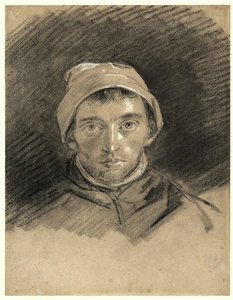
franz krüger
1797 - 1857 , Germany
Quick Facts
- Artistic Movement Or Style: Romanticism, Neoclassicism
- Artists Or Movements Influenced By This Artist: ['Dutch painting']
- Artists Who Influenced This Artist: ['Hudson']
- Date Of Birth: September 3, 1734
- Date Of Death: August 29, 1797
- Full Name: Joseph Wright of Derby
- Nationality: English
- Notable Artworks:
- An Experiment on a Bird in the Air Pump
- The Slaughtered Lamb
- Place Of Birth: Derby, England

