 Preview
 Send
Send Share
Share
 Details

 Download
 Similars
 X-Ray
X-Ray Diaporama
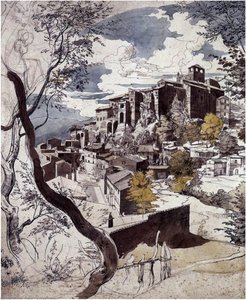
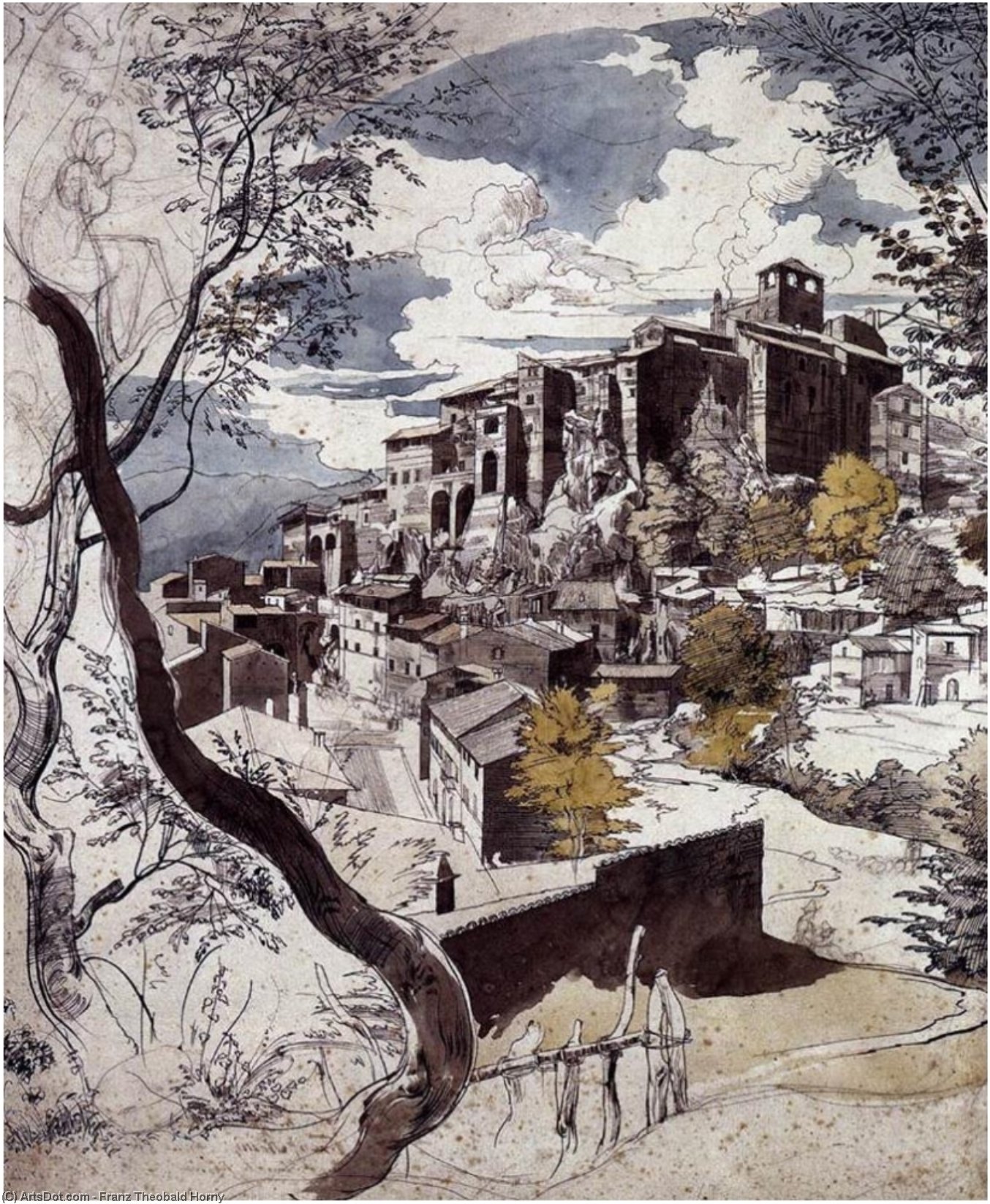
View of Olevano
 Oil On Canvas
- WallArt
- Romanticism
 1822
1822- 19th Century
 531.0 x 431.0 cm
 Staatliche Museen
 Read More
Hand Made Oil Reproduction
Hand-painted oil on canvas in your size and frame, made to order by our artists. ( Buy Print Buy Image)




P118B $10

P118H $10

P118W $10

P438Z $10

P508JH $12

P508YH $12

P805H $10

P805Z $10

P919BZ $10

P919G $10

P919XJ $10

P959ZH $10

P968JZ $12

W106C $8

W218G $10

W218JH $8

W218Y $10

W307PJ $10

W316G $10

W316PJ $8

W316Y $10

W398PJ $8

W4111J $10

W500HY $15

W500JH $15

W692G $12

W849H $8

W940BG $15

W953PJ $8




Pick from our preset sizes that match the artwork's original proportions.

You may enter your own dimensions to fit a specific frame or space. If your selected size does not match the original image's proportions, we will either crop the artwork or extend the painting with additional hand-painted elements. A digital mockup will be sent for your approval before production begins.
Please note that the on-screen preview does not reflect the actual cropping or extension. Only the mockup will accurately show the final composition.
While custom sizes are available, we recommend selecting a dimension from the predefined list to preserve the original proportions.
After order, ArtsDot.com team will email client for instructions and provide a mockup preview
Worldwide Delivery () in 3/4 weeks instead of standard 5 weeks. (16 August). No compromise on quality.

Free Worldwide Express Shipping

High-Quality Linen Canvas

Full Shipping Insurance

Customs Tax Refund Guarantee

True Color Matching Guarantee

60-Day Return Policy (Defects Only)

100% Money-Back Guarantee

Bulk Discount Offer
 Glass option is only available in size under 110 CM

View of Olevano
Reproduction Medium
Reproduction Size
-


Total Price
$ 263
Artwork Description
A Romantic Glimpse into Italian Life
To gaze upon View of Olevano is to step through a veil of time directly into the heart of early nineteenth-century Italy. This painting, executed by Franz Theobald Horny in 1822, is far more than a mere depiction of an Italian town; it is a carefully composed meditation on life, community, and the enduring beauty of classical architecture set against the vibrant pulse of human activity. Horny, whose career was deeply intertwined with the Romantic spirit, captures that quintessential blend of idealized landscape and lived-in reality that so captivated the era's patrons.
The Allure of the Roman Vista
The composition itself draws the eye deep into the scene. Dominating the background is the imposing silhouette of a castle, suggesting history, defense, and permanence, while nestled before it unfolds the charming tapestry of Olevano. The architecture—the clustered buildings, the visible church tower reaching toward the heavens—speaks to centuries of accumulated culture. Horny masterfully populates this scene with figures; they are not merely placed within the frame but seem to inhabit it, suggesting daily routines unfolding under a warm, perhaps Mediterranean, sun. These scattered people and the few strategically placed trees lend an immediate sense of scale and narrative depth, inviting the viewer to imagine their own footsteps echoing on those ancient cobblestones.
Romantic Technique and Emotional Resonance
Horny’s technique is deeply rooted in the Romantic movement, allowing him to imbue the scene with palpable emotion. While his training was rigorous, evident in the detailed rendering of the structures, his touch remains lyrical. The light seems almost tangible, bathing the town in a glow that speaks both of midday warmth and nostalgic memory. For the collector or designer, this piece offers an unparalleled atmosphere—it is evocative without being overwhelming. It whispers tales of travel, of discovery, and of the sublime beauty found in everyday life.
A Touchstone for Inspired Interiors
For those seeking to infuse a space with the romance of historical grandeur, View of Olevano serves as an exquisite focal point. Its palette—likely featuring warm ochres, soft terracotta reds, and muted stone greys—harmonizes beautifully with both classical furnishings and modern minimalist design schemes. Reproducing this work allows one to bring the sophisticated narrative quality of a masterwork into a contemporary setting. It is art that doesn't just hang on a wall; it breathes life back into a room, transforming it into a destination.
Related Artworks
Artist Biography
Franz Horny: A Romantic Vision of Italy
Franz Theobald Horny (23 November 1798, Weimar – 23 June 1824, Olevano Romano) was a German painter in the Romantic style. He embodied the spirit of his time—a fervent embrace of emotion and imagination against the backdrop of burgeoning scientific inquiry. His artistic journey began amidst the intellectual fervor of Weimar’s court, nurtured by the mentorship of Johann Heinrich Meyer, Goethe's advisor on artistic matters, and profoundly shaped by his father, Konrad Horny, who himself was a respected teacher at the Weimar Princely Free Drawing School.- Early Life & Education: Born in Weimar, Horny’s upbringing instilled in him a deep appreciation for classical ideals alongside the burgeoning Romantic movement. His formal training at the Weimar school provided him with foundational skills and exposed him to influential figures like Meyer and Goethe, fostering an artistic sensibility that would characterize his entire career.
- The Roman Influence: A pivotal moment arrived when Horny encountered Carl Friedrich von Rumohr, who championed his artistic ambitions by orchestrating a transformative trip to Rome. This immersion in the Nazarene tradition—characterized by its reverence for biblical subjects and meticulous attention to detail—proved decisive, shaping Horny’s stylistic preferences and introducing him to techniques honed by masters like Joseph Anton Koch.
- Rome & Artistic Development: During his Roman studies, Horny collaborated closely with Rumohr on expeditions to Olevano and Frascati, absorbing the atmosphere of artistic pilgrimage and engaging in spirited discussions about art history and aesthetics. He skillfully blended influences from both German Romanticism and Nazarene painting, resulting in a distinctive visual language marked by luminous color palettes and expressive brushwork.
- Casino Massimo & Landscape Painting: Horny’s talent gained recognition through his commission to decorate the Casino Massimo—a lavish villa owned by the Marquis Carlo Massimo—with monumental frescoes depicting biblical scenes. This ambitious undertaking demanded technical mastery and artistic vision, cementing Horny's reputation as a prodigious painter. Simultaneously, he cultivated a passion for landscape painting, capturing the sublime beauty of Bavarian scenery with remarkable sensitivity and precision.
- Illness & Legacy: Tragically, Horny’s health deteriorated rapidly during his final years in Italy, burdened by tuberculosis. Despite valiant efforts to regain vitality, he succumbed to the disease in Olevano Romano at the young age of twenty-five. His untimely demise underscored the fragility of artistic genius and left behind a legacy of haunting landscapes and evocative frescoes—testaments to a Romantic artist who dared to confront mortality with unwavering conviction.
franz theobald horny
1798 - 1824 , Germany
Quick Facts
- Artistic Movement Or Style: Romantic
- Artists Or Movements Influenced By This Artist: ['Nazarene Movement']
- Artists Who Influenced This Artist:
- Johann Heinrich Meyer
- Joseph Anton Koch
- Date Of Birth: November 23, 1798
- Full Name: Franz Theobald Horny
- Nationality: German
- Notable Artworks:
- View of Olevano
- Lily
- Place Of Birth: Weimar, Germany
Related Articles

Romantic Landscapes: 10 Masterpieces for Your Home | ArtsDot
Journey through 10 Romantic landscape masterpieces by Friedrich, Turner & Cole. Explore emotional art, sublime nature scenes & iconic 19th-century paintings. Find museum-quality reproductions for your home at ArtsDot.com – discover the full collection online!

Beyond the Horizon: 10 Landscape Masterpieces for Your Home Decor
Journey through 10 breathtaking landscape paintings by Monet, Van Gogh & more! Explore iconic artworks, artistic techniques & find inspiration for your home decor. Museum-quality reproductions at ArtsDot.com. Discover all masterpieces on ArtsDot.com

Evoking Nature's Sublime: A Comprehensive Exploration of 19th-Century Landscape Painting
Explore the captivating world of 19th-century landscape painting! Discover renowned artists like Friedrich & Monet, key movements, and find the perfect artwork to bring nature's serenity into your home. Expert insights at ArtsDot.

John Constable's Masterpieces: Explore 25 Iconic Landscapes for Your Home
Journey through John Constable's 25 most celebrated landscapes. Explore Romanticism, Dedham Vale & his masterful use of light in iconic paintings like 'Hay Wain'. Find museum-quality art reproductions and elevate your home decor on ArtsDot.com.

Impressionistic Landscapes: 10 Masterpieces That Changed Art & Decor
Journey into the heart of Impressionism! Explore 10 masterpieces by Monet, Renoir & Degas that revolutionized landscape art. Discover their stories, techniques & find museum-quality reproductions to elevate your home decor on ArtsDot.com.