 Send
Send Share
Share
 Details

 Download
 Similars
 Diaporama
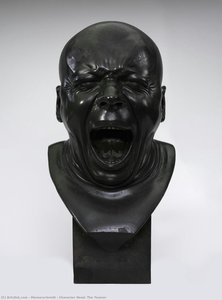
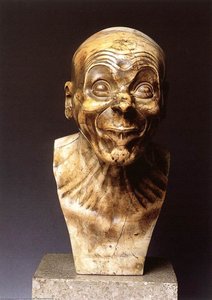
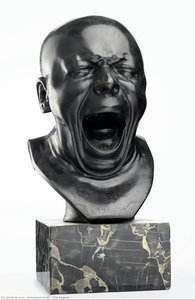
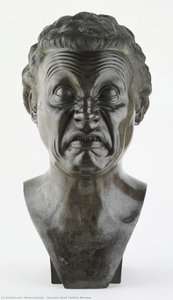
Character Head: The Yawner
 Bronze
- Sculpture
- Neoclassicism
 1783
1783 42.0 x 21.0 cm
 Museum of Fine Arts
 Read More
Giclée / Art Print
Museum-quality giclée or canvas print with fast production and flexible finish options. ( Buy Hand Made Painting Buy Image)




































Pick from our preset sizes that match the artwork's original proportions.

You may enter your own dimensions to fit a specific frame or space. If your selected size does not match the original image's proportions, we will either crop the artwork or extend the image with a mirrored or solid-fill edge. A digital mockup will be sent for your approval before production begins.
Please note that the on-screen preview does not reflect the actual cropping or extension. Only the mockup will accurately show the final composition.
While custom sizes are available, we recommend selecting a dimension from the predefined list to preserve the original proportions.
Worldwide Delivery () in 2 weeks instead of standard 4/5 weeks. (17 August)

Free Worldwide Express Shipping

High-Quality Linen Canvas

Full Shipping Insurance

Customs Tax Refund Guarantee

True Color Matching Guarantee

60-Day Return Policy (Defects Only)

100% Money-Back Guarantee

Bulk Discount Offer
 Glass option is only available in size under 110 CM

Character Head: The Yawner
Giclée / Art Print
Reproduction Size
-


Total Price
$ 63
Collectible Description
Franz Xaver Messerschmidt’s “Character Head: The Yawner” – A Portrait of Unyielding Despair
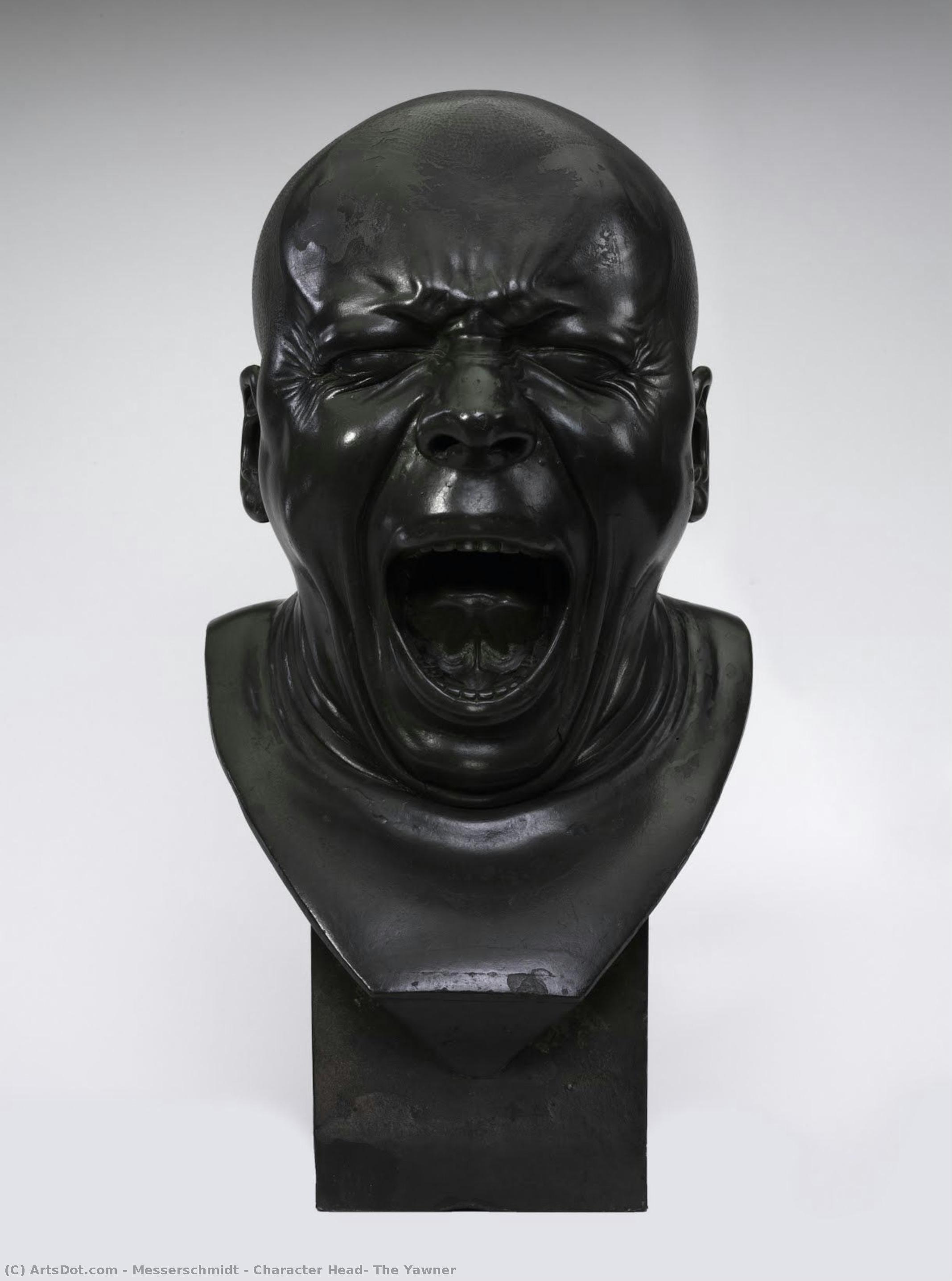
Franz Xaver Messerschmidt's "Character Head: The Yawner," created in 1783, isn’t merely a sculpture; it’s an excavation of the human psyche. Born in Bavaria during a period of shifting artistic sensibilities—bridging the Baroque’s grandeur with the nascent Neoclassicism—Messerschmidt carved out a singular path, driven by a profound fascination with capturing raw emotion through his art. This particular piece, rendered in bronze, stands as one of his most arresting “Character Heads,” a series that cemented his reputation for depicting states of intense psychological distress. It’s a work that demands attention, not just for its technical mastery but for the unsettling honesty it reveals about the depths of human suffering.
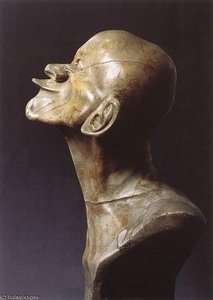
The sculpture depicts a male figure, almost entirely consumed by an open-mouthed scream. The features are exaggerated – the lips stretched wide in agony, the eyes narrowed and filled with a desperate plea—transforming a realistic portrayal into a visceral representation of torment. Messerschmidt’s meticulous attention to anatomical detail is evident in the musculature around the mouth and jaw, suggesting the immense physical strain of such an outpouring of emotion. Yet, it's precisely this combination of realism and dramatic exaggeration that makes the piece so profoundly affecting. The pose itself—rigid yet contorted—conveys a sense of trapped energy, as if the figure is struggling to contain an overwhelming force.
Technique and Material – A Masterclass in Bronze Casting
Messerschmidt’s skill lies not only in his ability to capture emotion but also in his technical proficiency. The sculpture was created using traditional bronze casting techniques, a process demanding considerable expertise and patience. The smooth surface of the bronze suggests careful polishing, highlighting the contours of the face and emphasizing the dramatic lighting. Subtle variations in texture—slightly rougher areas where the metal cooled unevenly—add to the sense of realism and depth. The choice of bronze itself is significant; it’s a material associated with permanence and strength, lending an almost monumental quality to the figure's suffering. The weight of the bronze seems to mirror the weight of the emotion being portrayed.
Furthermore, the scale of the sculpture—measuring 42 x 21 cm—contributes to its impact. It’s a relatively small piece, yet it commands attention due to the intensity of the subject matter. This intimacy forces the viewer to confront the figure's anguish directly, creating a deeply personal and unsettling experience.
Historical Context and the “Character Heads”
Messerschmidt’s "Character Heads" emerged during a period of significant social and intellectual upheaval in Europe. The late 18th century witnessed the rise of Enlightenment ideals challenging traditional notions of morality and religion, while simultaneously experiencing widespread poverty, disease, and political instability. This atmosphere of uncertainty and anxiety undoubtedly influenced Messerschmidt's artistic vision. He wasn’t simply depicting individual suffering; he was exploring the broader psychological landscape of his time.
The series itself is remarkable for its uniformity—all the “Character Heads” are cast in bronze, each representing a distinct emotion: rage, despair, grief, joy, and the infamous "Yawner." This systematic approach suggests that Messerschmidt was attempting to codify human emotions, believing he could capture their essence through sculptural form. His work foreshadowed later developments in Expressionism, demonstrating an early understanding of the power of art to convey subjective experience.
Symbolism and Emotional Resonance – A Window into the Soul
"Character Head: The Yawner" is rich with symbolic meaning. The open mouth, frozen in a perpetual scream, represents not just pain but also helplessness, frustration, and a desperate plea for release. The closed eyes suggest a state of shock or denial, as if the figure is unable to fully comprehend the source of its suffering. Some scholars have interpreted the sculpture as an allegory for the human condition—a reminder of our inherent vulnerability and mortality.
Ultimately, this piece transcends mere representation; it’s an invitation to contemplate the complexities of human emotion. It's a powerful testament to Messerschmidt's ability to translate inner turmoil into tangible form, leaving a lasting impression on the viewer long after they have turned away. Reproductions of “Character Head: The Yawner” offer a compelling opportunity to bring this profound work of art into any space, serving as a poignant reminder of the enduring power of human suffering and resilience.
Related Artworks
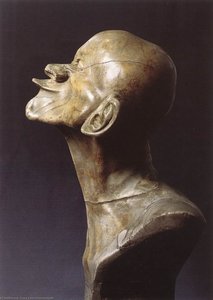
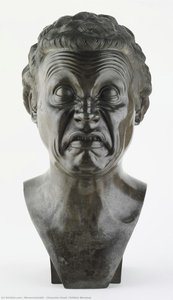
Artist Biography
A Life Sculpted by Emotion: The World of Franz Xaver Messerschmidt
Franz Xaver Messerschmidt, born in the Bavarian village of Wiesensteig in 1736, occupies a singular and often unsettling position in the history of sculpture. He wasn’t merely a product of his time—a bridge between the opulent late Baroque and the emerging Neoclassical styles—but an artist who seemed to anticipate the emotional intensity of Expressionism nearly a century before its formal emergence. His life, marked by both artistic promise and increasing psychological turmoil, is inextricably linked to his most enduring legacy: the “Character Heads,” busts that capture human emotion in states of raw, almost unbearable intensity. Messerschmidt’s early training was steeped in family tradition; he first learned the craft under the tutelage of his uncle, Johann Baptist Straub, a sculptor working in Munich. This foundational period instilled in him a mastery of traditional techniques, which he further honed through apprenticeships with another uncle, Philipp Jakob Straub, in Graz, and later at the Academy of Fine Arts Vienna, where Jacob Schletterer guided his development. These early works demonstrate a clear proficiency in the prevailing Baroque style, particularly evident in commissions for Empress Maria Theresa—bronze busts and reliefs that adhered to the conventions of courtly representation favored by artists like Balthasar Ferdinand Moll. He was, initially, a sculptor very much *of* his time, skilled at portraying power and status with appropriate grandeur.The Genesis of Disquiet: The Character Heads
Around 1769-1770, however, a profound shift began to occur in Messerschmidt’s artistic vision. While continuing to accept traditional portrait commissions, he embarked on the creation of what would become his defining work—the Character Heads. These were not portraits in the conventional sense; they weren't intended to flatter or commemorate. Instead, they depicted faces contorted in extreme emotional expressions: laughter bordering on hysteria, grief etched into every line, grimaces of anguish and despair. The origins of this dramatic departure are complex, interwoven with both artistic experimentation and a deepening personal struggle. Accounts from the time, particularly those provided by Friedrich Nicolai following a visit to Messerschmidt in 1781, reveal an artist obsessed with capturing the full spectrum of human emotion. Nicolai described Messerschmidt’s peculiar method: he would reportedly pinch his own lower ribs, observing the resulting facial contortions in a mirror and then attempting to replicate them in marble or bronze. This self-experimentation suggests a deliberate attempt to access and portray authentic emotional states, rather than relying on idealized representations. Furthermore, Messerschmidt believed he was striving to represent all 64 “canonical grimaces” of the human face, guided by principles derived from Hermetic teachings and a quest for a "universal balance" akin to the golden ratio. This ambition speaks to a deeper philosophical underpinning—a desire to understand and codify the fundamental expressions of humanity. However, alongside this intellectual pursuit, there was a growing sense of mental instability. Ernst Kris theorized that these experiments were linked to paranoid ideas and hallucinations that began to plague Messerschmidt in the 1770s, ultimately leading to his expulsion from the Academy of Fine Arts in 1774 despite having served as a teacher since 1769.Decline and Isolation: The Final Years
Following his dismissal from Vienna, Messerschmidt’s life took a downward spiral. He returned to Wiesensteig, then briefly sought patronage in Munich without success. He eventually settled in Pressburg (modern-day Bratislava), where he spent his final years largely isolated, continuing to create Character Heads with unwavering dedication. This period was marked by increasing eccentricity and financial hardship. The invaluable account of his methods and beliefs recorded by Friedrich Nicolai during his 1781 visit provides a crucial window into Messerschmidt’s artistic process and the philosophical underpinnings of his work. Nicolai's writings reveal an artist convinced he was on a path to unlocking universal truths about human emotion, even as his mental state deteriorated. The Character Heads produced during these final years are perhaps the most haunting and emotionally charged, reflecting both his artistic genius and his profound inner turmoil. He died in Pressburg in 1783, largely forgotten by the art world.A Legacy Rediscovered: Messerschmidt’s Enduring Influence
For many years after his death, Messerschmidt remained a relatively obscure figure. His Character Heads were initially dismissed as the products of madness, curiosities rather than serious works of art. However, in the 20th century, a reevaluation began to take place. Scholars and artists recognized the profound psychological insight embedded within these unsettling sculptures, acknowledging Messerschmidt as a precursor to Expressionism and an early explorer of the human psyche. His willingness to depict raw emotion—to confront the darker aspects of the human condition—challenged traditional artistic norms and paved the way for future generations of artists who sought to express inner experience rather than simply represent external reality. Today, Franz Xaver Messerschmidt is celebrated as a unique and visionary sculptor whose work continues to resonate with audiences seeking a deeper understanding of themselves and the complexities of the human spirit. His legacy lies not only in the technical brilliance of his sculptures but also in their enduring power to provoke, disturb, and ultimately, illuminate the depths of human emotion.Key Works & Their Significance
- The Yawner (1775): This marble bust exemplifies Messerschmidt’s ability to capture a fleeting moment of intense physical and emotional release, showcasing his mastery of anatomical detail and expressive form.
- Character Head: Childish Weeping (1783): A bronze sculpture that embodies profound sorrow, demonstrating the artist's skill in conveying complex emotions through subtle shifts in facial features. It’s a poignant example of his later Mannerist style.
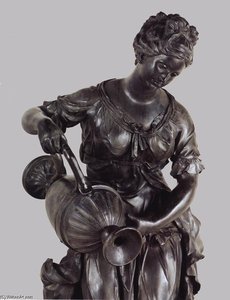
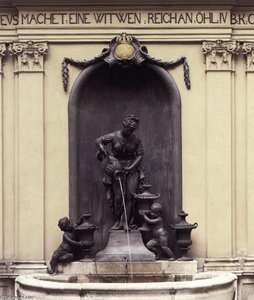
- Elijah Increases the Oil of the Widow: This neoclassical fountain sculpture demonstrates Messerschmidt’s earlier versatility and ability to work within established artistic conventions, providing a contrast to the radical experimentation of the Character Heads.
Franz Xaver Messerschmidt
1736 - 1783 , Germany
Quick Facts
- Artistic Movement Or Style: Late Baroque, Neoclassical
- Artists Or Movements Influenced By This Artist: ['Expressionism']
- Artists Who Influenced This Artist:
- Johann Baptist Straub
- Philipp Jakob Straub
- Jacob Schletterer
- Date Of Birth: February 6, 1736
- Date Of Death: 1783
- Full Name: Franz Xaver Messerschmidt
- Nationality: German-Austrian
- Notable Artworks:
- The Yawner
- Childish Weeping
- Elijah Increases the Oil
- Place Of Birth: Wiesensteig, Germany
Related Articles

Bronze Age to Modern Masters: 10 Sculptures That Redefined Art | ArtsDot
Journey through art history with 10 legendary bronze sculptures – from Michelangelo's David to Rodin’s Thinker. Explore the stories, techniques & timeless beauty of these masterpieces. Find museum-quality reproductions & elevate your home decor on ArtsDot.com.

Bronze Sculptures That Defined Art History | ArtsDot
Journey through art history with our Top 10 bronze sculptures! Explore masterpieces by Rodin, Michelangelo & more. Discover stories behind iconic statues and find museum-quality reproductions for your home decor at ArtsDot.com.

The Enduring Legacy of Bronze: A Historical & Artistic Exploration for the Collector
Explore the rich history & enduring appeal of bronze sculpture with expert insights for collectors at ArtsDot. Learn about casting techniques, iconic artists, collecting tips & contemporary interpretations.
The Enduring Legacy of Bronze: History, Technique & Artistic Expression for the Collector
Explore the rich history & enduring appeal of bronze sculpture with expert insights for collectors at ArtsDot. Learn about casting techniques, iconic artists, and collecting tips.

The Enduring Legacy of Bronze Sculpture: A Collector's Guide to Form & Cultural Significance
Explore the rich history & enduring appeal of bronze sculpture with expert insights for collectors at ArtsDot. Learn about casting techniques, iconic artists, and collecting tips to build a discerning art collection.