 Preview
 Send
Send Share
Share
 Details

 Download
 Similars
 X-Ray
X-Ray Diaporama
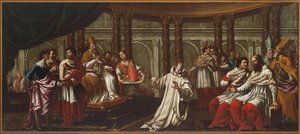
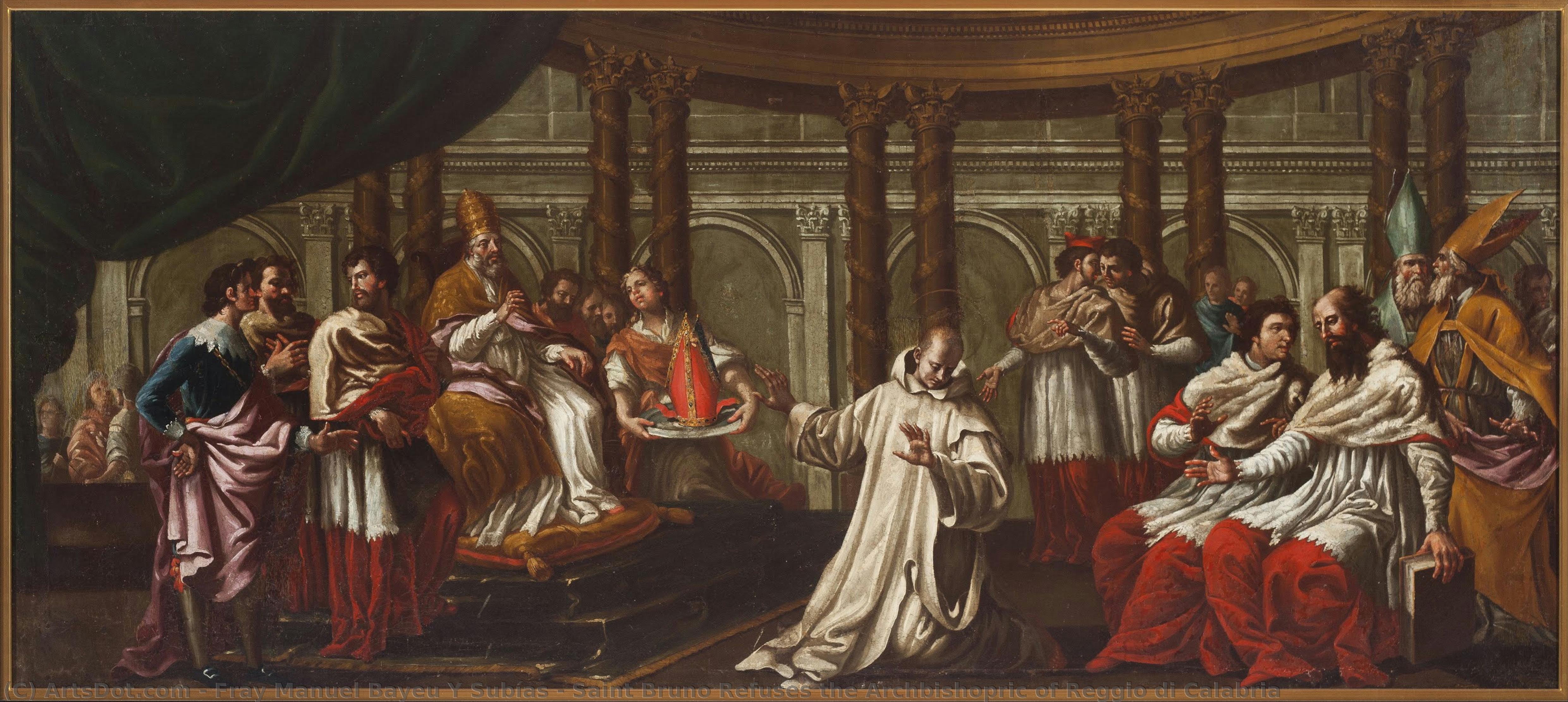
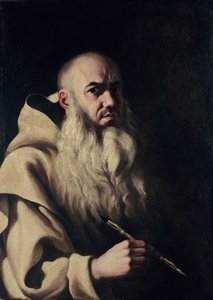
Saint Bruno Refuses the Archbishopric of Reggio di Calabria

 Read More
Hand Made Oil Reproduction
Hand-painted oil on canvas in your size and frame, made to order by our artists. ( Buy Print Buy Image)




































Pick from our preset sizes that match the artwork's original proportions.

You may enter your own dimensions to fit a specific frame or space. If your selected size does not match the original image's proportions, we will either crop the artwork or extend the painting with additional hand-painted elements. A digital mockup will be sent for your approval before production begins.
Please note that the on-screen preview does not reflect the actual cropping or extension. Only the mockup will accurately show the final composition.
While custom sizes are available, we recommend selecting a dimension from the predefined list to preserve the original proportions.
After order, ArtsDot.com team will email client for instructions and provide a mockup preview
Worldwide Delivery () in 3/4 weeks instead of standard 5 weeks. (31 August). No compromise on quality.

Free Worldwide Express Shipping

High-Quality Linen Canvas

Full Shipping Insurance

Customs Tax Refund Guarantee

True Color Matching Guarantee

60-Day Return Policy (Defects Only)

100% Money-Back Guarantee

Bulk Discount Offer
 Glass option is only available in size under 110 CM

Saint Bruno Refuses the Archbishopric of Reggio di Calabria
Reproduction Medium
Reproduction Size
-


Total Price
$ 263
Related Artworks





Artist Biography
The Devout Brush: The Life and Legacy of Fray Manuel Bayeu y Subías
In the quiet, contemplative corridors of the Carthusian monastery, Nuestra Señora de las Fuentes, a unique artistic spirit flourished. Fray Manuel Bayeu y Subías, born in Zaragoza in 1740, lived a life defined by the dual commitment to spiritual devotion and aesthetic mastery. As a Carthusian monk, his existence was one of solitude and prayer, yet his hands were deeply engaged with the vibrant world of Spanish art. Coming from a distinguished lineage of painters that included his celebrated brothers, Francisco and Ramón, Manuel was steeped in the traditions of his craft from birth. This familial connection provided him with a foundation of technical excellence that he would eventually weave into the religious and architectural fabric of Spain.
His journey through the monastic life was marked by a steady ascent toward artistic recognition. After entering the monastery in 1760 and taking his solemn vows in 1772, Manuel began to emerge from the shadows of cloistered life as an officially recognized artist by 1779. His work was never merely decorative; it was an extension of his faith. While much of his output was dedicated to the service of the Church, his style possessed a personal, almost intimate quality. His casual and personal drawings, which are preserved today in the Museo de Huesca, offer a rare glimpse into the private observations of a man who saw the divine in the subtle details of the world around him.
Artistic Vision and Sacred Spaces
The breadth of Manuel Bayeu’s work spanned various architectural landscapes, leaving an indelible mark on the religious heritage of the Aragon region. His artistic touch can be felt in the solemn atmosphere of the Huesca Cathedral and the Jaca Cathedral, where his paintings serve as windows into the sacred. He was also deeply involved in significant projects across Los Monegros and Lalueza, contributing to the spiritual grandeur of the Royal Monastery of Santa María de Sigena and the Santuario de la Virgen de Magallón in Leciñena. Each project allowed him to blend his architectural sensibilities with his painterly skill, creating environments where light and pigment worked in harmony to inspire awe.
One of the most poignant chapters of his career occurred toward the end of his life, when he traveled to Mallorca to create a mural at the Valldemossa Charterhouse. This work stands as a testament to his enduring vitality and his ability to translate complex theological themes into visual narratives. Even in his later years, the influence of his training and the weight of his monastic responsibilities did not stifle his creativity; rather, they refined it, resulting in works like Paula Melzi de Eril, which remains a notable piece held within the collections of the Museo de Huesca.
A Lasting Impression on Spanish Art
The historical significance of Fray Manuel Bayeu y Subías lies in his ability to bridge the gap between the ascetic life of a monk and the burgeoning artistic movements of late 18th-century Spain. While he worked alongside contemporaries such as the legendary Francisco de Goya, Manuel maintained a distinct identity rooted in his Carthusian vocation. His legacy is not found merely in grand canvases, but in the enduring presence of his work within the cathedrals and monasteries that continue to house his creations.
To reflect on his life is to contemplate the intersection of art and piety. His contributions include:
- Religious Murals: Significant works in the Valldemossa Charterhouse and various Aragonese sanctuaries.
- Architectural Integration: A unique ability to harmonize painting with the structural elements of monasteries and cathedrals.
- Personal Draftsmanship: Intimate drawings that provide historical insight into 18th-century Spanish life.
- Familial Influence: Carrying forward the prestigious Bayeu tradition alongside his brothers Francisco and Ramón.
Though much of his work in Zaragoza has been lost to time, the fragments that remain serve as a powerful reminder of a man who found his greatest expression through the marriage of the brush and the soul.
fray manuel bayeu y subías
1740 - 1809 , Spain
Quick Facts
- Artistic Movement Or Style: Casual drawings and religious murals
- Artists Who Influenced This Artist: ['Family of painters']
- Date Of Birth: 1740
- Date Of Death: 1809
- Full Name: Fray Manuel Bayeu y Subías
- Nationality: Spanish
- Notable Artworks:
- Paula Melzi de Eril
- Valldemossa Charterhouse mural
- Place Of Birth: Zaragoza, Spain