 Preview
 Send
Send Share
Share
 Details

 Download
 Similars
 X-Ray
X-Ray Diaporama
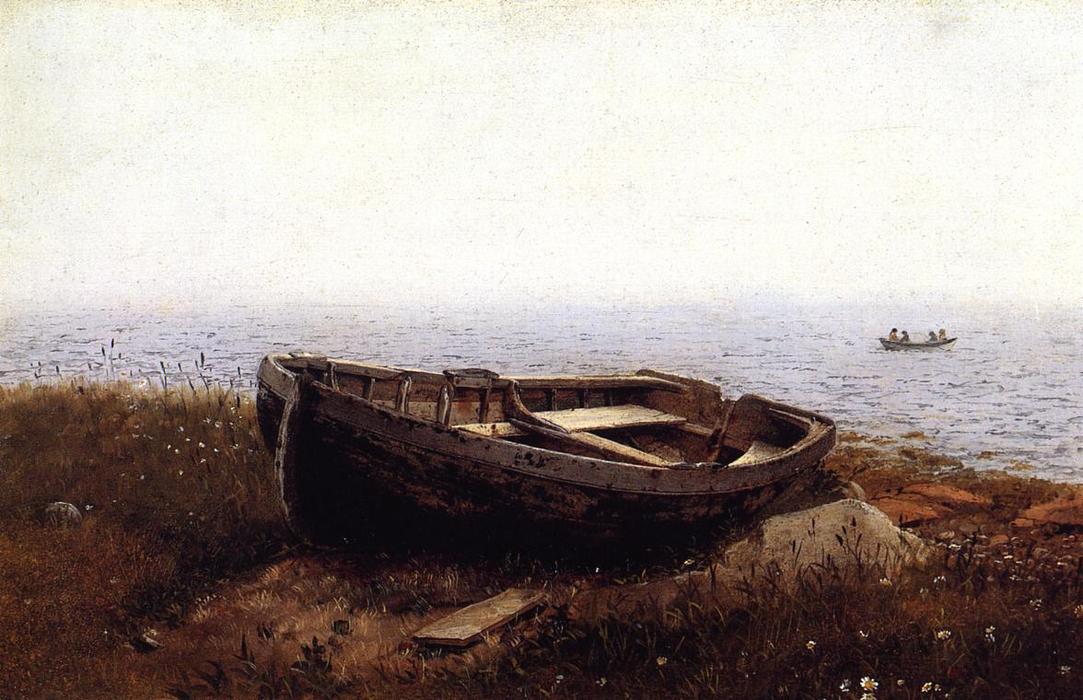
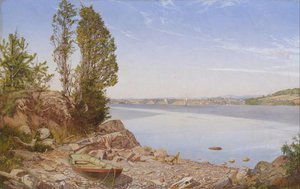
The Old Boat (also known as The Abandoned Skiff)


 Read More
Hand Made Oil Reproduction
Hand-painted oil on canvas in your size and frame, made to order by our artists. ( Buy Print Buy Image)




P118B $10

P118H $10

P118W $10

P438Z $10

P508JH $12

P508YH $12

P805H $10

P805Z $10

P919BZ $10

P919G $10

P919XJ $10

P959ZH $10

P968JZ $12

W106C $8

W218G $10

W218JH $8

W218Y $10

W307PJ $10

W316G $10

W316PJ $8

W316Y $10

W398PJ $8

W4111J $10

W500HY $15

W500JH $15

W692G $12

W849H $8

W940BG $15

W953PJ $8




Pick from our preset sizes that match the artwork's original proportions.

You may enter your own dimensions to fit a specific frame or space. If your selected size does not match the original image's proportions, we will either crop the artwork or extend the painting with additional hand-painted elements. A digital mockup will be sent for your approval before production begins.
Please note that the on-screen preview does not reflect the actual cropping or extension. Only the mockup will accurately show the final composition.
While custom sizes are available, we recommend selecting a dimension from the predefined list to preserve the original proportions.
After order, ArtsDot.com team will email client for instructions and provide a mockup preview
Worldwide Delivery () in 3/4 weeks instead of standard 5 weeks. (16 August). No compromise on quality.

Free Worldwide Express Shipping

High-Quality Linen Canvas

Full Shipping Insurance

Customs Tax Refund Guarantee

True Color Matching Guarantee

60-Day Return Policy (Defects Only)

100% Money-Back Guarantee

Bulk Discount Offer
 Glass option is only available in size under 110 CM

The Old Boat (also known as The Abandoned Skiff)
Reproduction Medium
Reproduction Size
-


Total Price
$ 263
Artwork Description
A Vision of Spiritual Solitude Amidst Rugged Beauty: Exploring Frederic Edwin Church’s “The Old Boat”
Frederic Edwin Church stands as an undisputed titan amongst the Hudson River School painters, a movement that irrevocably shaped American landscape art and cemented its place in the canon of Romanticism. Born in Hartford, Connecticut, in 1826, his lineage traced back to Puritan settlers—a heritage imbued with a profound respect for tradition and a conviction in the transformative power of nature—provided him with unparalleled access to resources vital for pursuing his artistic ambitions. This fortunate circumstance allowed Church to dedicate himself entirely to his craft, fostering an unwavering devotion that would culminate in masterpieces like “The Old Boat,” or “The Abandoned Skiff.”Subject Matter and Composition: A Reflection on Faith
“The Old Boat” depicts a solitary wooden skiff resting upon a rocky shoreline bathed in the ethereal glow of twilight. The scene isn’t merely picturesque; it's deliberately conceived as an emblem of spiritual contemplation. Church meticulously positioned the boat at the center of the canvas, anchoring its presence against the expansive backdrop of the Adirondack Mountains—a landscape he considered sacred and profoundly influential on his artistic vision. Two figures stand near the boat, one gazing towards the distant peaks while the other looks down upon the water, embodying a duality that speaks to the human condition: aspiration toward transcendence juxtaposed with grounded awareness of earthly realities.Hudson River School Style and Technique: Luminosity and Atmospheric Perspective
Church’s mastery lies in his ability to capture the sublime—that feeling of awe inspired by grandeur—through masterful technique rooted in the Hudson River School aesthetic. Employing oil paints on canvas, he achieved an unparalleled luminosity through a process known as “aerial perspective.” This painstaking method involved layering thin glazes of color to simulate the scattering of light particles in the atmosphere, creating a breathtaking illusion of depth and conveying the palpable coolness of twilight. The artist’s meticulous attention to detail—evident in the textured surface of the rocks and the subtle reflections on the water—further enhances the painting's realism while simultaneously elevating it beyond mere representation.Historical Context: Romantic Idealism and Transcendental Philosophy
Painted in 1850, “The Old Boat” emerged during a period marked by burgeoning transcendentalist philosophy championed by figures like Ralph Waldo Emerson and Henry David Thoreau. These thinkers advocated for aligning oneself with the natural world as a pathway to spiritual enlightenment—a concept that deeply resonated with Church’s artistic sensibilities. The painting reflects this intellectual fervor, portraying nature not simply as an object of beauty but as a source of moral instruction and divine inspiration. It stands alongside other monumental Hudson River School canvases like “Heart of Oak” and “Twilight in the Wilderness,” demonstrating the movement's commitment to exploring themes of faith, solitude, and the sublime experience.Symbolism: The Boat as Vessel of Spiritual Journey
Beyond its visual splendor, "The Old Boat" is laden with symbolic significance. The abandoned skiff represents vulnerability and resilience—a humble craft confronting the immensity of nature’s power yet steadfastly enduring. Its position on the shoreline symbolizes the intersection between earthly existence and spiritual aspiration; it's a reminder that true understanding requires acknowledging both our limitations and our capacity for wonder. The figures gazing upwards embody the yearning for divine grace, while those observing the water represent grounded acceptance of God’s presence in everyday life—a harmonious blend reflecting the core tenets of Romantic idealism.Emotional Impact: Capturing the Essence of Tranquility and Reverence
Ultimately, Church succeeds in conveying a profound emotional resonance within “The Old Boat.” The painting evokes feelings of serenity, contemplation, and reverence for the majesty of the natural world. Its muted palette—dominated by blues and grays—creates an atmosphere of quiet solemnity, inviting viewers to pause and contemplate the beauty and mystery inherent in existence. Like many works from the Hudson River School, it transcends mere visual representation, transporting the observer into a realm where art becomes a conduit for spiritual experience – a legacy that continues to inspire artists and collectors alike.Related Artworks
Artist Biography
A Pioneer of American Landscape: The Life and Art of Frederic Edwin Church
Frederic Edwin Church, born in Hartford, Connecticut, on May 4th, 1826, emerged as a pivotal figure in the blossoming landscape tradition of 19th-century America. His lineage was steeped in New England history—a direct descendant of Puritan pioneers—and his family’s prosperity afforded him opportunities rare for aspiring artists of the time. This financial stability allowed Church to dedicate himself wholeheartedly to his artistic pursuits, a path that would ultimately lead him to become one of the most celebrated and influential painters of the Hudson River School. His early training began at the age of eighteen under the tutelage of Thomas Cole, the very founder of this distinctly American art movement. These formative years spent in Catskill, New York, were crucial, instilling in Church a deep reverence for nature and a commitment to capturing its grandeur on canvas. The apprenticeship wasn’t merely technical; it was an immersion into a philosophy that saw landscape not just as scenery, but as a reflection of the divine and a symbol of national identity.The Rise of a Master: Style and Influences
Church quickly distinguished himself from his contemporaries through a remarkable ability to blend meticulous realism with a romantic sensibility. His paintings are characterized by an astonishing level of detail, capturing the textures of foliage, the play of light on water, and the imposing scale of mountains with breathtaking accuracy. However, this wasn’t simply photographic representation; Church infused his work with a dramatic flair, employing sweeping panoramic views, vibrant color palettes, and a masterful command of atmospheric perspective. He was deeply influenced by the scientific explorations of Alexander von Humboldt, whose writings on the interconnectedness of nature resonated profoundly with the artist. This influence is evident in Church’s later expeditions to South America and his attempts to convey not just the visual beauty of these landscapes but also their underlying geological and botanical complexities. The Oxbow, completed in 1836, stands as an early testament to this synthesis of observation and imagination—a romantic vision of the American wilderness that would become a hallmark of his style. His technique involved “hidden” brushstrokes, creating smooth surfaces that enhanced the realism and luminosity of his paintings.Ventures into the Wild: Travels and Major Works
Church’s ambition extended beyond the familiar landscapes of New England and New York. Driven by a thirst for firsthand experience and inspired by Humboldt's writings, he embarked on daring expeditions to remote corners of the world. These journeys—to South America in 1853 and 1857, and later to the Arctic regions—provided him with an unparalleled wealth of visual material. The Heart of the Andes, completed in 1859, is perhaps his most ambitious undertaking, a monumental canvas that sought to encapsulate the entire ecosystem of the Andean mountains. The painting was exhibited in a specially constructed gallery, illuminated by skylights, creating an immersive experience for viewers and solidifying Church’s reputation as a master showman as well as an artist. His subsequent series of paintings inspired by his Arctic travels, such as Icebergs: The North, demonstrated his versatility and willingness to tackle challenging subjects. These works weren't merely depictions of remote landscapes; they were statements about the power and fragility of nature, reflecting a growing environmental consciousness in the mid-19th century.Legacy and Impact on American Art
Frederic Edwin Church’s influence on American landscape painting is undeniable. He elevated the genre to new heights of artistic achievement and popular acclaim, inspiring generations of artists to explore the beauty and majesty of the natural world. His innovative exhibition practices—presenting single paintings in dramatic settings—set a precedent for future art displays and helped to cultivate a broader public appreciation for art. Beyond his painting, Church was also a dedicated conservationist, advocating for the preservation of Niagara Falls and playing a role in the establishment of national parks. He understood that art could be a powerful tool for raising awareness about environmental issues and inspiring action. His home, Olana, designed and built with his own hands overlooking the Hudson River, stands as a testament to his artistic vision and his deep connection to the landscape.- Church’s work bridged the gap between Romanticism and Realism.
- He pioneered immersive exhibition techniques that captivated audiences.
- His advocacy for conservation foreshadowed the modern environmental movement.
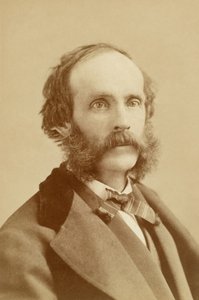
Frederic Edwin Church
1826 - 1900 , United States of America
Quick Facts
- Artistic Movement Or Style: Hudson River School
- Artists Or Movements Influenced By This Artist: American landscape painting
- Artists Who Influenced This Artist:
- Thomas Cole
- A. von Humboldt
- Date Of Birth: May 4, 1826
- Date Of Death: April 7, 1900
- Full Name: Frederic Edwin Church
- Nationality: American
- Notable Artworks:
- The Oxbow
- Mount Holyoke
- Heart of Andes
- Place Of Birth: Hartford, USA
Related Articles
Hudson River School: 10 Masterpieces That Capture America's Wild Beauty | ArtsDot
Journey through America's breathtaking landscapes with our guide to the Top 10 Hudson River School masterpieces. Explore Thomas Cole, Frederic Church & more! Find museum-quality art reproductions and elevate your home decor at ArtsDot.com.
The Sublime Landscape: Exploring the Hudson River School Movement
Explore the captivating world of the Hudson River School! Discover the history, artists, and defining characteristics of this iconic American art movement. Learn about Romanticism's influence & find inspiration for your collection.

Romantic Landscapes: 10 Masterpieces for Your Home | ArtsDot
Journey through 10 Romantic landscape masterpieces by Friedrich, Turner & Cole. Explore emotional art, sublime nature scenes & iconic 19th-century paintings. Find museum-quality reproductions for your home at ArtsDot.com – discover the full collection online!
Robert Spencer: Luminism, Narrative & the American Landscape Tradition
Explore the captivating world of Luminism & the Hudson River School with our expert analysis. Discover the history, artists, and enduring beauty of 19th-century American landscape painting. Find museum-quality reproductions at ArtsDot.

Beyond the Horizon: 10 Landscape Masterpieces for Your Home Decor
Journey through 10 breathtaking landscape paintings by Monet, Van Gogh & more! Explore iconic artworks, artistic techniques & find inspiration for your home decor. Museum-quality reproductions at ArtsDot.com. Discover all masterpieces on ArtsDot.com