 Preview
 Send
Send Share
Share
 Details

 Download
 Similars
 X-Ray
X-Ray Diaporama
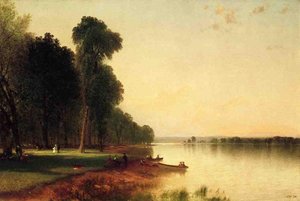
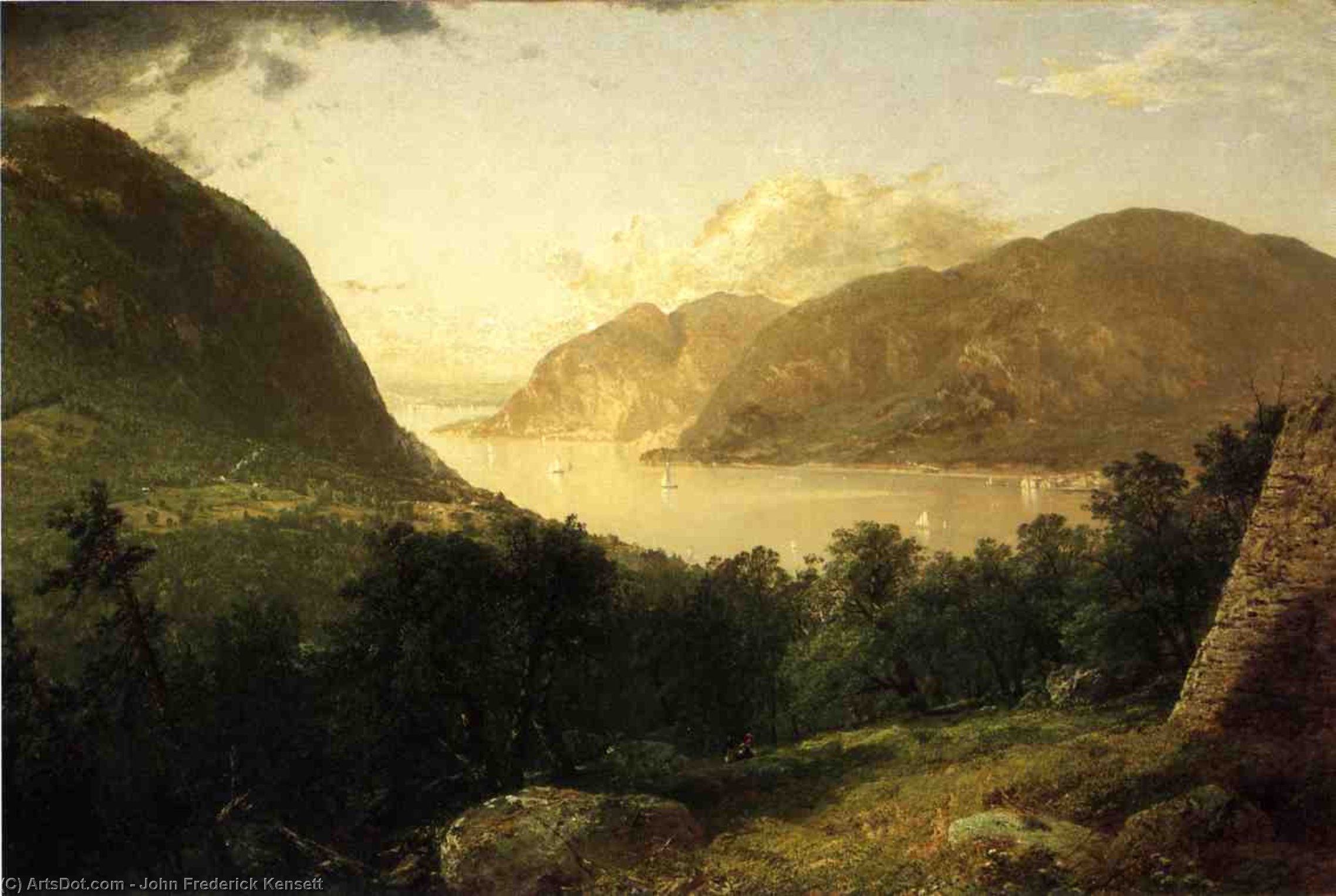
Hudson River Scene


 Read More
Hand Made Oil Reproduction
Hand-painted oil on canvas in your size and frame, made to order by our artists. ( Buy Print Buy Image)




P118B $10

P118H $10

P118W $10

P438Z $10

P508JH $12

P508YH $12

P805H $10

P805Z $10

P919BZ $10

P919G $10

P919XJ $10

P959ZH $10

P968JZ $12

W106C $8

W218G $10

W218JH $8

W218Y $10

W307PJ $10

W316G $10

W316PJ $8

W316Y $10

W398PJ $8

W4111J $10

W500HY $15

W500JH $15

W692G $12

W849H $8

W940BG $15

W953PJ $8




Pick from our preset sizes that match the artwork's original proportions.

You may enter your own dimensions to fit a specific frame or space. If your selected size does not match the original image's proportions, we will either crop the artwork or extend the painting with additional hand-painted elements. A digital mockup will be sent for your approval before production begins.
Please note that the on-screen preview does not reflect the actual cropping or extension. Only the mockup will accurately show the final composition.
While custom sizes are available, we recommend selecting a dimension from the predefined list to preserve the original proportions.
After order, ArtsDot.com team will email client for instructions and provide a mockup preview
Worldwide Delivery () in 3/4 weeks instead of standard 5 weeks. (16 August). No compromise on quality.

Free Worldwide Express Shipping

High-Quality Linen Canvas

Full Shipping Insurance

Customs Tax Refund Guarantee

True Color Matching Guarantee

60-Day Return Policy (Defects Only)

100% Money-Back Guarantee

Bulk Discount Offer
 Glass option is only available in size under 110 CM

Hudson River Scene
Reproduction Medium
Reproduction Size
-


Total Price
$ 263
Artwork Description
A Serene Vision of the Hudson Valley: John Frederick Kensett’s “Hudson River Scene”
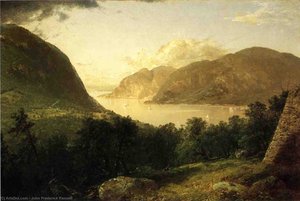
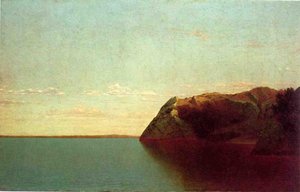
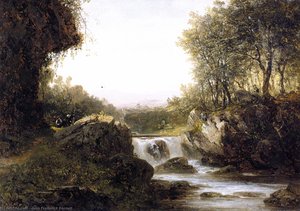
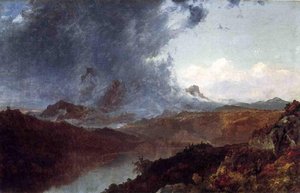
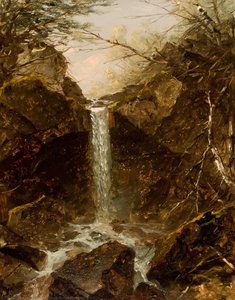
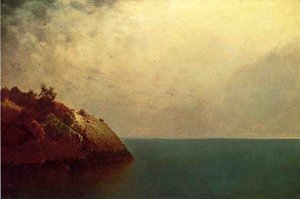
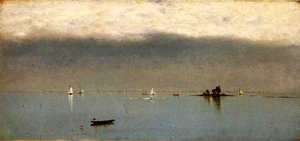
John Frederick Kensett's "Hudson River Scene," painted in 1857, isn’t merely a landscape; it’s a carefully constructed meditation on light, tranquility, and the sublime beauty of the American wilderness. Belonging to the illustrious Hudson River School, a movement that profoundly shaped the course of American art, this painting embodies the core tenets of Luminism – an approach prioritizing atmospheric effects and subtle tonal variations over dramatic detail. Kensett, deeply influenced by the Romantic ideals of his time, sought not to represent nature as it *is*, but rather as it *feels*—a source of profound spiritual resonance.
The scene unfolds along the banks of the Hudson River, a quintessential vista of the New York countryside. Rolling hills, draped in a soft, hazy blue, recede into the distance, their contours softened by atmospheric perspective. A meandering river reflects the muted light of the sky, creating an illusion of infinite depth and mirroring the serenity above. Two figures, rendered with remarkable delicacy, are positioned near the center of the composition, suggesting a quiet moment of contemplation amidst this idyllic setting. Their presence isn’t intrusive; rather, they serve to anchor the viewer in the scene, inviting us to share their peaceful observation.
The Language of Light and Color
Kensett's mastery lies not just in his depiction of the landscape but also in his innovative use of color. He eschewed the bold, vibrant hues favored by some of his contemporaries, opting instead for a palette dominated by cool blues, greens, and grays. This restrained approach creates a sense of stillness and quietude, emphasizing the subtle shifts in light and shadow. The artist’s brushwork is remarkably delicate—almost invisible—allowing the colors to blend seamlessly into one another, mimicking the hazy atmosphere of a summer afternoon. He employed a technique known as “broken color,” applying thin layers of paint that refract light and create shimmering effects, particularly noticeable in the water and sky.
The painting’s luminosity – its ability to seem to glow from within – is a hallmark of Luminism. Kensett meticulously studied the way light interacts with different surfaces, capturing the ephemeral quality of sunlight filtering through trees or reflecting off the river's surface. This pursuit of atmospheric effects was deeply influenced by his travels in Europe, particularly his admiration for the Dutch Masters who excelled at depicting light and shadow.
A Reflection of Transcendentalist Ideals
"Hudson River Scene" is inextricably linked to the broader philosophical currents of the mid-19th century. The Hudson River School artists, including Kensett, were deeply influenced by the Transcendentalist movement, which emphasized the inherent goodness of humanity and the importance of connecting with nature. For these artists, the landscape wasn’t simply a picturesque backdrop; it was a conduit to spiritual truth. Kensett's paintings, like this one, aim to evoke a sense of awe and wonder, prompting viewers to contemplate their place within the vastness of the natural world.
The inclusion of the two figures adds another layer of meaning. They represent humanity’s ability to find solace and connection in nature—a theme central to Transcendentalist thought. Their quiet contemplation suggests a harmonious relationship between humans and the environment, reflecting an ideal of balance and serenity.
Collecting a Legacy: Reproduction and Beyond
Reproductions of “Hudson River Scene” offer a remarkable opportunity to bring this timeless masterpiece into your home or office. ArtsDot’s hand-painted reproductions meticulously recreate Kensett's delicate brushwork and nuanced color palette, capturing the essence of his original vision. Whether you seek an authentic work of art or a high-quality reproduction that evokes the spirit of the Hudson River School, this painting remains a powerful symbol of American landscape artistry and its enduring appeal.
Consider how this serene scene can complement your interior design—bringing a touch of tranquility and natural beauty to any space. The subtle colors and atmospheric effects create a calming atmosphere, perfect for relaxation or contemplation. “Hudson River Scene” is more than just a painting; it’s an invitation to connect with the timeless allure of the American wilderness.
Related Artworks
Artist Biography
a life devoted to capturing serene landscapes
john frederick kensett, an american artist and engraver, was born on march 22, 1816, in cheshire, connecticut. as a member of the second generation of the hudson river school of artists, kensett's signature works are characterized by their serene and luminous qualities, celebrating the transcendental aspects of nature.early life and training
kensett attended school at cheshire academy and studied engraving with his father, thomas kensett. he later worked as an engraver in new haven until 1838, then moved to new york city to work on banknote engravings. in 1840, kensett traveled to europe to study painting, refining his talents alongside benjamin champney.established studio and luminist style
after establishing his studio in new york, kensett extensively traveled throughout the northeast and colorado rockies, capturing the essence of these landscapes. his style evolved from traditional hudson river school to a more refined luminist approach, characterized by unselfconscious brushstrokes conveying qualities of atmospheric light.- mount washington from the valley of conway (1851), an iconic painting, was purchased by the american art union and distributed to 13,000 subscribers.
- eaton's neck, long island (1872), a prime example of kensett's luminist style, is now in the collection of the metropolitan museum of art in new york.
legacy and contributions
kensett was a founder of the metropolitan museum of art and a full member of the national academy of design. his work, widely acclaimed during his lifetime, continues to influence landscape painting. key works:- sunset sky (ca. 1870), the metropolitan museum of art, new york
- three mile harbor (ca. 1860), museum of fine arts, tallahassee
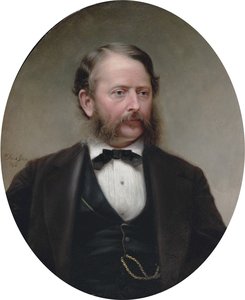
John Frederick Kensett
1816 - 1872 , United States of America
Quick Facts
- Artistic Movement Or Style: Hudson River School & Luminism
- Artists Or Movements Influenced By This Artist: ['Luminism']
- Artists Who Influenced This Artist:
- Thomas Cole
- Benjamin Champney
- Date Of Birth: March 22, 1816
- Date Of Death: December 14, 1872
- Full Name: John Frederick Kensett
- Nationality: American
- Notable Artworks:
- Mount Washington from the Valley of Conway
- Eaton's Neck, Long Island
- Place Of Birth: Cheshire, United States
Related Articles

John Frederick Kensett: Luminosity, Landscape & the American Identity
Explore the luminous landscapes of John Frederick Kensett, a master of Luminism and key figure in the Hudson River School. Discover his serene paintings & enduring legacy with ArtsDot.
Hudson River School: 10 Masterpieces That Capture America's Wild Beauty | ArtsDot
Journey through America's breathtaking landscapes with our guide to the Top 10 Hudson River School masterpieces. Explore Thomas Cole, Frederic Church & more! Find museum-quality art reproductions and elevate your home decor at ArtsDot.com.

Robert Spencer: Luminism, Narrative & the American Landscape Tradition
Explore the captivating world of Luminism & the Hudson River School with our expert analysis. Discover the history, artists, and enduring beauty of 19th-century American landscape painting. Find museum-quality reproductions at ArtsDot.

The Sublime Landscape: Exploring the Hudson River School Movement
Explore the captivating world of the Hudson River School! Discover the history, artists, and defining characteristics of this iconic American art movement. Learn about Romanticism's influence & find inspiration for your collection.
The Sublime American Landscape: Frederic Edwin Church & the Dawn of Luminism
Explore the captivating world of Frederic Edwin Church and the Luminist movement. Discover the history, techniques & enduring legacy of America’s first great landscape painters with ArtsDot.