 Preview
 Send
Send Share
Share
 Details

 Download
 Similars
 X-Ray
X-Ray Diaporama
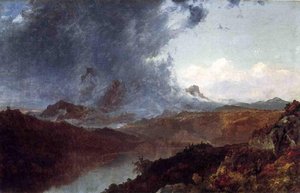
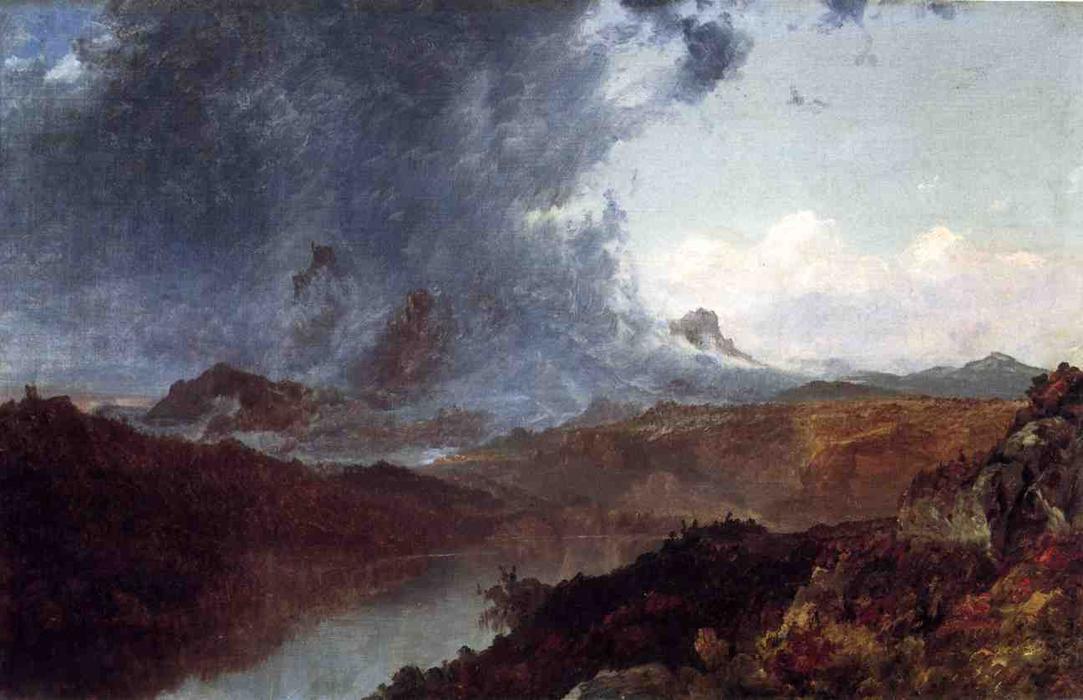
Storm Western Colorado


 Read More
Hand Made Oil Reproduction
Hand-painted oil on canvas in your size and frame, made to order by our artists. ( Buy Print Buy Image)




P118B $10

P118H $10

P118W $10

P438Z $10

P508JH $12

P508YH $12

P805H $10

P805Z $10

P919BZ $10

P919G $10

P919XJ $10

P959ZH $10

P968JZ $12

W106C $8

W218G $10

W218JH $8

W218Y $10

W307PJ $10

W316G $10

W316PJ $8

W316Y $10

W398PJ $8

W4111J $10

W500HY $15

W500JH $15

W692G $12

W849H $8

W940BG $15

W953PJ $8




Pick from our preset sizes that match the artwork's original proportions.

You may enter your own dimensions to fit a specific frame or space. If your selected size does not match the original image's proportions, we will either crop the artwork or extend the painting with additional hand-painted elements. A digital mockup will be sent for your approval before production begins.
Please note that the on-screen preview does not reflect the actual cropping or extension. Only the mockup will accurately show the final composition.
While custom sizes are available, we recommend selecting a dimension from the predefined list to preserve the original proportions.
After order, ArtsDot.com team will email client for instructions and provide a mockup preview
Worldwide Delivery () in 3/4 weeks instead of standard 5 weeks. (17 August). No compromise on quality.

Free Worldwide Express Shipping

High-Quality Linen Canvas

Full Shipping Insurance

Customs Tax Refund Guarantee

True Color Matching Guarantee

60-Day Return Policy (Defects Only)

100% Money-Back Guarantee

Bulk Discount Offer
 Glass option is only available in size under 110 CM

Storm Western Colorado
Reproduction Medium
Reproduction Size
-


Total Price
$ 263
Artwork Description
Storm Western Colorado
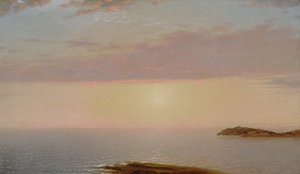
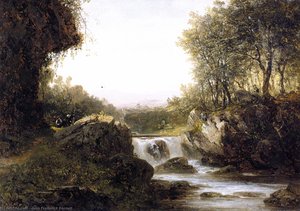
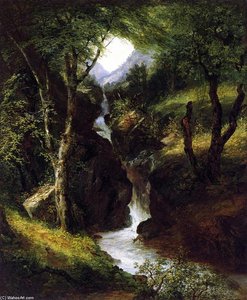
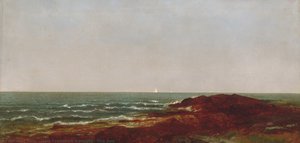
John Frederick Kensett’s “Storm Western Colorado” stands as a quintessential emblem of Luminism—a movement that championed the sublime beauty of untamed landscapes and sought to capture the ethereal quality of natural light. Painted in 1870, this monumental canvas embodies Kensett's profound connection with the American West and his unwavering dedication to portraying nature’s grandeur with understated elegance. Subject Matter & Composition The painting depicts a dramatic vista overlooking Lake Dillon near Silverton, Colorado. Dominating the scene is Mount Sneffels, its jagged peaks shrouded in swirling clouds—a testament to Kensett's meticulous observation of geological formations and atmospheric conditions. Scattered across the foreground are figures representing travelers enjoying the breathtaking panorama; their presence serves not as a distraction but rather as a grounding element, emphasizing the immensity of the mountainscape and inviting contemplation about humanity’s place within it. The artist skillfully employs a pyramidal composition, guiding the viewer's eye upwards towards the imposing summit, reinforcing the sense of awe and grandeur. Style & Technique Unlike the bold brushstrokes characteristic of earlier Hudson River School painters, Kensett adopted a Luminist approach—characterized by almost imperceptible marks that convey light and color with remarkable subtlety. He achieved this effect through layering thin washes of pigment onto canvas, creating luminous surfaces that shimmer with reflected sunlight. The muted palette—primarily blues, grays, and browns—mirrors the subdued tones of a stormy day, yet avoids melodrama, prioritizing atmospheric realism over dramatic narrative. Kensett’s meticulous attention to detail is evident in the rendering of textures – from the rough granite slopes of Mount Sneffels to the glassy surface of Dillon Lake – demonstrating his mastery of artistic technique. Historical Context & Philosophical Influence “Storm Western Colorado” emerged during a period of burgeoning transcendentalist thought, fueled by writers like Ralph Waldo Emerson and Henry David Thoreau who championed the spiritual significance of nature. Kensett’s Luminist style reflects this intellectual climate, aligning with the belief that art should inspire contemplation and elevate the human spirit. The painting captures the Romantic fascination with sublime landscapes—places where beauty overwhelms reason and evokes feelings of awe and humility—a reaction against the Enlightenment's emphasis on scientific rationalism. Symbolism & Emotional Impact The storm itself symbolizes both destructive force and transformative potential, mirroring the challenges faced by pioneers venturing into the American West. Yet, Kensett’s masterful depiction avoids portraying fear or despair; instead, he conveys a sense of serene contemplation—a recognition that even amidst turbulent weather, there exists an enduring beauty and majesty. The painting invites viewers to consider their own relationship with nature, prompting reflection on themes of resilience, wonder, and the sublime experience of confronting overwhelming grandeur. It remains a powerful reminder of Kensett’s ability to distill the essence of the American wilderness into a timeless masterpiece.- Artist: John Frederick Kensett
- Year Painted: 1870
- Medium: Oil on Canvas
- Location: Metropolitan Museum of Art, New York
Related Artworks
Artist Biography
a life devoted to capturing serene landscapes
john frederick kensett, an american artist and engraver, was born on march 22, 1816, in cheshire, connecticut. as a member of the second generation of the hudson river school of artists, kensett's signature works are characterized by their serene and luminous qualities, celebrating the transcendental aspects of nature.early life and training
kensett attended school at cheshire academy and studied engraving with his father, thomas kensett. he later worked as an engraver in new haven until 1838, then moved to new york city to work on banknote engravings. in 1840, kensett traveled to europe to study painting, refining his talents alongside benjamin champney.established studio and luminist style
after establishing his studio in new york, kensett extensively traveled throughout the northeast and colorado rockies, capturing the essence of these landscapes. his style evolved from traditional hudson river school to a more refined luminist approach, characterized by unselfconscious brushstrokes conveying qualities of atmospheric light.- mount washington from the valley of conway (1851), an iconic painting, was purchased by the american art union and distributed to 13,000 subscribers.
- eaton's neck, long island (1872), a prime example of kensett's luminist style, is now in the collection of the metropolitan museum of art in new york.
legacy and contributions
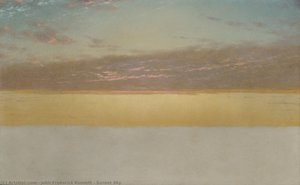
kensett was a founder of the metropolitan museum of art and a full member of the national academy of design. his work, widely acclaimed during his lifetime, continues to influence landscape painting. key works:- sunset sky (ca. 1870), the metropolitan museum of art, new york
- three mile harbor (ca. 1860), museum of fine arts, tallahassee
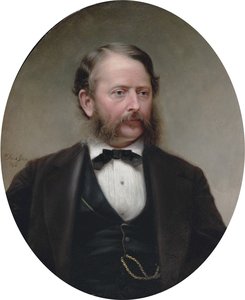
John Frederick Kensett
1816 - 1872 , United States of America
Quick Facts
- Artistic Movement Or Style: Hudson River School & Luminism
- Artists Or Movements Influenced By This Artist: ['Luminism']
- Artists Who Influenced This Artist:
- Thomas Cole
- Benjamin Champney
- Date Of Birth: March 22, 1816
- Date Of Death: December 14, 1872
- Full Name: John Frederick Kensett
- Nationality: American
- Notable Artworks:
- Mount Washington from the Valley of Conway
- Eaton's Neck, Long Island
- Place Of Birth: Cheshire, United States
Related Articles

John Frederick Kensett: Luminosity, Landscape & the American Identity
Explore the luminous landscapes of John Frederick Kensett, a master of Luminism and key figure in the Hudson River School. Discover his serene paintings & enduring legacy with ArtsDot.
Hudson River School: 10 Masterpieces That Capture America's Wild Beauty | ArtsDot
Journey through America's breathtaking landscapes with our guide to the Top 10 Hudson River School masterpieces. Explore Thomas Cole, Frederic Church & more! Find museum-quality art reproductions and elevate your home decor at ArtsDot.com.

The Sublime Landscape: Exploring the Hudson River School Movement
Explore the captivating world of the Hudson River School! Discover the history, artists, and defining characteristics of this iconic American art movement. Learn about Romanticism's influence & find inspiration for your collection.

John Constable's Masterpieces: Explore 25 Iconic Landscapes for Your Home
Journey through John Constable's 25 most celebrated landscapes. Explore Romanticism, Dedham Vale & his masterful use of light in iconic paintings like 'Hay Wain'. Find museum-quality art reproductions and elevate your home decor on ArtsDot.com.
John Singer Sargent's 25 Masterpieces: Portraits & Beyond | ArtsDot
Explore 25 iconic John Singer Sargent paintings – from dazzling portraits to Impressionist landscapes. Discover the stories behind Madame X, El Jaleo & more! Find museum-quality art reproductions and elevate your home decor with ArtsDot.com.