 Preview
 Send
Send Share
Share
 Details

 Download
 Similars
 X-Ray
X-Ray Diaporama
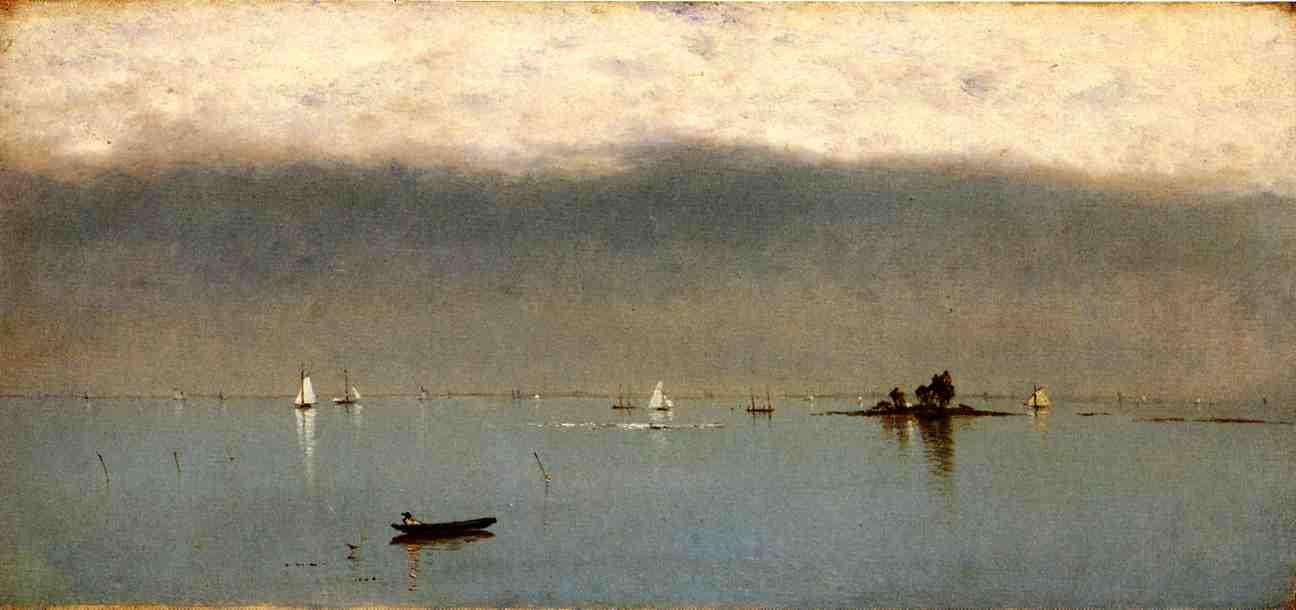
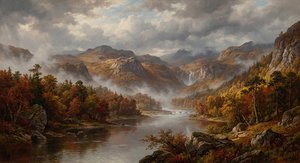
Passing Off of the Storm


 Read More
Hand Made Oil Reproduction
Hand-painted oil on canvas in your size and frame, made to order by our artists. ( Buy Print Buy Image)




P118B $10

P118H $10

P118W $10

P438Z $10

P508JH $12

P508YH $12

P805H $10

P805Z $10

P919BZ $10

P919G $10

P919XJ $10

P959ZH $10

P968JZ $12

W106C $8

W218G $10

W218JH $8

W218Y $10

W307PJ $10

W316G $10

W316PJ $8

W316Y $10

W398PJ $8

W4111J $10

W500HY $15

W500JH $15

W692G $12

W849H $8

W940BG $15

W953PJ $8




Pick from our preset sizes that match the artwork's original proportions.

You may enter your own dimensions to fit a specific frame or space. If your selected size does not match the original image's proportions, we will either crop the artwork or extend the painting with additional hand-painted elements. A digital mockup will be sent for your approval before production begins.
Please note that the on-screen preview does not reflect the actual cropping or extension. Only the mockup will accurately show the final composition.
While custom sizes are available, we recommend selecting a dimension from the predefined list to preserve the original proportions.
After order, ArtsDot.com team will email client for instructions and provide a mockup preview
Worldwide Delivery () in 3/4 weeks instead of standard 5 weeks. (17 August). No compromise on quality.

Free Worldwide Express Shipping

High-Quality Linen Canvas

Full Shipping Insurance

Customs Tax Refund Guarantee

True Color Matching Guarantee

60-Day Return Policy (Defects Only)

100% Money-Back Guarantee

Bulk Discount Offer
 Glass option is only available in size under 110 CM

Passing Off of the Storm
Reproduction Medium
Reproduction Size
-


Total Price
$ 263
Artwork Description
A Moment Frozen in Light: John Frederick Kensett’s “Passing Off of the Storm”
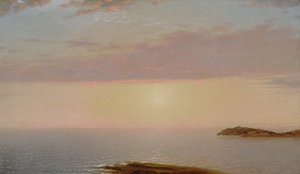
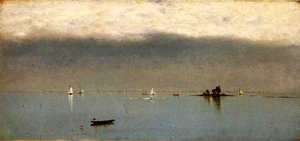
John Frederick Kensett's "Passing off of the Storm," painted in 1872, isn’t merely a landscape; it’s an exquisitely rendered meditation on light, atmosphere, and the sublime power of nature. This work, now housed within the Metropolitan Museum of Art, exemplifies the Luminist movement – a distinctly American branch of the Hudson River School that prioritized capturing fleeting moments of atmospheric illumination rather than detailed topographical representation. Kensett, deeply influenced by the philosophies of Transcendentalism, sought to evoke not just what he saw, but also the *feeling* of being immersed in a vast and powerful natural world.
The scene unfolds across a deceptively simple composition: a tranquil lake reflecting an overcast sky, punctuated by the subtle silhouettes of distant hills. A small rowboat, carrying a solitary figure, drifts across the water’s surface, drawing the viewer's eye into the hazy distance. The color palette is remarkably restrained – muted blues and grays dominate, creating a sense of quiet solemnity. Yet, within this apparent simplicity lies an astonishing depth of observation and technical mastery. Kensett meticulously layered thin washes of oil paint, building up texture and luminosity with remarkable subtlety. Notice how he captures the diffused light filtering through the clouds, transforming them into shimmering bands of color that ripple across the water’s surface.
The Luminist Philosophy: Light as Subject
Kensett's approach to landscape painting was revolutionary for its time. Unlike his predecessors in the Hudson River School, who often focused on dramatic mountain vistas and heroic figures, Kensett prioritized capturing the ephemeral qualities of light and atmosphere. He studied the work of 17th-century Dutch masters – particularly their use of *chiaroscuro* (the contrast between light and dark) – to achieve a similar effect of luminous depth. This shift in focus reflected a broader cultural movement, as artists increasingly sought to capture the subjective experience of nature rather than simply documenting its objective reality.
The title itself, “Passing off of the Storm,” is profoundly evocative. It suggests not an imminent threat, but rather a gradual transformation – the subtle shifting of light and weather that defines the natural world. The storm isn’t raging; it's receding, leaving behind a sense of quiet contemplation and the promise of renewed beauty. This delicate balance between drama and serenity is characteristic of Kensett’s work.
Symbolism and the Human Figure
The solitary figure in the rowboat holds significant symbolic weight. Often interpreted as representing humanity's place within the vastness of nature, it invites reflection on our own insignificance and connection to something larger than ourselves. The boat itself can be seen as a symbol of exploration, both physical and spiritual – a journey into the unknown depths of the natural world. The distant hills, barely discernible through the haze, add another layer of mystery, suggesting the limits of human perception.
Furthermore, Kensett’s choice to depict a relatively calm lake, despite the “storm” in the title, speaks volumes about his artistic sensibility. He wasn't interested in dramatic spectacle; rather, he sought to capture the subtle beauty and inherent tranquility that can be found even amidst atmospheric change. The painting is a testament to Kensett’s ability to distill complex emotions and philosophical ideas into a single, breathtaking image.
A Legacy of Luminosity
"Passing off of the Storm" remains one of Kensett's most celebrated works, admired for its exquisite technical skill, evocative atmosphere, and profound sense of beauty. It’s a painting that invites viewers to slow down, breathe deeply, and contemplate the wonders of the natural world – a timeless reminder of the power of light, color, and quiet contemplation. Reproductions by ArtsDot offer an exceptional opportunity to bring this masterpiece into your home or office, allowing you to experience its luminous beauty firsthand.
Related Artworks
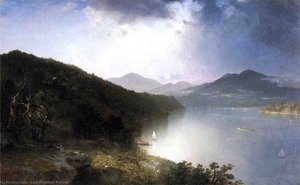
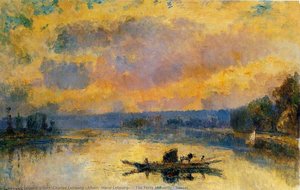
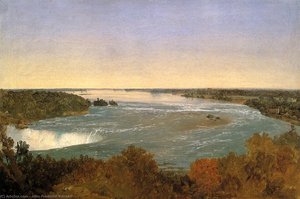
Artist Biography
a life devoted to capturing serene landscapes
john frederick kensett, an american artist and engraver, was born on march 22, 1816, in cheshire, connecticut. as a member of the second generation of the hudson river school of artists, kensett's signature works are characterized by their serene and luminous qualities, celebrating the transcendental aspects of nature.early life and training
kensett attended school at cheshire academy and studied engraving with his father, thomas kensett. he later worked as an engraver in new haven until 1838, then moved to new york city to work on banknote engravings. in 1840, kensett traveled to europe to study painting, refining his talents alongside benjamin champney.established studio and luminist style
after establishing his studio in new york, kensett extensively traveled throughout the northeast and colorado rockies, capturing the essence of these landscapes. his style evolved from traditional hudson river school to a more refined luminist approach, characterized by unselfconscious brushstrokes conveying qualities of atmospheric light.- mount washington from the valley of conway (1851), an iconic painting, was purchased by the american art union and distributed to 13,000 subscribers.
- eaton's neck, long island (1872), a prime example of kensett's luminist style, is now in the collection of the metropolitan museum of art in new york.
legacy and contributions
kensett was a founder of the metropolitan museum of art and a full member of the national academy of design. his work, widely acclaimed during his lifetime, continues to influence landscape painting. key works:- sunset sky (ca. 1870), the metropolitan museum of art, new york
- three mile harbor (ca. 1860), museum of fine arts, tallahassee
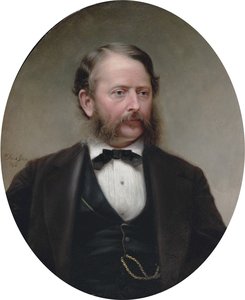
John Frederick Kensett
1816 - 1872 , United States of America
Quick Facts
- Artistic Movement Or Style: Hudson River School & Luminism
- Artists Or Movements Influenced By This Artist: ['Luminism']
- Artists Who Influenced This Artist:
- Thomas Cole
- Benjamin Champney
- Date Of Birth: March 22, 1816
- Date Of Death: December 14, 1872
- Full Name: John Frederick Kensett
- Nationality: American
- Notable Artworks:
- Mount Washington from the Valley of Conway
- Eaton's Neck, Long Island
- Place Of Birth: Cheshire, United States
Related Articles

John Frederick Kensett: Luminosity, Landscape & the American Identity
Explore the luminous landscapes of John Frederick Kensett, a master of Luminism and key figure in the Hudson River School. Discover his serene paintings & enduring legacy with ArtsDot.
Hudson River School: 10 Masterpieces That Capture America's Wild Beauty | ArtsDot
Journey through America's breathtaking landscapes with our guide to the Top 10 Hudson River School masterpieces. Explore Thomas Cole, Frederic Church & more! Find museum-quality art reproductions and elevate your home decor at ArtsDot.com.

The Sublime Landscape: Exploring the Hudson River School Movement
Explore the captivating world of the Hudson River School! Discover the history, artists, and defining characteristics of this iconic American art movement. Learn about Romanticism's influence & find inspiration for your collection.

John Constable's Masterpieces: Explore 25 Iconic Landscapes for Your Home
Journey through John Constable's 25 most celebrated landscapes. Explore Romanticism, Dedham Vale & his masterful use of light in iconic paintings like 'Hay Wain'. Find museum-quality art reproductions and elevate your home decor on ArtsDot.com.

John Singer Sargent's 25 Masterpieces: Portraits & Beyond | ArtsDot
Explore 25 iconic John Singer Sargent paintings – from dazzling portraits to Impressionist landscapes. Discover the stories behind Madame X, El Jaleo & more! Find museum-quality art reproductions and elevate your home decor with ArtsDot.com.