

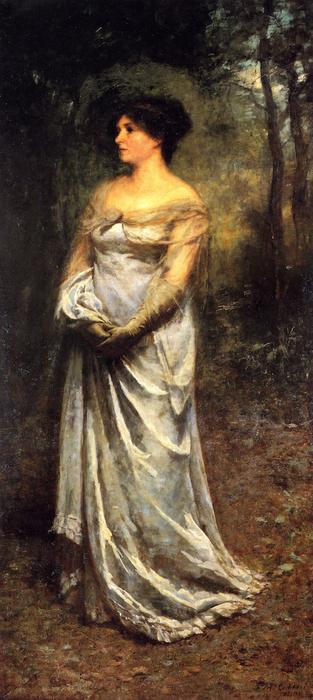
 Preview
 Send
Send Share
Share
 Details

 Download
 Similars
 X-Ray
X-Ray Diaporama
A Lady in Grey (also known as Portrait of Mrs. McCubbin)


 Read More
Purchase a high-resolution, enhanced digital image, far superior to the online preview.
Each file is meticulously prepared by our in-house specialists using advanced tools and expert manual retouching. We ensure every image has exceptional clarity, precise color accuracy, and fine detail.
The final file is delivered via email within 72 hours, optimized for immediate use in professional, editorial, and print environments. This is the same quality trusted by top-tier design studios, publishers, and galleries.
Digital Image
Download a high-resolution file for personal display, printing, and creative projects. ( Buy Print Buy Hand Made Painting)
Included in Every Digital Image Order
Expert Digital Delivery, Guaranteed
When you choose ArtsDot.com, you're not just getting an image - you're receiving a professionally enhanced digital artwork, crafted with precision and backed by a satisfaction guarantee. Here's everything that comes with your order, automatically:

Fast Email Delivery
Your high-resolution digital image file will be emailed to you within 72 hours of ordering - ready for immediate use.

AI-Enhanced Digital File
Your artwork is professionally optimized using advanced AI tools and manual editing, ensuring maximum detail, clarity, and color accuracy.

Free Lifetime Re-Delivery
Accidentally deleted or lost your file? No worries - we'll resend it to you anytime, free of charge.

No Import Fees - Ever
Enjoy your artwork instantly with zero customs, duties, or delivery fees - digital downloads are always tax-free.

Color Accuracy Guarantee
We ensure your digital image reflects the original colors as closely as possible using professional tools and color management.

60-Day Satisfaction Guarantee
If you're not satisfied with your digital image, we'll revise it or refund 100% within 60 days - no questions asked.

100% Money-Back Guarantee
Not satisfied? Get a full refund within 60 days of receiving your digital file - no questions asked.

Bulk Order Discounts
Buy 3 images, save 10% - Buy 5, save 15% - Buy 10+, save 20%. Great for creative projects, galleries, and agencies.
Collectible Description
A Lady in Grey: A Portrait of Victorian Contemplation
Frederick McCubbin’s “A Lady in Grey,” painted in 1900, is more than just a portrait; it's a carefully constructed tableau of late Victorian sensibilities and the burgeoning spirit of Australian Impressionism. The painting depicts a woman, likely Mrs. McCubbin (Frederick’s wife), standing beneath a solitary tree against a backdrop of muted, atmospheric hills. Her posture—slightly turned towards the viewer, one hand resting gently on her skirt—conveys an air of quiet contemplation, a subtle blend of vulnerability and resilience that resonates deeply with viewers even today.
McCubbin’s style leans heavily into the principles of Impressionism, yet he grounds it firmly within the Australian landscape. He employs loose brushstrokes, prioritizing capturing fleeting light and atmosphere over meticulous detail. The palette is dominated by cool greys, blues, and browns—a deliberate choice that evokes a sense of melancholy and the quiet beauty of the natural world. Notice how the artist uses broken color to suggest depth and texture in the foliage, creating an illusion of movement and airiness. This technique was heavily influenced by his travels through Europe where he encountered the works of J.M.W Turner and the French Impressionists.
The Heidelberg School and Australian Identity
“A Lady in Grey” is a quintessential example of work produced by the Heidelberg School, a group of Australian artists who sought to capture the essence of their homeland—its rugged landscapes, pioneering spirit, and evolving identity. Unlike earlier colonial art that often romanticized European ideals, the Heidelberg School focused on depicting everyday Australian life with honesty and realism. McCubbin’s paintings frequently explored themes of rural existence, family relationships, and the challenges faced by settlers in a new land. The inclusion of the tree—a common motif in his work—symbolizes both strength and vulnerability, mirroring the enduring spirit of Australia itself.
The painting's setting, reminiscent of the Burnley quarry near Melbourne, was a favored subject for McCubbin. He frequently depicted this area, using it as a backdrop to explore themes of isolation, nostalgia, and the connection between humanity and nature. The woman’s attire—a simple grey dress—further reinforces this sense of understated elegance and connection to the land. It speaks to a time when practicality and modesty were valued, yet there's an undeniable grace in her presence.
Symbolism and Emotional Resonance
Beyond its surface depiction, “A Lady in Grey” is rich with symbolic meaning. The grey color itself represents ambiguity, introspection, and perhaps even the complexities of a woman’s role within Victorian society. Her gaze—directed slightly off-camera—suggests a thoughtful awareness of her surroundings and a quiet strength of character. The solitary tree serves as a visual anchor, grounding the figure in the landscape and emphasizing her connection to the natural world.
The painting evokes a powerful sense of nostalgia and melancholy, inviting viewers to contemplate themes of memory, loss, and the passage of time. It’s not merely a portrait; it's a meditation on the human condition—a poignant reminder of the beauty and fragility of life in the Australian bush. It remains a beloved work, frequently reproduced and admired for its evocative atmosphere and timeless appeal.
A Legacy of Australian Art
Frederick McCubbin’s “A Lady in Grey” stands as a cornerstone of Australian art history, representing a pivotal moment in the development of Impressionism within the country. His ability to seamlessly blend European artistic techniques with distinctly Australian themes has cemented his place as one of the nation's most celebrated painters. Reproductions of this work continue to resonate with audiences today, offering a glimpse into a bygone era and reminding us of the enduring power of art to capture the spirit of a land and its people.
Related Artworks
Artist Biography
A Life Rooted in the Australian Landscape
Frederick McCubbin, born in Melbourne on February 25th, 1855, stands as a cornerstone of Australian art, inextricably linked to the nation’s evolving identity and its unique visual language. His journey from humble beginnings – the son of bakers who instilled in him a strong work ethic – to becoming a pivotal figure in the Heidelberg School is a testament to his dedication and artistic vision. McCubbin's early life was marked by diverse experiences, working as a solicitor’s clerk and assisting in the family bakery before fully embracing his calling as a painter. These formative years, though seemingly disparate, imbued him with a deep understanding of everyday Australian life, a theme that would resonate profoundly throughout his oeuvre. He received foundational training at the National Gallery of Victoria's School of Design, studying under esteemed artists like Eugene von Guerard and George Folingsby, honing his skills in landscape painting while absorbing the prevailing artistic currents of the time. A crucial turning point arrived with his enduring friendship with Tom Roberts, a bond that would shape the course of Australian art history.The Heidelberg School and Defining a National Aesthetic
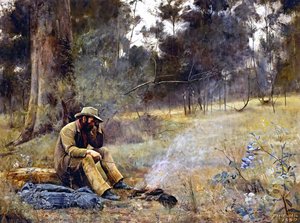
In 1885, McCubbin and Roberts established the Box Hill Artists' Camp, a landmark event in the development of the Heidelberg School movement. This plein air collective – soon joined by Arthur Streeton and Charles Conder – sought to capture the essence of Australian life and landscapes with an unprecedented immediacy and authenticity. Rejecting the conventions of European academic painting, they ventured into the bush, embracing the raw beauty and harsh realities of the Australian environment. McCubbin’s contributions during this period were instrumental in defining a distinctly Australian aesthetic. His works from this era, such as Down on His Luck (1889), On the Wallaby Track (1896), and The Pioneer (1904), are now iconic representations of pioneering life, depicting the struggles and resilience of early settlers against the backdrop of a vast and often unforgiving landscape. These paintings weren’t merely depictions of scenery; they were narratives imbued with social commentary, exploring themes of solitude, hardship, and the complex relationship between European settlers and the Indigenous land. Heidelberg School artists aimed to paint what was uniquely Australian, moving away from imported styles and subjects.Evolution of Style and a Continued Exploration of Identity
While deeply committed to capturing the spirit of Australia, McCubbin wasn’t immune to external influences. A pivotal journey to Europe in 1907 exposed him to the works of J.M.W. Turner and French Impressionists, prompting a subtle yet significant shift in his artistic approach. He began experimenting with freer brushwork, lighter colors, and a more abstracted style, evident in later paintings like An Interior, which many critics consider among his strongest achievements. This evolution wasn’t a rejection of his earlier themes but rather a refinement of his ability to convey emotion and atmosphere. Despite these stylistic changes, McCubbin remained steadfast in his exploration of Australian identity and the human condition. He continued to depict scenes of rural life, often focusing on the interplay between light and shadow, creating works that are both visually stunning and emotionally resonant. His later landscapes demonstrate a growing interest in atmospheric effects and a more subjective interpretation of the natural world.Legacy and Enduring Influence
Frederick McCubbin’s impact on Australian art is undeniable. His work is held in prestigious collections, including the National Gallery of Victoria and the Art Gallery of Ballarat, ensuring his legacy endures for generations to come. He served as a mentor to countless aspiring artists, both through his teaching position at the National Gallery School and through his influence as a leading figure in the art community. He was president of the Victorian Artists’ Society and played a key role in establishing the Australian Art Association. McCubbin's contribution extends beyond his individual paintings; he helped establish a national artistic identity, fostering a sense of pride in Australia’s unique landscape and culture. He remains celebrated as one of Australia's most important and beloved painters, whose works continue to resonate with audiences today, offering poignant glimpses into the nation’s past and enduring reflections on the human spirit. His ability to capture the essence of Australian life – its beauty, hardship, and resilience – has cemented his place in art history as a true pioneer and visionary.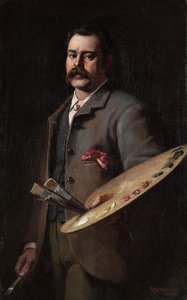
Frederick McCubbin
1855 - 1917 , Australia
Quick Facts
- Artistic Movement Or Style: Impressionism
- Artists Or Movements Influenced By This Artist: ['Heidelberg School']
- Artists Who Influenced This Artist:
- Eugene von Guerard
- George Folingsby
- Date Of Birth: Feb 25, 1855
- Date Of Death: Dec 20, 1917
- Full Name: Frederick McCubbin
- Nationality: Australian
- Notable Artworks:
- On the Wallaby Track
- Down on His Luck
- The Pioneer
- Place Of Birth: Melbourne, Australia

