

 Preview
 Send
Send Share
Share
 Details

 Download
 Similars
 X-Ray
X-Ray Diaporama
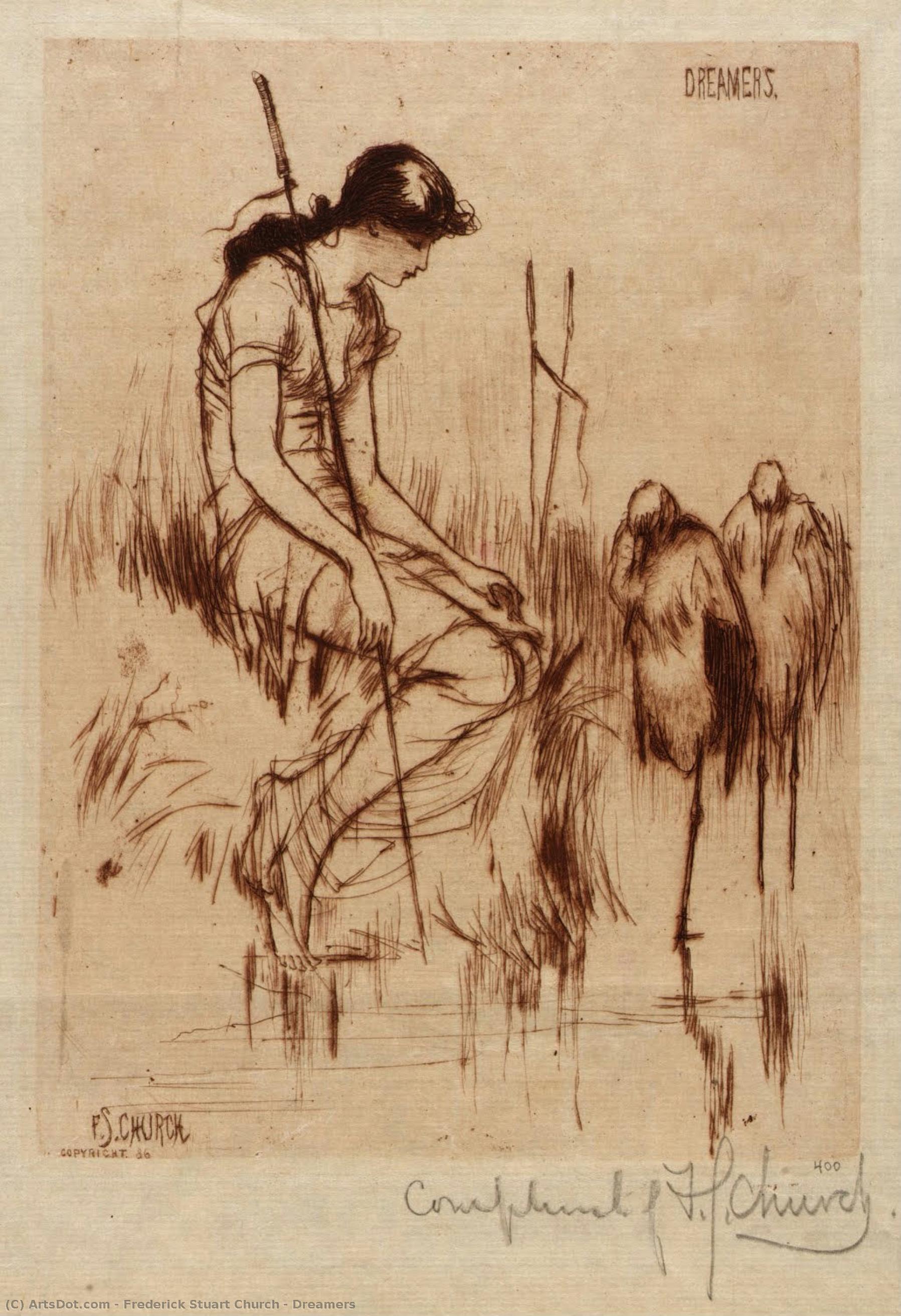
Dreamers
 Painting
- Symbolism
 1886
1886- 19th Century
 20.0 x 14.0 cm
 Smithsonian American Art Museum
 Read More
Purchase a high-resolution, enhanced digital image, far superior to the online preview.
Each file is meticulously prepared by our in-house specialists using advanced tools and expert manual retouching. We ensure every image has exceptional clarity, precise color accuracy, and fine detail.
The final file is delivered via email within 72 hours, optimized for immediate use in professional, editorial, and print environments. This is the same quality trusted by top-tier design studios, publishers, and galleries.
Digital Image
Download a high-resolution file for personal display, printing, and creative projects. ( Buy Print Buy Hand Made Painting)
Included in Every Digital Image Order
Expert Digital Delivery, Guaranteed
When you choose ArtsDot.com, you're not just getting an image - you're receiving a professionally enhanced digital artwork, crafted with precision and backed by a satisfaction guarantee. Here's everything that comes with your order, automatically:

Fast Email Delivery
Your high-resolution digital image file will be emailed to you within 72 hours of ordering - ready for immediate use.

AI-Enhanced Digital File
Your artwork is professionally optimized using advanced AI tools and manual editing, ensuring maximum detail, clarity, and color accuracy.

Free Lifetime Re-Delivery
Accidentally deleted or lost your file? No worries - we'll resend it to you anytime, free of charge.

No Import Fees - Ever
Enjoy your artwork instantly with zero customs, duties, or delivery fees - digital downloads are always tax-free.

Color Accuracy Guarantee
We ensure your digital image reflects the original colors as closely as possible using professional tools and color management.

60-Day Satisfaction Guarantee
If you're not satisfied with your digital image, we'll revise it or refund 100% within 60 days - no questions asked.

100% Money-Back Guarantee
Not satisfied? Get a full refund within 60 days of receiving your digital file - no questions asked.

Bulk Order Discounts
Buy 3 images, save 10% - Buy 5, save 15% - Buy 10+, save 20%. Great for creative projects, galleries, and agencies.
Collectible Description
A Visionary Encounter: The Ethereal World of Frederick Stuart Church
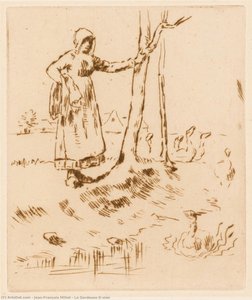
In the delicate interplay of light and shadow found within Dreamers, we encounter the profound mastery of Frederick Stuart Church, an artist who possessed the rare ability to bridge the gap between the tangible world and the realm of symbolic allegory. Painted in 1886, this captivating work invites the viewer into a quiet, pastoral sanctuary where the boundaries between humanity and nature begin to dissolve. The scene centers on a woman seated gracefully upon the earth, her gaze fixed with an intimate, almost spiritual intensity upon a bird perched before her. This is not merely a depiction of a moment in time; it is an invitation to contemplate the deep, unspoken connections that bind all living creatures within the tapestry of existence.
Church’s technique, refined through his rigorous training at the Academy of Design in Chicago, allows for a breathtakingly soft rendering of texture and atmosphere. The grassy expanse surrounding the central figures feels alive, breathing with the quiet energy of an afternoon spent in reverie. As the eye wanders across the canvas, it discovers other avian companions—one resting near the right periphery and another drifting into the background—creating a sense of depth and a layered narrative of companionship. The presence of other figures in the distance adds a layer of social complexity to the scene, yet they remain secondary to the profound, silent dialogue occurring between the woman and her feathered interlocutor.
Symbolism and the Romantic Spirit
To understand Dreamers is to understand the late 19th-century fascination with Symbolism and the Romantic movement. Church was far more than a mere illustrator; he was a storyteller who used animals as vessels for moral and emotional truths. In this piece, the birds serve as much more than decorative elements; they act as messengers of the subconscious, representing the fleeting nature of thoughts and the purity of the soul. The woman’s contemplative posture suggests a state of "dreaming" while awake—a hallmark of the era's fascination with the inner life and the spiritual dimensions of the natural world.
For the discerning collector or interior designer, this painting offers an unparalleled emotional resonance. Its palette, characterized by the soft, organic tones of the late Victorian era, provides a sense of tranquility and timelessness that can anchor any sophisticated space. Whether placed in a sunlit study or a quiet library, a high-quality reproduction of Dreamers serves as a window into a more contemplative age. It is a piece that does not merely decorate a wall but enriches the atmosphere of a room, prompting guests to pause, reflect, and perhaps, like the figures within the painting, lose themselves in a moment of beautiful, silent dreaming.
Related Artworks
Artist Biography
The Visionary Soul of an American Master
In the vibrant tapestry of late nineteenth-century American art, few threads are as intricately woven or as whimsically colored as those spun by Frederick Stuart Church. Born in Grand Rapids, Michigan, on December 1, 1842, Church was a man whose life trajectory defied the conventional paths laid out by his prominent lineage. The son of a distinguished lawyer and politician, his early years were marked by a departure from the structured world of commerce. At just thirteen, he abandoned formal schooling to join the American Express Company in Chicago—a move intended by his parents to steer him toward a stable business career. Yet, the call of destiny was far more profound than the lure of ledger books. The onset of the Civil War provided a transformative crucible; serving in the Union Army, Church experienced a depth of human experience that would later infuse his work with a unique sense of empathy and moral weight.
A Symphony of Allegory and Animal Grace
Church’s artistic legacy is most profoundly felt in his mastery of the allegorical depiction. He possessed a rare, almost supernatural ability to imbue the animal kingdom with human emotion and moral complexity. His illustrations, which graced the pages of prestigious publications such as Harper's and Century Magazine, were never merely decorative; they were narratives of the soul. Through his delicate use of line and color, a tiger was rarely just a predator, and a bird was never just a creature of flight. Instead, they became vessels for exploring themes of innocence, power, and the delicate balance of nature. In works like Maiden with Flamingos or his evocative etchings such as A Symphony, one finds a serene yet tension-filled world where every tilt of a head or outstretched paw tells a story of profound significance.
His technique often danced between the realms of Impressionism and fine line illustration, creating a dreamlike atmosphere that captivated the Gilded Age audience. His fascination with certain motifs—such as the majestic tiger or the delicate songbird—allowed him to explore the duality of existence: the predator and the prey, the powerful and the vulnerable. This era of his work reflected the broader cultural shifts of the time, capturing a sense of lightness and whimsy while simultaneously touching upon deeper, often more somber, social allegories. To look upon a Church original is to enter a realm where the boundaries between the natural world and the human psyche dissolve into a beautiful, symbolic haze.
Legacy of an American Illustrator
The historical significance of Frederick Stuart Church lies in his ability to bridge the gap between commercial illustration and fine art. He elevated the medium of the periodical illustration to a level of high symbolism, proving that even within the constraints of mass media, an artist could achieve profound depth. His life, spanning from the mid-nineteenth century through the dawn of the twentieth, mirrored the evolution of the American identity itself—moving from the ruggedness of the Civil War era to the sophisticated, ornamental elegance of the Gilded Age.
Today, his work remains a testament to the power of empathy in art. His ability to find the "human" within the animal and the "divine" within the mundane continues to resonate with collectors and historians alike. As we revisit his catalog, we see more than just beautiful images; we encounter the enduring spirit of an artist who believed that through the lens of nature, we might most clearly see ourselves.
- Key Artistic Milestones:
- Enrolled at the National Academy of Design under Lemuel Wilmarth.
- Became a prominent contributor to Harper's Weekly and Century Magazine.
- Developed a signature style blending Romanticism with animal allegory.
- Championed an independent, American-centric approach to artistic training.
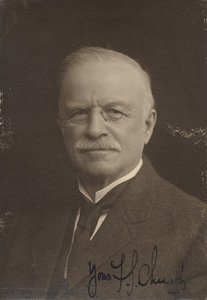
Frederick Stuart Church
1842 - 1924
Quick Facts
- Artistic Movement Or Style: Illustrator; Victorian Animal Art
- Artists Or Movements Influenced By This Artist: Aesops Fables
- Artists Who Influenced This Artist: Walter Shirlaw
- Date Of Birth: December 1, 1842
- Date Of Death: February 18, 1923
- Full Name: Frederick Stuart Church
- Nationality: American
- Notable Artworks:
- Supremacy
- Dreamers
- Two Birds
- Place Of Birth: Grand Rapids, Michigan

