 Preview
 Send
Send Share
Share
 Details

 Download
 Similars
 X-Ray
X-Ray Diaporama
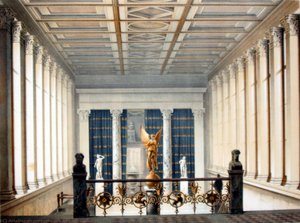
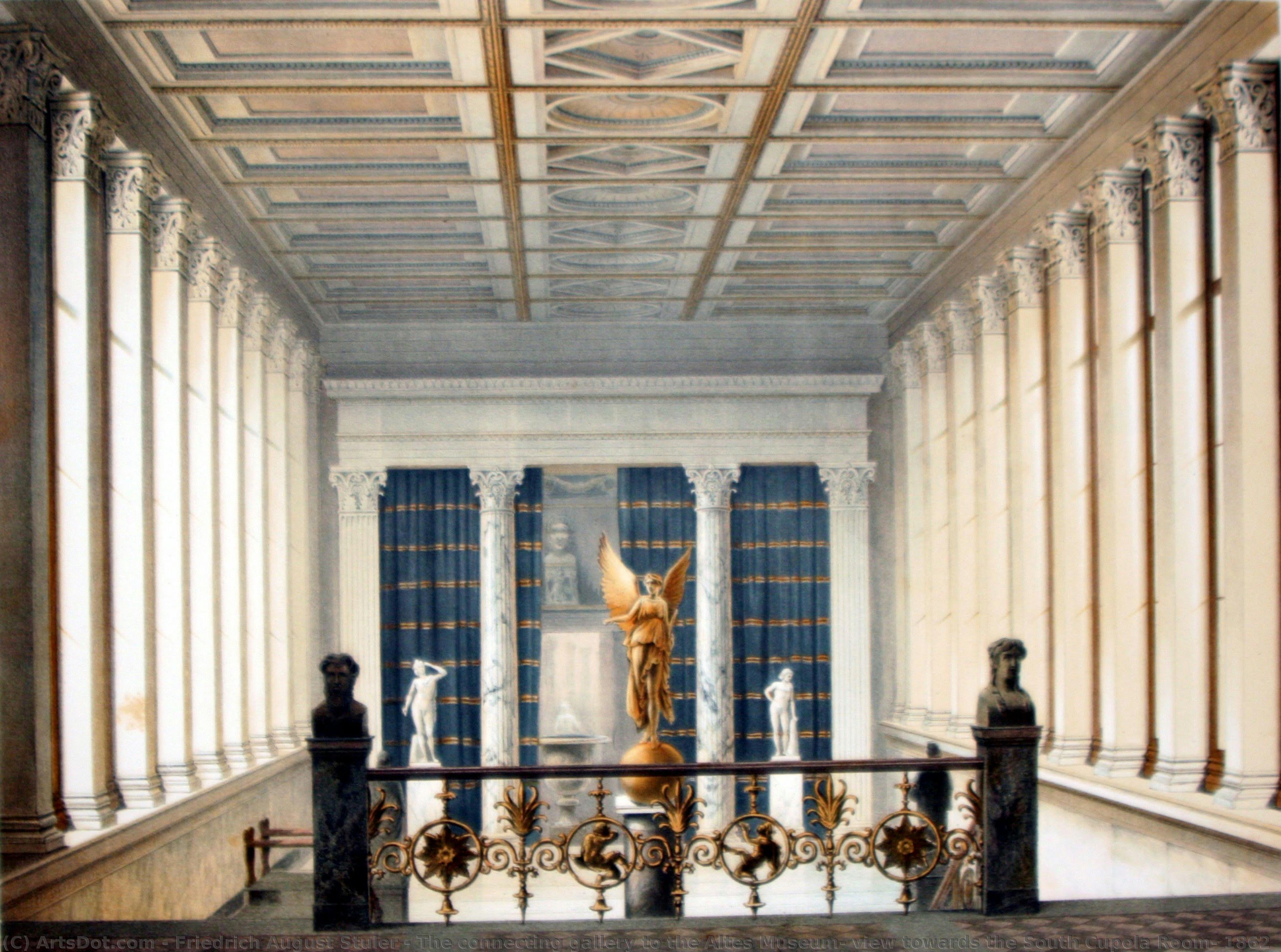
The connecting gallery to the Altes Museum, view towards the South Cupola Room, 1862


 Read More
Giclée / Art Print
Museum-quality giclée or canvas print with fast production and flexible finish options. ( Buy Hand Made Painting Buy Image)




P118B $10

P118H $10

P118W $10

P438Z $10

P508JH $12

P508YH $12

P805H $10

P805Z $10

P919BZ $10

P919G $10

P919XJ $10

P959ZH $10

P968JZ $12

W106C $8

W218G $10

W218JH $8

W218Y $10

W307PJ $10

W316G $10

W316PJ $8

W316Y $10

W398PJ $8

W4111J $10

W500HY $15

W500JH $15

W692G $12

W849H $8

W940BG $15

W953PJ $8




Pick from our preset sizes that match the artwork's original proportions.

You may enter your own dimensions to fit a specific frame or space. If your selected size does not match the original image's proportions, we will either crop the artwork or extend the image with a mirrored or solid-fill edge. A digital mockup will be sent for your approval before production begins.
Please note that the on-screen preview does not reflect the actual cropping or extension. Only the mockup will accurately show the final composition.
While custom sizes are available, we recommend selecting a dimension from the predefined list to preserve the original proportions.
Worldwide Delivery () in 2 weeks instead of standard 4/5 weeks. (24 August)

Free Worldwide Express Shipping

High-Quality Linen Canvas

Full Shipping Insurance

Customs Tax Refund Guarantee

True Color Matching Guarantee

60-Day Return Policy (Defects Only)

100% Money-Back Guarantee

Bulk Discount Offer
 Glass option is only available in size under 110 CM

The connecting gallery to the Altes Museum, view towards the South Cupola Room, 1862
Giclée / Art Print
Reproduction Size
-


Total Price
$ 63
Collectible Description
A Window into Prussian Grandeur: Stüler’s Vision of the Alte Nationalgalerie
Friedrich August Stüler's “The Connecting Gallery to the Alte Museum, View Towards the South Cupola Room,” painted in 1862, transcends mere architectural depiction; it embodies the spirit of Prussia under King Wilhelm II—a nation striving for artistic prestige and intellectual advancement. This monumental canvas captures not just a building’s façade but its very soul, reflecting Schinkel's enduring influence on Stüler’s approach to design and conveying a profound sense of solemn beauty.Architectural Precision Meets Romantic Idealism
Stüler, deeply rooted in the neoclassical tradition championed by Schinkel, skillfully blended rigorous geometric precision with elements suggestive of Romantic idealism. The painting meticulously portrays the Alte Nationalgalerie's South Cupola Room, showcasing its soaring dome and intricate sculptural ornamentation. Stüler’s meticulous draughtsmanship ensures accuracy, mirroring Schinkel’s commitment to classical proportions and detailing—a deliberate contrast against the burgeoning Impressionist movement gaining momentum across Europe. Notice how the gallery itself is rendered with careful perspective, grounding the grandeur of the cupola in a tangible space.Sculptural Echoes: Symbolism Within Form
The artwork isn't simply about architectural representation; it’s enriched by the presence of statues adorning the gallery walls. These sculptures—featuring figures draped in opulent fabrics and adorned with symbolic emblems like a golden helmet and a blue cape—represent not only artistic skill but also broader cultural aspirations. The helmet symbolizes royal authority and protection, while the cape evokes nobility and spiritual contemplation – motifs prevalent in Romantic art’s exploration of heroism and moral virtue. Stüler's choice of sculptural subjects speaks to Prussia’s desire for cultural refinement and its engagement with philosophical ideas circulating at the time.A Reflection of Wilhelm II’s Ambitions
Painted during Wilhelm II’s reign, “The Connecting Gallery” served as a visual testament to his ambition to elevate Prussia’s artistic reputation. Stüler's project—the Neues Museum in Berlin—became a cornerstone of this endeavor, demonstrating the power of architecture to inspire national pride and intellectual curiosity. The Alte Nationalgalerie itself was conceived as a repository for German Romantic art, mirroring Wilhelm II’s patronage of artists and fostering a climate conducive to creative innovation. Stüler's masterpiece embodies the overarching ethos of his era: striving for excellence in both form and substance—a legacy that continues to resonate with viewers today.Technical Mastery and Emotional Resonance
Stüler employed oil paint on canvas, utilizing layering techniques to achieve remarkable tonal depth and luminosity. The artist’s meticulous attention to detail – from capturing the subtle nuances of light reflecting off marble surfaces to rendering the textures of drapery—demonstrates a mastery of artistic craft. Yet, beyond technical prowess lies an emotional impact: the painting evokes a feeling of awe and reverence for architectural grandeur and artistic heritage. It invites contemplation on themes of history, beauty, and national identity – qualities that remain powerfully relevant in our contemporary world.Related Artworks
Artist Biography
Friedrich August Stüler: Architect of Prussian Grandeur
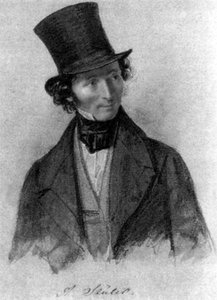
Friedrich August Stüler, born in Berlin on January 28, 1800, and tragically passing away on March 18, 1865, remains a pivotal figure in the history of Prussian architecture. More than simply an architect, he was a conduit between the neoclassical ideals championed by Karl Friedrich Schinkel and the burgeoning aesthetic sensibilities of his time. Stüler’s career spanned decades, marked by a relentless pursuit of architectural excellence and a profound impact on the visual landscape of Berlin and beyond. His legacy is inextricably linked to the grandeur of Prussian power and the evolving tastes of its monarchy, making him a compelling subject for artistic reproduction and study.Early Influences and Training
Stüler’s journey began within the hallowed halls of the Bauakademie (School of Architecture) in Berlin, where he diligently honed his skills under the tutelage of the immensely influential Karl Friedrich Schinkel. This formative period proved crucial; Stüler absorbed not only technical expertise but also Schinkel's profound understanding of classical proportions and the expressive potential of architecture. However, Stüler’s artistic development didn’t solely rely on imitation. He embarked on extensive travels throughout Europe – to France and Italy in 1829-30, and Russia in 1831 – immersing himself in the architectural traditions of these nations. These experiences broadened his perspective, introducing him to Renaissance revival styles and inspiring a synthesis of influences that would characterize much of his later work. Crucially, he learned from Eduard Knoblauch, another prominent architect who had studied under Schinkel, further solidifying his grounding in classical principles.Masterpieces of the Prussian State
Stüler’s career truly ascended with his appointment as Hofbauinspektor (Royal Buildings Inspector) and Hofbaurat (Royal privy councillor for buildings) in 1832. This prestigious position afforded him direct access to the royal court, allowing him to undertake some of Prussia's most ambitious architectural projects. The *Neues Museum* in Berlin stands as his undisputed masterpiece – a testament to his innovative use of color and form, pushing beyond mere imitation of classical styles into a more expressive and dynamic design. The dome of the triumphal arch of the Berliner Stadtschloss, completed around 1860, is another iconic achievement, showcasing Stüler’s mastery of monumental scale and intricate detailing. Beyond these grand structures, he also designed the *alte Nationalgalerie* (Old National Gallery), a significant building reflecting his architectural style, and contributed to the design of *Hohenzollern Castle*, demonstrating his skill in creating imposing and dignified royal residences. The connecting gallery to the Altes Museum, completed in 1862, is a remarkable example of his ability to seamlessly integrate new structures with existing historical monuments.Beyond Berlin: Expanding Horizons
Stüler’s influence extended far beyond the borders of Berlin. He was commissioned to design significant buildings throughout Prussia and even ventured abroad, notably undertaking the reconstruction of the Winter Palace in Saint Petersburg (though this project ultimately fell through due to Tsar Nicholas I's preference for preserving the existing Baroque structure). His work also included designing churches, castles, and public buildings in cities like Potsdam, Koblenz, Trier, and Stockholm. His involvement in the design of the Emanuelkirche in Niemegk, though unfinished at his death, exemplifies his continued dedication to architectural innovation. The Burg Hohenzollern, completed around 1850, stands as a particularly striking example of his ability to create visually arresting and historically resonant structures.Legacy and Influence
Friedrich August Stüler’s legacy is profound and enduring. He played a crucial role in shaping the architectural landscape of Prussia during the 19th century, bridging the gap between classical tradition and evolving aesthetic sensibilities. His designs continue to be studied by architects and art historians today, admired for their elegance, grandeur, and skillful integration of historical influences. The *Neues Museum*, in particular, remains a symbol of Berlin’s cultural heritage and a testament to Stüler's visionary genius. His work stands as a powerful reminder of the transformative power of architecture to shape not only physical spaces but also the identity and aspirations of a nation.Further Exploration
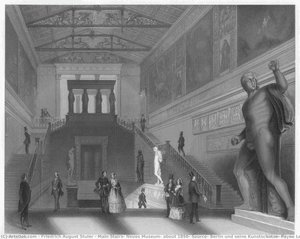
For more detailed information on Stüler’s life, works, and artistic influences, consider visiting these resources:- Main Stairs, Neues Museum, about 1850, Source: Berlin und seine Kunstschätze, Payne Leipzig und Dresden, ca. 1850: Explore this artwork
- The connecting gallery to the Altes Museum, view towards the South Cupola Room, 1862: Discover this artwork
- Altes Museum: Learn more about the Altes Museum and its significance
- Friedrich August Stüler - Google Arts & Culture: Explore this resource
- Friedrich August Stüler - Wikipedia: Read the Wikipedia article
- Friedrich August Stüler: Visit our artist page for more information
friedrich august stuler
1800 - 1865 , Germany
Quick Facts
- Artistic Movement Or Style: Neoclassical & Renaissance Revival
- Artists Or Movements Influenced By This Artist: ['Prussian Architecture']
- Artists Who Influenced This Artist: ['Karl Friedrich Schinkel']
- Date Of Birth: January 28, 1800
- Date Of Death: March 18, 1865
- Full Name: Friedrich August Stüler
- Nationality: German
- Notable Artworks:
- Neues Museum Berlin
- Hohenzollern Castle
- Alte Nationalgalerie
- Connecting Gallery
- Place Of Birth: Berlin, Germany
Related Articles

Renoir's Masterpieces: Explore 25 Iconic Paintings & Bring Art Home | ArtsDot
Explore 25 iconic Pierre-Auguste Renoir paintings! Discover the stories behind Impressionist masterpieces like 'Dance at Le Moulin de la Galette' & 'Luncheon of the Boating Party'. Find museum-quality art reproductions and elevate your home decor with ArtsDot.com.
Staatliche Museen Berlin: 25 Masterpieces for Your Home | ArtsDot
Journey through 25 iconic artworks at Staatliche Museen Berlin! Explore Nefertiti, Pergamon Altar & masterpieces of German art history. Find museum-quality reproductions & curated decor ideas to bring timeless beauty home. Discover all masterpieces on ArtsDot.com.
Alte Pinakothek's Masterpieces: 25 Iconic Paintings for Art Lovers | ArtsDot
Journey through Alte Pinakothek's 25 most iconic paintings! Explore masterpieces by Dürer, Rembrandt & Rubens. Discover art history, techniques & find museum-quality reproductions for your home at ArtsDot.com.

Caspar David Friedrich: Romanticism's Master of Landscape & the Sublimity of Inner Experience
Explore the profound landscapes of Caspar David Friedrich, a master of German Romanticism. Discover the symbolism, themes & enduring influence of this iconic artist. A deep dive into his life and work.
Neoclassical Art: 10 Masterpieces That Shaped History |
Explore 10 defining Neoclassical masterpieces by David, Ingres & Canova. Discover the history, symbolism & artistry behind these iconic paintings and sculptures. Find museum-quality art reproductions at – elevate your home with timeless beauty.