 Preview
 Send
Send Share
Share
 Details

 Download
 Similars
 X-Ray
X-Ray Diaporama
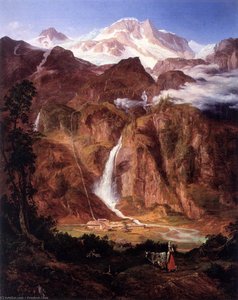
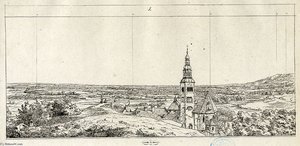
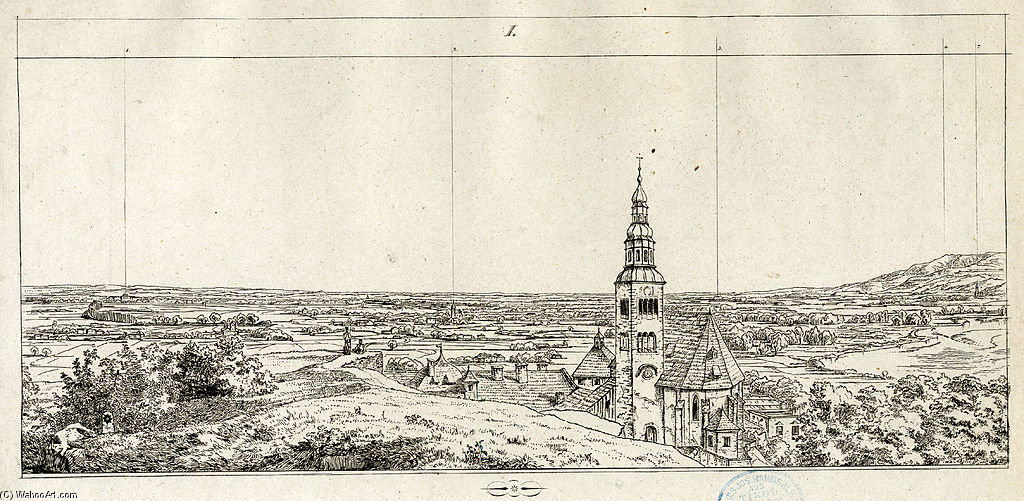
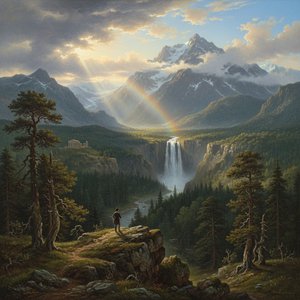
Wegweiser Auf Dem Monchberge

 Read More
Hand Made Oil Reproduction
Hand-painted oil on canvas in your size and frame, made to order by our artists. ( Buy Print Buy Image)




































Pick from our preset sizes that match the artwork's original proportions.

You may enter your own dimensions to fit a specific frame or space. If your selected size does not match the original image's proportions, we will either crop the artwork or extend the painting with additional hand-painted elements. A digital mockup will be sent for your approval before production begins.
Please note that the on-screen preview does not reflect the actual cropping or extension. Only the mockup will accurately show the final composition.
While custom sizes are available, we recommend selecting a dimension from the predefined list to preserve the original proportions.
After order, ArtsDot.com team will email client for instructions and provide a mockup preview
Worldwide Delivery () in 3/4 weeks instead of standard 5 weeks. (17 August). No compromise on quality.

Free Worldwide Express Shipping

High-Quality Linen Canvas

Full Shipping Insurance

Customs Tax Refund Guarantee

True Color Matching Guarantee

60-Day Return Policy (Defects Only)

100% Money-Back Guarantee

Bulk Discount Offer
 Glass option is only available in size under 110 CM

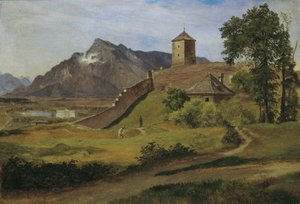
Wegweiser Auf Dem Monchberge
Reproduction Medium
Reproduction Size
-


Total Price
$ 263
Related Artworks
Artist Biography
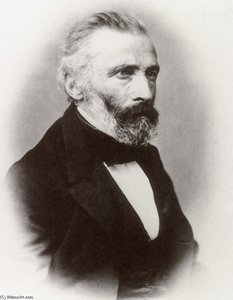
The Quiet Precision of Friedrich Loos
In the heart of the nineteenth century, as the dramatic swells of Romanticism began to sweep across Europe, a different kind of vision was taking root in the Austrian landscape. Friedrich Loos (1797–1890), born in the historic city of Graz, emerged not as a painter of tempestuous storms or supernatural shadows, but as a master of the Biedermeier spirit—a movement defined by its devotion to clarity, domestic tranquility, and an intimate, observant realism. His life’s work serves as a luminous window into a bygone era, capturing the serene majesty of the Alps and the timeless elegance of Rome with a technical discipline that commanded respect from his contemporaries.
Loos' artistic foundation was laid within the prestigious halls of the Vienna Academy, where he studied under the tutelage of Joseph Mössmer. It was here that he mastered the rigorous demands of drawing and etching, developing a meticulous approach to linework that would become his signature. While many of his peers sought to provoke intense emotional upheaval through exaggerated landscapes, Loos found profound beauty in the subtle gradations of light and the precise textures of the natural world. His training instilled in him a disciplined eye, allowing him to translate the atmospheric complexities of the Austrian mountains into works of remarkable topographical accuracy.
A Journey Through Light and Landscape
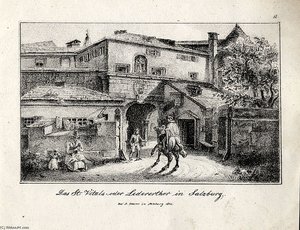
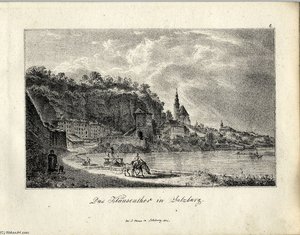
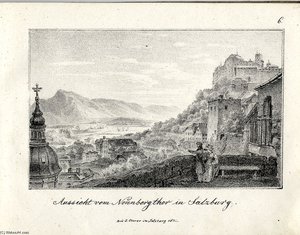
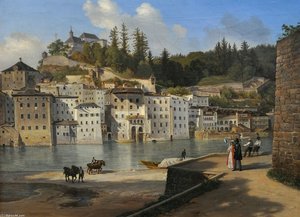
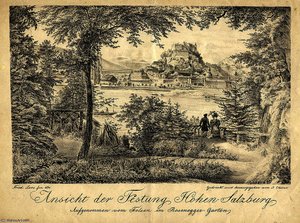
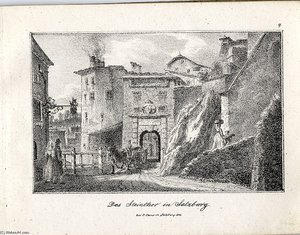
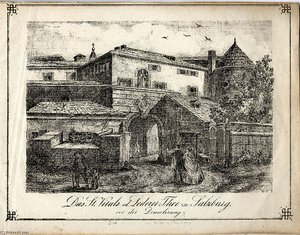
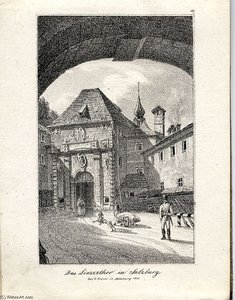
The evolution of Loos’ oeuvre is inextricably linked to his travels, which functioned as both personal pilgrimages and professional explorations. His early excursions through the Austrian Alpine regions provided him with a rich tapestry of subjects, ranging from rugged mountain passes to tranquil valley vistas. These journeys were not merely for inspiration but were essential to his commitment to naturalism; he sought to understand the very bones of the landscape. This dedication is perhaps most vividly realized in his celebrated engravings, such as “Die Zwölf Stadt-thore Salzburgs” (1820), where his ability to manipulate tonal variations brings the grandeur of Salzburg’s historic gates to life with breathtaking clarity.
As his career progressed, Loos expanded his horizons far beyond the borders of Austria. His sojourns in Rome during the mid-nineteenth century introduced a classical grace to his repertoire. In the Italian light, he refined his ability to use color and shadow to harmonize disparate elements within a composition, effectively "loosening" his technique while maintaining structural integrity. This period of Roman influence allowed him to bridge the gap between the meticulous detail of his early etchings and a more fluid, painterly approach that celebrated the warmth and luminosity of the Mediterranean atmosphere.
Legacy of the Biedermeier Vision
The historical significance of Friedrich Loos lies in his role as a guardian of the Biedermeier aesthetic. In an age of rapid industrialization and shifting political tides, his work offered a sense of permanence and peace. He did not merely document scenery; he captured the essence of a world that valued order, observation, and the quiet dignity of nature. His later years, spent as a drawing teacher in Kiel, allowed him to pass this legacy of precision onto a new generation, ensuring that the technical excellence of the Vienna Academy would endure.
Today, the works of Friedrich Loos remain vital for their ability to transport the viewer to a time of profound stillness. His contributions can be summarized through several defining artistic pillars:
- Technical Mastery: An unparalleled command over etching and lithography, characterized by intricate hatching and precise topographical detail.
- Atmospheric Realism: A unique ability to use light and subtle color palettes to convey the true character of Alpine and Roman landscapes without resorting to Romantic exaggeration.
- Biedermeier Essence: The embodiment of an era focused on introspection, clarity, and a deep, respectful connection to the visible world.
Through his eyes, the mountains were not just obstacles or symbols of terror, but intricate compositions of texture and light, inviting us to witness the enduring beauty of the earth with a sense of wonder and quiet reverence.
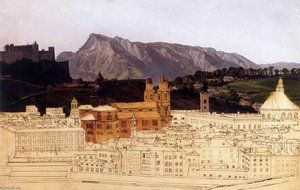
friedrich loos
1797 - 1890 , Austria
Quick Facts
- Artistic Movement Or Style: Biedermeier
- Artists Or Movements Influenced By This Artist: ['Romanticism']
- Artists Who Influenced This Artist: ['Joseph Möss']
- Date Of Birth: 1797 Graz Austria
- Date Of Death: 1890 Kiel Austria
- Full Name: Friedrich Loos
- Nationality: Austrian
- Notable Artworks:
- Die Zwölf Stadt-thore Salzburgs
- Wegweiser Auf Dem Monchberge
- Place Of Birth: Graz Austria
Related Articles

Romantic Landscapes: 10 Masterpieces for Your Home | ArtsDot
Journey through 10 Romantic landscape masterpieces by Friedrich, Turner & Cole. Explore emotional art, sublime nature scenes & iconic 19th-century paintings. Find museum-quality reproductions for your home at ArtsDot.com – discover the full collection online!

Beyond the Horizon: 10 Landscape Masterpieces for Your Home Decor
Journey through 10 breathtaking landscape paintings by Monet, Van Gogh & more! Explore iconic artworks, artistic techniques & find inspiration for your home decor. Museum-quality reproductions at ArtsDot.com. Discover all masterpieces on ArtsDot.com

Evocations of Place: A Historical Journey Through Landscape Art
Explore the rich history of landscape art with ArtsDot. Discover renowned artists, movements like Impressionism & Romanticism, and expert guidance for collecting timeless pieces. Find your perfect serene escape today!
Evoking Nature's Sublime: A Comprehensive Exploration of 19th-Century Landscape Painting
Explore the captivating world of 19th-century landscape painting! Discover renowned artists like Friedrich & Monet, key movements, and find the perfect artwork to bring nature's serenity into your home. Expert insights at ArtsDot.

Caspar David Friedrich: Romanticism's Master of Landscape & the Sublimity of Inner Experience
Explore the profound landscapes of Caspar David Friedrich, a master of German Romanticism. Discover the symbolism, themes & enduring influence of this iconic artist. A deep dive into his life and work.