 Preview
 Send
Send Share
Share
 Details

 Download
 Similars
 X-Ray
X-Ray Diaporama
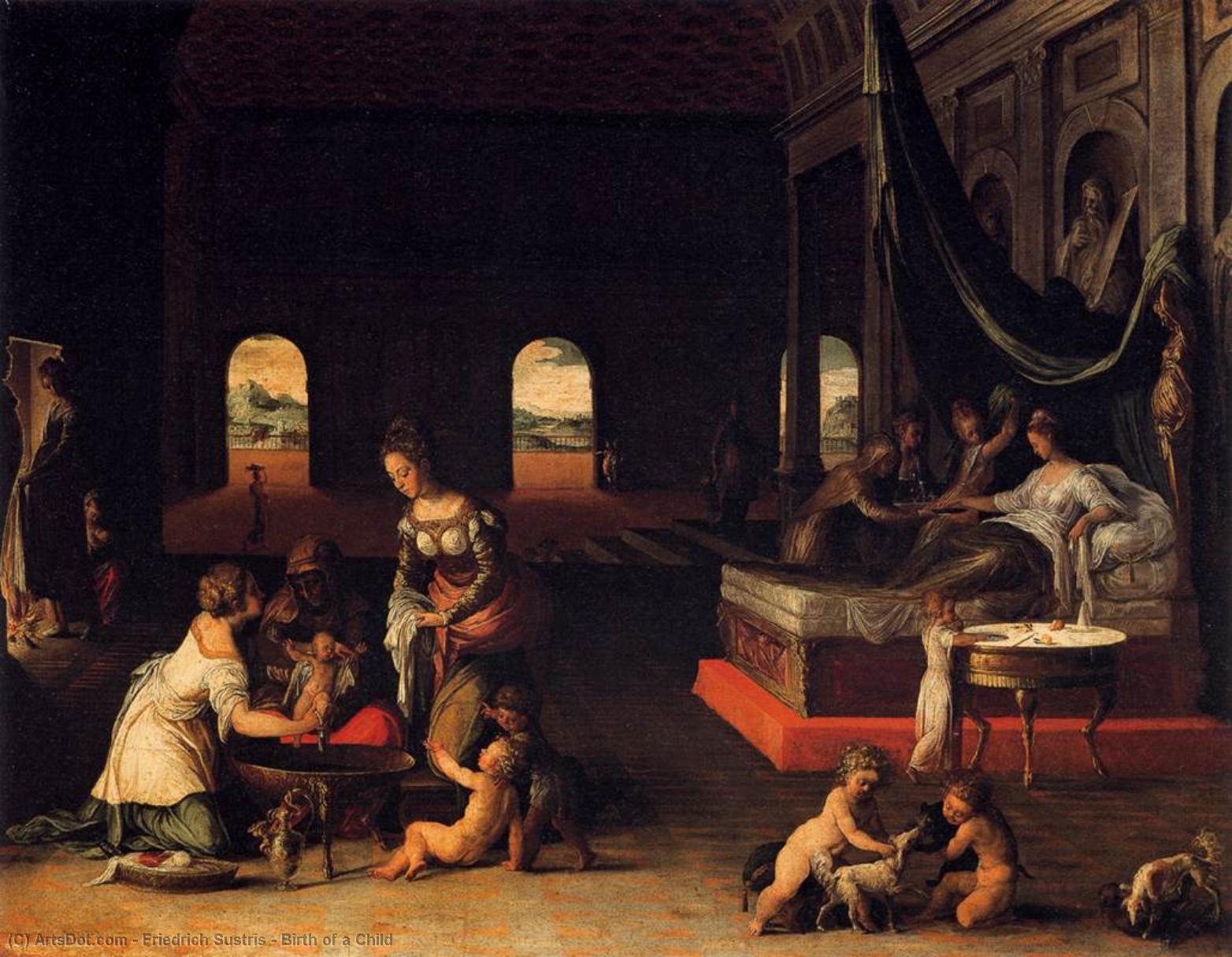
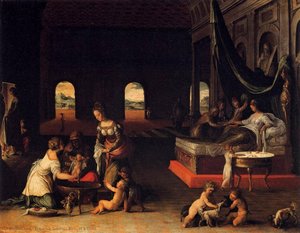
Birth of a Child
 1563
1563 76.0 x 97.0 cm
 Read More
Hand Made Oil Reproduction
Hand-painted oil on canvas in your size and frame, made to order by our artists. ( Buy Print Buy Image)




































Pick from our preset sizes that match the artwork's original proportions.

You may enter your own dimensions to fit a specific frame or space. If your selected size does not match the original image's proportions, we will either crop the artwork or extend the painting with additional hand-painted elements. A digital mockup will be sent for your approval before production begins.
Please note that the on-screen preview does not reflect the actual cropping or extension. Only the mockup will accurately show the final composition.
While custom sizes are available, we recommend selecting a dimension from the predefined list to preserve the original proportions.
After order, ArtsDot.com team will email client for instructions and provide a mockup preview
Worldwide Delivery () in 3/4 weeks instead of standard 5 weeks. (26 August). No compromise on quality.

Free Worldwide Express Shipping

High-Quality Linen Canvas

Full Shipping Insurance

Customs Tax Refund Guarantee

True Color Matching Guarantee

60-Day Return Policy (Defects Only)

100% Money-Back Guarantee

Bulk Discount Offer
 Glass option is only available in size under 110 CM

Birth of a Child
Reproduction Medium
Reproduction Size
-


Total Price
$ 263
Related Artworks

![Life Of Saint Francis - [04] - Death And Ascension Of St Francis — Giotto Di Bondone, Italian Renaissance](/media/artworks/images-thumb/08/8b/088b102b13c1a379233690905590f156.jpg)

Artist Biography
A Renaissance Visionary of the Bavarian Court
Friedrich Sustris stands as a pivotal figure in the artistic landscape of late Renaissance Bavaria, embodying the ambition and innovation that characterized the era’s most influential courts. Born around 1540 in Padua, his very origins were steeped in a profound artistic lineage. As the son of the renowned Venetian painter Lambert Sustris, Friedrich was destined for a life shaped by the brush and the compass. His early years were spent absorbing the stylistic currents of Mannerism and Proto-Baroque, moving through the vibrant artistic hubs of Venice and Padua. This formative period allowed him to internalize the sophisticated aesthetic sensibilities of the Italian masters, creating a foundation that would eventually allow him to bridge the gap between Mediterranean elegance and the burgeoning grandeur of the German courts.
The trajectory of Sustris's development was marked by an extraordinary series of apprenticeships that connected him to the most celebrated minds of the sixteenth century. Following his initial training under his father, he journey of artistic maturation led him to Florence between 1563 and 1567, where he studied under the legendary Giorgio Vasari. This period in Florence was transformative; Vasari instilled in him a profound appreciation for classical ideals and the pursuit of harmonious proportions. Through this Florentine lens, Sustris learned to master the intricate language of Mannerism, a style characterized by elongated forms and complex compositions. His ability to synthesize the atmospheric light of Venice with the structured elegance of Florence made him a uniquely versatile artist, capable of both delicate decoration and monumental architectural design.
Architectural Grandeur and the Munich Legacy
Sustris's career was not merely one of painting, but of profound architectural influence. His journey eventually led him to Germany, where his reputation as a skilled decorator and architect preceded him. His first significant independent commission arrived in 1569 through the patronage of Hans Fugger, who engaged him to decorate the newly built rear wing of the Fugger houses in Augsburg. This early success in Germany served as a prelude to his most enduring legacy: his service to the Bavarian ducal heir, Wilhelm V. When the Duke ascended to power and moved his residence to Munich, he brought Sustris with him, appointing him as court painter, architect, and artistic director.
In Munich, Sustris became the primary architect of the city's cultural identity. He was tasked with overseeing massive projects that would define the Bavarian landscape for centuries. His contributions were vast and varied:
- The Remodeling of Trausnitz Castle: Working alongside master builder Georg Stern the Younger, Sustris played a crucial role in the architectural evolution of this landmark above Landshut.
- The Munich Residenz: He contributed significantly to the breathtaking decoration of the Antiquarium, a hall that remains one of the most magnificent Renaissance rooms in Europe.
- The Jesuit Church of St. Michael: Between 1583 and 1597, he worked on what would become his most celebrated achievement, helping to establish a monumental space that blended religious devotion with architectural splendor.
Through these works, Sustris introduced the formal language of Italian Mannerism to Munich, effectively establishing the city as a leading German art center of the late Renaissance. His ability to command both the fine details of fresco cycles and the structural complexities of large-scale buildings allowed him to shape the very atmosphere of the Bavarian court. Even after the Duke's abdication in 1597, Sustris continued his creative pursuits, leaving behind a legacy of stone, pigment, and light that continues to resonate within the historical heart of Germany.
friedrich sustris
1540 - 1599 , Netherlands
Quick Facts
- Artistic Movement Or Style: Mannerist
- Artists Or Movements Influenced By This Artist:
- Hans Fugger
- William V
- Artists Who Influenced This Artist:
- Giorgio Vasari
- Lambert Sustris
- Date Of Birth: c.1540
- Date Of Death: 1600
- Full Name: Friedrich Sustris
- Nationality: Dutch
- Notable Artworks: ['Susannah and the Elders']
- Place Of Birth: Holland or Italy