 Preview
 Send
Send Share
Share
 Details

 Download
 Similars
 X-Ray
X-Ray Diaporama
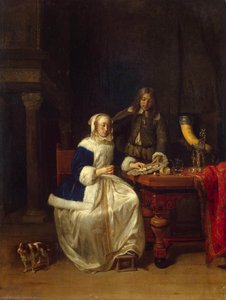
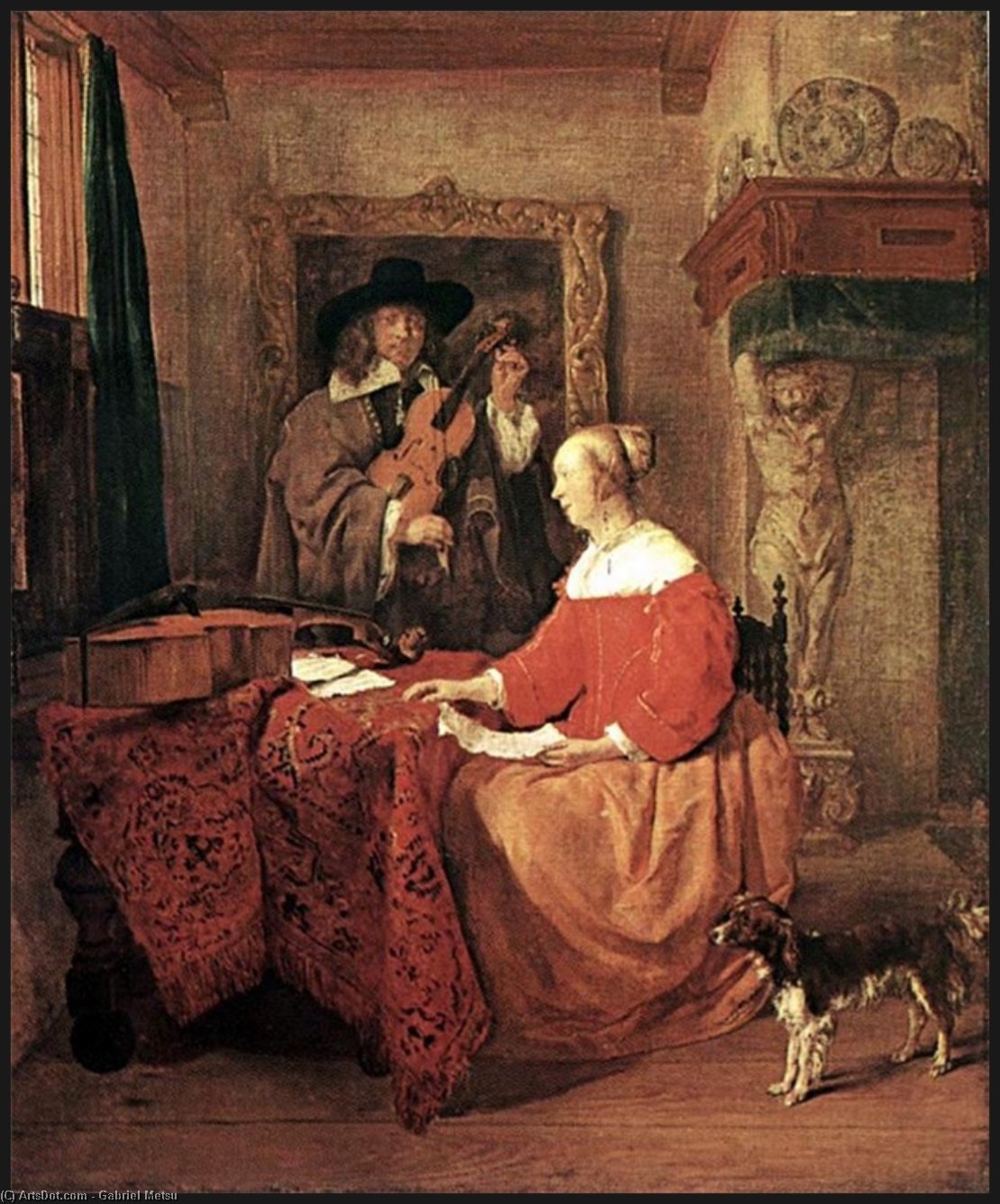
A Woman Seated at a Table and a Man Tuning a Violin
 Acrylic On Canvas
- WallArt
- Baroque
 43.0 x 37.0 cm
 National Gallery
 Read More
Hand Made Oil Reproduction
Hand-painted oil on canvas in your size and frame, made to order by our artists. ( Buy Print Buy Image)




P118B $10

P118H $10

P118W $10

P438Z $10

P508JH $12

P508YH $12

P805H $10

P805Z $10

P919BZ $10

P919G $10

P919XJ $10

P959ZH $10

P968JZ $12

W106C $8

W218G $10

W218JH $8

W218Y $10

W307PJ $10

W316G $10

W316PJ $8

W316Y $10

W398PJ $8

W4111J $10

W500HY $15

W500JH $15

W692G $12

W849H $8

W940BG $15

W953PJ $8




Pick from our preset sizes that match the artwork's original proportions.

You may enter your own dimensions to fit a specific frame or space. If your selected size does not match the original image's proportions, we will either crop the artwork or extend the painting with additional hand-painted elements. A digital mockup will be sent for your approval before production begins.
Please note that the on-screen preview does not reflect the actual cropping or extension. Only the mockup will accurately show the final composition.
While custom sizes are available, we recommend selecting a dimension from the predefined list to preserve the original proportions.
After order, ArtsDot.com team will email client for instructions and provide a mockup preview
Worldwide Delivery () in 3/4 weeks instead of standard 5 weeks. (25 August). No compromise on quality.

Free Worldwide Express Shipping

High-Quality Linen Canvas

Full Shipping Insurance

Customs Tax Refund Guarantee

True Color Matching Guarantee

60-Day Return Policy (Defects Only)

100% Money-Back Guarantee

Bulk Discount Offer
 Glass option is only available in size under 110 CM

A Woman Seated at a Table and a Man Tuning a Violin
Reproduction Medium
Reproduction Size
-


Total Price
$ 263
Artwork Description
A Window into Dutch Domestic Tranquility: Gabriel Metsu’s “A Woman Seated at a Table”
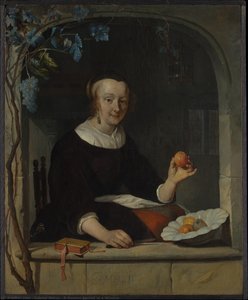
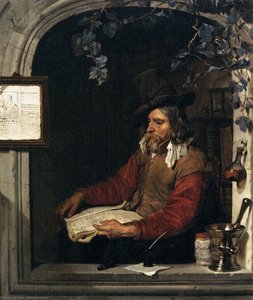
Gabriel Metsu's "A Woman Seated at a Table and a Man Tuning a Violin," painted circa 1658, resides within the esteemed collection of The National Gallery in London—a testament to his enduring influence on Baroque art. This captivating portrait transcends mere representation; it embodies the essence of Dutch Golden Age ideals: refined elegance, domestic harmony, and an appreciation for intellectual pursuits alongside artistic expression. Metsu’s masterful handling of light and color contributes significantly to the painting's serene atmosphere, inviting viewers into a meticulously crafted tableau of everyday life elevated by artistic brilliance.The Artist’s Eclectic Approach & Style
Gabriel Metsu (1629–1667) distinguished himself as an artist who eschewed stylistic conformity, earning him the moniker “a highly eclectic artist.” Unlike many of his contemporaries who adhered to established conventions, Metsu embraced a diverse range of influences—from Flemish primitives to Caravaggio’s dramatic chiaroscuro—resulting in a distinctive visual language characterized by subtle nuances and expressive detail. His oeuvre encompassed history paintings, still lifes, portraits, and genre scenes, demonstrating an unparalleled versatility that cemented his reputation as one of the era's foremost innovators. The painting exemplifies this eclectic style through its careful observation of naturalism combined with idealized forms—a hallmark of Metsu’s artistic vision.Technique & Composition: Mastering Light and Texture
Metsu’s technique is renowned for its meticulous attention to detail and masterful manipulation of light. He employed a glazing technique, layering thin translucent washes of color over an underpainting to achieve luminous effects that imbue the scene with palpable warmth. Observe how Metsu skillfully captures the diffused glow emanating from the windowpane, illuminating the woman's face and highlighting the textures of the table surface and violin instrument. The composition is deliberately balanced—the woman seated centrally, while the musician occupies a position slightly off-kilter—creating visual interest without disrupting the overall sense of tranquility. Furthermore, Metsu’s use of tonal gradations contributes to the painting’s depth and realism, transporting viewers into the intimate space depicted.Symbolism & Context: Reflecting Dutch Values
“A Woman Seated at a Table” speaks volumes about the values prevalent in 17th-century Holland—a nation deeply invested in intellectual discourse and artistic patronage. The woman reading suggests an engagement with learning and contemplation, mirroring the importance placed on education within Dutch society during this period. The violin symbolizes musical artistry and refinement, reflecting the cultural prestige accorded to musicianship. Moreover, the presence of two dogs adds a subtle element of domestic comfort and companionship—symbols commonly found in genre paintings of the era. These details underscore Metsu’s ability to infuse his artwork with layers of meaning beyond mere visual beauty.Emotional Resonance: Capturing Quiet Contemplation
Ultimately, Metsu's masterpiece succeeds in conveying a profound sense of quiet contemplation. The painting invites viewers to pause and appreciate the simple pleasures of domestic life—the warmth of companionship, the pursuit of knowledge, and the solace found in artistic creation. It’s a scene frozen in time, capturing an instant of serene beauty that continues to resonate with audiences centuries later. This reproduction allows you to experience this timeless elegance firsthand, bringing Metsu's vision into your home or studio.Related Artworks
Artist Biography
**a life of artistic exploration**
gabriël metsu, a dutch painter from the netherlands, lived a life marked by artistic exploration and innovation. born in 1629, metsu's work embodied the spirit of the dutch golden age, a period renowned for its prolific artistic output. this biography delves into the life and works of this enigmatic figure, whose contributions to the art world continue to fascinate.**early life and influences**
metsu was born in 1629, the son of jacques metsu, a tapestry worker and painter originally from hainault. this eclectic background likely influenced gabriel's early interest in diverse artistic techniques. the family's move to leiden, where metsu grew up, exposed him to various cultural influences.**artistic career**
metsu's career was marked by an adherence to no single style or technique, earning him the title of "a highly eclectic artist." his work spanned history paintings, still lifes, portraits, and genre works. notably, only 14 of his 133 works are dated, leaving much to be discovered about his creative process.- rembrandt van rijn's influence on metsu's early work is evident, particularly in his use of light and color.
- metsu's move to amsterdam in 1655 marked a significant shift in his style, with more emphasis on domestic interiors and genre scenes.
- his training of michiel van musscher and joost van geel reflects his commitment to the artistic community.
**notable works and legacy**
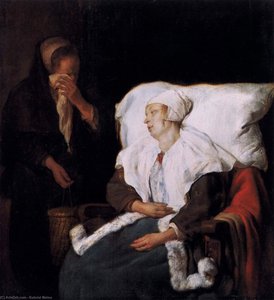
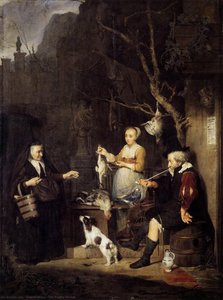
metsu's paintings often featured young women, market scenes, and old people, drawing from popular emblems. a notable example is the poultry seller, which showcases his use of symbolism. key works:- the sick child (c. 1664), reflecting metsu's admiration for vermeer's work.
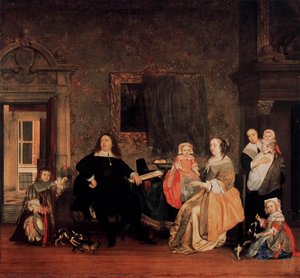
- portrait of the family hinlopen, a masterpiece that blends genre and portrait painting.
**museums and collections**
metsu's works can be found in various museums, including the rijksmuseum in amsterdam. for more information on his art and to explore other dutch golden age painters, visit /en/art/show/art-d3c627-en/ for a comprehensive overview. **conclusion:** gabriel metsu's life and art are a testament to the innovative spirit of the dutch golden age. his eclectic style, though sometimes enigmatic, has left an indelible mark on the world of art. as we continue to uncover more about his life and works, we are reminded of the profound impact he had on the development of western art.- for a deeper understanding of the dutch golden age, refer to [https://en.wikipedia.org/wiki/dutch_golden_age_painting](https://en.wikipedia.org/wiki/dutch_golden_age_painting).
- explore more of metsu's works and those of his contemporaries at [https://ArtsDot.com/@/gabriel-metsu](https://ArtsDot.com/@/gabriel-metsu).
**references:**
- the house of orange-nassau historic collection trust (the hague, netherlands), [https://ArtsDot.com/@@/a@d3ccx5](https://ArtsDot.com/@@/a@d3ccx5).
- van gogh museum (netherlands) - a haven for art lovers, [https://ArtsDot.com/@@/a@d3c8x3](https://ArtsDot.com/@@/a@d3c8x3).
- dutch golden age painting, [https://en.wikipedia.org/wiki/dutch_golden_age_painting](https://en.wikipedia.org/wiki/dutch_golden_age_painting).
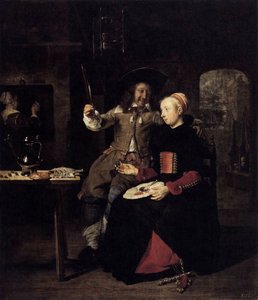
Gabriel Metsu
1629 - 1667 , Netherlands
Quick Facts
- Artistic Movement Or Style: Dutch Golden Age painting
- Artists Or Movements Influenced By This Artist:
- Michiel van Musscher
- Joost van Geel
- Artists Who Influenced This Artist:
- Rembrandt van Rijn
- Johannes Vermeer
- Date Of Birth: 1629
- Date Of Death: 1667
- Full Name: Gabriel Metsu
- Nationality: Dutch
- Notable Artworks:
- The Sick Child
- Poultry Seller
- Portrait of the Hinlopen Family
- Place Of Birth: Leiden, Netherlands
Related Articles

Golden Age Reflections: Dutch Baroque Painting & Cultural Innovation
Explore the Dutch Golden Age of painting! Discover key artists like Vermeer & ter Borch, their innovative techniques, and the rich cultural context behind these Baroque masterpieces. Learn about collecting & appreciating this iconic art period.

Dutch Masters: 10 Golden Age Paintings That Still Inspire |
Journey into the Dutch Golden Age! Explore 10 iconic paintings by Rembrandt, Vermeer & Hals. Discover the stories behind these Baroque masterpieces and find museum-quality art reproductions to elevate your home decor on .
Dante Gabriel Rossetti's 25 Masterpieces: A Journey Through Victorian Art & Symbolism | ArtsDot
Explore 25 iconic artworks by Dante Gabriel Rossetti, a leading Pre-Raphaelite artist. Discover the stories behind masterpieces like 'Proserpine' & 'Beata Beatrix'. Find museum-quality art reproductions and elevate your home decor with ArtsDot.com.

Dutch Baroque Masters: 10 Paintings That Shaped an Era | ArtsDot
Journey through the Golden Age with our guide to the Top 10 Dutch Baroque masterpieces! Explore iconic paintings by Rembrandt, Vermeer & Frans Hals. Find museum-quality art reproductions and elevate your home decor at ArtsDot.com.

Illuminating Innovation: Exploring the Dutch Golden Age of Painting
Explore the Dutch Golden Age of painting with ArtsDot. Discover Rembrandt, Vermeer & other Masters. Learn about key characteristics, iconic artworks, and lasting influence. Expert insights for collectors & enthusiasts.