- Home

- Oil Painting Reproduction
- ganku, kishi ku (koma), saeki masaaki ku (koma), funzen, utanosuke, dôkôkan, kakandô, kayô, kotôkan, kyûsôrô, tansai, tenkaikutsu
 Preview
 Send
Send Share
Share
 Details

 Download
 Similars
 X-Ray
X-Ray Diaporama
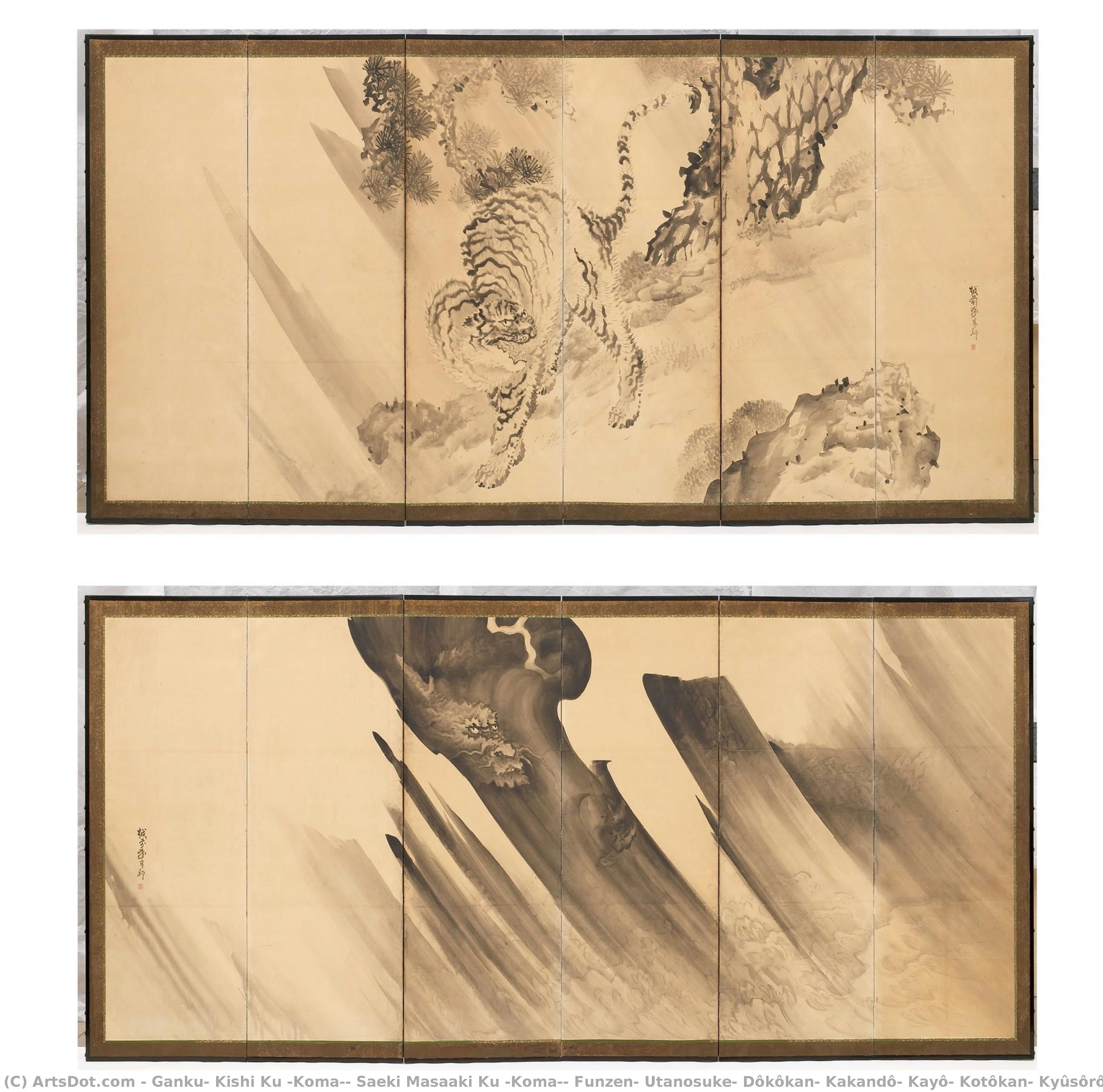
Tiger and dragon
 Ink
Ink 19th Century
 376.0 x 174.0 cm
 Museum of Oriental Art
 Read More
Hand Made Oil Reproduction
Hand-painted oil on canvas in your size and frame, made to order by our artists. ( Buy Print Buy Image)




P118B $10

P118H $10

P118W $10

P438Z $10

P508JH $12

P508YH $12

P805H $10

P805Z $10

P919BZ $10

P919G $10

P919XJ $10

P959ZH $10

P968JZ $12

W106C $8

W218G $10

W218JH $8

W218Y $10

W307PJ $10

W316G $10

W316PJ $8

W316Y $10

W398PJ $8

W4111J $10

W500HY $15

W500JH $15

W692G $12

W849H $8

W940BG $15

W953PJ $8




Pick from our preset sizes that match the artwork's original proportions.

You may enter your own dimensions to fit a specific frame or space. If your selected size does not match the original image's proportions, we will either crop the artwork or extend the painting with additional hand-painted elements. A digital mockup will be sent for your approval before production begins.
Please note that the on-screen preview does not reflect the actual cropping or extension. Only the mockup will accurately show the final composition.
While custom sizes are available, we recommend selecting a dimension from the predefined list to preserve the original proportions.
After order, ArtsDot.com team will email client for instructions and provide a mockup preview
Worldwide Delivery () in 3/4 weeks instead of standard 5 weeks. (6 September). No compromise on quality.

Free Worldwide Express Shipping

High-Quality Linen Canvas

Full Shipping Insurance

Customs Tax Refund Guarantee

True Color Matching Guarantee

100-Day Return Policy (Defects Only)

100% Money-Back Guarantee

Bulk Discount Offer
 Glass option is only available in size under 110 CM

Tiger and dragon
Reproduction Medium
Reproduction Size
-


Total Price
$ 263
A Celestial Encounter: The Primal Energy of Tiger and Dragon
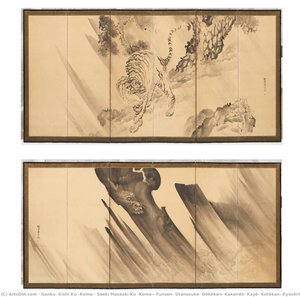
In the grand tradition of Japanese screen painting, few subjects command as much visceral attention as the dual presence of the tiger and the dragon. This breathtaking pair of screens, attributed to the masterful hand of Kishi Ganku, serves as a profound meditation on the elemental forces of nature. The artwork presents a dramatic dichotomy: one screen captures the grounded, muscular intensity of a tiger navigating a rugged, mountainous terrain of pine and stone, while the other unveils a celestial dragon emerging from a turbulent sea of boiling waters and swirling clouds. Together, they create a cosmic dialogue between the earth and the heavens, inviting the viewer into a world where the boundaries between the physical and the spiritual are perpetually blurred.
The artistry behind these screens is rooted in the vigorous, expressive brushwork characteristic of the late Edo period. Ganku, a pivotal figure of the Kishi school, was celebrated for his ability to blend the refined elegance of the Maruyama-shijō school with the powerful, sweeping strokes of Chinese-inspired styles. In this particular work, one can feel the artist's pulse through every stroke; the tiger’s open maw and the dragon’s serpentine movement are rendered with a kinetic energy that feels almost alive. The use of broad, confident applications of pigment creates a sense of texture—from the rough, weathered surfaces of the mountain rocks to the ethereal, misty atmosphere surrounding the dragon—making the composition feel both monumental and deeply intimate.
Symbolism and the Harmony of Opposites
Beyond their visual splendor, these screens are steeped in profound Eastern symbolism. The tiger and the dragon are not merely creatures of myth; they represent the fundamental balance of the universe. Often associated with the seasons of autumn and spring, respectively, their pairing evokes the concept of yin and yang—the eternal dance between strength and fluidity, terrestrial power and celestial wisdom. The tiger, a symbol of earthly authority and ferocious courage, stands amidst the permanence of the mountains, while the dragon represents the unpredictable, transformative power of the heavens and the waters. For the discerning collector or interior designer, this piece offers more than decoration; it provides a focal point of philosophical depth, suggesting a space of balance, resilience, and cosmic order.
Integrating such a magnificent work into a contemporary setting offers an unparalleled opportunity for dramatic impact. Whether placed in a grand salon or a curated study, the sheer scale and movement of these paintings can transform the atmosphere of a room, lending it an air of historical prestige and cultural sophistication. A high-quality reproduction of this masterpiece allows the evocative power of Ganku’s vision to reside within your home, serving as a constant reminder of the sublime beauty found in the struggle and harmony of the natural world.
Related Artworks


Artist Biography
early life and training
ganku, kishi ku (koma), a renowned japanese painter from kyoto, was born in 1749 in kanazawa as saeki masaaki ku (koma). he studied various painting styles, including those of chinese painter shen nanpin and the maruyama-shijō school. this diverse training laid the foundation for his future success.rise to prominence
ganku's artistic talents soon gained recognition, leading him to assume a position under prince arisugawa by the late 18th century. his work was highly appreciated by patrons, including the imperial family. this period marked the beginning of his illustrious career.notable students and legacy
ganku's influence extended beyond his own work through his students, who included:- gantai (1782–1865), his son
- ganryou (1797–1852), his son-in-law
- renzen (1804–59), his adopted son
- yokoyama kazan (1784–1837)
- shirai kayou (fl. ca 1840–60)
- kawamura bumpou (1779–1821)
later life and honors
ganku was made honorary governor of echizen (echizen no kami, 越前守) toward the end of his life. he passed away on january 19, 1839, in kyoto.artistic style and notable works
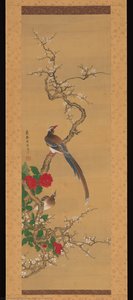
notable works by ganku include:- birds on a plum tree (silk, 107 x 34 cm)
- tiger and dragon (paper, 376 x 174 cm, museum of oriental art, turin, italy)
references and external links
- ganku, kishi ku (koma), saeki masaaki ku (koma), funzen, utanosuke, dôkôkan, kakandô, kayô, kotôkan, kyûsôrô, tansai, tenkaikutsu on ArtsDot
- kishi ganku on wikipedia
conclusion
ganku's legacy as a leading japanese painter of kyoto and founder of the kishi school of painting continues to inspire artists and art enthusiasts alike. his influence, marked by his captivating depictions of tigers and other subjects, remains a testament to his enduring impact on the world of art.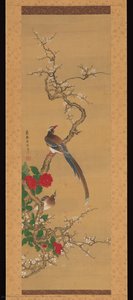
Quick Facts
- Artistic Movement Or Style: Kishi School
- Artists Or Movements Influenced By This Artist:
- Gantai
- Ganryou
- Renzan
- Artists Who Influenced This Artist:
- Shen Nanpin
- Maruyama-Shijō school
- Date Of Birth: 1749, Kanazawa
- Date Of Death: 1839, Kyoto
- Full Name: Kishi Ganku (Saeki Masaaki Ku)
- Nationality: Japanese
- Notable Artworks:
- Birds on a Plum Tree
- Tiger and Dragon
- Place Of Birth: Kanazawa, Japan
Related Articles
Majestic Peaks on Canvas: A Historical & Artistic Exploration of Mountains in Fine Art
Explore the history of mountain painting! Discover Romantic masterpieces & key artists like Dahl & Calame. Learn about the Sublime & Picturesque aesthetics and find your perfect artwork at ArtsDot.

Cézanne's Masterpieces: 25 Iconic Artworks to Transform Your Space
Journey through 25 iconic artworks by Paul Cézanne – a master of Impressionism and Post-Impressionism. Explore his landscapes, still lifes, and the stories behind these timeless masterpieces. Discover museum-quality reproductions & curated decor at ArtsDot.com.

Monet's Masterpieces: 25 Iconic Artworks to Transform Your Home
Journey through 25 iconic Claude Monet masterpieces! Explore Impressionism’s beauty, from Water Lilies to Rouen Cathedral. Discover stunning art reproductions & curated decor ideas – explore the full collection online at ArtsDot.com.
Renoir's Masterpieces: Explore 25 Iconic Paintings & Bring Art Home | ArtsDot
Explore 25 iconic Pierre-Auguste Renoir paintings! Discover the stories behind Impressionist masterpieces like 'Dance at Le Moulin de la Galette' & 'Luncheon of the Boating Party'. Find museum-quality art reproductions and elevate your home decor with ArtsDot.com.

Hokusai's Masterpieces: 25 Iconic Prints & Paintings for Art Lovers | ArtsDot
Journey through Katsushika Hokusai’s 25 most iconic artworks, including *The Great Wave*. Explore the ukiyo-e master's history, style & timeless Japanese woodblock prints. Find museum-quality reproductions for your home at ArtsDot.com.