 Preview
 Send
Send Share
Share
 Details

 Download
 Similars
 X-Ray
X-Ray Diaporama
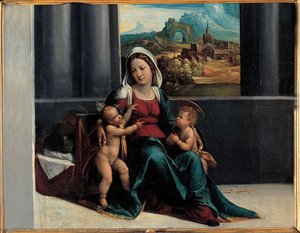
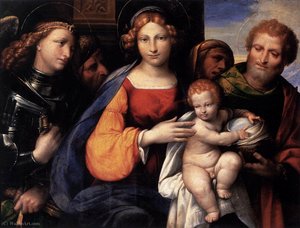
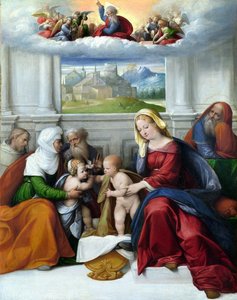
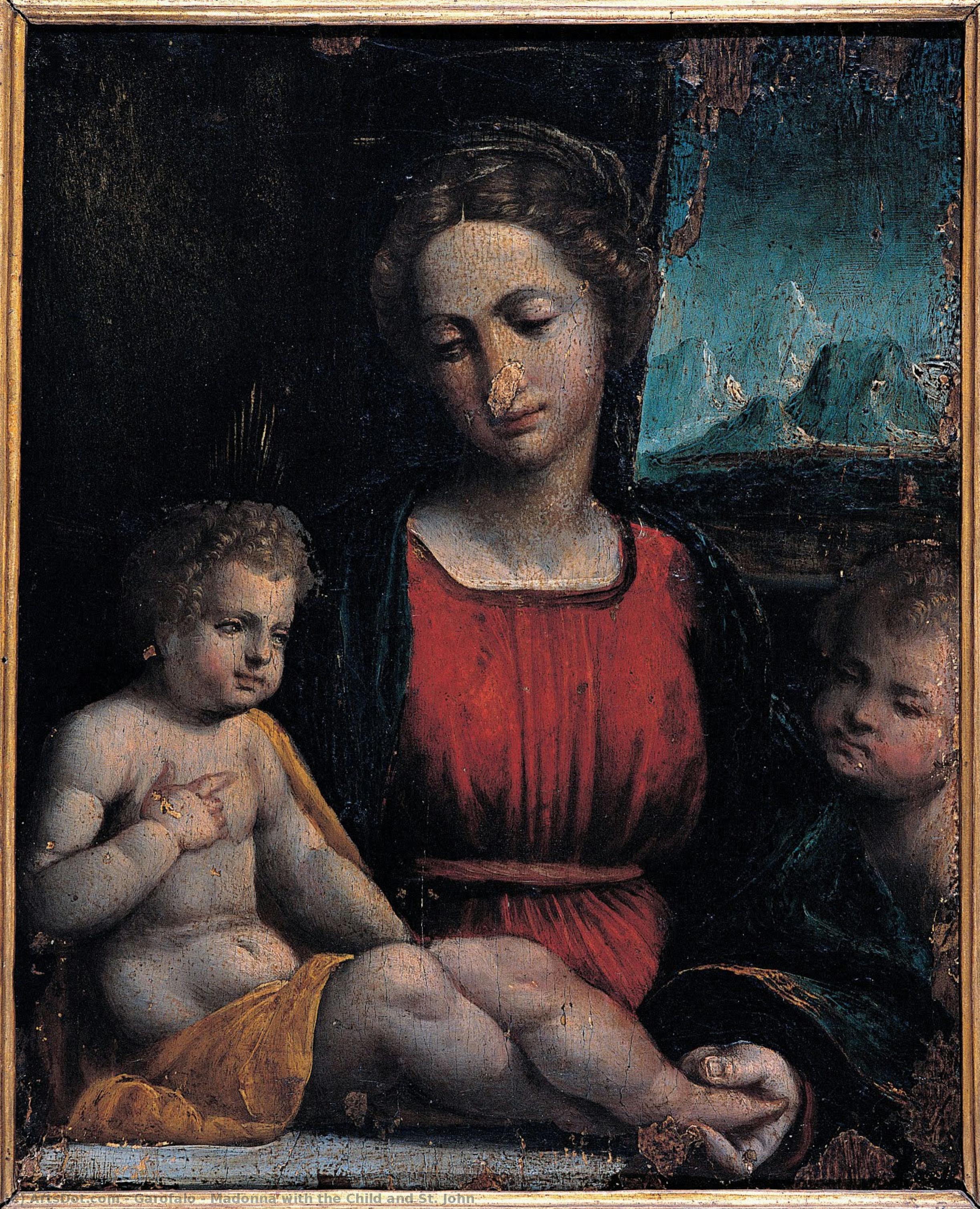
Madonna with the Child and St. John
 Oil On Canvas
- WallArt
- Ferrara Renaissance
 230.0 x 280.0 cm
 Musei Capitolini
 Read More
Hand Made Oil Reproduction
Hand-painted oil on canvas in your size and frame, made to order by our artists. ( Buy Print Buy Image)




P118B $10

P118H $10

P118W $10

P438Z $10

P508JH $12

P508YH $12

P805H $10

P805Z $10

P919BZ $10

P919G $10

P919XJ $10

P959ZH $10

P968JZ $12

W106C $8

W218G $10

W218JH $8

W218Y $10

W307PJ $10

W316G $10

W316PJ $8

W316Y $10

W398PJ $8

W4111J $10

W500HY $15

W500JH $15

W692G $12

W849H $8

W940BG $15

W953PJ $8




Pick from our preset sizes that match the artwork's original proportions.

You may enter your own dimensions to fit a specific frame or space. If your selected size does not match the original image's proportions, we will either crop the artwork or extend the painting with additional hand-painted elements. A digital mockup will be sent for your approval before production begins.
Please note that the on-screen preview does not reflect the actual cropping or extension. Only the mockup will accurately show the final composition.
While custom sizes are available, we recommend selecting a dimension from the predefined list to preserve the original proportions.
After order, ArtsDot.com team will email client for instructions and provide a mockup preview
Worldwide Delivery () in 3/4 weeks instead of standard 5 weeks. (16 August). No compromise on quality.

Free Worldwide Express Shipping

High-Quality Linen Canvas

Full Shipping Insurance

Customs Tax Refund Guarantee

True Color Matching Guarantee

60-Day Return Policy (Defects Only)

100% Money-Back Guarantee

Bulk Discount Offer
 Glass option is only available in size under 110 CM

Madonna with the Child and St. John
Reproduction Medium
Reproduction Size
-


Total Price
$ 263
Artwork Description
Benvenuto Garofalo’s “Madonna with the Child and St. John”: A Window into Ferrara’s Renaissance Soul
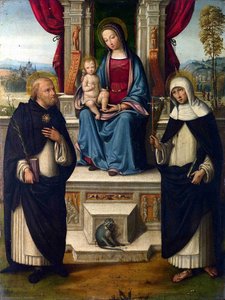
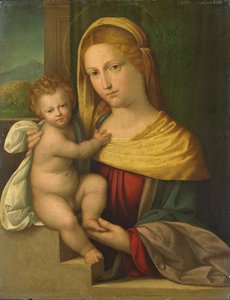
Benvenuto Garofalo's "Madonna with the Child and St. John," painted circa 1502 in the heart of Ferrara, Italy, isn’t merely a devotional image; it’s a vibrant snapshot of a city brimming with artistic innovation and humanist ideals. This small yet powerfully resonant panel offers an intimate glimpse into the world of the late Renaissance, revealing Garofalo's meticulous craftsmanship and his profound understanding of color, composition, and the emotional lives of his subjects. The painting immediately draws the eye to the central figures – the Virgin Mary, cradling the Christ Child with a serene tenderness, and St. John the Baptist, depicted as a young man in simple robes, offering a gesture of quiet reverence.
Garofalo’s style firmly places him within the School of Ferrara, a movement renowned for its rich palette, dramatic lighting, and a distinctive blend of realism and idealized beauty. Unlike the more rigid formality often associated with earlier Renaissance art, Garofalo imbues his figures with a palpable sense of humanity. Mary's face isn’t flawlessly smooth; it bears subtle lines that speak to her age and experience, while St. John possesses an earnestness that invites connection. The artist masterfully employs *sfumato*, a technique perfected by Leonardo da Vinci, to soften the edges and create a hazy atmosphere around the figures, lending them an ethereal quality.
A Symbol of Faith and Humanism
The composition itself is carefully orchestrated, reflecting both religious symbolism and humanist principles. The inclusion of St. John, often depicted as a young adult rather than an elderly hermit, highlights the Renaissance fascination with youth and its association with virtue and potential. He’s not presented as a prophet in the wilderness but as a youthful figure engaged in quiet contemplation – a testament to the era's emphasis on human intellect and spiritual growth. The presence of the monkey, perched on a ledge within the scene, is particularly intriguing. While initially appearing somewhat jarring, it’s widely interpreted as a symbol of humanity’s inherent desires and temptations, which must be controlled by faith and virtue – a common motif in Renaissance art.
The background, rendered with a limited but effective use of color and perspective, establishes the scene within a modest domestic setting. This deliberate choice emphasizes the intimate nature of the devotional subject matter, suggesting that piety is best cultivated within the familiar comforts of home. The warm hues of the drapery and the rich reds of Mary’s robe create a sense of warmth and serenity, while the subtle blues and greens in the architectural details contribute to the overall harmony of the composition.
Technique and Materials
Garofalo's masterful use of tempera on wood is evident in the painting’s luminous quality. Tempera, a fast-drying paint made from pigments mixed with egg yolk, allowed for precise layering and blending, contributing to the work’s remarkable detail and vibrancy. The artist skillfully manipulated the texture of the paint to create a sense of depth and volume, particularly in the folds of Mary's robe and the youthful features of St. John. The meticulous attention to detail—from the delicate rendering of the Christ Child’s face to the subtle variations in color within the drapery—demonstrates Garofalo’s exceptional technical skill.
A Legacy of Ferrara’s Artistic Brilliance
"Madonna with the Child and St. John" stands as a poignant example of the School of Ferrara's artistic achievements. It embodies the movement’s commitment to realism, emotional depth, and innovative techniques—a legacy that continues to captivate art lovers today. Reproductions of this captivating work offer an accessible way to experience the beauty and spiritual resonance of Garofalo’s masterpiece, bringing a touch of Renaissance elegance to any space.
Related Artworks
Artist Biography
Benvenuto Garofalo: A Master of Ferrara’s Late Renaissance
Benvenuto Garofalo, born in Canaro near Ferrara in 1481 and tragically dying in 1559, stands as a pivotal figure within the School of Ferrara – a vibrant artistic movement that flourished during the late Italian Renaissance. More than simply a painter, Garofalo was a meticulous craftsman, a skilled storyteller, and a keen observer of human emotion, whose works offer a captivating glimpse into the refined tastes and complex sensibilities of 16th-century Italy. His career began as an apprentice within the court of the Duke d’Este, quickly establishing him amongst a circle of artists known for their opulent commissions and elaborate conceits. While his early pieces are often described as “idyllic,” reflecting the luxurious setting of Ferrara, they demonstrate a sophisticated understanding of perspective and color that would evolve dramatically over time.
Garofalo’s nickname, "Il Garofalo," likely derives from his habit of signing some works with a depiction of a carnation (garofano in Italian). This seemingly small detail speaks volumes about the artist's personality – a touch of personal flair within a highly structured artistic environment. His early career was marked by collaborations, notably with Dosso Dossi, and he benefited greatly from the tutelage of Boccaccino, who introduced him to Venetian painting techniques, influencing his later stylistic choices. The period spent in Rome between 1509 and 1512 proved particularly transformative, exposing Garofalo to the influence of Giulio Romano’s classical style – a shift that would profoundly impact his approach to composition and subject matter.
The Delizia di Belriguardo and Beyond
Returning to Ferrara after Rome, Garofalo found himself deeply involved in decorating several palaces for Duke Alfonso I. The “Delizia di Belriguardo,” a lavishly decorated room within the Palazzo del Belvedere, stands as one of his most celebrated achievements. This project showcased his mastery of fresco painting and his ability to seamlessly integrate classical motifs with the prevailing Mannerist style. Alongside Dosso Dossi, Garofalo created a series of scenes depicting mythological subjects, demonstrating a remarkable command of detail and a deep appreciation for the beauty of the human form. The Duke’s patronage provided him with consistent work, allowing him to hone his skills and explore new artistic avenues.
His output extended beyond palace walls; Garofalo painted extensively in oil and fresco, producing works such as “The Massacre of the Innocents” (1519) at the church of S. Francesco and the powerfully evocative "Betrayal of Christ" (1524). Notably, he employed clay models for study – a testament to his dedication to anatomical accuracy and compositional planning. The “Massacre of the Innocents,” in particular, reveals Garofalo’s meticulous approach; he created detailed clay figures to analyze perspective, drapery, and the emotional impact of each scene.
A Mannerist Style Shaped by Influences
Garofalo's style is often characterized as a synthesis of various influences. The Lombard influence is evident in his use of rich color palettes and dynamic compositions. Roman art provided him with a foundation in classical mythology and portraiture, while Venetian painting instilled within him an appreciation for atmospheric perspective and the subtle nuances of light and shadow. His work reflects this complex interplay of styles, creating a unique visual language that is both elegant and emotionally resonant.
The years spent in Rome were particularly formative, exposing Garofalo to the innovations of Raphael and Giulio Romano. He absorbed their emphasis on illusionistic space, dramatic lighting, and intricate detail, incorporating these elements into his own work. His later paintings demonstrate a growing interest in Mannerist conventions – elongated figures, distorted perspectives, and exaggerated gestures – reflecting a deliberate departure from the more balanced proportions of High Renaissance art.
Legacy and Tragic End
Garofalo continued to paint until 1550, when blindness forced him to seek work in monasteries. He dedicated his remaining years to creating devotional paintings, driven by a profound sense of faith. He married at the age of forty-eight and died in Ferrara on September 6th (or 16th) 1559, leaving behind two children. His life was tragically cut short, but his artistic legacy endures through his masterful depictions of religious subjects, his innovative use of color and composition, and his profound understanding of the human condition.
Garofalo’s story is one of artistic brilliance tempered by personal hardship. He remains a significant figure in the history of Italian painting, representing the culmination of the School of Ferrara's distinctive style and embodying the complex aesthetic sensibilities of the late Renaissance.

garofalo
1481 - 1559
Quick Facts
- Artistic Movement Or Style: Late Renaissance & Mannerism
- Artists Or Movements Influenced By This Artist:
- Ferrara School
- Venetian Colouring
- Artists Who Influenced This Artist:
- Dosso Dossi
- Giulio Romano
- Date Of Birth: 1481
- Date Of Death: 1559
- Full Name: Benvenuto Garofalo
- Nationality: Italian
- Notable Artworks:
- Massacre of the Innocents
- Betrayal of Christ
- Place Of Birth: Canaro, Ferrara
Related Articles

John Singer Sargent's 25 Masterpieces: Portraits & Beyond | ArtsDot
Explore 25 iconic John Singer Sargent paintings – from dazzling portraits to Impressionist landscapes. Discover the stories behind Madame X, El Jaleo & more! Find museum-quality art reproductions and elevate your home decor with ArtsDot.com.

John Constable's Masterpieces: Explore 25 Iconic Landscapes for Your Home
Journey through John Constable's 25 most celebrated landscapes. Explore Romanticism, Dedham Vale & his masterful use of light in iconic paintings like 'Hay Wain'. Find museum-quality art reproductions and elevate your home decor on ArtsDot.com.
Raphael's Masterpieces: 25 Iconic Paintings & Renaissance Art for Your Home
Explore 25 breathtaking Raphael paintings! Journey through the Italian Renaissance with masterpieces like 'School of Athens' & iconic Madonnas. Find museum-quality art reproductions and elevate your home decor on ArtsDot.com.

El Greco's Masterpieces: Explore 25 Iconic Paintings & Spiritual Visions | ArtsDot
Journey through El Greco's 25 most iconic paintings! Explore the spiritual depth & dramatic beauty of this Spanish Renaissance master. Discover art history, techniques & find museum-quality reproductions for your home at ArtsDot.com.

Uffizi's 25 Masterpieces: Renaissance Art & Timeless Decor Inspiration
Journey through the Uffizi Gallery's 25 most iconic Renaissance artworks! Explore Botticelli, Leonardo da Vinci & Michelangelo’s masterpieces. Find museum-quality art reproductions and curated decor ideas to bring timeless Italian beauty into your home. Discover all masterpieces on ArtsDot.com