 Preview
 Send
Send Share
Share
 Details

 Download
 Similars
 X-Ray
X-Ray Diaporama
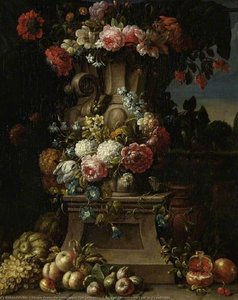
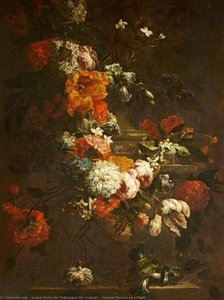
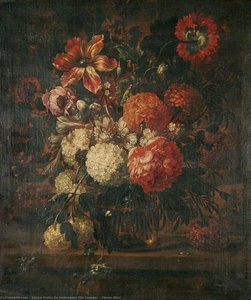
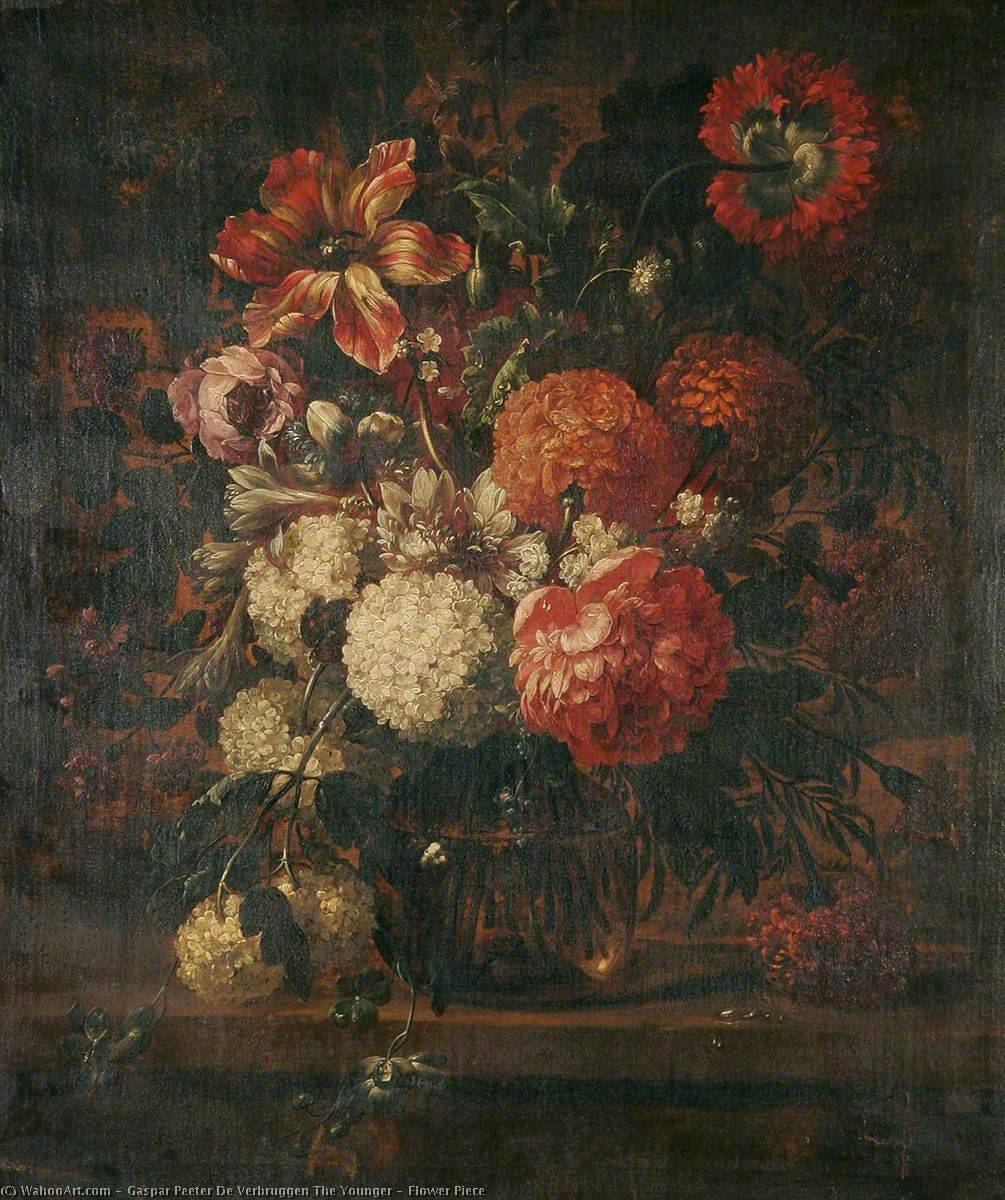
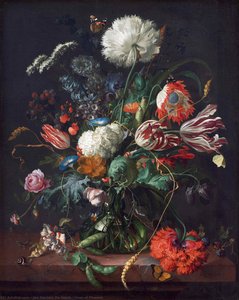
Flower Piece
 Dutch Golden Age
 81.0 x 69.0 cm
 Read More
Hand Made Oil Reproduction
Hand-painted oil on canvas in your size and frame, made to order by our artists. ( Buy Print Buy Image)




































Pick from our preset sizes that match the artwork's original proportions.

You may enter your own dimensions to fit a specific frame or space. If your selected size does not match the original image's proportions, we will either crop the artwork or extend the painting with additional hand-painted elements. A digital mockup will be sent for your approval before production begins.
Please note that the on-screen preview does not reflect the actual cropping or extension. Only the mockup will accurately show the final composition.
While custom sizes are available, we recommend selecting a dimension from the predefined list to preserve the original proportions.
After order, ArtsDot.com team will email client for instructions and provide a mockup preview
Worldwide Delivery () in 3/4 weeks instead of standard 5 weeks. (24 August). No compromise on quality.

Free Worldwide Express Shipping

High-Quality Linen Canvas

Full Shipping Insurance

Customs Tax Refund Guarantee

True Color Matching Guarantee

60-Day Return Policy (Defects Only)

100% Money-Back Guarantee

Bulk Discount Offer
 Glass option is only available in size under 110 CM

Flower Piece
Reproduction Medium
Reproduction Size
-


Total Price
$ 263
Related Artworks

Artist Biography
Gaspar Peeter de Verbruggen: A Flemish Master of Opulent Still Life
Gaspar Peeter de Verbruggen, often referred to as Gaspar Peeter the Younger or Gasparo Pedro Verbruggen, stands as a significant figure in 17th-century Flemish painting, primarily celebrated for his exquisitely detailed and lavish still lifes. Born in Antwerp in 1664 and tragically passing away in 1730, his artistic journey was marked by both remarkable success and periods of considerable hardship. Verbruggen’s legacy rests largely on his ability to transform the humble subjects of fruit, flowers, and decorative objects into scenes of breathtaking beauty and intricate composition – a testament to his technical skill and keen eye for detail.
His early life was deeply intertwined with the artistic world. Born into a family already established in the realm of still-life painting—his father, Gaspar Peeter Verbruggen the Elder, was a respected master—Gaspar Peeter received an invaluable education from a young age. He apprenticed under his father, absorbing not only technical proficiency but also a deep appreciation for the genre’s nuances and traditions. The guild system of Antwerp provided him with a structured path to mastery, culminating in his acceptance as a master in 1678 at the remarkably young age of thirteen. This rapid ascent underscored his prodigious talent and the esteem held by his peers.
A Life of Contrasts: Prosperity and Poverty
Verbruggen’s career unfolded against a backdrop of fluctuating fortunes. Initially, he enjoyed considerable success, establishing himself as a sought-after decorator for prominent residences in both Antwerp and The Hague. His commissions included elaborate arrangements featuring fruit, flowers, and even incorporating figures within the still life composition – a trend reflecting the evolving tastes of the era. He was known to collaborate with other skilled artists, such as Peter Ykens and Jacob Leyssens, creating complex and visually arresting works that showcased a blend of individual styles.
However, his life was also characterized by extravagance and financial instability. Verbruggen possessed a considerable appetite for luxury, residing in a grand house on the prestigious Meir street in Antwerp. Despite his commercial achievements, he consistently overspent, leading to mounting debts. A pivotal moment arrived in 1703 when, facing imminent ruin, he was forced to liquidate nearly all of his paintings. The proceeds from this sale, while substantial, proved insufficient to cover his outstanding obligations. This crisis prompted a dramatic shift in his life – a move to the Dutch Republic in 1705, seeking new opportunities and a fresh start.
The Hague and a Return to Humble Beginnings
In The Hague, Verbruggen found renewed patronage and established himself as a respected artist. He joined the local guild of Saint Luke in 1708, further solidifying his position within the artistic community. Yet, even amidst this commercial success, he struggled with persistent financial difficulties. Eventually, burdened by debt and lacking resources, he returned to Antwerp – not as a celebrated master, but as a ‘knaap’ (boy) at the guild, a humbling role that marked a significant decline in his status.
This return represented a poignant illustration of his life's trajectory: from youthful promise and opulent living to poverty and servitude. The guild provided him with basic sustenance and work, allowing him to continue painting until his death in 1730. His final years were spent quietly, surrounded by the friends who had once supported him, a stark contrast to the vibrant social circles he had previously inhabited.
Style and Influences: A Decorative Flourish
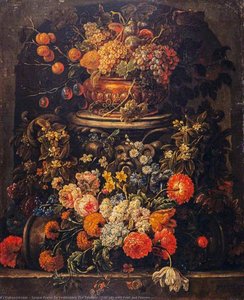
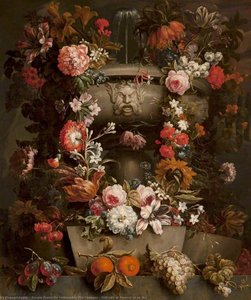
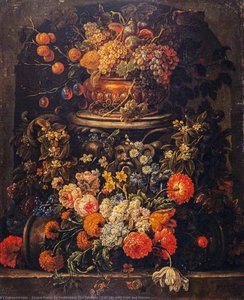
Verbruggen’s artistic style is immediately recognizable for its opulent and decorative qualities. His still lifes are characterized by an abundance of meticulously rendered fruit, flowers, and other objects – often arranged within elaborate stone vases or garlands. The use of broad brushstrokes and a rich palette contributes to the overall sense of lavishness and drama. His work demonstrates a clear influence from earlier Italian masters like Mario Nuzzi and Michele Pace del Campidoglio, particularly in his technique of impasto and dramatic lighting.
Furthermore, Verbruggen’s style evolved alongside other prominent Flemish still life painters such as Jan Baptist Bosschaert and Simon Hardimé. His compositions often mirrored the tripartite division favored by Bosschaert, creating a sense of balance and visual harmony. The collaboration with artists like Peeter Bailliu, who specialized in painting vases and grisailles, further enriched his works, adding layers of complexity and detail.
Legacy and Significance
Despite the challenges he faced, Gaspar Peeter de Verbruggen left an enduring mark on the history of Flemish still life painting. His meticulous attention to detail, combined with his ability to create visually stunning and emotionally evocative compositions, secured his place as a master of the genre. His works are now housed in prestigious collections such as the Royal Museum of Fine Arts Antwerp, testament to their artistic merit and historical significance. Verbruggen’s story serves as a compelling reminder of the complexities of an artist's life – a blend of talent, ambition, financial hardship, and ultimately, enduring legacy.
Quick Facts
- Artistic Movement Or Style: Still life painting
- Artists Or Movements Influenced By This Artist:
- Jan Baptist Bosschaert
- Simon Hardimé
- Artists Who Influenced This Artist:
- Mario Nuzzi
- Michele Pace del Campidoglio
- Jean-Baptiste Monnoyer
- Date Of Death: 1730
- Full Name: Gaspar Peeter de Verbruggen the Younger
- Nationality: Flemish
- Notable Artworks:
- Flower garland Apollo
- Various still lifes
- Place Of Birth: Antwerp, Belgium
Related Articles

Dutch Masters: 10 Golden Age Paintings That Still Inspire |
Journey into the Dutch Golden Age! Explore 10 iconic paintings by Rembrandt, Vermeer & Hals. Discover the stories behind these Baroque masterpieces and find museum-quality art reproductions to elevate your home decor on .
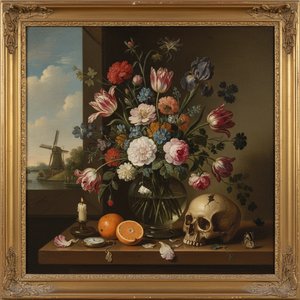
Jan Jansz Wijnants: A Study in Dutch Golden Age Still Life & Floral Transience
Explore the captivating world of Jan Wijnants and Dutch Golden Age still life painting. Discover symbolism, masterful techniques & lasting influence on floral art history. Learn more!

Golden Age Reflections: Dutch Baroque Painting & Cultural Innovation
Explore the Dutch Golden Age of painting! Discover key artists like Vermeer & ter Borch, their innovative techniques, and the rich cultural context behind these Baroque masterpieces. Learn about collecting & appreciating this iconic art period.

Illuminating Innovation: Exploring the Dutch Golden Age of Painting
Explore the Dutch Golden Age of painting with ArtsDot. Discover Rembrandt, Vermeer & other Masters. Learn about key characteristics, iconic artworks, and lasting influence. Expert insights for collectors & enthusiasts.
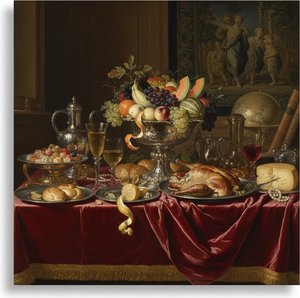
Abraham Hendricksz van Beyeren: Pioneering Dutch Still Life & the Banquet Tradition
Explore the captivating world of Dutch Golden Age still life with Abraham van Beyeren. Discover his innovative techniques, symbolic banquet scenes & lasting influence on art history. Learn about collecting these masterpieces.