 Preview
 Send
Send Share
Share
 Details

 Download
 Similars
 X-Ray
X-Ray Diaporama
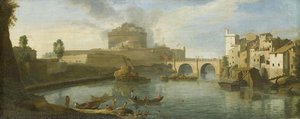
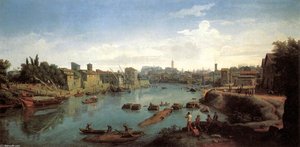
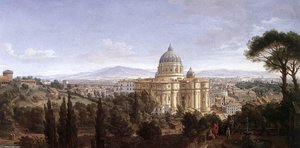
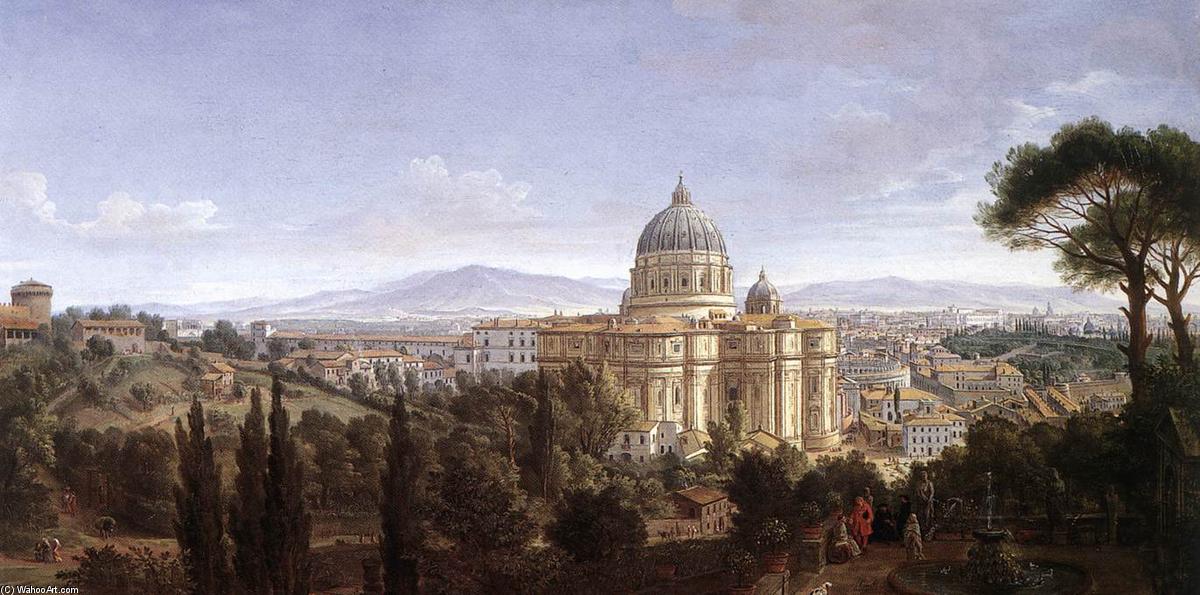
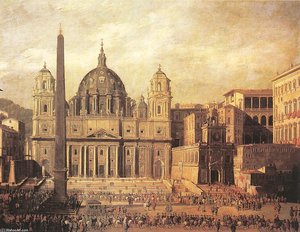
St Peter's in Rome
 1711
1711 57.0 x 11.0 cm
 Read More
Hand Made Oil Reproduction
Hand-painted oil on canvas in your size and frame, made to order by our artists. ( Buy Print Buy Image)




































Pick from our preset sizes that match the artwork's original proportions.

You may enter your own dimensions to fit a specific frame or space. If your selected size does not match the original image's proportions, we will either crop the artwork or extend the painting with additional hand-painted elements. A digital mockup will be sent for your approval before production begins.
Please note that the on-screen preview does not reflect the actual cropping or extension. Only the mockup will accurately show the final composition.
While custom sizes are available, we recommend selecting a dimension from the predefined list to preserve the original proportions.
After order, ArtsDot.com team will email client for instructions and provide a mockup preview
Worldwide Delivery () in 3/4 weeks instead of standard 5 weeks. (27 August). No compromise on quality.

Free Worldwide Express Shipping

High-Quality Linen Canvas

Full Shipping Insurance

Customs Tax Refund Guarantee

True Color Matching Guarantee

60-Day Return Policy (Defects Only)

100% Money-Back Guarantee

Bulk Discount Offer
 Glass option is only available in size under 110 CM

St Peter's in Rome
Reproduction Medium
Reproduction Size
-


Total Price
$ 263
Related Artworks
Artist Biography
A Pioneer of the Veduta: The Life and Art of Gaspar van Wittel
Caspar van Wittel, known in Italy as Gaspare Vanvitelli or Gasparo degli Occhiali, stands as a pivotal figure in the history of art, bridging the gap between Dutch topographical precision and the burgeoning Italian veduta tradition. Born in Amersfoort, Netherlands, around 1652 or 1653, his journey from relative obscurity to becoming one of Rome’s most sought-after view painters is a testament to his exceptional talent and keen observation skills. Van Wittel wasn't merely recording cities; he was crafting immersive experiences, capturing the atmosphere, light, and architectural grandeur with an unprecedented level of detail.
Early Life and Formation in Holland
Van Wittel’s initial artistic training took place within the Dutch landscape tradition. He began as an apprentice to Thomas Jansz van Veenendaal in Amersfoort, followed by a seven-year tutelage under Matthias Withoos, a painter specializing in genre scenes. This early exposure instilled in him a meticulous approach and a love for intricate detail – qualities that would define his later work. The political turmoil of the “Rampjaar” (Disaster Year) of 1672 forced Van Wittel to flee to Hoorn, but he soon returned to Amersfoort, honing his skills before embarking on a life-altering journey to Italy in 1674 alongside fellow artist Jacob van Staverden. This move marked a decisive shift in his artistic focus and trajectory.
The Roman Years: Establishing a New Genre
Upon arriving in Rome, Van Wittel quickly found employment with Cornelius Meyer, a Dutch hydraulic engineer tasked by Pope Clement X with assessing the navigability of the Tiber River. This commission proved to be transformative. Rather than simply creating functional maps, Van Wittel began producing large-scale, highly accurate topographical drawings that transcended mere documentation. He transformed topography into a painterly specialism, meticulously rendering Roman architecture and urban landscapes with an unprecedented level of realism. His work quickly gained recognition, earning him the nickname “Gaspare degli Occhiali” (Gaspar with the Spectacles), likely due to his nearsightedness and the precision required for his detailed depictions. He joined the Bentvueghels, a society of predominantly Dutch and Flemish artists in Rome, adopting the moniker "Piktoors" or “Torch of Amersfoort”.
Development of Style and Influences
Van Wittel’s style evolved through collaboration and observation. He worked alongside Abraham Genoels, possibly as a pupil, and later with Hendrik Frans van Lint, who would become a leading vedutista himself. His paintings stand apart from earlier topographical representations due to their atmospheric perspective, the play of light on surfaces, and the inclusion of bustling figures that animate the scenes. He skillfully balanced architectural accuracy with a sense of life and movement, creating views that were both informative and emotionally engaging. His early works show influence from Dutch masters like Jan van der Heyden, but he quickly developed a unique style tailored to the Roman landscape. He was instrumental in shifting the focus from idealized depictions to realistic portrayals of urban environments.
Legacy and Historical Significance
Gaspar van Wittel’s impact on Italian art history is profound. He paved the way for artists like Canaletto, Carlevaris, and Pannini, establishing the veduta as a major genre. His meticulous technique and dedication to topographical accuracy set a new standard for landscape painting. His patrons included prominent figures such as Luis Francisco de la Cerda, 9th Duke of Medinaceli, who amassed an impressive collection of Van Wittel’s Italian views. The artist's son, Luigi Vanvitelli, further cemented the family name through his renowned architectural achievements in Naples. While Van Wittel spent almost his entire life in Italy, dying in Rome in 1736, his Dutch roots and innovative approach left an indelible mark on the artistic landscape of the Italian peninsula, forever changing how cities were perceived and represented on canvas.
gaspar van wittel (caspar andriaans van wittel)
1653 - 1736 , Netherlands
Quick Facts
- Artistic Movement Or Style: Veduta painting
- Artists Or Movements Influenced By This Artist:
- Carlevaris
- Canaletto
- Pannini
- Artists Who Influenced This Artist:
- Thomas Jansz van Veenendaal
- Matthias Withoos
- Date Of Birth: 1653
- Date Of Death: 1736
- Full Name: Gaspar van Wittel
- Nationality: Dutch
- Notable Artworks:
- Piazza del Popolo
- Piazza San Marco
- River Adige at Braida
- Place Of Birth: Amersfoort, Netherlands