 Preview
 Send
Send Share
Share
 Details

 Download
 Similars
 X-Ray
X-Ray Diaporama
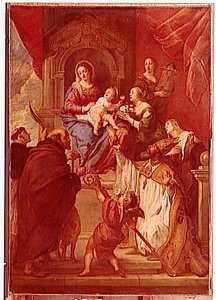
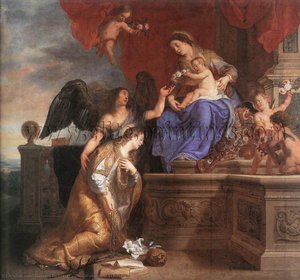
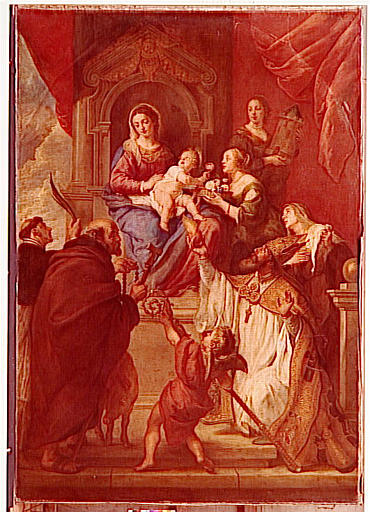
LA VIERGE ET L'ENFANT JESUS AVEC SAINT AUGUSTIN, SAINTE BARBE ET SAINT ANTOINE


 Read More
Hand Made Oil Reproduction
Hand-painted oil on canvas in your size and frame, made to order by our artists. ( Buy Print Buy Image)




P118B $10

P118H $10

P118W $10

P438Z $10

P508JH $12

P508YH $12

P805H $10

P805Z $10

P919BZ $10

P919G $10

P919XJ $10

P959ZH $10

P968JZ $12

W106C $8

W218G $10

W218JH $8

W218Y $10

W307PJ $10

W316G $10

W316PJ $8

W316Y $10

W398PJ $8

W4111J $10

W500HY $15

W500JH $15

W692G $12

W849H $8

W940BG $15

W953PJ $8




Pick from our preset sizes that match the artwork's original proportions.

You may enter your own dimensions to fit a specific frame or space. If your selected size does not match the original image's proportions, we will either crop the artwork or extend the painting with additional hand-painted elements. A digital mockup will be sent for your approval before production begins.
Please note that the on-screen preview does not reflect the actual cropping or extension. Only the mockup will accurately show the final composition.
While custom sizes are available, we recommend selecting a dimension from the predefined list to preserve the original proportions.
After order, ArtsDot.com team will email client for instructions and provide a mockup preview
Worldwide Delivery () in 3/4 weeks instead of standard 5 weeks. (16 August). No compromise on quality.

Free Worldwide Express Shipping

High-Quality Linen Canvas

Full Shipping Insurance

Customs Tax Refund Guarantee

True Color Matching Guarantee

60-Day Return Policy (Defects Only)

100% Money-Back Guarantee

Bulk Discount Offer
 Glass option is only available in size under 110 CM

LA VIERGE ET L'ENFANT JESUS AVEC SAINT AUGUSTIN, SAINTE BARBE ET SAINT ANTOINE
Reproduction Medium
Reproduction Size
-


Total Price
$ 263
Artwork Description
The Virgin and Child with Saints – A Baroque Tapestry of Faith
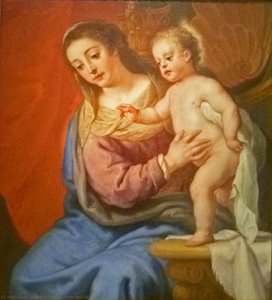
Gaspar de Crayer’s “La Vierge et l'Enfant Jésus avec les saints Dominique, Antoine, Augustin et les saintes Monique, Dorothée et Barbe” is not merely a painting; it’s an immersive experience, a vibrant window into the heart of 17th-century Flemish religious art. Housed within the Louvre’s esteemed collection, this monumental work transcends its physical dimensions to evoke a profound sense of devotion and spiritual contemplation. Painted in 1638 – though likely completed over several years – it stands as a testament to de Crayer's mastery of the Baroque style, a period defined by dramatic contrasts, rich color palettes, and an intense emotionality that sought to inspire awe and reverence.
At first glance, the scene unfolds with arresting clarity. Mary, rendered in luminous tones of cream and gold, cradles the infant Jesus, his gaze serene and filled with an almost otherworldly wisdom. Her posture is one of gentle protection, a maternal embrace that speaks volumes about her role as the embodiment of grace and humility. Flanking her are a constellation of saints – Augustine, Barbara, Anthony, and Monique – each rendered with meticulous detail and imbued with distinct personalities. The composition isn’t simply decorative; it's carefully orchestrated to guide the viewer’s eye through a narrative of faith and salvation.
A Symphony of Color and Light
De Crayer’s technique is nothing short of breathtaking. He employs a masterful use of chiaroscuro – the dramatic interplay of light and shadow – to sculpt the figures, lending them an almost three-dimensional quality. The warm reds dominating Mary's robes and the rich blues of Augustine’s garments create a visual feast, while strategically placed highlights draw attention to key elements within the scene. Notice how the light seems to emanate from the central figure of Christ, bathing the surrounding saints in a divine glow. This technique wasn’t simply aesthetic; it was deeply rooted in the Baroque's desire to represent religious subjects with heightened realism and emotional intensity.
The artist’s palette is remarkably vibrant for its time, utilizing pigments derived from minerals and plants to achieve an astonishing range of hues. The textures are equally impressive – the velvet-like folds of Mary’s garments, the intricate details of the saints' robes, and even the subtle sheen on the infant Jesus’ skin all contribute to a sense of tactile realism. De Crayer wasn’t just painting; he was crafting an illusion of reality, inviting the viewer to step into this sacred space.
Historical Context and Symbolism
“La Vierge et l'Enfant Jésus” emerged during a pivotal moment in European history – the Counter-Reformation. Following the Protestant Reformation, the Catholic Church sought to reaffirm its authority and revitalize religious fervor. Art played a crucial role in this effort, serving as a powerful tool for conveying theological messages and inspiring piety. De Crayer’s work exemplifies this trend, depicting biblical figures with an almost theatrical intensity that aimed to stir the emotions of the faithful.
Each saint within the composition carries specific symbolic weight. Augustine, known for his philosophical reflections on faith and grace, represents intellectual devotion. Barbara, a martyr who died defending her faith, embodies courage and sacrifice. Anthony, a patron saint of children and monks, symbolizes protection and guidance. Monique, a virgin martyr, reinforces the theme of purity and sanctity. The inclusion of these figures underscores the multifaceted nature of Christian belief – encompassing intellect, virtue, and unwavering commitment to God.
A Legacy of Baroque Grandeur
“La Vierge et l'Enfant Jésus avec les saints” is more than just a beautiful painting; it’s a window into a bygone era. It offers a glimpse into the artistic, religious, and cultural landscape of 17th-century Flanders, showcasing the brilliance of Gaspar de Crayer and his contemporaries. Reproductions of this masterpiece capture its grandeur and emotional depth, allowing art lovers to experience its timeless appeal in their own homes. Its rich colors, dramatic lighting, and profound symbolism continue to resonate with viewers today, reminding us of the enduring power of faith and artistic expression.
Related Artworks
Artist Biography
Gaspar de Crayer: A Flemish Master of Counter-Reformation Splendor
Gaspar de Crayer, a name perhaps less familiar than his contemporaries Rubens or Van Dyck, nevertheless stands as a pivotal figure in 17th-century Flemish art. Born in Antwerp in 1584 and passing away in Ghent in 1669, he navigated the turbulent political landscape of the Spanish Netherlands, becoming a court painter, guild master, and prolific creator of both portraits and monumental altarpieces. His work reflects not only the artistic currents of his time but also the profound religious shifts brought about by the Counter-Reformation, making him a crucial link between the Mannerist traditions of the past and the burgeoning Baroque style.
De Crayer’s early life was steeped in art. He was the son of Gaspard de Crayer the Elder, a respected decorative painter, illuminator, and art dealer – a lineage that instilled within him an appreciation for craftsmanship and a deep understanding of artistic materials. Rather than remain in his birthplace, Antwerp, he sought opportunity in Brussels, a city rapidly becoming a center for artistic patronage under the Spanish governors. It was here, around 1607, that he achieved master status within the Guild of Saint Luke, a significant accomplishment demonstrating his technical skill and dedication to the profession.
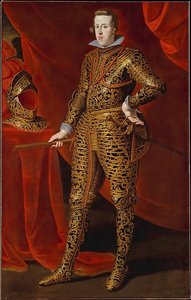
His early career was marked by commissions from the Spanish court and local dignitaries. He quickly established himself as a portraitist, capturing the likenesses of kings, governors, and members of the Brussels city council – works that showcased both his ability to render realistic features and his growing command of composition. The equestrian portrait of Don Diego Messia Felipe de Guzmán (now housed in the Kunsthistorisches Museum in Vienna) exemplifies this early period, demonstrating a sophisticated understanding of perspective and a meticulous attention to detail. However, it was his work on altarpieces that truly cemented his reputation and established him as a leading artist of his generation.
The Counter-Reformation and Religious Art
De Crayer’s career coincided with the rise of the Counter-Reformation, a period of intense religious reform within the Catholic Church. The church actively sought to utilize art as a tool for propaganda and spiritual instruction, commissioning elaborate altarpieces and devotional paintings that would inspire piety and reinforce Catholic doctrine. De Crayer embraced this opportunity, producing a vast number of works for churches and monasteries throughout Flanders, Germany, and Spain. These altarpieces were not merely decorative; they were carefully constructed narratives designed to convey religious messages through vivid imagery and dramatic composition.
His approach was deeply influenced by the prevailing artistic trends of the time, particularly those championed by Peter Paul Rubens. Like Rubens, De Crayer favored dynamic compositions, rich colors, and a sense of movement – qualities that lent his works an emotional intensity and theatrical flair. He skillfully blended elements of Mannerism with emerging Baroque principles, creating a distinctive style characterized by its elegance, grace, and profound spiritual depth.
Court Painter and Artistic Patronage
De Crayer’s influence extended beyond the religious sphere. In 1635, Cardinal-Infante Ferdinand of Austria, brother of King Philip IV of Spain, appointed him his court painter – a prestigious position that afforded him considerable wealth and access to influential patrons. This appointment marked a significant shift in his career, bringing him into closer contact with the Spanish royal family and providing him with opportunities to create large-scale works for public buildings and religious institutions.
Following Ferdinand’s departure, Archduke Leopold Wilhelm of Austria took up residence in Brussels, continuing De Crayer's patronage. He also engaged De Crayer in a commission to decorate the Huis ten Bosch palace in The Hague, showcasing his versatility as an artist and his ability to adapt to diverse artistic styles. His workshop flourished during this period, employing numerous assistants who helped him fulfill a steady stream of commissions – from portraits of prominent citizens to elaborate altarpieces for churches across Europe.
Key Works and Legacy
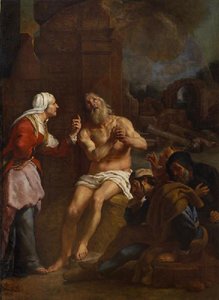
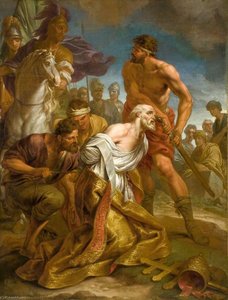
Among De Crayer’s most celebrated works are the “Death of the Virgin” (now in Madrid), a powerful depiction of the biblical scene, and his numerous altarpieces, including “The Martyrdom of Saint Blas” and “Caritas Romana.” The latter, painted in 1645, is particularly noteworthy for its dramatic composition and evocative portrayal of Christian charity. It’s a testament to his ability to infuse religious themes with emotional resonance.
De Crayer's legacy lies not only in the beauty of his individual works but also in his role as a bridge between artistic traditions. He absorbed the lessons of Raphael Coxie and Rubens, while simultaneously developing his own distinctive style – one characterized by its elegance, dynamism, and profound spiritual depth. Though often overshadowed by more famous contemporaries, Gaspar de Crayer remains an important figure in Flemish art history, a testament to the enduring power of faith, beauty, and artistic skill.
His final years were spent in Ghent, where he continued to accept commissions until his death in 1669. His workshop continued to operate for several years after his passing, ensuring that his artistic legacy would endure.
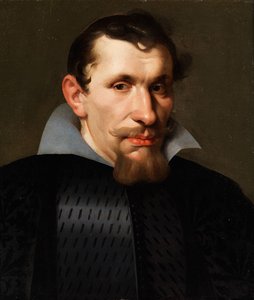
gaspard de crayer
1582 - 1669 , Belgium
Quick Facts
- Artistic Movement Or Style: Baroque
- Artists Or Movements Influenced By This Artist:
- Rubens
- Van Dyck
- Artists Who Influenced This Artist: ['Raphael Coxie']
- Date Of Birth: 1584-11-18
- Date Of Death: 1669-01-27
- Full Name: Gaspar de Crayer
- Nationality: Flemish
- Notable Artworks:
- Caritas Romana
- Portrait of Don Diego
- Death of the Virgin
- Place Of Birth: Antwerp, Belgium
Related Articles
Fra Angelico's Masterpieces: 25 Renaissance Paintings for Your Home | ArtsDot
Explore 25 breathtaking masterpieces by Fra Angelico, a Renaissance master. Discover the stories behind his iconic frescoes, Annunciations & religious art. Find museum-quality reproductions and elevate your home decor with ArtsDot.com.
Discover the Divine: Inspiring Saint Anthony Artworks to Elevate Your Home Decor
Transform your home with the profound beauty of Saint Anthony artworks. Explore exquisite Baroque reproductions by Murillo and Zurbarán, hand-painted on 100% cotton canvas to bring divine serenity and timeless elegance to your interior design.

The Visceral Stage: Exploring Dramatic Narratives & Emotional Intensity in Baroque Art
Explore the dramatic world of Baroque art! Discover iconic masters like Caravaggio & Rembrandt, their techniques, and the movement's lasting impact. Expert insights for collectors & enthusiasts at ArtsDot.

The Dramatic Flourish: Exploring the Baroque Movement's Enduring Legacy in Art History
Explore the dramatic world of Baroque art! Discover iconic artists like Caravaggio & Rubens, defining techniques, and its lasting impact on art history. Expert insights for collectors & enthusiasts at ArtsDot.

Baroque Masterpieces: 10 Paintings That Defined an Era |
Journey through the drama & grandeur of Baroque art! Explore 10 masterpieces by Caravaggio, Rembrandt, Rubens & more. Discover stunning oil paintings, rich colors & timeless stories. Find museum-quality reproductions at .