

 Preview
 Send
Send Share
Share
 Details

 Download
 Similars
 X-Ray
X-Ray Diaporama
 Stats
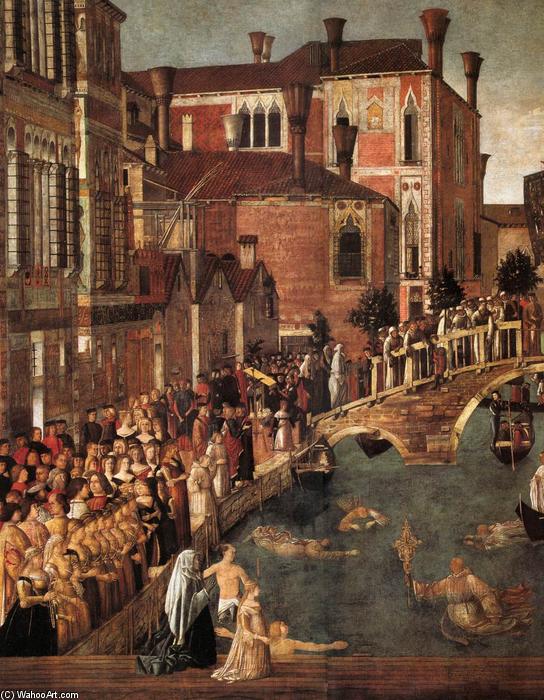
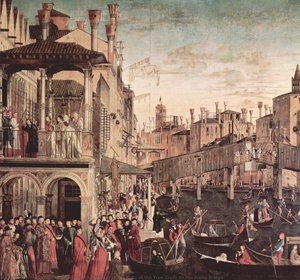
StatsMiracle of the Cross at the Bridge of San Lorenzo (detail)


 Read More
Purchase a high-resolution, enhanced digital image, far superior to the online preview.
Each file is meticulously prepared by our in-house specialists using advanced tools and expert manual retouching. We ensure every image has exceptional clarity, precise color accuracy, and fine detail.
The final file is delivered via email within 72 hours, optimized for immediate use in professional, editorial, and print environments. This is the same quality trusted by top-tier design studios, publishers, and galleries.
Digital Image
Download a high-resolution file for personal display, printing, and creative projects. ( Switch to Print Buy Hand Made Painting)
Included in Every Digital Image Order
Expert Digital Delivery, Guaranteed
When you choose ArtsDot.com, you're not just getting an image - you're receiving a professionally enhanced digital artwork, crafted with precision and backed by a satisfaction guarantee. Here's everything that comes with your order, automatically:

Fast Email Delivery
Your high-resolution digital image file will be emailed to you within 72 hours of ordering - ready for immediate use.

AI-Enhanced Digital File
Your artwork is professionally optimized using advanced AI tools and manual editing, ensuring maximum detail, clarity, and color accuracy.

Free Lifetime Re-Delivery
Accidentally deleted or lost your file? No worries - we'll resend it to you anytime, free of charge.

No Import Fees - Ever
Enjoy your artwork instantly with zero customs, duties, or delivery fees - digital downloads are always tax-free.

Color Accuracy Guarantee
We ensure your digital image reflects the original colors as closely as possible using professional tools and color management.

100-Day Satisfaction Guarantee
If you're not satisfied with your digital image, we'll revise it or refund 100% within 100 days - no questions asked.

100% Money-Back Guarantee
Not satisfied? Get a full refund within 100 days of receiving your digital file - no questions asked.

Bulk Order Discounts
Buy 3 images, save 10% - Buy 5, save 15% - Buy 10+, save 20%. Great for creative projects, galleries, and agencies.
A Venetian Drama Painted in Light and Sorrow
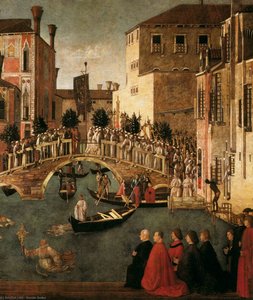
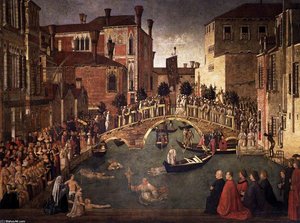
Gentile Bellini’s “Miracle of the Cross at the Bridge of S. Lorenzo,” completed around 1500, isn't merely a depiction of a historical event; it’s a profound meditation on faith, mortality, and the vibrant pulse of Renaissance Venice. This monumental tempera painting, now residing in the Gallerie dell’Accademia, transports us to a bustling canal scene, dominated by the dramatic rescue of a fragment of the Holy Cross – an event that resonated deeply within the city's religious life.
The painting unfolds against the backdrop of the Bridge of San Lorenzo, a crucial artery in Venice’s intricate network of waterways. Bellini masterfully captures the chaotic energy of the scene: figures jostle for position, boats navigate the canal, and the air is thick with both curiosity and grief. The composition is remarkably complex, layering numerous individuals into a single, dynamic space – a testament to Bellini's skill in creating a sense of depth and movement within a crowded setting. The artist’s attention to detail extends beyond the figures themselves; he meticulously renders the architecture of Venice, showcasing its distinctive inverted cone chimneys and the bustling activity along the fondamenta.
The Historical Context: Faith and Miracle
To understand “Miracle of the Cross,” one must delve into the fervent religious atmosphere of 15th-century Venice. The relic of the True Cross was a source of immense devotion, and its annual procession – known as the *Miracolo della Croce* – drew massive crowds. The event itself involved a staged ‘fall’ of the relic into the canal, followed by a miraculous recovery, symbolizing divine intervention and the power of faith. Bellini's painting isn’t simply a record of this spectacle; it’s an embodiment of its significance for the Venetian people.
The commission itself was deeply rooted in the city’s social fabric. The *Scuola Grande di San Giovanni Evangelista*, one of Venice’s most influential confraternities, commissioned the series of paintings to commemorate the relic's arrival in 1369. Bellini’s contribution, alongside other prominent artists, underscored the importance of this religious artifact and its role in shaping Venetian identity. The inclusion of figures like Caterina Cornaro, a queen of Cyprus, further highlights the painting’s connection to Venice’s complex network of political and cultural alliances.
A Masterclass in Technique: Light, Color, and Detail
Bellini's technique is characterized by a remarkable blend of Early Netherlandish influence – particularly evident in the meticulous detail and atmospheric perspective – with the vibrant colors and dynamic compositions typical of Venetian painting. He employs *impasto*—thickly applied paint—to create textural richness, especially in the building facades and clothing folds, lending a tactile quality to the scene. The use of glazing—thin layers of translucent color—builds up luminosity and depth, capturing the play of light on water and surfaces.
The painting’s palette is dominated by warm earth tones – ochres, siennas, and reds – creating a sense of realism and historical context. However, Bellini doesn't shy away from using brighter colors to draw attention to key figures and moments within the composition. The dramatic lighting—a combination of natural daylight and reflected light—further enhances the painting’s emotional impact, casting shadows that heighten the sense of drama and sorrow.
Symbolism and Emotional Resonance
Beyond its historical and artistic merits, “Miracle of the Cross” is rich in symbolism. The floating bodies represent the devastating effects of the plague that ravaged Venice during the 15th century – a poignant reminder of mortality and suffering. The gathering crowd reflects both grief and curiosity, capturing the complex emotions associated with such a momentous event. Bellini’s self-portrait within the composition adds a layer of personal reflection, inviting us to contemplate the artist's own place within this dramatic narrative.
Ultimately, “Miracle of the Cross at the Bridge of S. Lorenzo” is more than just a painting; it’s a window into the soul of Renaissance Venice – a city grappling with faith, mortality, and the enduring power of human belief. It remains a powerful testament to Bellini's artistic genius and his ability to capture both the grandeur and the sorrow of the Venetian experience.
Related Artworks
Artist Biography
A Venetian Renaissance Master
Gentile Bellini, born in Venice in 1429, emerged from a family deeply entrenched in the artistic heart of the city. His father, Jacopo Bellini, was a pioneering figure who embraced the relatively new medium of oil paint, and his younger brother, Giovanni, would later achieve renown as one of Venice’s most celebrated masters. Gentile's initial training unfolded within his father’s workshop, where he mastered the techniques that would define his career. One of Venice’s oldest surviving oil paintings, The Blessed Lorenzo Giustinian (1445), stands as a testament to this early skill and is now housed in the Accademia Museum. From these beginnings, Gentile quickly distinguished himself, earning recognition for his remarkable talent in portraiture and securing his position as the official painter of the Doges – the rulers of Venice. This prestigious role would profoundly shape his artistic trajectory, placing him at the center of Venetian power and society.Influences and Artistic Development
Gentile Bellini’s style was a fascinating synthesis of diverse influences. The rich traditions of the Byzantine Empire cast a long shadow over Venetian art, imbuing it with a distinctive aesthetic that resonated in Gentile's work through stylized figures and opulent color palettes. However, his artistic horizons expanded dramatically following an extraordinary journey to Constantinople in 1479. Invited by Sultan Mehmed II himself, Bellini spent time at the Ottoman court, an experience that proved pivotal in shaping his later creations. This encounter with a different culture, architecture, and way of life infused his paintings with a unique perspective. His portrait of Mehmed II, now residing in the National Gallery, London, is a striking example of this influence – a compelling depiction of power and personality informed by firsthand observation. Gentile’s compositions often feature grand scale scenes populated with numerous figures, reflecting the demands of commissions from Venice's powerful Scuole Grandi, major confraternities that played a vital role in civic life.Masterpieces and Artistic Legacy
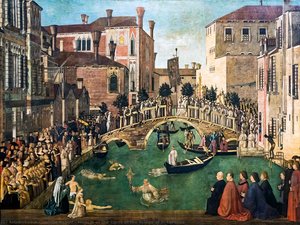
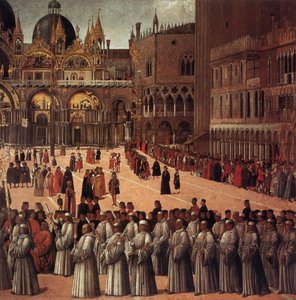
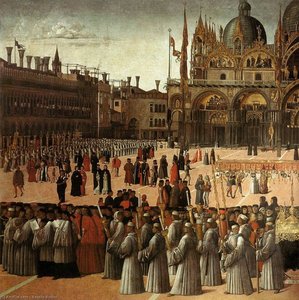
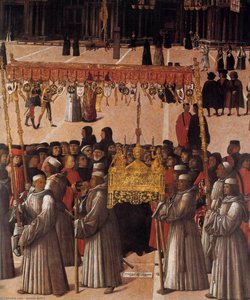
Among Gentile Bellini’s most celebrated works are two monumental paintings: The Procession of the True Cross in Piazza San Marco (1496) and The Miracle of the True Cross at the S. Lorenzo Bridge (c. 1500). The former is a breathtaking panorama of Venetian life, capturing the energy and spectacle of a religious procession with meticulous detail. It showcases his ability to portray large crowds and intricate architectural settings with remarkable precision. The Miracle of the True Cross at the S. Lorenzo Bridge is particularly noteworthy for its inclusion of self-portraits – both Gentile’s own likeness and that of his brother, Giovanni Bellini. This subtle artistic collaboration offers a fascinating glimpse into their relationship and creative dialogue. Beyond individual paintings, Gentile Bellini holds an important place in art history as one of the founders of Orientalist art—a movement characterized by depictions of Eastern cultures and settings.Historical Significance
Gentile Bellini’s legacy rests on several key achievements. His pioneering use of oil paint solidified its position as the dominant medium in Venetian painting, allowing for greater detail, luminosity, and realism. Furthermore, his exposure to Ottoman culture and subsequent incorporation of Eastern motifs into his work established him as a significant figure in the development of Orientalist art—a trend that would captivate European artists for centuries. While often overshadowed by the fame of his brother Giovanni, Gentile Bellini’s contributions are now widely recognized as essential to understanding the evolution of Western painting. He skillfully blended Venetian artistic traditions with influences from both the Byzantine Empire and Ottoman culture, creating a unique and compelling style that resonated throughout Europe. His work stands as a testament not only to his exceptional skill and talent but also to the power of cultural exchange in shaping artistic innovation.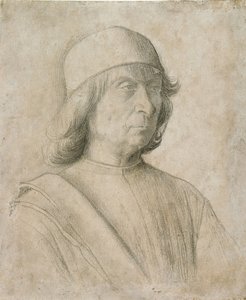
Gentile Bellini
1429 - 1507 , Italy
Quick Facts
- Artistic Movement Or Style: Renaissance
- Artists Or Movements Influenced By This Artist: ['Orientalist art']
- Artists Who Influenced This Artist:
- Jacopo Bellini
- Gentile da Fabriano
- Date Of Birth: 1429
- Date Of Death: 1507
- Full Name: Gentile Bellini
- Nationality: Italian
- Notable Artworks:
- Procession in Piazza San Marco
- Miracle of the True Cross
- Portrait of Mehmed II
- Place Of Birth: Venice, Italy