 Preview
 Send
Send Share
Share
 Details

 Download
 Similars
 X-Ray
X-Ray Diaporama
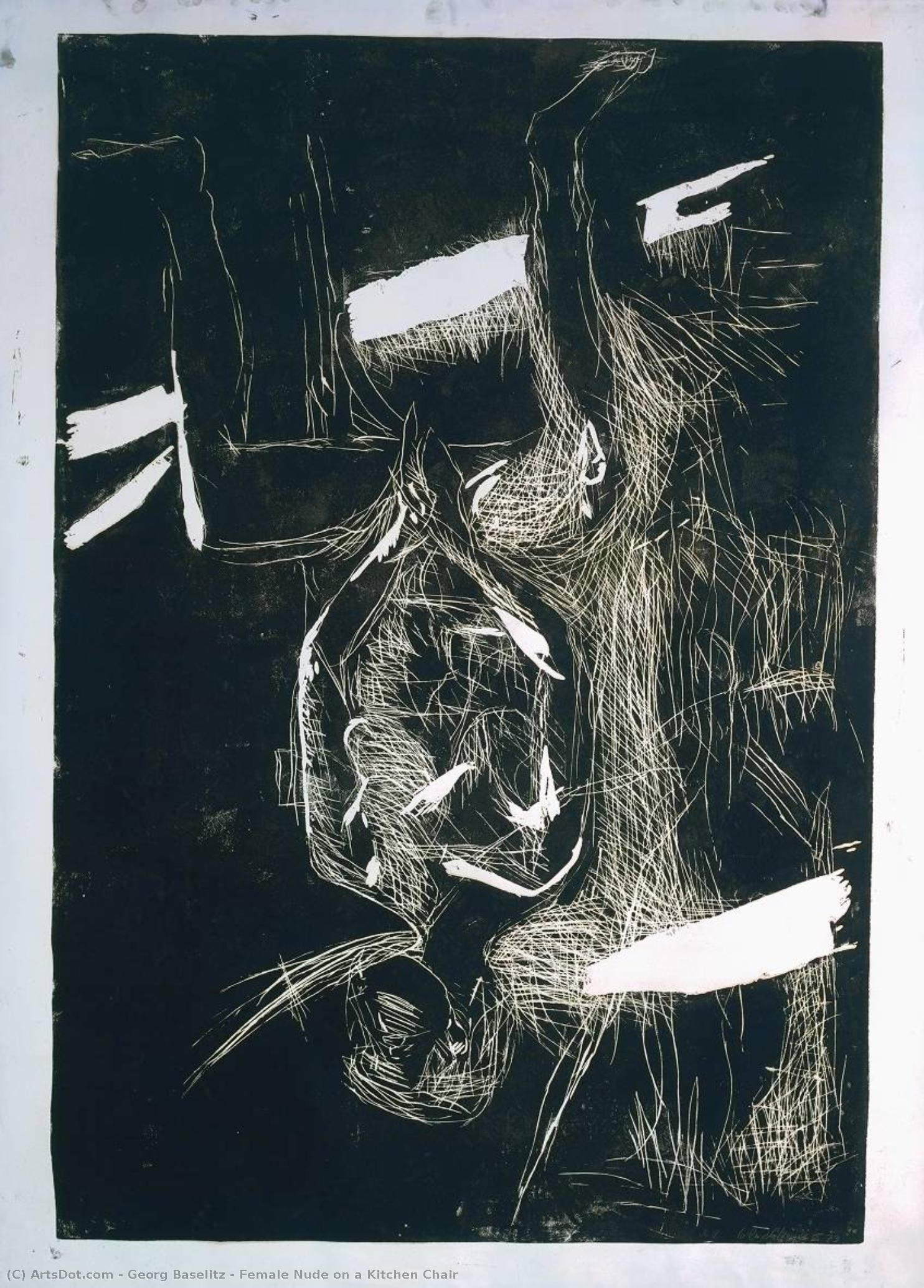
Female Nude on a Kitchen Chair


 Read More
Hand Made Oil Reproduction
Hand-painted oil on canvas in your size and frame, made to order by our artists. ( Buy Print Buy Image)




P118B $10

P118H $10

P118W $10

P438Z $10

P508JH $12

P508YH $12

P805H $10

P805Z $10

P919BZ $10

P919G $10

P919XJ $10

P959ZH $10

P968JZ $12

W106C $8

W218G $10

W218JH $8

W218Y $10

W307PJ $10

W316G $10

W316PJ $8

W316Y $10

W398PJ $8

W4111J $10

W500HY $15

W500JH $15

W692G $12

W849H $8

W940BG $15

W953PJ $8




Pick from our preset sizes that match the artwork's original proportions.

You may enter your own dimensions to fit a specific frame or space. If your selected size does not match the original image's proportions, we will either crop the artwork or extend the painting with additional hand-painted elements. A digital mockup will be sent for your approval before production begins.
Please note that the on-screen preview does not reflect the actual cropping or extension. Only the mockup will accurately show the final composition.
While custom sizes are available, we recommend selecting a dimension from the predefined list to preserve the original proportions.
After order, ArtsDot.com team will email client for instructions and provide a mockup preview
Worldwide Delivery () in 3/4 weeks instead of standard 5 weeks. (17 August). No compromise on quality.

Free Worldwide Express Shipping

High-Quality Linen Canvas

Full Shipping Insurance

Customs Tax Refund Guarantee

True Color Matching Guarantee

60-Day Return Policy (Defects Only)

100% Money-Back Guarantee

Bulk Discount Offer
 Glass option is only available in size under 110 CM

Female Nude on a Kitchen Chair
Reproduction Medium
Reproduction Size
-


Total Price
$ 263
Artwork Description
A Fractured Domesticity: Exploring Vulnerability and Distortion in Baselitz’s “Female Nude on a Kitchen Chair”
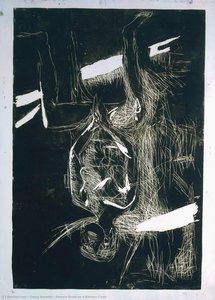
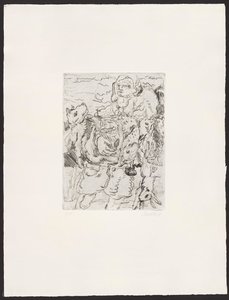
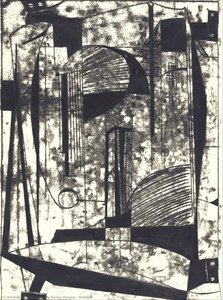
Georg Baselitz's "Female Nude on a Kitchen Chair," created in 1979, isn’t merely a depiction of a woman; it’s a raw, unsettling excavation of the human condition. Emerging from the aftermath of World War II and deeply rooted in the fractured landscape of post-war Germany, Baselitz's work consistently grapples with themes of destruction, memory, and the inherent instability of representation. This particular piece embodies these concerns with an arresting intensity, utilizing a stark monochrome palette and a deliberately inverted perspective to challenge our assumptions about beauty, vulnerability, and the very nature of art itself.
The composition immediately commands attention – a female nude, rendered in a graphic, almost brutal style, occupies a significant portion of the canvas. She’s seated on a kitchen chair, an object typically associated with domesticity, comfort, and routine. However, Baselitz subverts this expectation entirely. The figure is dramatically inverted, her head positioned at the bottom of the frame, creating a sense of disorientation and unease. This deliberate disruption of traditional perspective isn't simply stylistic; it’s a powerful statement about control and power dynamics – suggesting a vulnerability exposed to an unseen gaze.
Line as Language: The Technique of Woodcut Printmaking
The artwork’s visceral impact is largely due to Baselitz’s masterful manipulation of line. Executed through the technique of woodcut printmaking, the image is built up from a dense network of scratchy, energetic lines. These aren't smooth or flowing; they are jagged, fragmented, and imbued with a palpable sense of urgency. The artist carved these lines directly into a wooden block, then meticulously printed them onto paper, resulting in a surface that feels both rough and intensely textured. This technique lends the work an almost sculptural quality, as if the image is emerging from the very material itself.
The stark contrast between black and white amplifies this effect, creating dramatic shadows and highlights that define the figure’s form with startling clarity. The absence of color forces the viewer to focus entirely on the interplay of line and texture, intensifying the emotional resonance of the image. It's a deliberate choice, mirroring the artist’s desire to strip away superficiality and reveal the underlying structure of his subject.
Symbolism and the Weight of History
Beyond its formal qualities, “Female Nude on a Kitchen Chair” is laden with symbolic weight. The kitchen chair itself can be interpreted as a symbol of domestic confinement – a space often associated with women’s roles and responsibilities. The inverted figure suggests a rejection of these constraints, a defiant assertion of agency within a restrictive environment. Furthermore, the work echoes Baselitz's own personal history, born amidst the devastation of war and occupation. This sense of disruption and fragmentation is not just aesthetic; it reflects a deeper engagement with themes of trauma, memory, and the difficulty of rebuilding after conflict.
The image’s unsettling quality invites contemplation on issues of representation, vulnerability, and the gaze. It's a work that refuses easy interpretation, demanding that viewers confront uncomfortable truths about power, identity, and the complexities of human experience. “Female Nude on a Kitchen Chair” remains a potent testament to Baselitz’s unique artistic vision – a powerful exploration of the fractured self within a disrupted world.
Related Artworks



Artist Biography
A Life Forged in the Shadows of History
Born Hans-Georg Bruno Kern on January 23, 1938, in the small German village of Deutschbaselitz, the artist who would become known to the world as Georg Baselitz was a child of profound transition and upheaval. Growing up in the Upper Lusatia region amidst the literal and metaphorical rubble of World War II, his early consciousness was inextricably linked to themes of destruction, displacement, and the fractured order of a shattered society. This formative environment—marked by the loss of community and the lingering trauma of occupation—became the bedrock of his artistic vision. The devastation he witnessed did not merely provide subject matter; it instilled in him an urgent, lifelong need to question established conventions and to explore the very nature of perception through the lens of a world that had been turned upside down.
His early artistic inclinations were nurtured by a deep intellectual curiosity and significant cultural encounters. The influence of his father, an elementary school teacher, fostered a disciplined approach to observation, while the profound writings of Jakob Böhme provided a spiritual and philosophical complexity to his worldview. A pivotal moment in his development occurred when he encountered Louis-Ferdinand von Rayski’s Wermsdorfer Wald at a local school assembly. This masterpiece of realism ignited a fascination with capturing visual truth, leading him to produce portraits, religious subjects, and landscapes that, even in his youth, hinted at a more futuristic and unsettling vision.
The Revolution of Inversion and Neo-Expressionism
As the art world moved toward the sterile intellectualism of Minimalism and Conceptual Art in the 1960s, Baselitz staged a visceral rebellion. He became a leading voice of Neo-Expressionism, a movement that sought to reclaim the raw power and emotional intensity of figurative painting. However, his contribution was far from a simple return to tradition. In 1969, Baselitz introduced one of the most radical innovations in modern art: the technique of painting his subjects upside down. This deliberate inversion was not a mere gimmick; it was a profound attempt to strip the subject of its representational, content-driven character. By turning the figure on its head, he forced the viewer to confront the artifice of the painting itself—to look past the "what" of the image and focus instead on the texture, color, and the physical reality of the paint on canvas.
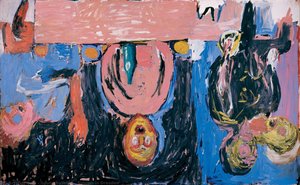
This period saw the emergence of works that challenged the very boundaries of the medium. His compositions often oscillated between recognizable figuration and a chaotic, feverish energy. In monumental pieces like Supper in Dresden, he reimagined historical narratives through a lens of disarray and chromatic collision, using striking shades of pink, blue, and black to create a sense of restless, uncontainable energy. His work during this era functioned as an excavation of the human condition, utilizing distortion to express vulnerability and the inherent instability of memory and identity.
A Lasting Legacy of Provocation
Throughout his prolific career, Baselitz’s artistic language has been a complex tapestry woven from myriad influences, ranging from the starkness of Socialist Realism and the dramatic tension of Mannerism to the primal rhythms of African sculpture. This eclectic synthesis allowed him to create a body of work that feels both deeply rooted in German history and universally resonant in its exploration of existential struggle. Whether through his commanding oil paintings, his evocative sculptures, or his intricate graphic works, Baselitz has remained steadfast in his commitment to a style characterized by unsettling honesty.
The historical significance of Georg Baselitz lies in his ability to transform the trauma of the past into a revolutionary aesthetic for the future. He did not merely document destruction; he used it as a tool to rebuild the language of painting. His achievements include:
- Redefining Figuration: Breaking the reliance on narrative content through the radical use of inversion.
- Mastery of Neo-Expressionism: Leading a global revival of emotional, visceral painting in an era of conceptual dominance.
- Exploration of Identity: Using distorted forms to grapple with the complexities of post-war German identity and the fragility of the human form.
- Technical Innovation: Integrating diverse cultural influences into a singular, unmistakable artistic voice that continues to influence generations of painters and sculptors.
Today, Baselitz stands as one of the most influential figures of the twentieth century, a painter whose work remains a powerful testament to the resilience of creativity in the face of chaos.

Georg Baselitz
1938 -
Quick Facts
- Artistic Movement Or Style: Neo-Expressionism
- Artists Or Movements Influenced By This Artist:
- Soviet era illustration art
- Mannerist period
- African sculptures
- Artists Who Influenced This Artist:
- Louis-Ferdinand von Rayski
- Jakob Böhme
- Date Of Birth: 1938
- Full Name: Georg Baselitz
- Nationality: German
- Notable Artworks:
- Der hirte
- Supper in Dresden
- Da. Portrait (Franz Dahlem)
- Place Of Birth: Deutschbaselitz, Germany
Related Articles

Dark Masterpieces: 10 Iconic Paintings Dominated by Black Tones |
Explore 10 iconic paintings dominated by black tones, from Rembrandt’s chiaroscuro to Goya's dark expressions. Discover the stories behind these masterpieces & find museum-quality art reproductions for your home at .
The Enduring Allure of the Nude: A Historical & Artistic Exploration of the Human Form
Explore the captivating history of nude art! Discover iconic paintings & artists from classical to modern eras. Uncover symbolism, techniques & find museum-quality reproductions at ArtsDot.

Mars Black Masterpieces: 10 Iconic Paintings & Timeless Art Decor Ideas
Delve into the power of 'Mars Black' with 10 iconic paintings by masters like Rembrandt & Caravaggio. Explore dramatic chiaroscuro, gothic art, and timeless beauty. Find museum-quality reproductions & elevate your home decor on .

Egon Schiele's Masterpieces: 25 Paintings That Define Expressionism | ArtsDot
Delve into the haunting world of Egon Schiele with our curated selection of his 25 most iconic Expressionist paintings. Explore the artist's life, technique & emotional depth. Find museum-quality Schiele reproductions and elevate your home decor on ArtsDot.com.

Figurative Expressionism: Emotional Intensity & Subjective Reality in 20th-Century Art
Explore the powerful world of Figurative Expressionism with ArtsDot. Discover key artists like Kirchner & Beckmann, understand its emotional depth, and learn how to collect this influential 20th-century art movement.