 Preview
 Send
Send Share
Share
 Details

 Download
 Similars
 X-Ray
X-Ray Diaporama
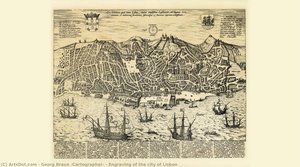
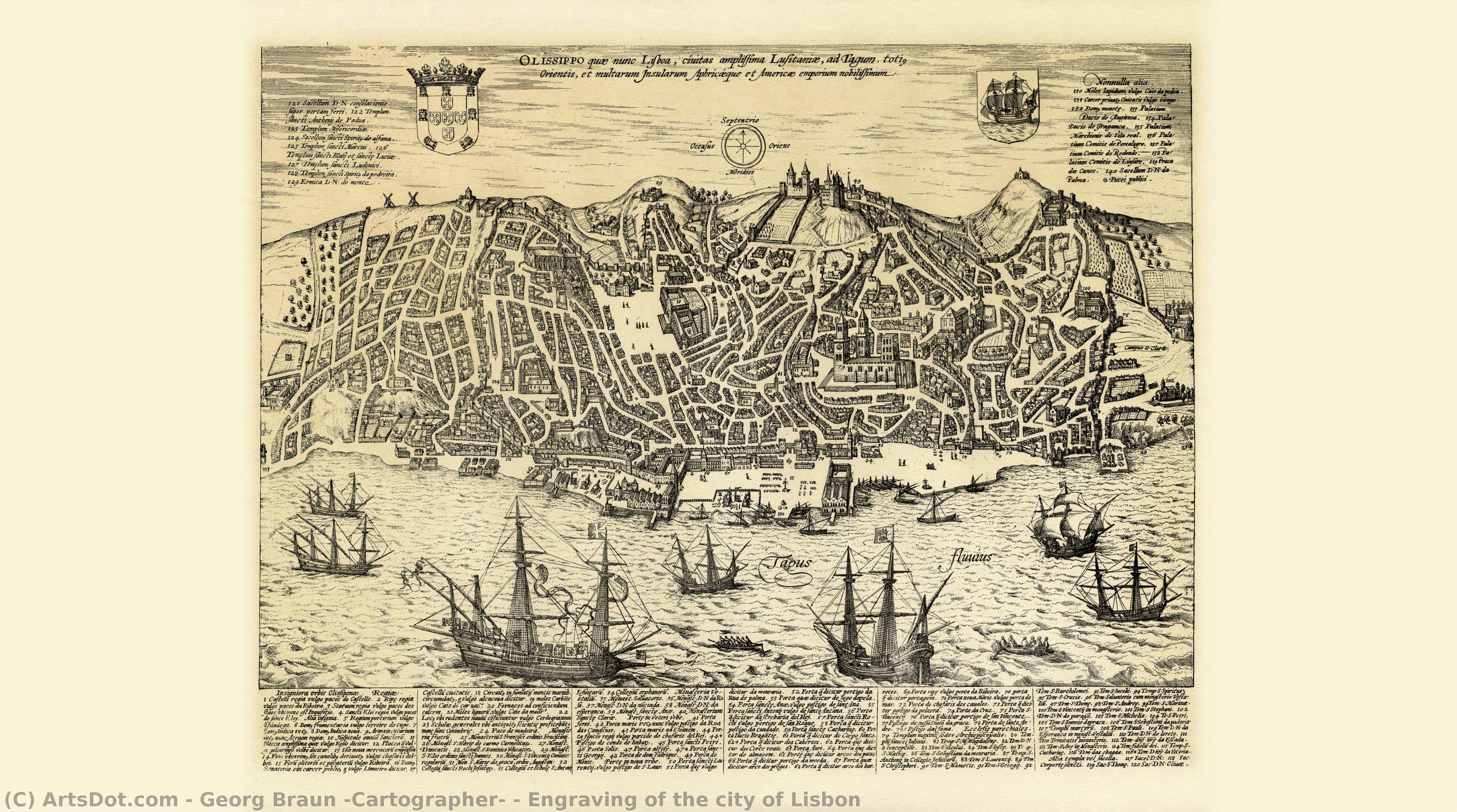
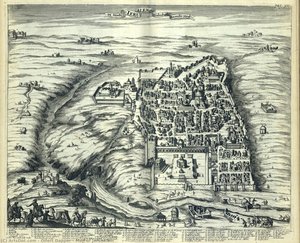
Engraving of the city of Lisbon
 Civic Art
 1598
1598 The Portuguese Task Force for the Commemorations of the V Centenary of Circumnavigation
 Read More
Hand Made Oil Reproduction
Hand-painted oil on canvas in your size and frame, made to order by our artists. ( Buy Print Buy Image)




P118B $10

P118H $10

P118W $10

P438Z $10

P508JH $12

P508YH $12

P805H $10

P805Z $10

P919BZ $10

P919G $10

P919XJ $10

P959ZH $10

P968JZ $12

W106C $8

W218G $10

W218JH $8

W218Y $10

W307PJ $10

W316G $10

W316PJ $8

W316Y $10

W398PJ $8

W4111J $10

W500HY $15

W500JH $15

W692G $12

W849H $8

W940BG $15

W953PJ $8




Pick from our preset sizes that match the artwork's original proportions.

You may enter your own dimensions to fit a specific frame or space. If your selected size does not match the original image's proportions, we will either crop the artwork or extend the painting with additional hand-painted elements. A digital mockup will be sent for your approval before production begins.
Please note that the on-screen preview does not reflect the actual cropping or extension. Only the mockup will accurately show the final composition.
While custom sizes are available, we recommend selecting a dimension from the predefined list to preserve the original proportions.
After order, ArtsDot.com team will email client for instructions and provide a mockup preview
Worldwide Delivery () in 3/4 weeks instead of standard 5 weeks. (7 September). No compromise on quality.

Free Worldwide Express Shipping

High-Quality Linen Canvas

Full Shipping Insurance

Customs Tax Refund Guarantee

True Color Matching Guarantee

100-Day Return Policy (Defects Only)

100% Money-Back Guarantee

Bulk Discount Offer
 Glass option is only available in size under 110 CM

Engraving of the city of Lisbon
Reproduction Medium
Reproduction Size
-


Total Price
$ 263
Related Artworks
![Title (original): Calechut Celeberrimum Indiae [with] Ormus [with] Cananor — Georg Braun (cartographer)](/media/artworks/images-thumb/38/76/387690b53e28b1f835a98e77d7212f19.jpg)

Artist Biography
El Greco: A Visionary of Faith and Emotion
Domenikos Theotokopoulos, better known as El Greco (1541-1614), remains one of the most enigmatic and intensely personal figures in Western art. Born in Crete – then a Venetian possession – his early life offers little concrete information, hinting at an upbringing steeped in Byzantine artistic traditions, evidenced by his initial work depicting icons. However, it was his relocation to Spain, specifically Toledo, that irrevocably shaped his unique style and cemented his legacy as a revolutionary painter. El Greco’s journey wasn't simply geographical; it represented a profound shift in artistic sensibility, moving away from the established conventions of his time towards an intensely subjective and emotionally charged vision. His work is characterized by elongated figures, dramatic lighting, vibrant colors, and a sense of spiritual intensity that continues to captivate viewers centuries later.Early Influences and Venetian Roots
El Greco’s formative years in Venice (around 1577-1580) proved pivotal. While he initially sought patronage from the influential artist Giulio Clovio, he found himself largely unsupported by the established Venetian school. Despite this initial lack of formal recognition, El Greco absorbed much from the Venetian masters, particularly Tintoretto. The dynamism and theatricality of Tintoretto’s compositions – his use of swirling movement, dramatic lighting effects, and emotionally charged figures – profoundly impacted El Greco's own approach to painting. He adopted Tintoretto’s penchant for intense color contrasts and a sense of overwhelming scale, though he ultimately developed these elements into something entirely his own. The influence of Mannerism is also evident in his elongated figures and the distortion of perspective, creating an otherworldly atmosphere that anticipates later developments in abstract art. His early works, such as the *Purification of the Temple* (Minneapolis Institute of Arts) and the portrait of Clovio (Museo di Capodimonte, Naples), demonstrate this nascent style – a departure from the more realistic depictions prevalent at the time.The Toledo Period: Spiritual Intensity and Monumental Altarpieces
El Greco’s arrival in Toledo in 1576 marked the true flowering of his artistic genius. The city's vibrant religious atmosphere, with its numerous churches and convents, provided a fertile ground for his creative output. He quickly gained commissions to paint monumental altarpieces, transforming these spaces into immersive experiences of faith and emotion. Works like *The Disrobing of Christ* (1577-1579), *The Burial of the Count of Orgaz* (1586–88), and *Assumption of the Virgin* (1577–9) are testaments to his extraordinary skill and dramatic vision. These paintings are not merely depictions of biblical events; they are explorations of spiritual ecstasy, conveying a sense of overwhelming emotion and divine presence. The figures seem to float in an ethereal space, bathed in intense light, their gestures imbued with profound meaning. The use of vibrant colors – reds, blues, yellows – further amplifies the emotional impact, creating a visual language that transcends mere representation.A Unique Style: Distortion and Emotional Expression
El Greco’s distinctive style is instantly recognizable, characterized by elongated figures, distorted perspectives, and an almost hallucinatory quality. He deliberately moved away from naturalistic representation, prioritizing emotional expression over anatomical accuracy. His figures are often depicted in dramatic poses, their faces contorted with emotion – anguish, ecstasy, or profound contemplation. This deliberate distortion creates a sense of unease and mystery, inviting the viewer to engage with the painting on an emotional level rather than simply observing it as a realistic depiction. The use of swirling lines and dynamic compositions further contributes to this sense of movement and energy. It’s important to note that El Greco's style wasn't born overnight; it evolved gradually over his career, becoming increasingly bold and expressive in his later works.Legacy and Historical Significance
El Greco’s influence on subsequent generations of artists is undeniable. He paved the way for Expressionism and Surrealism, demonstrating the power of art to convey subjective experience and emotional intensity. His work continues to be studied and admired for its originality, spiritual depth, and dramatic visual impact. He remains a controversial figure – some critics dismiss his style as chaotic and mannered, while others recognize it as a groundbreaking expression of faith and emotion. Regardless of one’s personal opinion, El Greco's contribution to the history of art is profound. His paintings are housed in major museums around the world, including the Prado Museum in Madrid, the National Gallery in Washington D.C., and the Art Institute of Chicago, ensuring that his visionary work will continue to inspire and challenge viewers for generations to come. His legacy lies not just in his individual masterpieces but also in his radical departure from artistic conventions and his unwavering commitment to expressing the inner world of faith and emotion through paint.
georg braun (cartographer)
1541 - 1622 , Germany
Quick Facts
- Artistic Movement Or Style: El Greco School
- Artists Or Movements Influenced By This Artist: ['Mannerism']
- Artists Who Influenced This Artist:
- Tintoretto
- Titian
- Date Of Birth: 1 October 1541
- Date Of Death: 7 April 1614
- Full Name: Domenikos Theotokopoulos
- Nationality: Cretan-born, Spanish
- Notable Artworks:
- Disrobing of Christ
- Burial of the Count of Orgaz
- The Adoration of the Shepherds
- Place Of Birth: Fodele, Crete
Related Articles

Georges Braque's Masterpieces: 25 Paintings That Defined Cubism & Modern Art | ArtsDot
Explore 25 iconic Georges Braque paintings that revolutionized Cubism & modern art. Discover the stories behind his masterpieces, from Fauvism to Analytical Cubism. Find museum-quality reproductions & elevate your home decor with ArtsDot.com.

Georges Seurat's Masterpieces: 25 Paintings That Defined Pointillism | ArtsDot
Explore 25 iconic Georges Seurat paintings & discover the brilliance of Pointillism. From 'La Grande Jatte' to his harbor scenes, delve into art history with ArtsDot.com. Find museum-quality reproductions for your home decor. Explore the full collection online!
Engraving's Golden Age: 10 Masterpieces That Redefined Art | ArtsDot
Journey through art history with our Top 10 Legendary Engravings! Explore masterpieces by Dürer, Rembrandt & Goya. Discover the stories behind these iconic prints and find museum-quality reproductions for your home at ArtsDot.com.
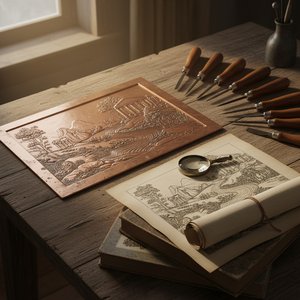
Engraving: A Historical Survey of Technique, Artistic Expression & Enduring Legacy
Explore the rich history of engraving with ArtsDot. Discover techniques, iconic artists like Dürer & Callot, collecting tips, and expert guidance for preserving your art investment. Learn about intaglio printing & more!

The Intricate World of Engraving: A Historical Survey of Technique, Artistic Expression & Enduring Legacy
Explore the rich history of engraving with ArtsDot. Discover techniques, iconic artists like Dürer & Callot, collecting tips, and expert guidance for preserving your art investment. Learn about intaglio printing & more!