 Preview
 Send
Send Share
Share
 Details

 Download
 Similars
 X-Ray
X-Ray Diaporama
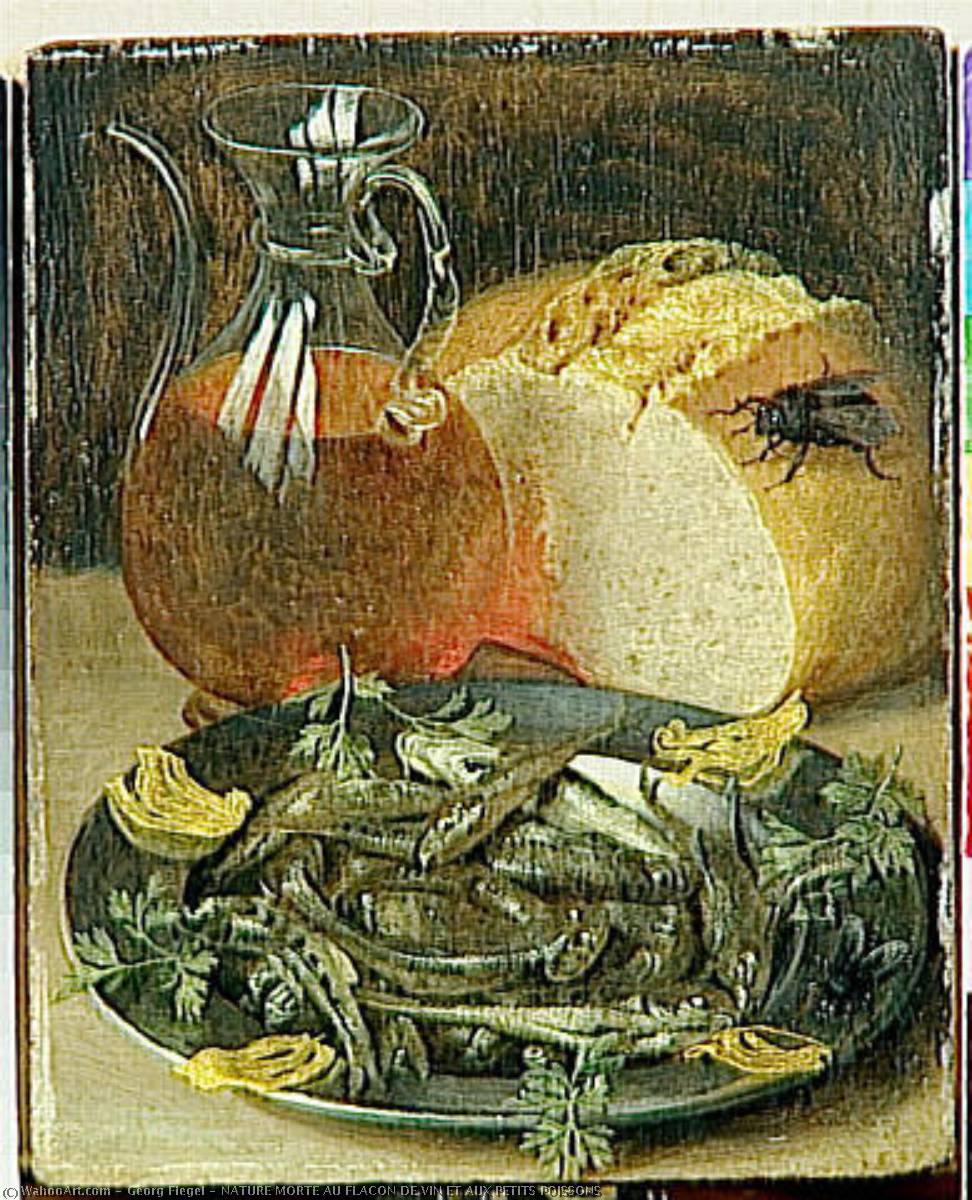
NATURE MORTE AU FLACON DE VIN ET AUX PETITS POISSONS


 Read More
Hand Made Oil Reproduction
Hand-painted oil on canvas in your size and frame, made to order by our artists. ( Buy Print Buy Image)




P118B $10

P118H $10

P118W $10

P438Z $10

P508JH $12

P508YH $12

P805H $10

P805Z $10

P919BZ $10

P919G $10

P919XJ $10

P959ZH $10

P968JZ $12

W106C $8

W218G $10

W218JH $8

W218Y $10

W307PJ $10

W316G $10

W316PJ $8

W316Y $10

W398PJ $8

W4111J $10

W500HY $15

W500JH $15

W692G $12

W849H $8

W940BG $15

W953PJ $8




Pick from our preset sizes that match the artwork's original proportions.

You may enter your own dimensions to fit a specific frame or space. If your selected size does not match the original image's proportions, we will either crop the artwork or extend the painting with additional hand-painted elements. A digital mockup will be sent for your approval before production begins.
Please note that the on-screen preview does not reflect the actual cropping or extension. Only the mockup will accurately show the final composition.
While custom sizes are available, we recommend selecting a dimension from the predefined list to preserve the original proportions.
After order, ArtsDot.com team will email client for instructions and provide a mockup preview
Worldwide Delivery () in 3/4 weeks instead of standard 5 weeks. (29 August). No compromise on quality.

Free Worldwide Express Shipping

High-Quality Linen Canvas

Full Shipping Insurance

Customs Tax Refund Guarantee

True Color Matching Guarantee

60-Day Return Policy (Defects Only)

100% Money-Back Guarantee

Bulk Discount Offer
 Glass option is only available in size under 110 CM

NATURE MORTE AU FLACON DE VIN ET AUX PETITS POISSONS
Reproduction Medium
Reproduction Size
-


Total Price
$ 263
A Still Life of Transient Beauty: Georg Flegel’s “NATURE MORTE AU FLACON DE VIN ET AUX PETITS POISSONS”
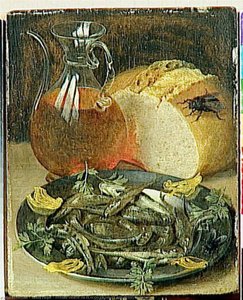
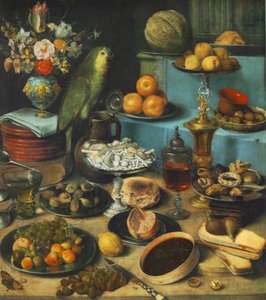
Georg Flegel's "Nature Morte au Flacon de Vin et aux Petits Poissons," a captivating painting housed within the Louvre Museum, offers more than just a visual arrangement of food and drink; it’s a poignant meditation on mortality, abundance, and the fleeting nature of earthly pleasures. Completed in 1637, during the twilight years of the Renaissance and the burgeoning Baroque period, this oil-on-panel masterpiece exemplifies the Northern European still life tradition – a genre characterized by meticulous detail, a profound understanding of texture, and an often subtly melancholic atmosphere.
The composition itself is deceptively simple yet remarkably complex. Flegel has masterfully arranged a collection of everyday objects upon what appears to be a rustic table or surface: a decanter overflowing with deep reddish-brown wine, a halved loaf of bread radiating warmth and crusty texture, a plate laden with an assortment of small fish – likely vairons caught from the nearby Main River – alongside vibrant green peas. A single insect, hovering near the bread, adds a touch of unsettling realism, hinting at decay and the inevitable passage of time. The careful placement of these elements creates a sense of dense abundance, almost overwhelming in its detail, yet simultaneously conveying a feeling of quiet contemplation.
The Language of Objects: Symbolism and Context
Flegel’s still life is rich with symbolic meaning, deeply rooted in the artistic conventions of his era. The wine decanter, a recurring motif in Northern Renaissance art, traditionally represents both earthly pleasures and the sacrament of the Eucharist – a potent reminder of the duality between worldly enjoyment and spiritual devotion. The loaf of bread, similarly, symbolizes sustenance and life itself, while the fish, particularly the vairons, evoke images of abundance and prosperity, referencing the wealth and trade of the region. The inclusion of the insect is perhaps the most striking element, acting as a subtle memento mori – a visual reminder of mortality and the transience of all things. It’s a delicate balance between celebration and sorrow, reflecting the prevailing philosophical currents of the time.
Considering Flegel's background as an assistant to Lucas van Valckenborch, it’s not surprising that his work incorporates elements borrowed from the master’s style. However, Flegel quickly developed his own distinctive voice, characterized by a heightened sensitivity to texture and light. The painting was created in Frankfurt, a major art trading center at the time, suggesting an exposure to diverse artistic influences and a keen awareness of market trends.
A Masterclass in Technique: Texture and Light
The remarkable realism of “Nature Morte au Flacon de Vin et aux Petits Poissons” is achieved through Flegel’s masterful command of oil painting technique. He employs a layered approach, building up color and texture with thin glazes of paint applied in meticulous detail. The artist's attention to surface qualities is particularly evident in the rendering of the various materials: the smooth, reflective glass of the decanter, the rough, uneven crust of the bread, the glistening scales of the fish, and the vibrant freshness of the peas. The use of hatching and cross-hatching creates a remarkable sense of volume and depth, while subtle variations in light and shadow define the forms without resorting to harsh contrasts.
The diffused lighting, seemingly originating from an unseen source above and slightly to the left, contributes significantly to the painting’s overall mood. It casts soft shadows that subtly accentuate the textures and volumes of the objects, creating a sense of intimacy and inviting the viewer into this still life tableau. The limited depth of field further enhances the feeling of immediacy, drawing attention to the intricate details within the composition.
A Legacy of Detail: A Timeless Masterpiece
“Nature Morte au Flacon de Vin et aux Petits Poissons” stands as a testament to Georg Flegel’s exceptional skill and artistic vision. It's more than just a depiction of food; it’s a profound meditation on the human condition, capturing both the beauty and fragility of life. The painting’s enduring appeal lies in its ability to evoke a sense of quiet contemplation and invite viewers to reflect on the transient nature of earthly pleasures. Reproductions of this remarkable work offer a chance to appreciate Flegel's meticulous artistry and his profound understanding of symbolism – a timeless treasure within the Louvre’s collection.
Related Artworks
Artist Biography
Giuseppe Arcimboldo: The Master of Impossibility
Giuseppe Arcimboldo (1527-1638), a name synonymous with audacious imagination and unparalleled skill, was an Italian Mannerist painter who redefined the boundaries of portraiture. Born Domenikos Theotokopoulos on April 5th, 1527, in Milan, he ultimately became known as Giuseppe Arcimboldo – a moniker adopted during his time serving the Habsburg court. His life’s work wasn't simply about depicting likenesses; it was an elaborate performance of visual storytelling, transforming ordinary objects—fruits, vegetables, flowers, books, and even instruments—into strikingly realistic and deeply symbolic human heads. This unique approach cemented his place as a pivotal figure in art history, bridging the gap between Renaissance idealism and the burgeoning Baroque era. Arcimboldo’s early career was firmly rooted in the traditional practices of Milanese painting. He began as a designer for stained glass and frescoes at local cathedrals, mastering the techniques of these demanding mediums. However, it was his appointment as court painter to Ferdinand I in Vienna in 1562 that marked a dramatic shift in his artistic trajectory. This position within the Habsburg court provided him with unprecedented access to power and influence, allowing him to experiment freely and develop his signature style. He subsequently served Maximilian II and Rudolf II at the Prague court, becoming a valued decorator, costume designer, and even a producer of elaborate drawings of exotic animals for the imperial menagerie – a testament to his versatility and artistic range.- Early Influences: Arcimboldo’s early work demonstrates a strong influence from the late Mannerism prevalent in Italy at the time. He absorbed the stylistic elements of artists like Giuseppe Cesari, known as the “Cavaliere d'Arpino,” and incorporated them into his own distinctive style.
- Venetian Techniques: His relocation to Venice in 1567 proved crucial, exposing him to the vibrant colors and dynamic compositions of Venetian masters like Titian, Tintoretto, and Jacopo Bassano. This experience significantly broadened his artistic palette and technique.
- The Farnese Circle: Arcimboldo’s time at the court of Cardinal Alessandro Farnese in Rome was a period of intense experimentation and innovation. He honed his skills in portraiture, creating striking images for the cardinal's circle of learned men – a group known for its intellectual curiosity and appreciation for visual spectacle.
Symbolism and Renaissance Neo-Platonism
The precise motivations behind Arcimboldo’s unconventional portraits remain a subject of scholarly debate. While some critics initially dismissed them as mere curiosities designed to amuse the court, more recent interpretations suggest a deeper engagement with Renaissance Neo-Platonism – a philosophical movement that sought to reconcile classical philosophy with Christian theology. The use of natural elements, representing earthly beauty and abundance, could be seen as an allegory for the divine realm, while the careful arrangement of these objects within the human form reflects the concept of “anamorphic unity” – the idea that all things are ultimately interconnected and part of a single, underlying reality.Major Works and Legacy
Several works stand out as particularly significant examples of Arcimboldo’s genius. *Flora* (c. 1591), depicting a woman's head composed entirely of flowers and plants, is arguably his most iconic creation. Similarly, *Vertumnus* (1587-1588) – a portrait of Rudolf II as the Roman god of fertility – showcases his mastery of composition and his ability to transform inanimate objects into remarkably lifelike figures. His later works, such as *Winter*, created for Rudolf II in 1590, demonstrate an increasing sophistication in his technique and a greater emphasis on atmospheric perspective.- *Flora* (c. 1591): A quintessential example of Arcimboldo’s signature style, celebrating the beauty and abundance of nature.
- *Vertumnus* (1587-1588): A portrait of Rudolf II as the Roman god of fertility, showcasing his skill in creating complex and layered compositions.
- *Winter* (1590): Demonstrates a growing mastery of atmospheric perspective and a more refined artistic style.
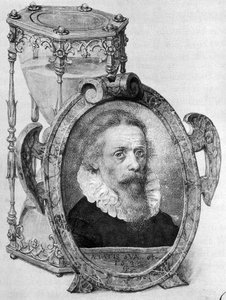
georg flegel
1566 - 1638 , Czech Republic
Quick Facts
- Artistic Movement Or Style: Mannerism/Early Baroque
- Artists Or Movements Influenced By This Artist: ['Caravaggio']
- Artists Who Influenced This Artist:
- Titian
- Tintoretto
- Date Of Birth: 1541
- Date Of Death: 1614
- Full Name: Domenikos Theotokopoulos
- Nationality: Greek/Spanish
- Notable Artworks:
- The Burial of the Count of Orgaz
- View of Toledo
- Assumption of Mary
- Place Of Birth: Crete, Greece
Related Articles

Georges Braque's Masterpieces: 25 Paintings That Defined Cubism & Modern Art | ArtsDot
Explore 25 iconic Georges Braque paintings that revolutionized Cubism & modern art. Discover the stories behind his masterpieces, from Fauvism to Analytical Cubism. Find museum-quality reproductions & elevate your home decor with ArtsDot.com.

Georges Seurat's Masterpieces: 25 Paintings That Defined Pointillism | ArtsDot
Explore 25 iconic Georges Seurat paintings & discover the brilliance of Pointillism. From 'La Grande Jatte' to his harbor scenes, delve into art history with ArtsDot.com. Find museum-quality reproductions for your home decor. Explore the full collection online!
Silent Narratives: Exploring the Enduring Appeal of Still Life Painting Across Centuries
Explore the rich history of still life painting with ArtsDot. Discover Dutch Masters, decode vanitas symbolism & learn about collecting timeless art. Expert insights and museum-quality reproductions.

Baroque Masterpieces: 10 Paintings That Defined an Era |
Journey through the drama & grandeur of Baroque art! Explore 10 masterpieces by Caravaggio, Rembrandt, Rubens & more. Discover stunning oil paintings, rich colors & timeless stories. Find museum-quality reproductions at .

Baroque Drama: Bringing Opulence & Emotion into Contemporary Interiors
Explore the opulent world of Baroque interior design! Discover key elements, modern applications & how to bring dramatic elegance into your home with 's authentic reproductions.