 Preview
 Send
Send Share
Share
 Details

 Download
 Similars
 X-Ray
X-Ray Diaporama
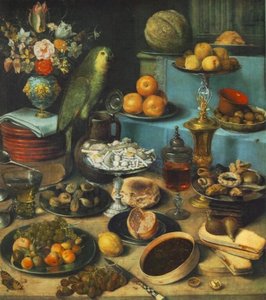
Still-life with Parrot
 Oil
Oil- WallArt
- Baroque
 Early Modern
 78.0 x 67.0 cm
 Alte Pinakothek
 Read More
Hand Made Oil Reproduction
Hand-painted oil on canvas in your size and frame, made to order by our artists. ( Buy Print Buy Image)




P118B $10

P118H $10

P118W $10

P438Z $10

P508JH $12

P508YH $12

P805H $10

P805Z $10

P919BZ $10

P919G $10

P919XJ $10

P959ZH $10

P968JZ $12

W106C $8

W218G $10

W218JH $8

W218Y $10

W307PJ $10

W316G $10

W316PJ $8

W316Y $10

W398PJ $8

W4111J $10

W500HY $15

W500JH $15

W692G $12

W849H $8

W940BG $15

W953PJ $8




Pick from our preset sizes that match the artwork's original proportions.

You may enter your own dimensions to fit a specific frame or space. If your selected size does not match the original image's proportions, we will either crop the artwork or extend the painting with additional hand-painted elements. A digital mockup will be sent for your approval before production begins.
Please note that the on-screen preview does not reflect the actual cropping or extension. Only the mockup will accurately show the final composition.
While custom sizes are available, we recommend selecting a dimension from the predefined list to preserve the original proportions.
After order, ArtsDot.com team will email client for instructions and provide a mockup preview
Worldwide Delivery () in 3/4 weeks instead of standard 5 weeks. (21 August). No compromise on quality.

Free Worldwide Express Shipping

High-Quality Linen Canvas

Full Shipping Insurance

Customs Tax Refund Guarantee

True Color Matching Guarantee

60-Day Return Policy (Defects Only)

100% Money-Back Guarantee

Bulk Discount Offer
 Glass option is only available in size under 110 CM

Still-life with Parrot
Reproduction Medium
Reproduction Size
-


Total Price
$ 263
Artwork Description
A Symphony of Nature and Abundance
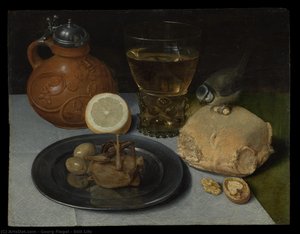
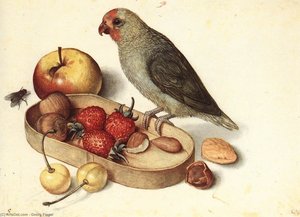
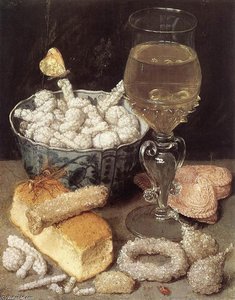
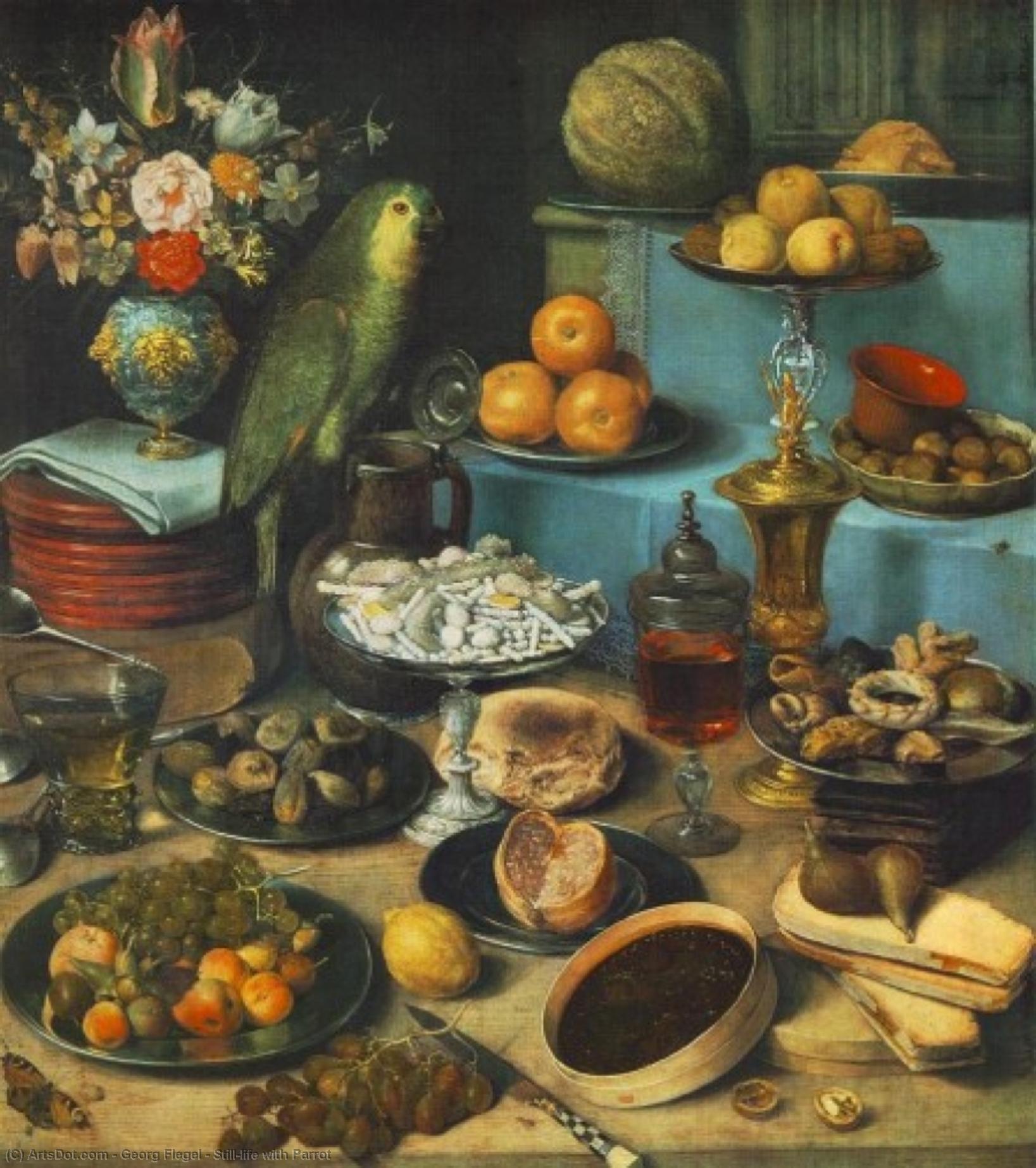
In the quiet, contemplative realm of seventeenth-century Dutch and German still life, few works capture the delicate tension between the wild and the domestic as exquisitely as Georg Flegel’s Still-life with Parrot. This mesmerizing composition invites the viewer into a world where every element—from the vibrant plumage of an exotic bird to the humble skin of a ripening apple—is rendered with a devotion to truth that borders on the miraculous. The scene is set upon a sturdy table, a stage prepared for a silent drama of textures and colors. A parrot, perched with an air of regal curiosity, serves as the focal point, its presence bridging the gap between the untamed wonders of distant lands and the curated comforts of a refined interior. Around this central figure, a bountiful harvest of fruits and vegetables is scattered, creating a visual feast that celebrates the tactile richness of the natural world.
The technique employed by Flegel is nothing short of masterful, showcasing the meticulous precision characteristic of the era's finest practitioners. Each brushstroke serves to define the subtle gradients of light as it dances across the waxy surface of an apple or catches the soft, downy edges of a leaf. The artist utilizes a sophisticated interplay of light and shadow to create a profound sense of three-dimensionality, making the objects appear almost tangible to the touch. One can almost feel the cool smoothness of the ceramic plates and the crispness of the vegetables. This level of detail is not merely decorative; it is an exercise in observation, where the artist’s ability to replicate the luster of moisture or the matte texture of organic decay elevates the painting from a simple arrangement to a profound meditation on the fleeting nature of life.
Symbolism and the Art of Observation
Beyond its surface beauty, the Still-life with Parrot is steeped in the symbolic language of the Baroque period. In the context of the seventeenth century, such arrangements were rarely just displays of wealth or culinary abundance; they were often laden with memento mori—reminders of mortality and the passage of time. The parrot, an exotic inhabitant of a far-off world, represents the reach of human discovery and the allure of the unknown, yet its placement amidst perishable fruits suggests the inevitable cycle of growth and decay. The apples, scattered with intentional randomness, serve as symbols of both temptation and the seasonal rhythms of the earth. For the discerning collector or interior designer, this painting offers more than just a visual anchor; it provides a narrative depth that invites continuous re-examination.
For those looking to integrate such a masterpiece into a contemporary space, the emotional impact of Flegel’s work is unparalleled. A high-quality reproduction of this piece brings an atmosphere of timeless elegance and intellectual curiosity to any room. Whether placed in a sunlit library or a sophisticated dining area, the painting acts as a window into a bygone era of scientific wonder and artistic devotion. It commands attention not through loud colors or aggressive movement, but through a quiet, enduring grace that harmonizes perfectly with both classical and modern decor. To possess such a work is to hold a piece of history that celebrates the exquisite beauty found in the smallest details of our existence.
Related Artworks
Artist Biography
Giuseppe Arcimboldo: The Master of Impossibility
Giuseppe Arcimboldo (1527-1638), a name synonymous with audacious imagination and unparalleled skill, was an Italian Mannerist painter who redefined the boundaries of portraiture. Born Domenikos Theotokopoulos on April 5th, 1527, in Milan, he ultimately became known as Giuseppe Arcimboldo – a moniker adopted during his time serving the Habsburg court. His life’s work wasn't simply about depicting likenesses; it was an elaborate performance of visual storytelling, transforming ordinary objects—fruits, vegetables, flowers, books, and even instruments—into strikingly realistic and deeply symbolic human heads. This unique approach cemented his place as a pivotal figure in art history, bridging the gap between Renaissance idealism and the burgeoning Baroque era. Arcimboldo’s early career was firmly rooted in the traditional practices of Milanese painting. He began as a designer for stained glass and frescoes at local cathedrals, mastering the techniques of these demanding mediums. However, it was his appointment as court painter to Ferdinand I in Vienna in 1562 that marked a dramatic shift in his artistic trajectory. This position within the Habsburg court provided him with unprecedented access to power and influence, allowing him to experiment freely and develop his signature style. He subsequently served Maximilian II and Rudolf II at the Prague court, becoming a valued decorator, costume designer, and even a producer of elaborate drawings of exotic animals for the imperial menagerie – a testament to his versatility and artistic range.- Early Influences: Arcimboldo’s early work demonstrates a strong influence from the late Mannerism prevalent in Italy at the time. He absorbed the stylistic elements of artists like Giuseppe Cesari, known as the “Cavaliere d'Arpino,” and incorporated them into his own distinctive style.
- Venetian Techniques: His relocation to Venice in 1567 proved crucial, exposing him to the vibrant colors and dynamic compositions of Venetian masters like Titian, Tintoretto, and Jacopo Bassano. This experience significantly broadened his artistic palette and technique.
- The Farnese Circle: Arcimboldo’s time at the court of Cardinal Alessandro Farnese in Rome was a period of intense experimentation and innovation. He honed his skills in portraiture, creating striking images for the cardinal's circle of learned men – a group known for its intellectual curiosity and appreciation for visual spectacle.
Symbolism and Renaissance Neo-Platonism
The precise motivations behind Arcimboldo’s unconventional portraits remain a subject of scholarly debate. While some critics initially dismissed them as mere curiosities designed to amuse the court, more recent interpretations suggest a deeper engagement with Renaissance Neo-Platonism – a philosophical movement that sought to reconcile classical philosophy with Christian theology. The use of natural elements, representing earthly beauty and abundance, could be seen as an allegory for the divine realm, while the careful arrangement of these objects within the human form reflects the concept of “anamorphic unity” – the idea that all things are ultimately interconnected and part of a single, underlying reality.Major Works and Legacy
Several works stand out as particularly significant examples of Arcimboldo’s genius. *Flora* (c. 1591), depicting a woman's head composed entirely of flowers and plants, is arguably his most iconic creation. Similarly, *Vertumnus* (1587-1588) – a portrait of Rudolf II as the Roman god of fertility – showcases his mastery of composition and his ability to transform inanimate objects into remarkably lifelike figures. His later works, such as *Winter*, created for Rudolf II in 1590, demonstrate an increasing sophistication in his technique and a greater emphasis on atmospheric perspective.- *Flora* (c. 1591): A quintessential example of Arcimboldo’s signature style, celebrating the beauty and abundance of nature.
- *Vertumnus* (1587-1588): A portrait of Rudolf II as the Roman god of fertility, showcasing his skill in creating complex and layered compositions.
- *Winter* (1590): Demonstrates a growing mastery of atmospheric perspective and a more refined artistic style.
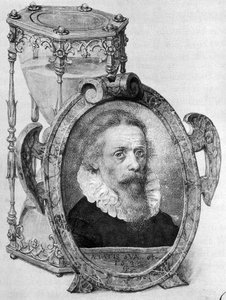
georg flegel
1566 - 1638 , Czech Republic
Quick Facts
- Artistic Movement Or Style: Mannerism/Early Baroque
- Artists Or Movements Influenced By This Artist: ['Caravaggio']
- Artists Who Influenced This Artist:
- Titian
- Tintoretto
- Date Of Birth: 1541
- Date Of Death: 1614
- Full Name: Domenikos Theotokopoulos
- Nationality: Greek/Spanish
- Notable Artworks:
- The Burial of the Count of Orgaz
- View of Toledo
- Assumption of Mary
- Place Of Birth: Crete, Greece
Related Articles

Georges Braque's Masterpieces: 25 Paintings That Defined Cubism & Modern Art | ArtsDot
Explore 25 iconic Georges Braque paintings that revolutionized Cubism & modern art. Discover the stories behind his masterpieces, from Fauvism to Analytical Cubism. Find museum-quality reproductions & elevate your home decor with ArtsDot.com.

Georges Seurat's Masterpieces: 25 Paintings That Defined Pointillism | ArtsDot
Explore 25 iconic Georges Seurat paintings & discover the brilliance of Pointillism. From 'La Grande Jatte' to his harbor scenes, delve into art history with ArtsDot.com. Find museum-quality reproductions for your home decor. Explore the full collection online!
The Bountiful Still Life: Symbolism & Artistic Representation of Fruit Across Art History
Explore the rich history of still life painting & the symbolism of fruit across art movements. Discover masterpieces from Caravaggio to Cézanne with ArtsDot – expert guidance & museum-quality reproductions.
Silent Narratives: Exploring the Enduring Appeal of Still Life Painting Across Centuries
Explore the rich history of still life painting with ArtsDot. Discover Dutch Masters, decode vanitas symbolism & learn about collecting timeless art. Expert insights and museum-quality reproductions.
The Enduring Appeal of Still Life: A Historical & Contemporary Exploration
Explore the rich history & symbolism of still life painting with ArtsDot. Discover masterpieces from the Dutch Golden Age, learn about vanitas art, and find expert guidance for collecting timeless artworks.