 Preview
 Send
Send Share
Share
 Details

 Download
 Similars
 X-Ray
X-Ray Diaporama
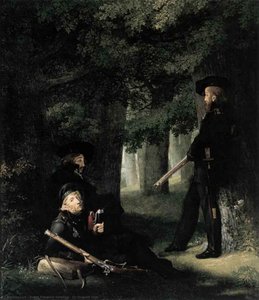
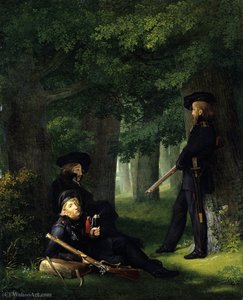
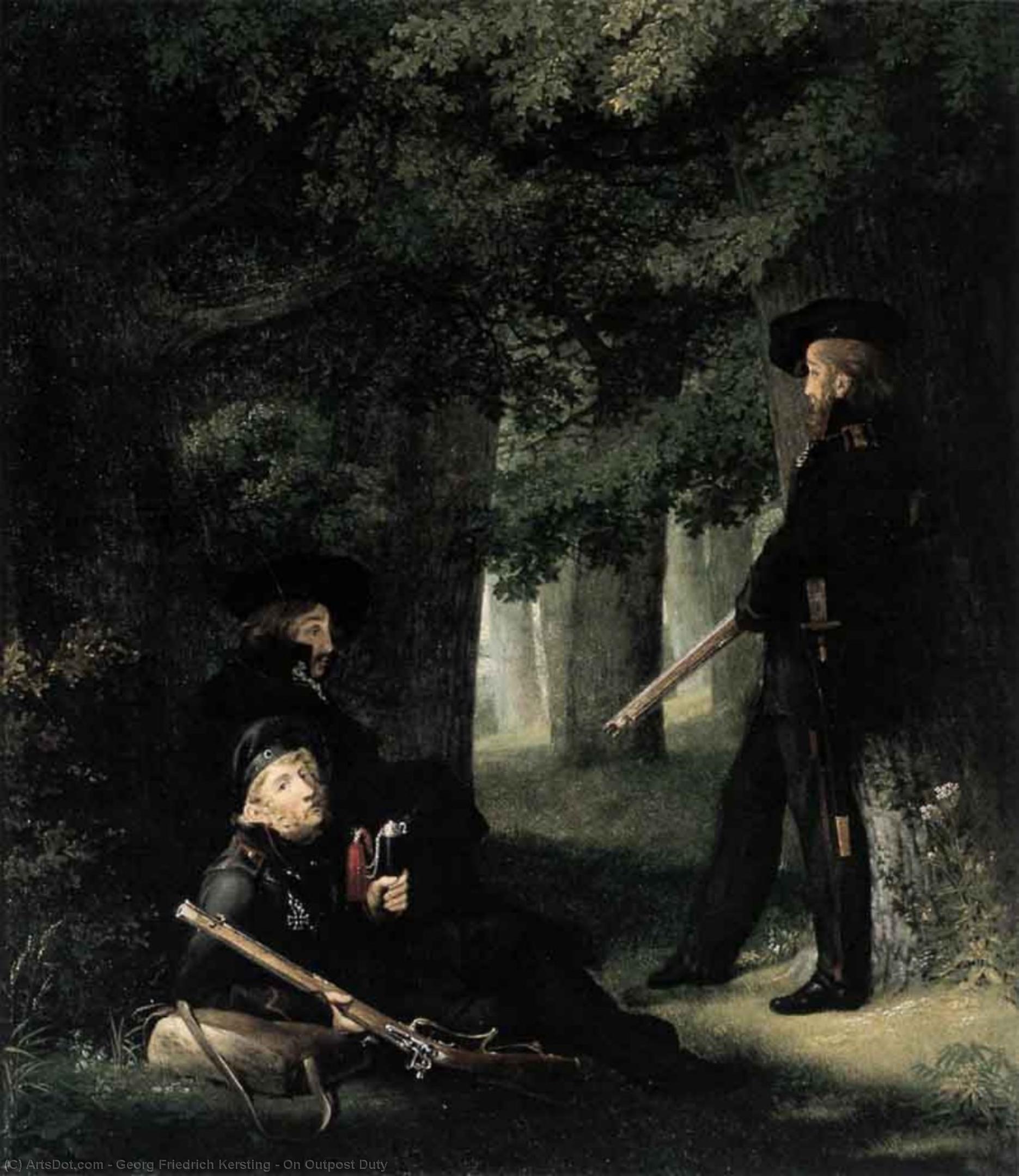
On Outpost Duty
 Oil On Canvas
- WallArt
- Biedermeier
 1815
1815 46.0 x 35.0 cm
 Nationalgalerie
 Read More
Hand Made Oil Reproduction
Hand-painted oil on canvas in your size and frame, made to order by our artists. ( Buy Print Buy Image)




P118B $10

P118H $10

P118W $10

P438Z $10

P508JH $12

P508YH $12

P805H $10

P805Z $10

P919BZ $10

P919G $10

P919XJ $10

P959ZH $10

P968JZ $12

W106C $8

W218G $10

W218JH $8

W218Y $10

W307PJ $10

W316G $10

W316PJ $8

W316Y $10

W398PJ $8

W4111J $10

W500HY $15

W500JH $15

W692G $12

W849H $8

W940BG $15

W953PJ $8




Pick from our preset sizes that match the artwork's original proportions.

You may enter your own dimensions to fit a specific frame or space. If your selected size does not match the original image's proportions, we will either crop the artwork or extend the painting with additional hand-painted elements. A digital mockup will be sent for your approval before production begins.
Please note that the on-screen preview does not reflect the actual cropping or extension. Only the mockup will accurately show the final composition.
While custom sizes are available, we recommend selecting a dimension from the predefined list to preserve the original proportions.
After order, ArtsDot.com team will email client for instructions and provide a mockup preview
Worldwide Delivery () in 3/4 weeks instead of standard 5 weeks. (17 August). No compromise on quality.

Free Worldwide Express Shipping

High-Quality Linen Canvas

Full Shipping Insurance

Customs Tax Refund Guarantee

True Color Matching Guarantee

60-Day Return Policy (Defects Only)

100% Money-Back Guarantee

Bulk Discount Offer
 Glass option is only available in size under 110 CM

On Outpost Duty
Reproduction Medium
Reproduction Size
-


Total Price
$ 313
Artwork Description
A Moment of Vigilance: Exploring “On Outpost Duty” by Georg Friedrich Kersting
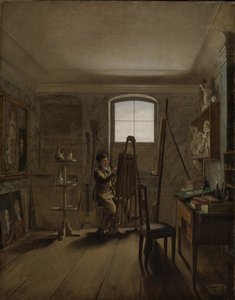
Georg Friedrich Kersting’s “On Outpost Duty,” painted in 1815, is more than a simple depiction of three Prussian rangers; it's a carefully constructed tableau of duty, contemplation, and the subtle anxieties inherent within military life. Rendered in the restrained elegance of the Biedermeier style – a movement characterized by its intimate realism and focus on everyday subjects – the painting immediately draws the viewer into a shadowed forest clearing, imbued with a palpable sense of quiet intensity.
The scene unfolds around a seated figure, identifiable as Kersting himself, holding a rifle and a small pouch. His posture is one of deliberate watchfulness, his gaze fixed on an unseen horizon. Beside him stand two other men, engaged in conversation, their faces etched with the weight of responsibility. The composition’s verticality – dominated by the imposing trees that frame the scene – creates a powerful sense of enclosure and reinforces the feeling of being trapped within this watchful vigil. The muted palette of browns, greens, and blacks contributes to an atmosphere of somber seriousness, suggesting both the harsh realities of military service and the inherent solitude of such duty.
The Biedermeier Aesthetic: Intimacy and Observation
Kersting’s work firmly resides within the Biedermeier tradition, a reaction against the grandiosity of Neoclassicism. Biedermeier art prioritized domestic scenes, landscapes, and portraits that reflected the lives of ordinary people – a deliberate shift away from overtly heroic or historical subjects. This emphasis on observation is strikingly evident in “On Outpost Duty.” Kersting doesn’t romanticize warfare; instead, he presents it with a quiet realism, focusing on the psychological state of his subjects rather than dramatic action. The painting's intimacy stems from its detailed portrayal of human interaction and the subtle nuances of facial expression – elements that were central to the Biedermeier aesthetic.
The artist’s meticulous attention to detail is further emphasized by the use of light and shadow. A directional light source casts deep shadows, highlighting the textures of the trees and the faces of the men, adding depth and a sense of realism to the scene. The careful blending of paint creates a slightly rough surface, mirroring the ruggedness of the landscape and reinforcing the painting’s overall atmosphere of quiet vigilance.
Symbolism and Historical Context
“On Outpost Duty” was created during a period of significant upheaval in Europe – the Napoleonic Wars and the subsequent efforts to restore the German monarchy. The Prussian rangers depicted in the painting were part of the forces that fought against Napoleon’s invasion, embodying themes of patriotism, duty, and sacrifice. The rifle held by Kersting himself is not merely a weapon; it represents the burden of responsibility and the potential for violence inherent within military service. The small pouch suggests provisions and perhaps even personal belongings – reminders of the lives left behind.
Furthermore, the painting’s setting—a dense forest—can be interpreted as a metaphor for the uncertainties and dangers that lie ahead. The trees, silent witnesses to countless battles, symbolize both protection and confinement. The act of watching, of being on outpost duty, becomes a symbol of vigilance against an unseen threat.
A Legacy of Quiet Realism
“On Outpost Duty” stands as a testament to Kersting’s skill as a painter and his ability to capture the complexities of human experience within a limited palette and restrained style. It's a poignant meditation on duty, solitude, and the subtle anxieties of military life—a work that continues to resonate with viewers today. Reproductions of this evocative painting offer a glimpse into a pivotal moment in European history, rendered with remarkable sensitivity and artistic integrity.
Related Artworks

Artist Biography
The Quiet Observer: The Life and Legacy of Georg Friedrich Kersting
In the grand tapestry of German Romanticism, where dramatic peaks and tempestuous skies often dominate the visual narrative, there exists a more intimate, whispered beauty found in the works of Georg Friedrich Kersting. Born in 1785 in the modest village of Gostendorf to a glazier, Kersting’s journey from humble beginnings to the heights of Prussian artistic prestige is a testament to a life dedicated to the profound observation of the everyday. His early training at the Copenhagen Academy between 1805 and 1808 provided him with a foundation of stylistic clarity and meticulous draughtsmanship, earning him a silver medal and instilling in him a precision that would become his artistic hallmark.
Kersting’s life was not merely one of quiet studio contemplation; it was deeply intertwined with the turbulent political currents of his era. Upon moving to Dresden in 1808, he joined the Lützow Free Corps, a patriotic volunteer unit, embodying the spirit of national reform and service. This period of military involvement likely sharpened his eye for detail and human character, experiences that would later inform the psychological depth found in his paintings. It was during this era that he forged one of the most significant artistic bonds of the nineteenth century through his relationship with Caspar David Friedrich. Walking together through the rugged landscapes of the Riesengebirge, Kersting acted as both a companion and a collaborator, producing preparatory drawings that would serve as vital inspirations for Friedrich’s more monumental, sublime landscapes.
The Art of the Intimate: Style and Technique
While his mentor, Friedrich, sought to capture the infinite and the divine through overwhelming natural phenomena, Kersting found his calling in the Biedermeier tradition—a style characterized by a retreat into the domestic, the cozy, and the tranquil. He mastered the genre of interior scenes, transforming simple rooms into stages for quiet human drama. His technique was a sophisticated blend of Romantic sensitivity and a reverence for the seventeenth-century Dutch masters. By employing subtle nuances of light and color, Kersting could breathe life into a sunlit corner or a shadowed study, imbuing domesticity with a sense of dignity and timelessness.
His work is defined by several key artistic elements:
- Meticulous Realism: A dedication to the precise rendering of textures, from the grain of wooden furniture to the soft folds of fabric.
- Psychological Depth: The ability to capture fleeting moments of contemplation or quiet interaction, suggesting a rich inner life within his subjects.
- Luminous Atmosphere: A masterful use of light to create a sense of warmth and peace, often focusing on the way natural light enters a domestic space.
- The Beauty of the Ordinary: An elevated focus on everyday objects and scenes, finding profound meaning in the mundane aspects of life.
Historical Significance and Artistic Endurance
The historical importance of Georg Friedrich Kersting lies in his ability to bridge the gap between the sweeping emotionalism of Romanticism and the grounded, observational realism of the Biedermeier period. He provided a necessary counterpoint to the era's more grandiose movements, offering a window into the soul of the German middle class and the sanctity of the private sphere. His collaborations and his ability to translate the spirit of his time into intimate visual poetry ensure his place as a vital figure in European art history.
Through his paintings, Kersting invites us to slow our pace and find wonder in the stillness. He reminds us that greatness is not only found in the epic or the extraordinary, but in the quiet, light-filled moments of our shared human experience. His legacy remains a profound celebration of the beauty found within the boundaries of the home and the heart.
Georg Friedrich Kersting
1785 - 1847 , Germany
Quick Facts
- Artistic Movement Or Style: Biedermeier
- Artists Or Movements Influenced By This Artist: Dutch Genre Painting
- Artists Who Influenced This Artist: Caspar David Friedrich
- Date Of Birth: October 31, 1785
- Date Of Death: July 1, 1847
- Full Name: Georg Friedrich Kersting
- Nationality: German
- Notable Artworks:
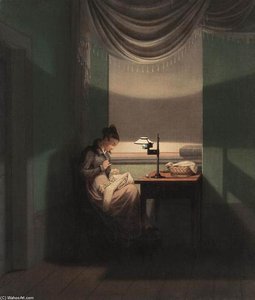
- The Embroiderer
- Morning in the Riesengebirge
- Place Of Birth: Göstendorf, Germany
Related Articles

Beyond the Horizon: 10 Landscape Masterpieces for Your Home Decor
Journey through 10 breathtaking landscape paintings by Monet, Van Gogh & more! Explore iconic artworks, artistic techniques & find inspiration for your home decor. Museum-quality reproductions at ArtsDot.com. Discover all masterpieces on ArtsDot.com

Romantic Landscapes: 10 Masterpieces for Your Home | ArtsDot
Journey through 10 Romantic landscape masterpieces by Friedrich, Turner & Cole. Explore emotional art, sublime nature scenes & iconic 19th-century paintings. Find museum-quality reproductions for your home at ArtsDot.com – discover the full collection online!

Evocations of Place: A Historical Journey Through Landscape Art
Explore the rich history of landscape art with ArtsDot. Discover renowned artists, movements like Impressionism & Romanticism, and expert guidance for collecting timeless pieces. Find your perfect serene escape today!

John Constable's Masterpieces: Explore 25 Iconic Landscapes for Your Home
Journey through John Constable's 25 most celebrated landscapes. Explore Romanticism, Dedham Vale & his masterful use of light in iconic paintings like 'Hay Wain'. Find museum-quality art reproductions and elevate your home decor on ArtsDot.com.

Evocations of Place: A Historical Journey Through Landscape Art
Explore the rich history of landscape art with ArtsDot. Discover renowned artists, movements like Impressionism & tonalism, and expert guidance for collecting timeless pieces. Find your perfect serene escape today!