 Preview
 Send
Send Share
Share
 Details

 Download
 Similars
 X-Ray
X-Ray Diaporama
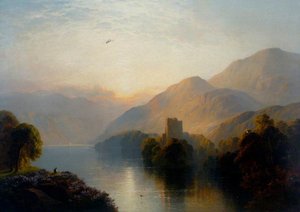
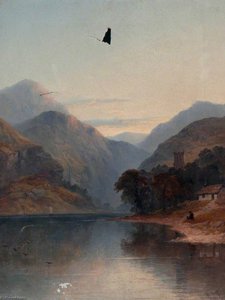
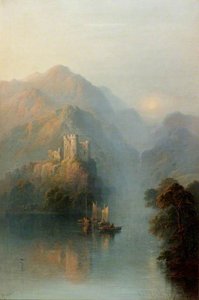
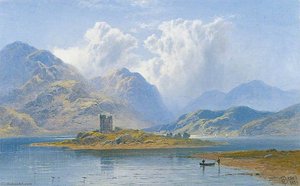
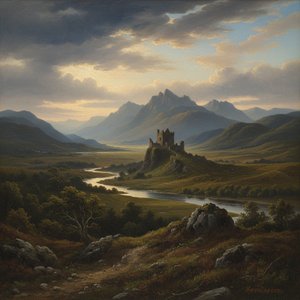
The Kyles of Bute, Argyll
 Romanticism
 1876
1876 26.0 x 21.0 cm
 Read More
Hand Made Oil Reproduction
Hand-painted oil on canvas in your size and frame, made to order by our artists. ( Buy Print Buy Image)




































Pick from our preset sizes that match the artwork's original proportions.

You may enter your own dimensions to fit a specific frame or space. If your selected size does not match the original image's proportions, we will either crop the artwork or extend the painting with additional hand-painted elements. A digital mockup will be sent for your approval before production begins.
Please note that the on-screen preview does not reflect the actual cropping or extension. Only the mockup will accurately show the final composition.
While custom sizes are available, we recommend selecting a dimension from the predefined list to preserve the original proportions.
After order, ArtsDot.com team will email client for instructions and provide a mockup preview
Worldwide Delivery () in 3/4 weeks instead of standard 5 weeks. (25 August). No compromise on quality.

Free Worldwide Express Shipping

High-Quality Linen Canvas

Full Shipping Insurance

Customs Tax Refund Guarantee

True Color Matching Guarantee

60-Day Return Policy (Defects Only)

100% Money-Back Guarantee

Bulk Discount Offer
 Glass option is only available in size under 110 CM

The Kyles of Bute, Argyll
Reproduction Medium
Reproduction Size
-


Total Price
$ 263
Related Artworks

Artist Biography
A Visionary of the Scottish Landscape
George Blackie Sticks, a name synonymous with the atmospheric grandeur of the British Isles, was born in 1843 in Newcastle upon Tyne. As the son of James Sticks, a respected Edinburgh artist, George was destined for a life steeped in the nuances of light and shadow. His early years were shaped by the artistic traditions of Scotland, where he received foundational instruction from his father. This mentorship did more than impart technical proficiency; it instilled in him a profound appreciation for Romantic ideals—a fascination with the sublime power of nature and the emotive potential of a landscape. Through meticulous observation and independent study, Sticks developed a way of seeing that would eventually establish him as one of the most distinguished painters of his era.
His artistic journey was characterized by an unwavering dedication to capturing the soul of the natural world. Whether depicting the rugged highlands or the tranquil lochs of Scotland, Sticks possessed a rare ability to translate the physical landscape into an emotional experience. His work often serves as a window into the 19th-century Romantic movement, where the goal was not merely accurate representation but the evocation of mood and atmosphere. By focusing on the interplay between earth, water, and sky, he created vistas that invite the viewer into a state of quiet contemplation.
Technique, Palette, and the Romantic Spirit
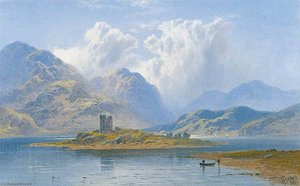
The mastery of George Blackie Sticks lies in his sophisticated use of composition and color to direct the viewer's eye and heart. He frequently employed pyramidal compositions, a technique that lends a sense of structural stability and monumental depth to his scenes. This method allowed him to mirror the towering peaks of the Scottish mountains, creating a visual rhythm that guides the gaze from the textured foreground toward the distant, misty horizons. His brushwork, while capable of fine detail in the depiction of rocky shores or resilient grasses, often maintained a pleasing softness that avoided harshness, contributing to the dreamlike quality of his landscapes.
< p>His palette was masterfully restrained, favoring muted tones dominated by deep blues, verdant greens, and earthy ochres. These colors were not chosen at random but were essential in creating the atmospheric perspective necessary for his luminous effects. Through subtle gradations of pigment, he could simulate the way light filters through a heavy mist or reflects off the surface of a still loch. This approach was deeply influenced by the legendary masters of British landscape painting, such as J.M.W. Turner and John Constable. From Turner, he drew an understanding of the sublime and the transformative power of light; from Constable, he learned the importance of capturing the specific, lived-in character of the countryside.Legacy and Artistic Significance
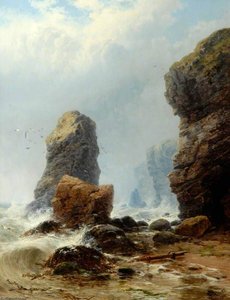
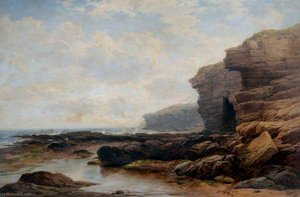
Throughout his prolific career, which spanned much of the late 19th and early 20th centuries, Sticks produced a body of work that remains a vital part of the British artistic canon. His paintings, such as the serene Whitley Coast or the evocative The Kyles of Bute, are more than mere topographical records; they are poetic interpretations of a landscape in transition. As the industrial era began to reshape the British Isles, Sticks’ work preserved a sense of the untouched, romantic wilderness, capturing a moment of natural majesty that felt both timeless and fleeting.
The historical significance of George Blackie Sticks extends beyond his technical skill. He was a key figure in a movement that sought to celebrate the beauty of the British Isles, catering to a growing middle class that found solace and identity in the depiction of their native landscapes. His ability to blend realism with a romantic sensibility ensured that his work resonated both with his contemporaries and with future generations of art lovers. Today, his paintings continue to inspire admiration for their ability to transport the viewer to a peaceful shoreline or a misty mountain pass, proving that the true power of landscape art lies in its ability to touch the eternal.
george blackie sticks
1843 - 1938
Quick Facts
- Artistic Movement Or Style: Romantic Landscape Art
- Artists Who Influenced This Artist: ['James Sticks']
- Date Of Death: 1938
- Full Name: George Blackie Sticks
- Nationality: British
- Notable Artworks: ['Derwentwater and Bassenthwaite Lakes']
- Place Of Birth: Newcastle
Related Articles

Georges Braque's Masterpieces: 25 Paintings That Defined Cubism & Modern Art | ArtsDot
Explore 25 iconic Georges Braque paintings that revolutionized Cubism & modern art. Discover the stories behind his masterpieces, from Fauvism to Analytical Cubism. Find museum-quality reproductions & elevate your home decor with ArtsDot.com.

Georges Seurat's Masterpieces: 25 Paintings That Defined Pointillism | ArtsDot
Explore 25 iconic Georges Seurat paintings & discover the brilliance of Pointillism. From 'La Grande Jatte' to his harbor scenes, delve into art history with ArtsDot.com. Find museum-quality reproductions for your home decor. Explore the full collection online!

Romantic Landscapes: 10 Masterpieces for Your Home | ArtsDot
Journey through 10 Romantic landscape masterpieces by Friedrich, Turner & Cole. Explore emotional art, sublime nature scenes & iconic 19th-century paintings. Find museum-quality reproductions for your home at ArtsDot.com – discover the full collection online!
Alexander Nasmyth: Picturing Scotland's Romantic Landscape – Innovation & Identity
Explore the life & art of Alexander Nasmyth, a pivotal figure in Scottish Romantic landscape painting. Discover his iconic works, including portraits of Robert Burns, and learn about his lasting influence on national identity. Fine art reproductions available.
George Paul Chalmers: Rediscovering the Angus Rembrandt & Scottish Colourist Roots
Explore the captivating world of George Paul Chalmers (1833-1878), a pivotal Scottish painter. Discover his landscapes, portraits & connection to the Aesthetic Movement and Colourists. Learn about this 'Angus Rembrandt's' legacy with ArtsDot.