 Preview
 Send
Send Share
Share
 Details

 Download
 Similars
 X-Ray
X-Ray Diaporama
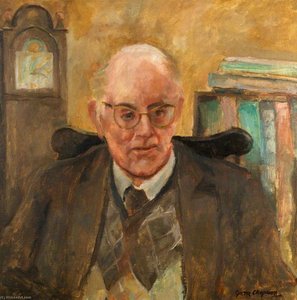
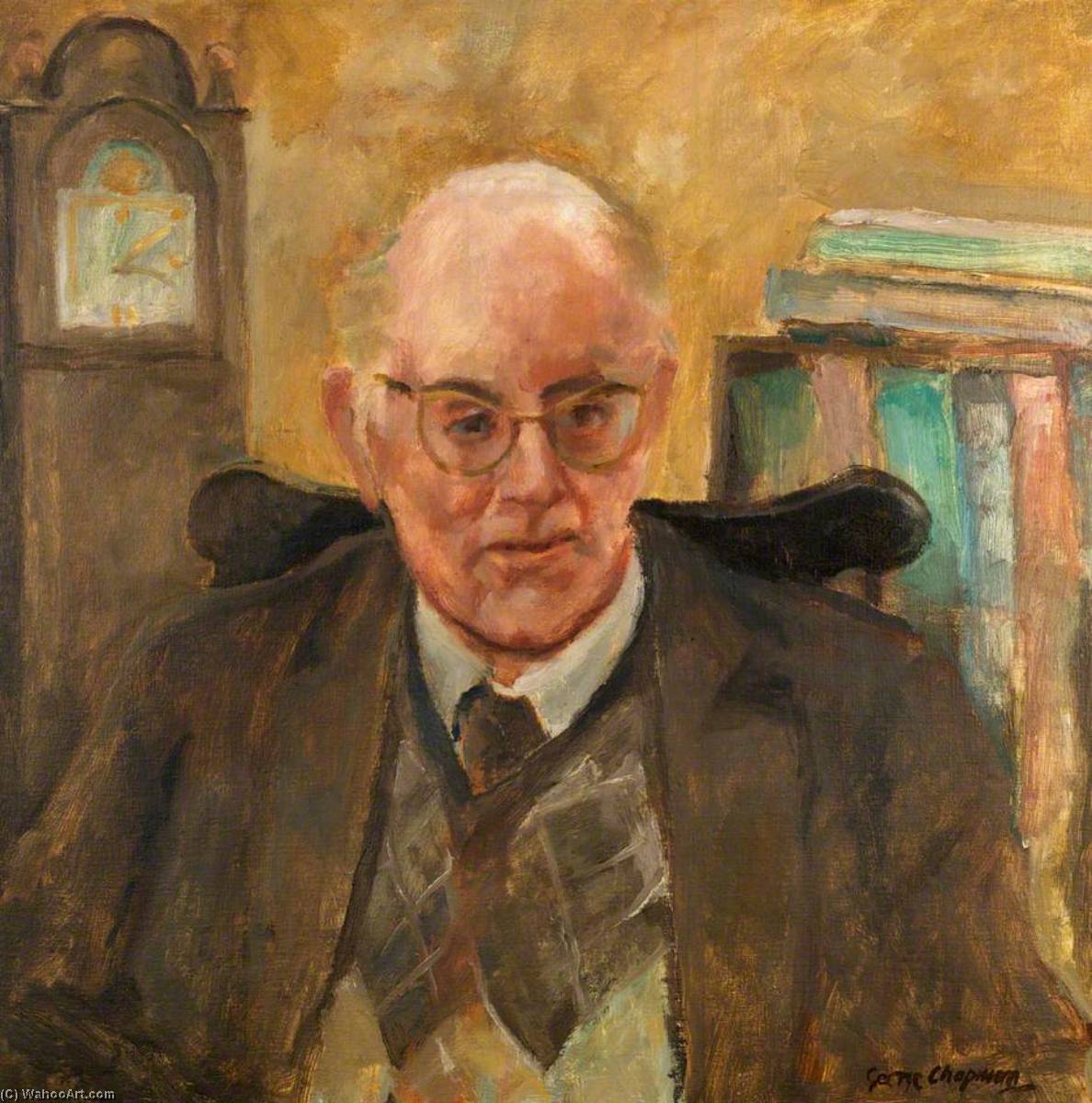
Dr John D. Owen (1926–2003), Curator at Ceredigion Museum (1972–1991)
 Contemporary Realism
 1990
1990- Contemporary
 51.0 x 51.0 cm
 Amgueddfa Ceredigion Museum
 Read More
Hand Made Oil Reproduction
Hand-painted oil on canvas in your size and frame, made to order by our artists. ( Buy Print Buy Image)




P118B $10

P118H $10

P118W $10

P438Z $10

P508JH $12

P508YH $12

P805H $10

P805Z $10

P919BZ $10

P919G $10

P919XJ $10

P959ZH $10

P968JZ $12

W106C $8

W218G $10

W218JH $8

W218Y $10

W307PJ $10

W316G $10

W316PJ $8

W316Y $10

W398PJ $8

W4111J $10

W500HY $15

W500JH $15

W692G $12

W849H $8

W940BG $15

W953PJ $8




Pick from our preset sizes that match the artwork's original proportions.

You may enter your own dimensions to fit a specific frame or space. If your selected size does not match the original image's proportions, we will either crop the artwork or extend the painting with additional hand-painted elements. A digital mockup will be sent for your approval before production begins.
Please note that the on-screen preview does not reflect the actual cropping or extension. Only the mockup will accurately show the final composition.
While custom sizes are available, we recommend selecting a dimension from the predefined list to preserve the original proportions.
After order, ArtsDot.com team will email client for instructions and provide a mockup preview
Worldwide Delivery () in 3/4 weeks instead of standard 5 weeks. (22 August). No compromise on quality.

Free Worldwide Express Shipping

High-Quality Linen Canvas

Full Shipping Insurance

Customs Tax Refund Guarantee

True Color Matching Guarantee

60-Day Return Policy (Defects Only)

100% Money-Back Guarantee

Bulk Discount Offer
 Glass option is only available in size under 110 CM

Dr John D. Owen (1926–2003), Curator at Ceredigion Museum (1972–1991)
Reproduction Medium
Reproduction Size
-


Total Price
$ 263
Artwork Description
A Moment Frozen in Contemplation
In this evocative portrait from 1990, George Chapman invites us into the private, intellectual sanctuary of Dr. John D. Owen, a man whose life was dedicated to the preservation of heritage as the Curator at Ceredigion Museum. The painting captures more than just a likeness; it captures a state of being. Seated in a moment of profound stillness, Dr. Owen is depicted with his hands resting thoughtfully against his chin, a gesture that immediately signals a mind deeply engaged in reflection. Through Chapman’s masterful use of light and shadow, the viewer is drawn into the subject's gaze, feeling the weight of a lifetime of scholarly pursuit and the quiet dignity of a man immersed in his vocation.
The composition is rich with the textures of an academic life. Scattered books surround the figure, serving as silent witnesses to his intellectual journey, while the subtle presence of a clock in the background introduces a poignant layer of symbolism regarding the passage of time and the enduring nature of history. This interplay between the ephemeral moment of thought and the permanence of recorded knowledge creates a tension that is both captivating and deeply moving for any observer.
The Mastery of Expressive Figuration
George Chapman, a graduate of the prestigious Slade School of Fine Art, brings a sophisticated technical prowess to this work. Having studied under masters such as Frank Auerbach, Chapman utilizes an expressive approach to figuration that avoids mere photographic imitation in favor of emotional truth. His brushwork, though controlled, possesses a vitality that breathes life into the subject's features and the heavy fabrics of his formal attire. The artist’s ability to manipulate light allows the skin tones to glow with a soft, human warmth, contrasting beautifully against the more muted, scholarly atmosphere of the background.
For the discerning collector or interior designer, this piece offers a remarkable depth of character. The palette is sophisticated and grounded, making it an ideal centerpiece for a study, a library, or a refined living space where conversation and intellect are celebrated. As a high-quality reproduction, every nuance of Chapman’s original technique—from the delicate rendering of the spectacles to the atmospheric shadows cast by the surrounding books—is preserved, offering an opportunity to possess a fragment of Welsh artistic history.
A Legacy of Empathy and Detail
Beyond the technical execution, there is a profound sense of empathy woven into the fabric of this portrait. Chapman was an artist who understood the soul of his subjects, a skill honed through his depictions of the resilient communities in the Rhondda Valley. In Dr. Owen, he finds a different kind of strength—the quiet, steadfast resilience of the academic and the curator. The painting serves as a tribute to the importance of memory and the careful stewardship of our cultural identity.
To display this artwork is to invite an atmosphere of introspection and grace into one's environment. It is a piece that does not merely decorate a wall but enriches the very air of a room, prompting guests to pause, reflect, and engage with the silent narrative of a life well-lived. Whether you are drawn to its historical significance, its masterful painterly style, or its ability to evoke a sense of timelessness, this portrait remains an enduring testament to the power of the human spirit.
Related Artworks
Artist Biography
The Soul of the Rhondda: The Life and Vision of George Chapman
Born in East Ham, London, on the first of October, 1908, George Chapman was an artist whose life and work were profoundly shaped by the textures of industrial reality and a deep-seated social conscience. As the son of a railway superintendent, his early years were rooted in the rhythms of a changing Britain, yet his path toward artistic mastery was marked by both personal struggle and immense technical discipline. His education at Shebbears College in Devon was notably challenged by profound deafness, a condition that perhaps sharpened his visual acuity and heightened his sensitivity to the silent, powerful atmospheres he would later capture on canvas. After studying at the Gravesend School of Art and training as a commercial designer, Chapman eventually found his true calling not in the polished world of advertising, but in the raw, unvarnished landscapes of the working class.
The turning point in Chapman’s career arrived in 1953, during a transformative journey through the coal-mining valleys of South Wales. It was in the Rhondda Valley that he famously declared he had found the material that would finally make him a painter. This discovery ignited a decade of intense productivity and success, as he turned his gaze toward the grit, the smoke, and the resilient spirit of the mining communities. His work became a vital documentary force, eschewing idealized pastoral scenes in favor of a gritty realism that confronted the harshness of industrial life. Through his eyes, the coal dust clinging to clothing and the weary, weathered faces of miners were elevated to subjects of profound dignity and emotional weight.
Technical Mastery and Artistic Lineage
Chapman’s aesthetic language was forged in the prestigious studios of London, specifically the Slade School of Fine Art and the Royal College of Art. Under the tutelage of influential figures such as Henry Spencer Palmer, Frank Auerbach, and Gilbert Spencer, he developed a sophisticated approach to figuration that balanced observational truth with expressive vitality. His training allowed him to move beyond mere photographic imitation, instead utilizing bold brushstrokes and textured surfaces to convey the psychological depth of his subjects. He drew inspiration from a diverse lineage of masters, including the atmospheric works of Sickert and the structural integrity of Cézanne, as well as the social realism of the Euston Road School.
His technique was characterized by an extraordinary ability to manipulate light and shadow, creating compositions that felt both heavy with atmosphere and luminous with human warmth. Whether depicting a bustling street or an intimate domestic interior, Chapman employed a controlled yet vigorous brushwork that breathed life into the very fabric of his paintings. This mastery extended to his printmaking, where he continued to explore the interplay between form and social commentary, ensuring that his artistic voice remained as much about the weight of history as it was about the beauty of the moment.
Legacy and Historical Significance
The significance of George Chapman lies in his role as a visual chronicler of an era defined by industrial struggle and communal resilience. His commitment to the working class was not merely a thematic choice but a fundamental part of his identity as a socially conscious artist. This dedication earned him widespread critical acclaim, including features on the BBC’s Monitor programme alongside Huw Wheldon and exhibitions at the Venice International Film Biennial. His works were not only celebrated in galleries but were also sought after by major public collections across Britain and abroad, ensuring that the spirit of the Rhondda Valley would be preserved for future generations.
Beyond his individual achievements, Chapman’s legacy is found in the way he bridged the gap between commercial precision and expressive fine art. His life's work stands as a testament to the power of finding meaning in the overlooked corners of society. To view a Chapman painting is to experience more than just a landscape; it is to encounter a profound empathy for the human condition, rendered through a lens of uncompromising honesty and masterful skill.
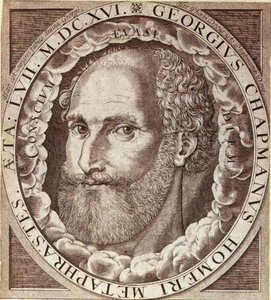
george chapman
1908 - 1993
Quick Facts
- Artistic Movement Or Style: Social Realist Art
- Artists Or Movements Influenced By This Artist: ['']
- Artists Who Influenced This Artist: ['']
- Date Of Death: 1993
- Full Name: George Chapman
- Nationality: British
- Notable Artworks:
- Children Going to School
- Self Portrait
Related Articles

Georges Braque's Masterpieces: 25 Paintings That Defined Cubism & Modern Art | ArtsDot
Explore 25 iconic Georges Braque paintings that revolutionized Cubism & modern art. Discover the stories behind his masterpieces, from Fauvism to Analytical Cubism. Find museum-quality reproductions & elevate your home decor with ArtsDot.com.

Georges Seurat's Masterpieces: 25 Paintings That Defined Pointillism | ArtsDot
Explore 25 iconic Georges Seurat paintings & discover the brilliance of Pointillism. From 'La Grande Jatte' to his harbor scenes, delve into art history with ArtsDot.com. Find museum-quality reproductions for your home decor. Explore the full collection online!
George Inness: Transcendental Landscapes & the American Search for Spiritual Harmony
Explore the profound landscapes of George Inness, a leading American artist-philosopher. Discover his spiritual approach to painting, influences, and lasting legacy with ArtsDot.
John George Brown: Capturing American Life & Sentiment in 19th-Century Genre Painting
Explore the captivating genre paintings of John George Brown, celebrated for his realistic depictions of 19th-century American life. Discover his legacy & find museum-quality reproductions at ArtsDot.
Sir George Clausen: Capturing Edwardian Life & British Impressionism's Nuances
Explore the luminous world of Sir George Clausen, a leading British Impressionist painter. Discover his captivating scenes of Edwardian life, rural England & poignant war art. Learn about his legacy and find high-quality reproductions at ArtsDot.