 Preview
 Send
Send Share
Share
 Details

 Download
 Similars
 X-Ray
X-Ray Diaporama
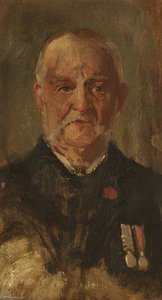
W. Porter, RMLI
 Oil
Oil- WallArt
- Early 20th Century Portraiture
 1920
1920 23.0 x 13.0 cm
 Bristol Museum - Art Gallery
 Read More
Hand Made Oil Reproduction
Hand-painted oil on canvas in your size and frame, made to order by our artists. ( Buy Print Buy Image)




P118B $10

P118H $10

P118W $10

P438Z $10

P508JH $12

P508YH $12

P805H $10

P805Z $10

P919BZ $10

P919G $10

P919XJ $10

P959ZH $10

P968JZ $12

W106C $8

W218G $10

W218JH $8

W218Y $10

W307PJ $10

W316G $10

W316PJ $8

W316Y $10

W398PJ $8

W4111J $10

W500HY $15

W500JH $15

W692G $12

W849H $8

W940BG $15

W953PJ $8




Pick from our preset sizes that match the artwork's original proportions.

You may enter your own dimensions to fit a specific frame or space. If your selected size does not match the original image's proportions, we will either crop the artwork or extend the painting with additional hand-painted elements. A digital mockup will be sent for your approval before production begins.
Please note that the on-screen preview does not reflect the actual cropping or extension. Only the mockup will accurately show the final composition.
While custom sizes are available, we recommend selecting a dimension from the predefined list to preserve the original proportions.
After order, ArtsDot.com team will email client for instructions and provide a mockup preview
Worldwide Delivery () in 3/4 weeks instead of standard 5 weeks. (17 August). No compromise on quality.

Free Worldwide Express Shipping

High-Quality Linen Canvas

Full Shipping Insurance

Customs Tax Refund Guarantee

True Color Matching Guarantee

60-Day Return Policy (Defects Only)

100% Money-Back Guarantee

Bulk Discount Offer
 Glass option is only available in size under 110 CM

W. Porter, RMLI
Reproduction Medium
Reproduction Size
-


Total Price
$ 263
Artwork Description
The Stoic Observer: W. Porter, RMLI – A Portrait of Authority
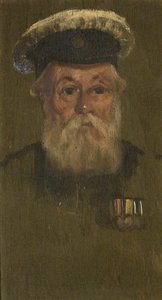
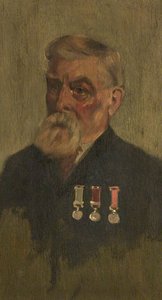
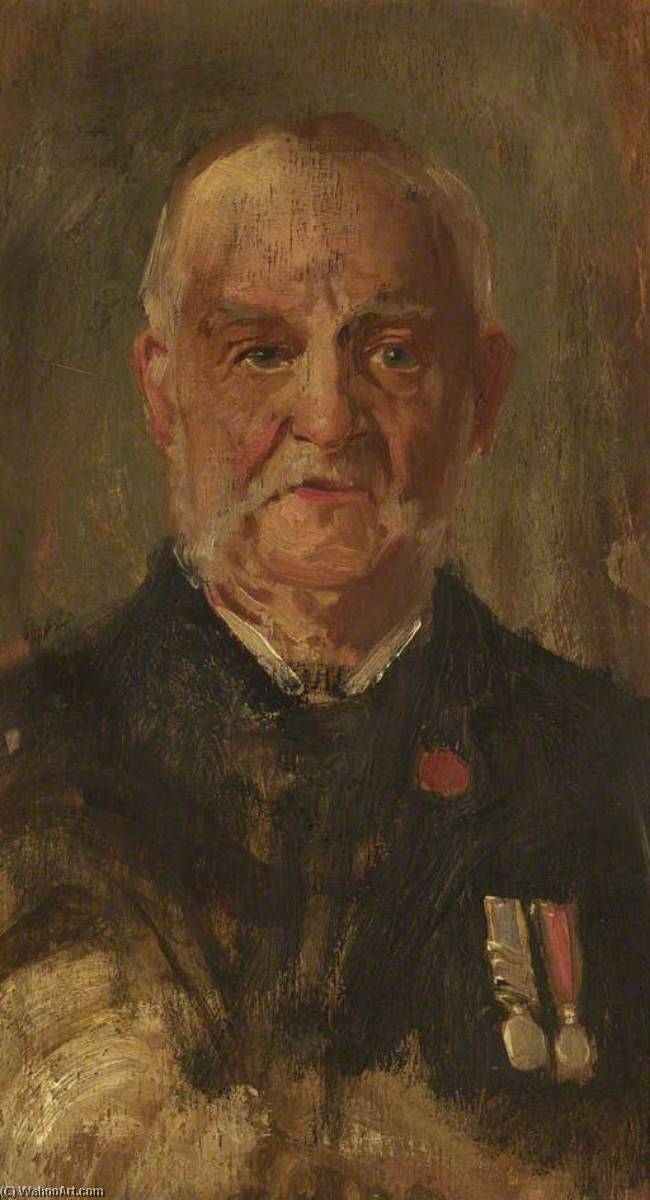
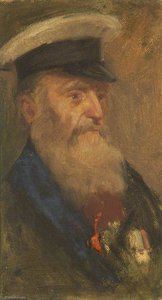
George Edmund Butler’s “W. Porter, RMLI,” painted circa 1920, is more than just a likeness; it's a carefully constructed tableau of Victorian authority and understated strength. The portrait captures Lyman W. Porter, a prominent figure in New Zealand’s legal and administrative circles, rendered with a precision that speaks to Butler’s meticulous training as an artist – honed initially in Europe and later refined through service as an official war artist during World War I. The painting immediately commands attention not just for its subject's dignified presence, but for the subtle yet potent atmosphere it evokes: a sense of quiet contemplation mingled with resolute command.
Butler’s technique is distinctly characterized by his early influences – a blend of academic realism and a burgeoning interest in capturing psychological depth. The oil on panel medium lends itself beautifully to the rich textures and nuanced tonal shifts that define the piece. Note the careful modeling of Porter's face, particularly the strong lines of his jaw and the subtle creases around his eyes, suggesting years of experience and considered judgment. The artist skillfully employs a limited palette – primarily browns, greys, and muted greens – to create a sense of gravitas and timelessness. The background is deliberately understated, featuring a simple chair that anchors Porter within a space of quiet contemplation, drawing the viewer’s focus entirely onto his face and posture.
A Man of Two Worlds: Contextualizing Butler's Journey
Understanding the painting requires acknowledging George Edmund Butler’s unique life story. Born in Southampton, England, he emigrated to New Zealand with his family at the age of eleven, a pivotal moment that shaped his artistic trajectory and instilled within him a deep connection to his adopted homeland. This relocation coincided with a period of significant growth for New Zealand's art scene, and Butler quickly found himself immersed in a vibrant community of artists and patrons. His formal training abroad – including studies at the Royal Academy and the Antwerp Academy – provided him with a solid foundation in classical techniques, which he then skillfully adapted to his distinctly New Zealand subject matter.
Crucially, Butler’s career was inextricably linked to the First World War. Following his return to New Zealand, he was appointed as an official war artist for the New Zealand Expeditionary Force (NZEF), a role that profoundly impacted his artistic development and provided him with invaluable experience in capturing the realities of conflict. This service not only honed his observational skills but also imbued his work with a heightened sense of empathy and social responsibility – qualities evident in “W. Porter, RMLI.” The medal hanging around Porter’s neck is a direct reference to his military service, subtly reinforcing this connection.
Symbolism and the Portrait's Narrative
Beyond its technical merits, "W. Porter, RMLI" is rich in symbolic detail. Porter’s stern expression – a carefully controlled gaze directed directly at the viewer – immediately conveys authority and self-assurance. The angle of his head and the slight furrowing of his brow suggest a man accustomed to making difficult decisions and bearing weighty responsibilities. The medal, a symbol of honor and service, underscores Porter's distinguished career and commitment to public duty. The muted color palette contributes to this sense of solemnity, reinforcing the painting’s overall mood of quiet contemplation and dignified resilience.
Furthermore, the composition itself is carefully orchestrated to create a sense of balance and stability. The vertical axis, defined by Porter's posture, anchors the image while the horizontal axis, created by the chair, provides a grounding element. This deliberate arrangement reinforces the painting’s message: Porter is a man firmly rooted in his position, both literally and figuratively.
A Legacy of Observation: Butler's Enduring Influence
George Edmund Butler’s “W. Porter, RMLI” stands as a testament to his artistic skill and his unique perspective on New Zealand society. It is a portrait that transcends mere likeness, offering instead a profound insight into the character and spirit of a man who played a significant role in shaping the nation's legal and administrative landscape. Reproductions of this compelling work capture not only its visual beauty but also the quiet dignity and understated strength that define Butler’s artistic legacy. It remains a valuable piece for collectors seeking to acquire a window into early 20th-century New Zealand, and an evocative addition to any discerning interior space.
Related Artworks
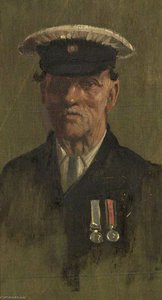
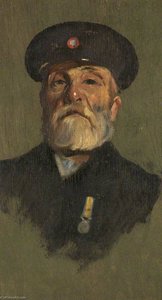
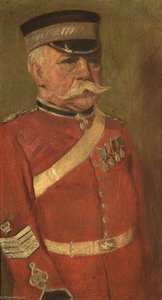
Artist Biography
A Life Bridging Continents: The Artistic Journey of George Edmund Butler
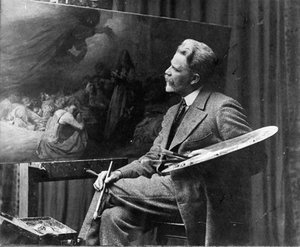
George Edmund Butler, a name perhaps less instantly recognizable than some of his contemporaries, nevertheless occupies a significant place in the landscape of early 20th-century British and New Zealand art. Born in Southampton, England, in 1872, Butler’s life was one of constant movement and artistic exploration, ultimately culminating in a poignant role as an official war artist documenting the experiences of his adopted homeland, New Zealand, during the tumultuous years of World War I. His story is not merely that of a painter; it's a narrative woven with threads of emigration, rigorous academic training, professional ambition, and a deep sense of patriotic duty. The family’s relocation to Wellington, New Zealand, in 1883, when Butler was eleven, proved formative, instilling within him a connection to the burgeoning artistic community of his new home while simultaneously setting the stage for a lifelong dialogue between European tradition and the unique light and landscapes of the Southern Hemisphere. Early studies under James Nairn at the Wellington School of Design provided a crucial foundation, nurturing a talent that quickly became apparent in his seascapes – works that captured the raw beauty and often unforgiving nature of the New Zealand coastline.From European Academies to Artistic Recognition
Driven by an ambition to hone his skills and immerse himself in the heart of artistic innovation, Butler embarked on a period of intensive study in Europe between 1898 and 1900. This wasn’t a casual foray; it was a deliberate pursuit of mastery. He married Sarah Jane Popplestone in England before dedicating himself to rigorous training at the Lambeth School of Art, followed by the prestigious Académie Julian in Paris – where he earned honors – and finally, the Antwerp Academy, achieving the remarkable distinction of winning both a gold medal and laurel wreath. These institutions weren’t simply places of instruction; they were crucibles where Butler absorbed the prevailing artistic currents, refined his technique, and developed a sophisticated understanding of composition, color theory, and form. Upon returning to New Zealand in 1900, he exhibited his work before settling in Dunedin from 1901-1905. Despite critical acclaim, financial pressures led him to supplement his income through teaching and portrait commissions – a common struggle for artists striving to establish themselves. This period, however, was crucial in solidifying his reputation and demonstrating his versatility. In 1905, Butler made the pivotal decision to return to England, settling in Bristol where he took a position teaching art at Clifton College. It was here that his talent truly began to flourish, leading to his election into the Royal West of England Academy in 1912 – a testament to his growing stature within the British art world. His work also gained recognition at the Royal Academy of Arts and the Royal Scottish Academy, solidifying his position as a respected landscape and portrait painter.Bearing Witness: Butler as Official War Artist
The outbreak of World War I dramatically altered the course of Butler’s career, presenting him with an opportunity to combine his artistic skill with a profound sense of national duty. His New Zealand connections and established reputation led to his appointment as an official war artist for the New Zealand Expeditionary Force (NZEF) in September 1918, holding the honorary rank of captain. This wasn’t merely about creating aesthetically pleasing depictions of battlefields; it was about documenting the realities of war – the courage, the suffering, and the sheer human cost of conflict. Butler meticulously sketched military operations, often working under incredibly challenging conditions, sometimes even while under fire. These sketches served as the foundation for larger paintings created after his return from active service. Following the armistice, he received private commissions from Robert Heaton Rhodes and Major General Sir Andrew Hamilton Russell to create a series of portraits of senior officers and evocative landscapes depicting New Zealand battlefield sites along the Western Front. The significance of these works was immediately recognized; the New Zealand government subsequently purchased them for preservation in national archives, ensuring that Butler’s visual record would endure as a powerful testament to the sacrifices made by New Zealand soldiers.A Lasting Legacy: Art and Remembrance
George Edmund Butler never returned to New Zealand after the war. He remarried following the death of his first wife and continued painting in England until his death in Twickenham in 1936. While he may not be a household name, his contribution to both British and New Zealand art history is undeniable. His paintings and sketches offer invaluable insights into the landscapes, personalities, and events of World War I, providing a visual record that complements written accounts and personal testimonies. His work transcends mere documentation; it’s an emotional response to conflict, imbued with a sense of empathy and respect for those who served. The portraits he created are not simply likenesses; they capture the weight of responsibility and the quiet dignity of leadership during wartime. The landscapes, too, are more than just topographical representations; they evoke the atmosphere of loss and resilience that permeated the battlefields of Europe. Butler’s legacy lies in his ability to bridge continents and experiences, creating art that speaks to universal themes of courage, sacrifice, and the enduring power of the human spirit. His work continues to be studied and appreciated today, serving as a poignant reminder of a pivotal moment in history and the artists who bore witness to it.Exploring Butler’s Oeuvre
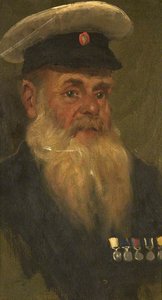
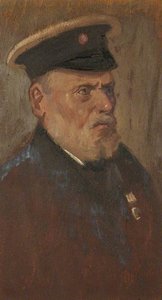
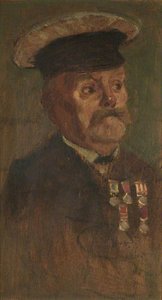
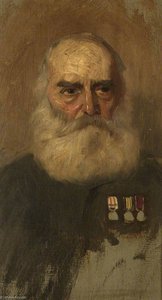
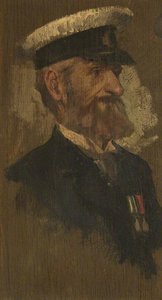
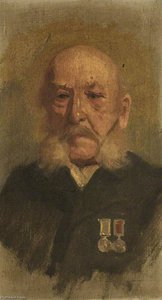
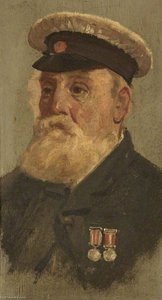
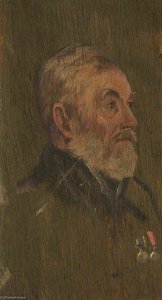
Today, examples of George Edmund Butler's artistry can be found in museum collections and private holdings around the world. Works such as “G. Sandford, 28th” (1920) and “R. Germain, 4th” (1920), both housed at the Bristol Museum, showcase his mastery of portraiture, characterized by a keen eye for detail and a subtle understanding of character. “J. Price, 28th”, another striking example from this period, demonstrates his ability to capture personality through impasto technique and nuanced brushwork. These portraits are not merely representations of individuals; they are windows into the lives and experiences of those who lived through a transformative era.- Butler’s landscapes often feature dramatic skies and evocative lighting, creating a sense of atmosphere and mood.
- His war sketches, though often small in scale, possess a remarkable immediacy and emotional impact.
- Throughout his career, Butler demonstrated a versatility that allowed him to work effectively in both oils and watercolours.
George Edmund Butler
1872 - 1936 , United Kingdom
Quick Facts
- Artistic Movement Or Style: Landscape & Portraiture
- Artists Who Influenced This Artist: ['James Nairn']
- Date Of Birth: January 15, 1872
- Date Of Death: August 9, 1936
- Full Name: George Edmund Butler
- Nationality: British
- Notable Artworks:
- G. Sandford, 28th
- R. Germain, 4th
- J. Price, 28th
- Place Of Birth: Southampton, UK
Related Articles

Georges Braque's Masterpieces: 25 Paintings That Defined Cubism & Modern Art | ArtsDot
Explore 25 iconic Georges Braque paintings that revolutionized Cubism & modern art. Discover the stories behind his masterpieces, from Fauvism to Analytical Cubism. Find museum-quality reproductions & elevate your home decor with ArtsDot.com.

Georges Seurat's Masterpieces: 25 Paintings That Defined Pointillism | ArtsDot
Explore 25 iconic Georges Seurat paintings & discover the brilliance of Pointillism. From 'La Grande Jatte' to his harbor scenes, delve into art history with ArtsDot.com. Find museum-quality reproductions for your home decor. Explore the full collection online!
Met Museum's 25 Masterpieces: Art History & Decor Inspiration | ArtsDot
Journey through 25 iconic artworks at the Metropolitan Museum of Art! Explore Van Gogh, Monet, Rembrandt & more. Discover art history, inspiring stories, and museum-quality reproductions to elevate your home decor. Explore the full collection on ArtsDot.com.
Sir George Clausen: Capturing Edwardian Life & British Impressionism's Nuances
Explore the luminous world of Sir George Clausen, a leading British Impressionist painter. Discover his captivating scenes of Edwardian life, rural England & poignant war art. Learn about his legacy and find high-quality reproductions at ArtsDot.
John George Brown: Capturing American Life & Sentiment in 19th-Century Genre Painting
Explore the captivating genre paintings of John George Brown, celebrated for his realistic depictions of 19th-century American life. Discover his legacy & find museum-quality reproductions at ArtsDot.