

 Preview
 Send
Send Share
Share
 Details

 Download
 Similars
 X-Ray
X-Ray Diaporama
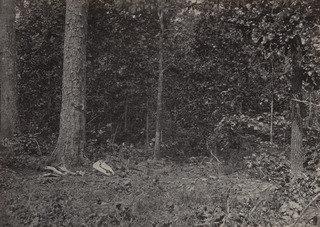
Scene of General McPherson's Death from the album Photographic Views of Sherman's Campaign


 Read More
Purchase a high-resolution, enhanced digital image, far superior to the online preview.
Each file is meticulously prepared by our in-house specialists using advanced tools and expert manual retouching. We ensure every image has exceptional clarity, precise color accuracy, and fine detail.
The final file is delivered via email within 72 hours, optimized for immediate use in professional, editorial, and print environments. This is the same quality trusted by top-tier design studios, publishers, and galleries.
Digital Image
Download a high-resolution file for personal display, printing, and creative projects. ( Buy Print Buy Hand Made Painting)
Included in Every Digital Image Order
Expert Digital Delivery, Guaranteed
When you choose ArtsDot.com, you're not just getting an image - you're receiving a professionally enhanced digital artwork, crafted with precision and backed by a satisfaction guarantee. Here's everything that comes with your order, automatically:

Fast Email Delivery
Your high-resolution digital image file will be emailed to you within 72 hours of ordering - ready for immediate use.

AI-Enhanced Digital File
Your artwork is professionally optimized using advanced AI tools and manual editing, ensuring maximum detail, clarity, and color accuracy.

Free Lifetime Re-Delivery
Accidentally deleted or lost your file? No worries - we'll resend it to you anytime, free of charge.

No Import Fees - Ever
Enjoy your artwork instantly with zero customs, duties, or delivery fees - digital downloads are always tax-free.

Color Accuracy Guarantee
We ensure your digital image reflects the original colors as closely as possible using professional tools and color management.

60-Day Satisfaction Guarantee
If you're not satisfied with your digital image, we'll revise it or refund 100% within 60 days - no questions asked.

100% Money-Back Guarantee
Not satisfied? Get a full refund within 60 days of receiving your digital file - no questions asked.

Bulk Order Discounts
Buy 3 images, save 10% - Buy 5, save 15% - Buy 10+, save 20%. Great for creative projects, galleries, and agencies.
A Glimpse into a Pivotal Moment: "Scene of General McPherson's Death"
This evocative black and white photograph, titled “Scene of General McPherson’s Death from the album Photographic Views of Sherman’s Campaign,” offers a poignant glimpse into a tragic event during the American Civil War. Captured in 1864 by George Grey Barnard, it depicts the aftermath of the death of Major General James B. McPherson, a significant Union commander killed in action near Atlanta. The photograph transcends a simple record; it becomes a meditation on loss and the stark realities of war, presented with remarkable sensitivity. The scene is set within a tranquil forest, creating a powerful juxtaposition between the serenity of nature and the violence that has transpired.Barnard's Photographic Style & Technique
George Grey Barnard, though primarily known as a sculptor, demonstrated considerable skill as a photographer during his time. This image exemplifies his ability to capture atmosphere and emotion through careful composition and tonal range. The photograph’s stark black and white palette enhances the somber mood, emphasizing textures of bark, foliage, and the fallen animal in the foreground. Barnard's technique likely involved wet plate collodion photography, a complex process requiring immediate development after exposure – highlighting the dedication needed to document such events during wartime. The composition draws the viewer’s eye to the central subject—the small animal—which serves as a powerful symbol of vulnerability and mortality within the larger context of military conflict.Historical Context & Sherman's Campaign
This photograph is part of a larger series documenting William Tecumseh Sherman’s Atlanta Campaign, a crucial phase in the Civil War. General McPherson’s death was a significant blow to the Union forces, occurring during a period of intense fighting and strategic maneuvering. Sherman’s campaign aimed to cripple the Confederacy's infrastructure and morale through a strategy of total war. Barnard’s photographic documentation provides invaluable visual evidence of this pivotal moment in American history, offering a perspective beyond battlefield reports and official accounts. The album "Photographic Views of Sherman's Campaign" was intended for wider distribution, bringing the realities of war to audiences across the nation.Symbolism & Emotional Impact
Beyond its historical significance, the photograph resonates on an emotional level. The presence of the animal—its posture suggesting stillness or death—evokes a sense of loss and fragility. The surrounding forest, while seemingly peaceful, becomes imbued with a feeling of melancholy and quiet devastation. Barnard masterfully uses natural elements to amplify the scene's somber tone. While the photograph directly references General McPherson’s death, its broader symbolism speaks to the universal themes of mortality, the impact of conflict on all living things, and the enduring power of nature in the face of human tragedy. The image invites contemplation about the cost of war and the delicate balance between life and loss.Related Artworks
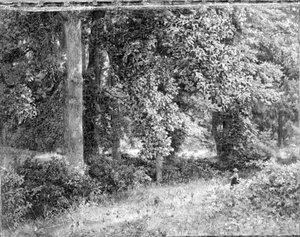
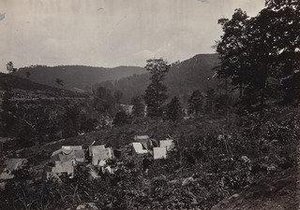
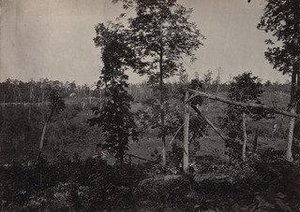
Artist Biography
A Life Forged in Stone: The World of George Grey Barnard
George Grey Barnard, born in Bellefonte, Pennsylvania, in 1863, was an American sculptor whose career unfolded against a backdrop of shifting artistic tides and burgeoning national identity. His life story is one of relentless pursuit – a journey from the rural landscapes of his youth to the hallowed halls of Parisian art academies, and ultimately, to establishing himself as a pivotal figure in American sculpture. The son of a Presbyterian minister, Barnard’s early years were marked by frequent relocation across Illinois, yet it was within this itinerant existence that an artistic sensibility began to blossom. He initially honed his skills at the Art Institute of Chicago under Leonard Volk, demonstrating an innate talent for modeling and form – a foundation upon which he would build a remarkable career. This initial spark propelled him towards Paris in 1883, where he immersed himself in the rigorous training of the École Nationale Supérieure des Beaux-Arts, working within the atelier of Pierre-Jules Cavelier. Twelve years spent absorbing classical techniques and engaging with the vibrant artistic community of France proved transformative, culminating in a triumphant debut at the Salon of 1894.The Echoes of Rodin and the Birth of a Symbolic Language
Barnard’s artistic development was profoundly shaped by his exposure to Auguste Rodin, whose influence is readily apparent in his early explorations of the human form and emotional depth. However, Barnard wasn't merely an imitator; he quickly forged his own distinct path, developing a symbolic language that delved into the complexities of the human condition. His major works are characterized by their allegorical nature, grappling with themes of duality, inner struggle, and the inherent contradictions within us all. Struggle of the Two Natures in Man (1894), exhibited at the Metropolitan Museum of Art, stands as a pivotal example – a powerful depiction of opposing forces locked in eternal conflict. This piece, along with subsequent sculptures like The Hewer (1902) and Rose Maiden (c. 1902), showcased his mastery of capturing both physical strength and delicate grace. Great God Pan (1899), initially met with controversy due to its depiction of nudity, eventually found a home at Columbia University, further cementing Barnard’s reputation as an artist unafraid to challenge conventional norms. Maidenhood(1896) is known for its simplicity and elegance.Monumental Commissions and the Pennsylvania State Capitol
The turn of the century brought with it a monumental commission that would define a significant chapter in Barnard’s career: the creation of over sixty sculptures for the Pennsylvania State Capitol in Harrisburg between 1902 and 1910. This ambitious project, representing scenes from human history, demanded immense skill and dedication, yet also presented considerable financial challenges. Despite these hurdles, Barnard persevered, leaving an indelible mark on the capitol building with his intricate and evocative figures. His ability to translate grand historical narratives into tangible form solidified his position as one of America’s leading sculptors. Later, in 1917, he undertook another ambitious project – a larger-than-life statue of Abraham Lincoln. This portrayal sparked debate due to its unconventional approach, diverging from traditional heroic representations; nevertheless, it remains a potent symbol of the president's character and has been cast in multiple locations including Cincinnati, Manchester (England), and Louisville (Kentucky).A Collector’s Passion: The Cloisters and a Lasting Legacy
Beyond his work as a sculptor, George Grey Barnard possessed a deep passion for medieval art. He became an avid collector of architectural fragments, traveling through French villages before World War I to acquire these remnants of the past. This collection wasn't merely a personal indulgence; it was driven by a desire to preserve and share the beauty of this often-overlooked artistic heritage. In 1925, his extensive holdings were purchased by John D. Rockefeller Jr., forming the core of what would become The Cloisters, a branch of the Metropolitan Museum of Art dedicated to medieval art and architecture. This act stands as a testament to Barnard’s vision and enduring impact on cultural preservation. Barnard's contribution to American sculpture is significant, bridging European traditions with a uniquely American aesthetic sensibility. He challenged artistic norms, embraced symbolism, and left behind a body of work that continues to inspire and provoke thought. His legacy extends beyond his sculptures; it lives on in the tranquil halls of The Cloisters, where fragments of the past are brought to life for generations to come.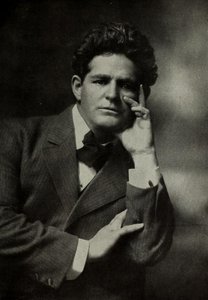
George Grey Barnard
1863 - 1938 , United States of America
Quick Facts
- Artistic Movement Or Style: Symbolism
- Artists Who Influenced This Artist: ['Auguste Rodin']
- Date Of Birth: May 24, 1863
- Date Of Death: April 24, 1938
- Full Name: George Grey Barnard
- Nationality: American
- Notable Artworks:
- Struggle of Two Natures
- The Hewer
- Great God Pan
- Rose Maiden
- Maidenhood
- Place Of Birth: Bellefonte, USA

