 Preview
 Send
Send Share
Share
 Details

 Download
 Similars
 X-Ray
X-Ray Diaporama
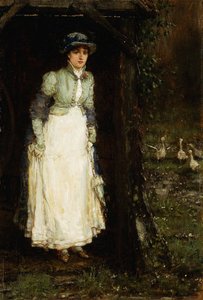
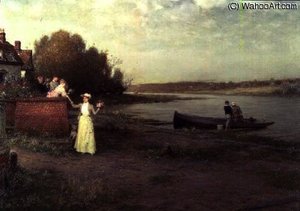
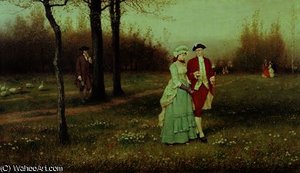
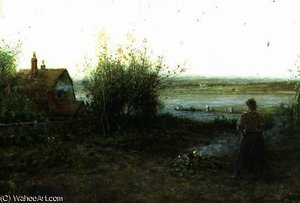
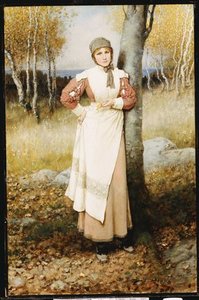
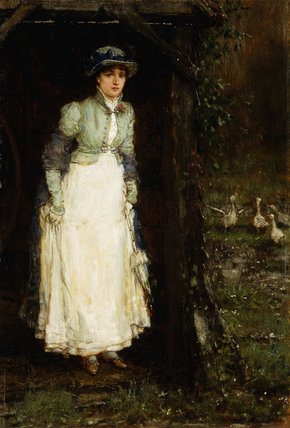
Spring Showers
 Read More
Hand Made Oil Reproduction
Hand-painted oil on canvas in your size and frame, made to order by our artists. ( Buy Print Buy Image)




































Pick from our preset sizes that match the artwork's original proportions.

You may enter your own dimensions to fit a specific frame or space. If your selected size does not match the original image's proportions, we will either crop the artwork or extend the painting with additional hand-painted elements. A digital mockup will be sent for your approval before production begins.
Please note that the on-screen preview does not reflect the actual cropping or extension. Only the mockup will accurately show the final composition.
While custom sizes are available, we recommend selecting a dimension from the predefined list to preserve the original proportions.
After order, ArtsDot.com team will email client for instructions and provide a mockup preview
Worldwide Delivery () in 3/4 weeks instead of standard 5 weeks. (18 August). No compromise on quality.

Free Worldwide Express Shipping

High-Quality Linen Canvas

Full Shipping Insurance

Customs Tax Refund Guarantee

True Color Matching Guarantee

60-Day Return Policy (Defects Only)

100% Money-Back Guarantee

Bulk Discount Offer
 Glass option is only available in size under 110 CM

Spring Showers
Reproduction Medium
Reproduction Size
-


Total Price
$ 263
Related Artworks
Artist Biography
A Transatlantic Vision: The Life and Art of George Henry Boughton
Born in Norwich, England, in 1833, George Henry Boughton’s life was a compelling narrative of artistic migration and cultural synthesis. His early years were marked by a significant relocation; at the tender age of three, his family embarked on a journey to the United States, settling in Albany, New York. This formative experience instilled within him a unique perspective—a dual consciousness shaped by both Old World sensibilities and the burgeoning spirit of America. Boughton’s artistic inclinations surfaced early, nurtured through self-directed study as he absorbed the influence of the Hudson River School painters who celebrated the grandeur of the American landscape. By nineteen, his talent was undeniable, leading to his first studio opening in 1852 and recognition for his evocative depictions of nature. A pivotal moment arrived with a purchase by the American Art Union, which funded six months of invaluable study in England, allowing him to immerse himself in the landscapes of the Lake District, Scotland, and Ireland – experiences that would profoundly shape his artistic vision. Though he briefly returned to America, exhibiting in Washington D.C. and New York, Boughton ultimately felt a pull towards Europe, making a permanent move in the late 1850s.European Refinement and Colonial Narratives
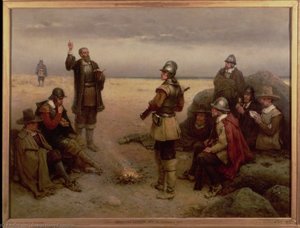
The years between 1859 and 1861 saw Boughton honing his skills under the tutelage of Pierre Edouard Frère and Edward Harrison May in France, a period that refined his technique and broadened his artistic horizons. Upon establishing a studio in London in 1861, however, he embarked on a distinctive path, turning his attention to subjects drawn from early American colonial history. This focus proved remarkably successful, resonating with audiences captivated by narratives of courage, faith, and the forging of a new nation. Works like The Early Puritans of New England Going to Church (1867) and The Return of the Mayflower (1871) became emblems of this period, lauded for their dramatic composition and evocative storytelling. Perhaps most significantly, his painting Godspeed! Pilgrims Setting Out for Canterbury deeply resonated with a fellow artist across the Channel—Vincent van Gogh. Van Gogh referenced the work in sermons and letters, captivated by its spiritual intensity and emotional depth, demonstrating Boughton’s far-reaching influence on even the most revolutionary of artists. Beyond his paintings, Boughton demonstrated versatility as an illustrator, lending his talents to editions of Nathaniel Hawthorne’s The Scarlet Letter and the poems of Henry Wadsworth Longfellow, further solidifying his reputation as a man of both artistic skill and literary sensibility. His dedication was formally recognized in 1879 with election as an Associate of the Royal Academy (ARA), culminating in full membership as a Royal Academician (RA) in 1896—a testament to his standing within the British art establishment.Style, Influences and Artistic Development
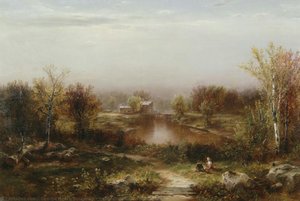
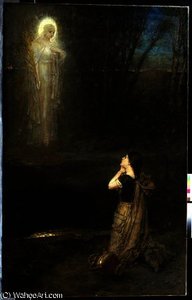
Boughton’s artistic style was a fascinating blend of influences and evolving techniques. His early work clearly bore the mark of the Hudson River School, particularly in its reverence for landscape and atmospheric effects. However, he wasn't merely imitative; he infused his landscapes with a Romantic sensibility, evident in dramatic scenes like The Vision at the Martyr’s Well, which prioritized emotional impact and narrative power. A keen observer of artistic trends, Boughton also incorporated elements of realism into his depictions of figures and settings, striving for authenticity alongside expressive drama. Later works, such as Bawdsey Ferry, reveal a subtle embrace of Impressionistic techniques, particularly in the handling of light and atmosphere—a testament to his willingness to experiment and adapt. He openly acknowledged the influence of British painter Frederick Walker, admiring his skill in capturing everyday life with sensitivity and nuance. His association with James Whistler further enriched his artistic discourse, placing him within a circle of artists engaged in debates about aesthetics and the evolving role of art in society. Boughton’s ability to synthesize these diverse influences—Hudson River School grandeur, Romantic drama, realistic detail, and Impressionistic light—defined his unique artistic voice.Later Years, Legacy and Lasting Impact
In the final decades of his life, Boughton became a prominent figure in the Broadway colony of Worcestershire, England, finding inspiration amongst fellow artists drawn to the area’s picturesque beauty. He continued to travel extensively, documenting his experiences in Holland through articles for Harper's Magazine, later published as Sketching Rambles in Holland. His intellectual curiosity extended beyond painting; he contributed to publications like English Art in the Public Galleries of London, demonstrating a broader engagement with art history and criticism. Boughton’s personal life, too, found its way into the cultural landscape, inspiring novels by Violet Hunt (Their Lives and Their Hearts) and Rosa Campbell-Praed (Christina Chard), suggesting the captivating presence he held within literary circles. He married Katherine Louise Cullen in 1865, and together they adopted a daughter, Florence. George Henry Boughton passed away in 1905, leaving behind a legacy as an artist who masterfully bridged Anglo-American cultural perspectives. He is remembered for his evocative depictions of American colonial history, his ability to blend artistic styles, and his enduring influence on artists like Van Gogh. His work continues to resonate today, offering viewers a glimpse into a pivotal era in both British and American art history—a testament to the power of a transatlantic vision.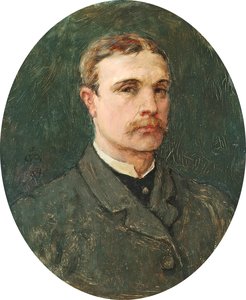
George Henry Boughton
1833 - 1905 , United Kingdom
Quick Facts
- Artistic Movement Or Style: Hudson River School, Romanticism
- Artists Or Movements Influenced By This Artist: ['Vincent van Gogh']
- Artists Who Influenced This Artist:
- Pierre Edouard Frère
- Edward Harrison May
- Frederick Walker
- Date Of Birth: 1833
- Date Of Death: 1905
- Full Name: George Henry Boughton
- Nationality: Anglo-American
- Notable Artworks:
- Early Puritans...
- Return of Mayflower
- Godspeed! Pilgrims...
- Place Of Birth: Norwich, UK