 Preview
 Send
Send Share
Share
 Details

 Download
 Similars
 X-Ray
X-Ray Diaporama
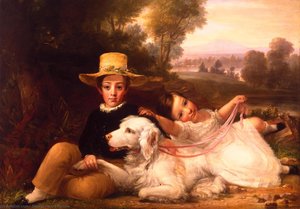
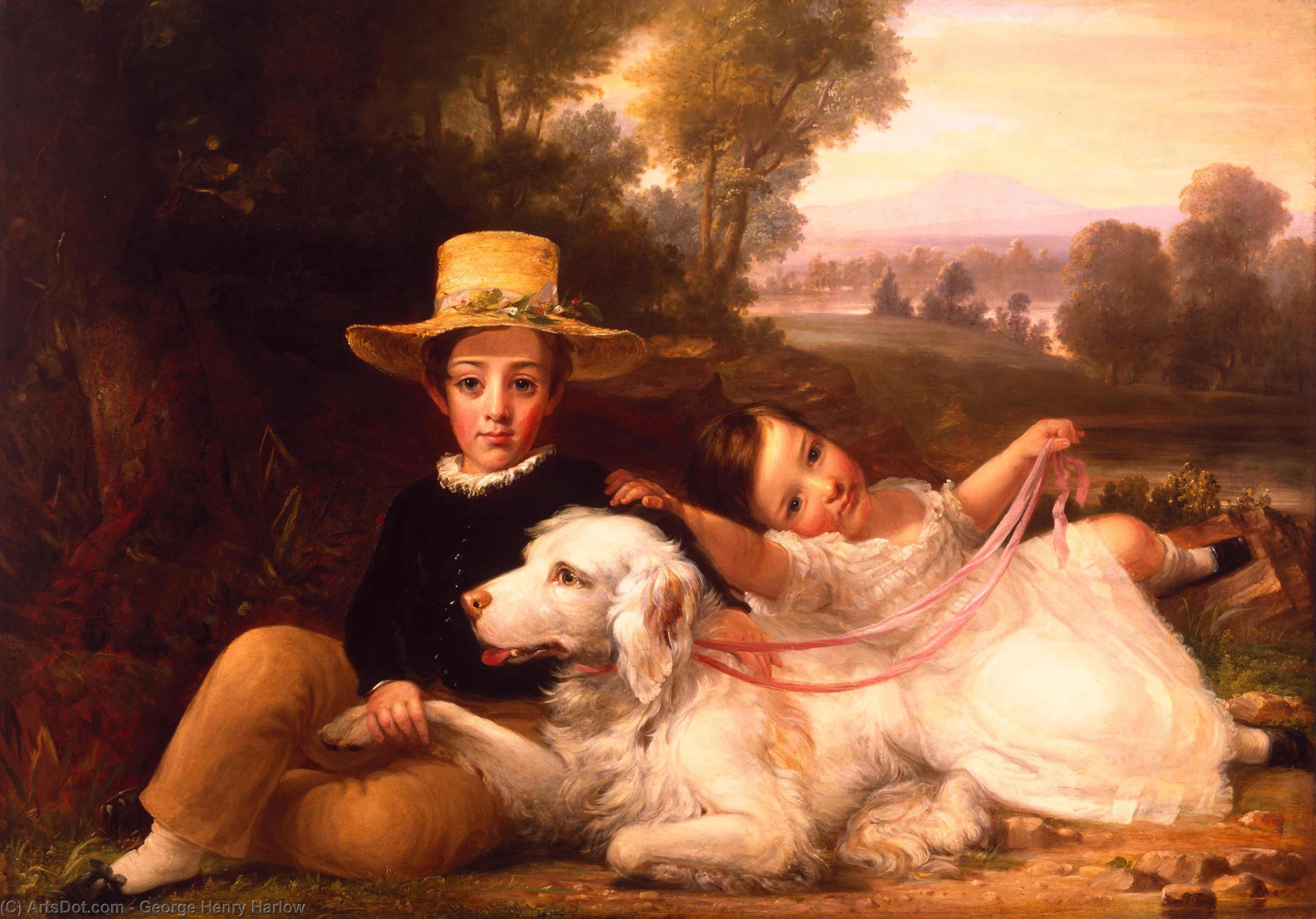
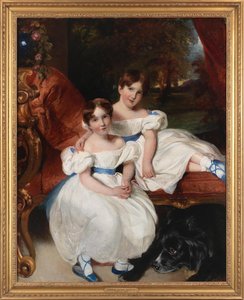
Portrait Of Two Children
 Read More
Hand Made Oil Reproduction
Hand-painted oil on canvas in your size and frame, made to order by our artists. ( Buy Print Buy Image)




































Pick from our preset sizes that match the artwork's original proportions.

You may enter your own dimensions to fit a specific frame or space. If your selected size does not match the original image's proportions, we will either crop the artwork or extend the painting with additional hand-painted elements. A digital mockup will be sent for your approval before production begins.
Please note that the on-screen preview does not reflect the actual cropping or extension. Only the mockup will accurately show the final composition.
While custom sizes are available, we recommend selecting a dimension from the predefined list to preserve the original proportions.
After order, ArtsDot.com team will email client for instructions and provide a mockup preview
Worldwide Delivery () in 3/4 weeks instead of standard 5 weeks. (16 August). No compromise on quality.

Free Worldwide Express Shipping

High-Quality Linen Canvas

Full Shipping Insurance

Customs Tax Refund Guarantee

True Color Matching Guarantee

60-Day Return Policy (Defects Only)

100% Money-Back Guarantee

Bulk Discount Offer
 Glass option is only available in size under 110 CM

Portrait Of Two Children
Reproduction Medium
Reproduction Size
-


Total Price
$ 263
Related Artworks
Artist Biography
The Brief, Brilliant Radiance of George Henry Harlow
In the vibrant, often turbulent landscape of early 19th-century British art, few figures captured the ephemeral grace of the Regency era as poignantly as George Henry Harlow. Born in London in 1787, Harlow’s life was marked by a sense of profound destiny and tragic brevity. As the posthumous son of a China merchant who passed away mere months before his arrival, Harlow entered the world with a legacy already steeped in loss. Yet, from this somber beginning emerged an artist of remarkable precocity. His early education at Dr. Barrow's Classical School and Mr. Roy’s School provided him with a scholarly foundation, but it was his apprenticeship under the landscape painter Henry De Cort that first ignited his ability to observe the subtle interplay of light and atmosphere—a skill that would later breathe life into his much more celebrated portraiture.
The trajectory of Harlow’s career was irrevocably altered when he entered the studio of Sir Thomas Lawrence, the preeminent portraitist of the age. This period of mentorship was a crucible of talent; by diligently copying Lawrence’s masterpieces, Harlow absorbed the fluid brushwork and the sophisticated, theatrical elegance that defined the Romantic movement. While their relationship eventually fractured due to professional disagreements regarding creative autonomy, the influence of Lawrence remained etched in Harlow's DNA. He emerged not merely as a student, but as an independent force capable of navigating the prestigious halls of the Royal Academy with a style that was uniquely his own—blending Neoclassical precision with a burgeoning Romantic sensibility.
A Mastery of Character and Light
Harlow’s oeuvre is most profoundly felt in his ability to render the human spirit through the medium of oil. He possessed a delicate touch, particularly when capturing the soft contours and aristocratic poise of his female subjects. His portraits of ladies are often described as embodiments of grace, where the texture of silk and the luster of pearls are rendered with such sensitivity that they seem almost tactile. However, his talent was not confined to the salon; he also found great success in theatrical subjects, imbuing his depictions of actors and dramatic scenes with a sense of movement and emotional depth that resonated with the public's fascination with the stage.
Beyond the elegance of his portraits, Harlow’s work often touched upon the following themes:
- Theatricality and Drama: A profound ability to capture the heightened emotions of the stage and the grandeur of historical moments.
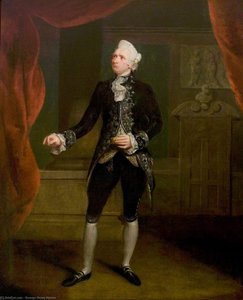
- Neoclassical Structure: The use of balanced compositions and classical motifs to lend dignity to his subjects, such as in his portrait of William Augustus Conway.
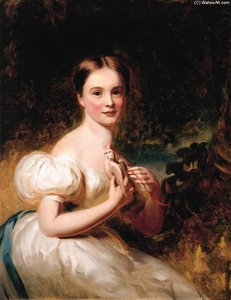
- Domestic Intimacy: A tender approach to familial scenes, seen in works like Portrait of a Girl Carrying a Child and a Boy, which evoke the quiet beauty of 19th-century domestic life.
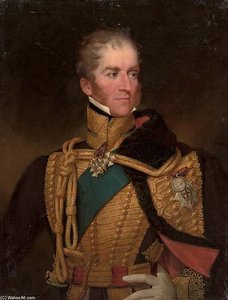
- Military Grandeur: The meticulous rendering of uniform and regalia, as demonstrated in his Portrait of a Colonel in Chief of the British Hussar's Regiment.
While he faced certain critiques—specifically regarding his ability to sustain the narrative complexity required for large-scale historical paintings—his technical command over texture and light remained undisputed. His work, such as the Self-Portrait held by The Metropolitan Museum of Art, reveals an artist deeply introspective, using the canvas to explore both his own identity and the evolving aesthetic standards of his time.
A Lasting Legacy in the Romantic Era
The life of George Henry Harlow was tragically short, ending in 1819 at the age of only thirty-two. Despite this untimely departure, the impact of his work endured through the decades of the 19th century. He stood at a pivotal crossroads in art history, bridging the gap between the structured elegance of the Neoclassical period and the emotive, sweeping energy of Romanticism. His ability to marry the formal requirements of portraiture with a sense of atmospheric drama allowed him to capture the very essence of the Regency spirit—a period defined by both rigid social hierarchy and a wild, burgeoning passion for the individual.
Today, Harlow is remembered not just as a follower of Lawrence, but as a master of the delicate touch. His paintings serve as luminous windows into a bygone era, offering contemporary viewers a glimpse of the sophistication, the drama, and the profound humanity that characterized the early 1800s. Through his meticulous attention to detail and his knack for capturing the ephemeral beauty of his subjects, George Henry Harlow secured his place in the pantheon of great British portraitists, leaving behind a legacy of light and elegance that continues to captivate the art world.
George Henry Harlow
1787 - 1819 , United Kingdom
Quick Facts
- Artistic Movement Or Style: Romanticism
- Artists Or Movements Influenced By This Artist: ['Romanticism']
- Artists Who Influenced This Artist:
- Henry De Cort
- Thomas Lawrence
- Date Of Death: 4 February 1819
- Full Name: George Henry Harlow
- Nationality: English
- Notable Artworks:
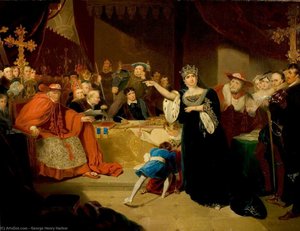
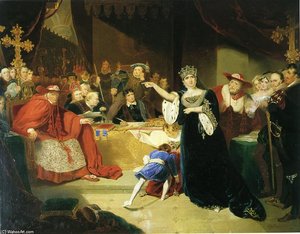
- Court for the Trial of Queen Katharine
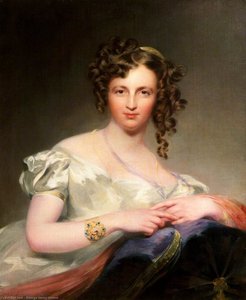
- Portrait of a Young Girl
- Place Of Birth: London, United Kingdom