 Preview
 Send
Send Share
Share
 Details

 Download
 Similars
 X-Ray
X-Ray Diaporama
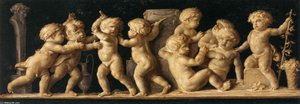
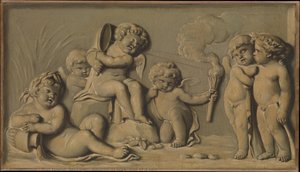
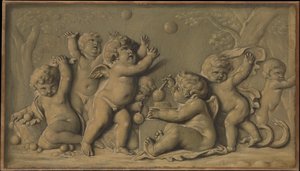
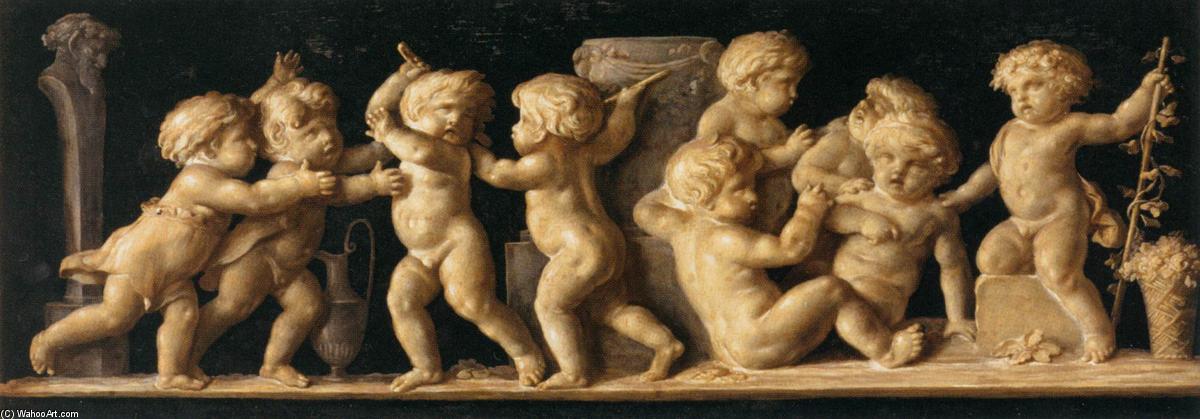
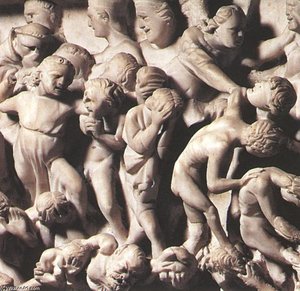
Bacchanalia of Children
 Oil On Canvas
- WallArt
- Neoclassicism
 1790
1790 32.0 x 84.0 cm
 The Louvre
 Read More
Hand Made Oil Reproduction
Hand-painted oil on canvas in your size and frame, made to order by our artists. ( Buy Print Buy Image)




P118B $10

P118H $10

P118W $10

P438Z $10

P508JH $12

P508YH $12

P805H $10

P805Z $10

P919BZ $10

P919G $10

P919XJ $10

P959ZH $10

P968JZ $12

W106C $8

W218G $10

W218JH $8

W218Y $10

W307PJ $10

W316G $10

W316PJ $8

W316Y $10

W398PJ $8

W4111J $10

W500HY $15

W500JH $15

W692G $12

W849H $8

W940BG $15

W953PJ $8




Pick from our preset sizes that match the artwork's original proportions.

You may enter your own dimensions to fit a specific frame or space. If your selected size does not match the original image's proportions, we will either crop the artwork or extend the painting with additional hand-painted elements. A digital mockup will be sent for your approval before production begins.
Please note that the on-screen preview does not reflect the actual cropping or extension. Only the mockup will accurately show the final composition.
While custom sizes are available, we recommend selecting a dimension from the predefined list to preserve the original proportions.
After order, ArtsDot.com team will email client for instructions and provide a mockup preview
Worldwide Delivery () in 3/4 weeks instead of standard 5 weeks. (16 August). No compromise on quality.

Free Worldwide Express Shipping

High-Quality Linen Canvas

Full Shipping Insurance

Customs Tax Refund Guarantee

True Color Matching Guarantee

60-Day Return Policy (Defects Only)

100% Money-Back Guarantee

Bulk Discount Offer
 Glass option is only available in size under 110 CM

Bacchanalia of Children
Reproduction Medium
Reproduction Size
-


Total Price
$ 263
Artwork Description
A Moment Frozen in Ecstatic Revelry: Piat Joseph Sauvage’s “Bacchanalia of Children”
Piat Joseph Sauvage's "Bacchanalia of Children," painted in 1790, isn’t merely a depiction of youthful play; it’s a carefully constructed tableau brimming with the spirit of Neoclassicism and a subtle undercurrent of unrestrained joy. Housed within the venerable halls of the Musée du Louvre, this oil on canvas invites us into a private world where childhood innocence intertwines with the echoes of ancient Greek celebrations – the Bacchanalia. The painting immediately commands attention through its masterful use of light and shadow; a dark, almost velvety background throws the figures forward, emphasizing their vitality and creating an intimate, theatrical atmosphere. Sauvage’s skill lies not just in rendering individual faces, but in capturing a collective mood—a sense of unrestrained delight that feels both timeless and profoundly human.
- Composition: The scene unfolds with a dynamic energy, centered around a group of children engaged in what appears to be a playful dance or revelry. The central figure, a young boy raising his arms aloft, acts as the focal point, drawing our eye and suggesting leadership within this joyous gathering.
- Color Palette: Sauvage employs a restrained yet effective color palette. The lighter tones of the children’s clothing and skin contrast sharply with the darker background, amplifying their presence and creating a sense of depth. Subtle hints of red and gold – perhaps in ribbons or garments – add touches of vibrancy without overwhelming the overall mood.
- Technique: The artist's attention to detail is remarkable; each child’s expression, gesture, and clothing are rendered with meticulous precision. This realism, characteristic of Neoclassicism, lends a sense of authenticity and immediacy to the scene.
Neoclassical Roots and the Echoes of Antiquity
“Bacchanalia of Children” firmly establishes itself within the context of Neoclassicism, a movement that sought inspiration from the art and ideals of ancient Greece and Rome. Sauvage’s decision to depict children engaged in a Bacchanalian-inspired celebration is no accident; it reflects the era's fascination with classical mythology and its belief in the inherent goodness of youth. The Bacchanalia itself, a frenzied religious festival dedicated to Dionysus, represented a release from societal constraints – a temporary escape into ecstatic joy and communal revelry. By reimagining this ancient ritual through the lens of childhood, Sauvage suggests that this spirit of liberation is not confined to adulthood but can be found in the simplest of pleasures.
The painting’s composition—with its dynamic movement and emphasis on youthful energy—mirrors the idealized depictions of athletic contests and heroic deeds prevalent in Neoclassical art. Furthermore, the careful attention to detail and realistic rendering of the figures aligns with the movement's commitment to accuracy and naturalism.Symbolism: Joy, Freedom, and the Promise of a New Era
Beyond its surface depiction of children playing, “Bacchanalia of Children” is rich in symbolic meaning. The dark background can be interpreted as representing the constraints of societal norms and expectations – those that often stifle youthful exuberance. The children’s unrestrained joy, therefore, becomes a powerful symbol of freedom and rebellion against these limitations. Moreover, the painting was created during a period of significant social and political upheaval in France—the years leading up to the French Revolution. The scene can be viewed as an allegory for the potential of a new era, one characterized by liberty, equality, and fraternity – values that were central to revolutionary ideals.
The presence of multiple children suggests a collective spirit, emphasizing the shared experience of joy and liberation. Their playful interactions represent a rejection of rigid social hierarchies and an embrace of communal harmony.A Legacy of Beauty: Reproduction and Artistic Significance
Piat Joseph Sauvage’s “Bacchanalia of Children” remains a captivating work of art, offering a glimpse into the spirit of Neoclassicism and the enduring appeal of childhood joy. Reproductions of this painting provide an accessible way to experience its beauty and contemplate its profound symbolism. When selecting a reproduction, consider the quality of materials and the artist’s interpretation – ensuring that it faithfully captures the essence of Sauvage's original vision. The ArtsDot website offers exceptional reproductions, allowing art lovers to bring this timeless masterpiece into their homes or offices.
Related Artworks

Artist Biography
Joseph Parry: A Manchester Master of Everyday Life
Born in Liverpool in 1744, Joseph Parry’s artistic journey began not within the hallowed halls of a formal academy, but amidst the practicalities of apprenticeship. His father, a Welsh master pilot, instilled in him a deep appreciation for observation and detail – skills that would prove invaluable as he transitioned from ship painting to capturing the vibrant pulse of Manchester life. While initially apprenticed to a house painter, Parry’s true passion lay in art, fueling his dedication through diligent study and an unwavering commitment to portraying the world around him with remarkable accuracy and charm.
Parry's career truly blossomed in Manchester during the early 18th century, earning him the affectionate title of “Father of Art” within the city. He quickly established himself as a sought-after portraitist and, more significantly, as an artist dedicated to documenting the daily routines and social scenes of his adopted home. Unlike many artists of his time who focused on grand historical or mythological subjects, Parry chose to immortalize the commonplace – bustling markets, lively wakes, and the intricate details of urban life. His most celebrated work, ‘The Old Market and Shambles at Manchester,’ stands as a testament to this approach, offering an intimate glimpse into the heart of a burgeoning industrial city.
Further showcasing his meticulous eye for detail and ability to capture human interaction, Parry created 'Eccles Wake,' a monumental painting depicting 200 individual figures – each carefully rendered from direct observation. This ambitious undertaking demonstrates not only his technical skill but also his profound interest in the social fabric of Manchester society. Beyond portraiture and large-scale scenes, Parry’s artistic endeavors extended to etching, producing a striking self-portrait that was limited to just ten impressions, highlighting the rarity and value he placed on his own work.
The Parry Family Legacy
Joseph Parry's influence extended beyond himself. His son, David Henry Parry (1793-1826), followed in his father’s footsteps, inheriting a passion for art and establishing his own studio in Manchester. David honed his skills under his father’s tutelage, eventually marrying Elizabeth Smallwood and relocating to London before his untimely death at the age of 33. His artistic style mirrored that of his father, focusing on capturing scenes of everyday life with a keen eye for detail and a sensitivity to human emotion.
James Parry (died 1871), Joseph’s younger son, also embraced a career in art, excelling as an engraver. He skillfully reproduced works by himself, his brother, and other artists, particularly those depicting Lancashire landscapes. His dedication to engraving ensured that the visual narratives of Manchester were preserved and disseminated through meticulously crafted plates.
Adding another layer to this artistic lineage was Charles James Parry (1824-1894), David Henry’s youngest son. Despite a formal education in business, he pursued his passion for painting as an amateur, creating evocative landscapes that found a ready market among collectors. His family history underscores the enduring legacy of artistic talent within the Parry family.
Parry's Artistic Style and Influences
Joseph Parry’s distinctive style is characterized by its realism, meticulous detail, and focus on capturing the essence of ordinary life. He was deeply influenced by the Dutch Golden Age masters, particularly their ability to render light and shadow with remarkable precision. His work shares a similar commitment to direct observation and a rejection of idealized representations in favor of portraying the world as he saw it – warts and all.
Furthermore, Parry’s engagement with contemporary social trends is evident in his choice of subjects. He deliberately depicted scenes that reflected the changing landscape of Manchester during a period of rapid industrialization and urbanization. His paintings offer valuable insights into the lives of ordinary people, providing a rich tapestry of social history.
Historical Significance and Lasting Impact
Joseph Parry’s contribution to British art lies not in grand historical narratives but in his profound documentation of everyday life. He elevated the mundane to the level of artistic significance, capturing the spirit of Manchester during a pivotal period in its development. His paintings serve as invaluable visual records of a rapidly changing society, offering a unique perspective on the lives and experiences of ordinary people.
Parry’s legacy extends beyond his individual works; he is remembered as a pioneer who championed realism and social observation in British art. His influence can be seen in subsequent generations of artists who sought to capture the complexities of modern life with honesty and empathy. His work continues to resonate today, reminding us of the beauty and significance that can be found in the most ordinary moments.
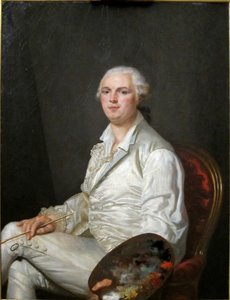
piat joseph sauvage
1744 - 1818 , Belgium
Quick Facts
- Artistic Movement Or Style: Painter and engraver
- Artists Who Influenced This Artist: ['None],\n "Artists or movements influenced by this artist": [David Allan']
- Date Of Birth: 1744
- Date Of Death: 1826
- Full Name: Joseph Parry
- Nationality: Welsh
- Notable Artworks:
- The Old Market & Shambles
- Eccles Wake
- Place Of Birth: Liverpool, Wales
Related Articles
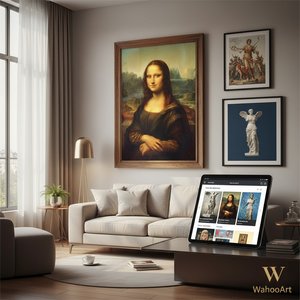
Louvre Masterpieces: Explore the Top 25 Artworks for Your Home | ArtsDot
Journey through the Louvre's 25 most iconic artworks! Explore masterpieces by Leonardo da Vinci, Michelangelo & Delacroix. Discover art history, techniques & find museum-quality reproductions for your home at ArtsDot.com.
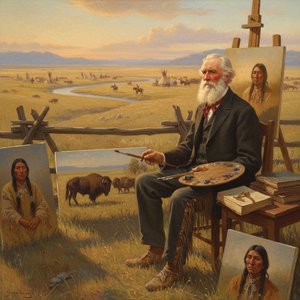
Joseph Henry Sharp: Capturing the Spirit of the Plains – Life, Art & Legacy
Explore the life & art of Joseph Henry Sharp, a founding member of the Taos Society of Artists renowned for his realistic depictions of Native American culture and Western landscapes. Discover his legacy with ArtsDot.
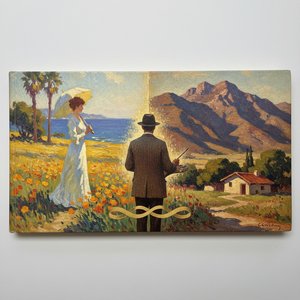
Joseph Kleitsch: Bridging Impressionism & California Regionalism – A Study of Light and Identity
Explore the life & work of Joseph Kleitsch, a pivotal California Impressionist painter. Discover his vibrant landscapes, portraits, and legacy within the Laguna Beach art colony. A comprehensive study for collectors & enthusiasts.
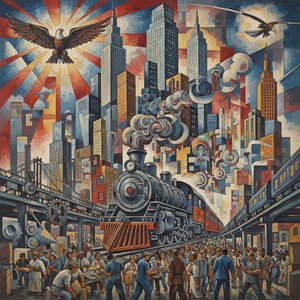
Joseph Stella: Modernism's Dynamic Vision of Industry, Urban Life & the American Spirit
Explore the captivating world of Joseph Stella, a pioneer of American Modernism. Discover his iconic depictions of industry, urban life & the Brooklyn Bridge. Expert analysis for art collectors.
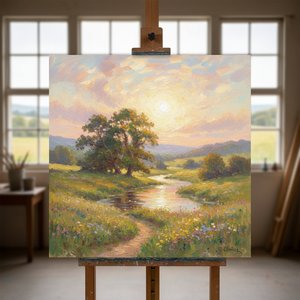
Joseph Clover: A Study in Luminosity & Transient Beauty – Exploring the Ephemeral Landscapes of a British Impressionist
Explore the captivating landscapes of Joseph Clover, a pioneering British Impressionist & innovator in anaesthesia. Discover his unique artistic vision, subtle colour palettes, and enduring legacy with ArtsDot.