 Preview
 Send
Send Share
Share
 Details

 Download
 Similars
 X-Ray
X-Ray Diaporama
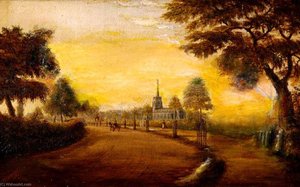
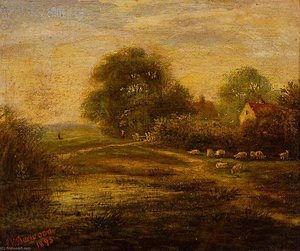
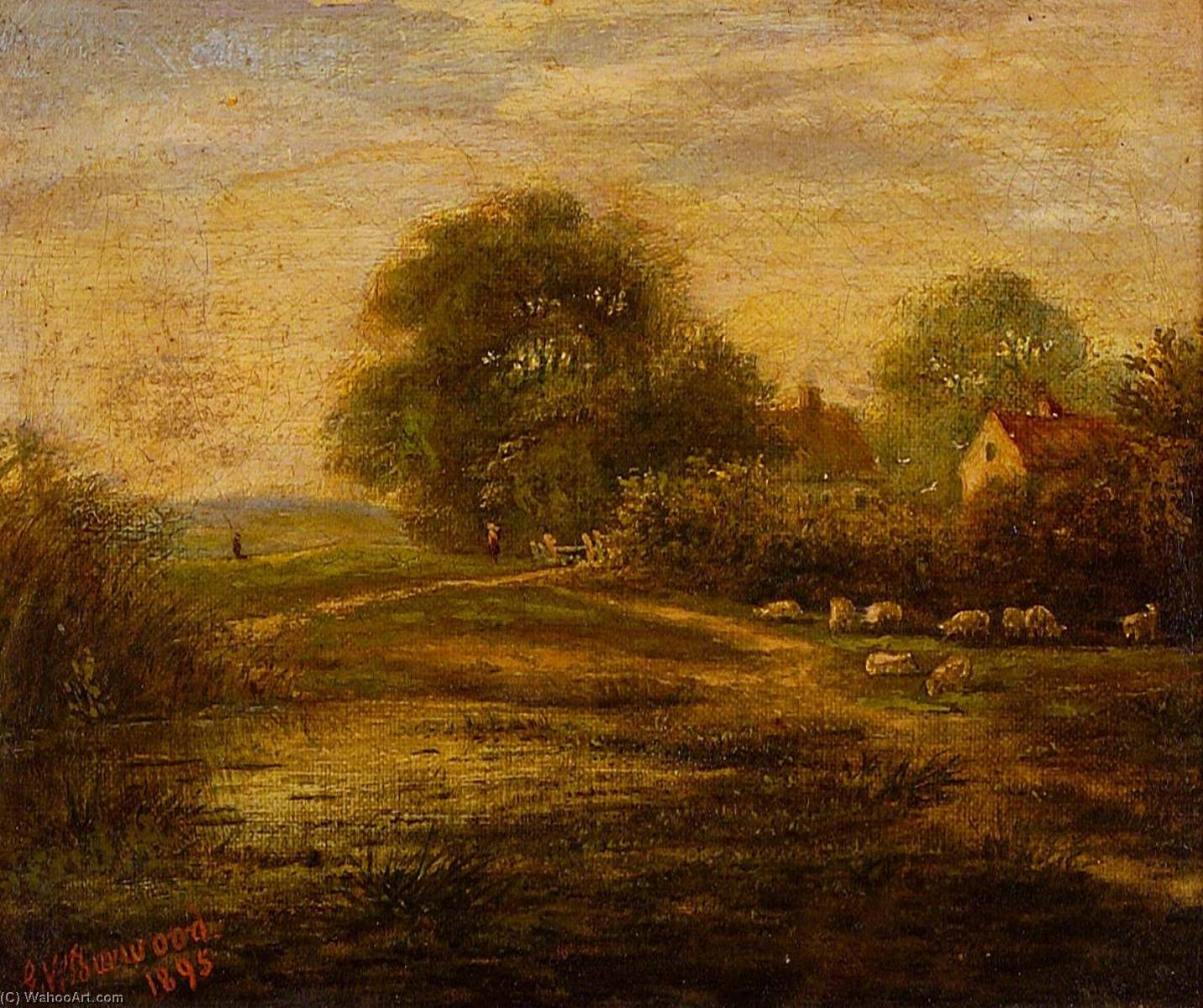
Landscape with Sheep
 Dutch Golden Age Landscape
 1895
1895 18.0 x 22.0 cm
 Read More
Hand Made Oil Reproduction
Hand-painted oil on canvas in your size and frame, made to order by our artists. ( Buy Print Buy Image)




































Pick from our preset sizes that match the artwork's original proportions.

You may enter your own dimensions to fit a specific frame or space. If your selected size does not match the original image's proportions, we will either crop the artwork or extend the painting with additional hand-painted elements. A digital mockup will be sent for your approval before production begins.
Please note that the on-screen preview does not reflect the actual cropping or extension. Only the mockup will accurately show the final composition.
While custom sizes are available, we recommend selecting a dimension from the predefined list to preserve the original proportions.
After order, ArtsDot.com team will email client for instructions and provide a mockup preview
Worldwide Delivery () in 3/4 weeks instead of standard 5 weeks. (22 August). No compromise on quality.

Free Worldwide Express Shipping

High-Quality Linen Canvas

Full Shipping Insurance

Customs Tax Refund Guarantee

True Color Matching Guarantee

60-Day Return Policy (Defects Only)

100% Money-Back Guarantee

Bulk Discount Offer
 Glass option is only available in size under 110 CM

Landscape with Sheep
Reproduction Medium
Reproduction Size
-


Total Price
$ 263
Related Artworks
Artist Biography
The Soul of the Suffolk Coast: The Life and Art of George Vemply Burwood
Born in 1844 amidst the historic surroundings of Bury St Edmunds, Essex, George Vemply Burwood emerged as a profound chronicler of the British landscape, specifically capturing the salt-sprayed essence of the Suffolk coastline. His life and work serve as a window into the Belle Époque period of East Anglia, a time when the rugged beauty of the English coast was being reimagined through the lens of both Romanticism and an emerging scientific precision. While his name may not resonate with the global fame of contemporaries like Turner or Constable, Burwood’s legacy is etched into the very textures of the landscapes he painted, offering a meticulous and deeply felt record of a bygone era of maritime and rural life.
Burwood’s artistic journey was shaped significantly by his formal training at the Ipswich School of Art between 1865 and 1867. It was here that he studied under the guidance of William Strachey, a master of the Suffolk landscape who instilled in him the vital practice of plein air painting. This method—working directly from nature to capture the fleeting nuances of light, atmosphere, and weather—became the heartbeat of Burwood’s technique. By stepping out of the studio and into the wind-swept coastal reaches, he learned to translate the ephemeral movement of clouds and the rhythmic pulse of the tide onto canvas, a skill that would later define his reputation as a premier marine and landscape painter.
Romantic Realism and the Mastery of Light
The aesthetic language of Burwood is best described as Romantic Realism. This delicate balance allowed him to embrace the grand, often dramatic scale of nature while maintaining an unwavering commitment to topographical accuracy. He did not merely seek to paint a scene; he sought to capture its physical weight and atmospheric truth. Utilizing oil on canvas, Burwood achieved a remarkable luminosity, particularly in his seascapes where the play of light upon churning waters creates a sense of profound depth and motion. His brushwork, though deliberate, possesses a fluid energy that mirrors the very elements he depicted—from the gentle ripples of a sheltered harbor to the formidable power of a storm-tossed sea.
His technical prowess is perhaps most evident in his ability to render diverse textures with startling clarity. Whether it was the weathered wood of a fishing vessel, the soft undulations of a pastoral field, or the translucent quality of sea foam, Burwood’s work invites the viewer into a tactile experience. This attention to detail extended to his compositions, which often featured:
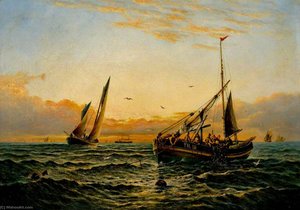
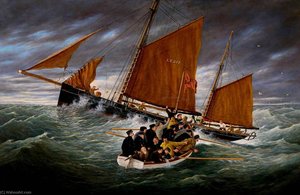
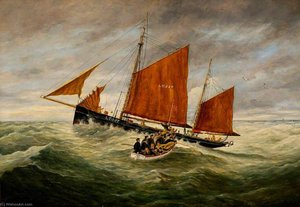
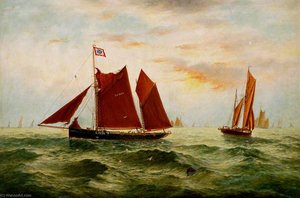
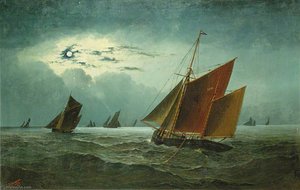
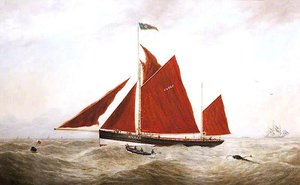
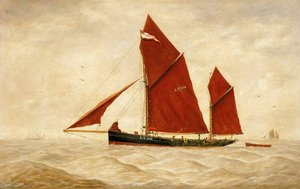
- Maritime Narratives: Capturing the industrious life of Lowestoft and Woodbridge through depictions of fishing boats, such as the evocative 'Wildflower', navigating both calm and turbulent waters.
- Coastal Atmosphere: Using tonal gradations to evoke the misty, salt-laden air characteristic of the East Anglian coast.
- Rural Serenity: Transitioning from the sea to the shore with tranquil depictions of Suffolk’s interior, including pastoral scenes featuring livestock and the quiet dignity of the English countryside.
A Lasting Legacy in British Art
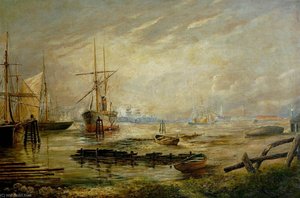
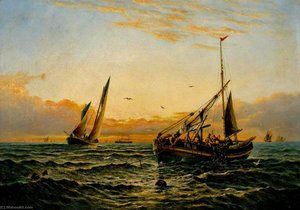
As Burwood established himself, primarily based in Woodbridge, his work became a vital part of the regional artistic identity. His paintings, such as the 1889 depiction of Lowestoft Inner Harbour, serve as historical documents that preserve the bustling maritime energy of the late 19th century. Through his eyes, we see the intricate dance of rowing boats and sailing vessels nestled against a backdrop of windmills and bridges, capturing a way of life that was soon to be transformed by the industrial age.
Though he passed away in 1917, the historical significance of George Vemply Burwood remains anchored in his ability to bridge the gap between emotion and observation. He did not rely on mere sentimentality; instead, he used the truth of the landscape to evoke a sense of wonder. Today, his works held in collections such as the Lowestoft and East Suffolk Maritime Museum continue to resonate, offering modern viewers a profound connection to the enduring spirit of the Suffolk coast and the masterful hand of an artist who truly understood its soul.
george vemply burwood
1844 - 1917
Quick Facts
- Artistic Movement Or Style: Maritime Realism
- Artists Or Movements Influenced By This Artist: ['Pre-Raphaelites']
- Artists Who Influenced This Artist: ['William Holman Hunt']
- Date Of Death: 1917
- Full Name: George Vemply Burwood
- Nationality: British
- Notable Artworks:
- Wildflower LT557
- 'YH' 151
- Place Of Birth: Suffolk, England
Related Articles

John Constable's Masterpieces: Explore 25 Iconic Landscapes for Your Home
Journey through John Constable's 25 most celebrated landscapes. Explore Romanticism, Dedham Vale & his masterful use of light in iconic paintings like 'Hay Wain'. Find museum-quality art reproductions and elevate your home decor on ArtsDot.com.
Cultivating Visions: A Historical Journey Through Rural Landscapes in Art
Explore the rich history of rural landscape painting with ArtsDot. Discover Impressionist masterpieces, key artists & movements. Find your perfect serene artwork and bring nature's beauty home.

Evocations of Place: A Historical Journey Through Landscape Art
Explore the rich history of landscape art with ArtsDot. Discover renowned artists, movements like Impressionism & Romanticism, and expert guidance for collecting timeless pieces. Find your perfect serene escape today!

Romantic Landscapes: 10 Masterpieces for Your Home | ArtsDot
Journey through 10 Romantic landscape masterpieces by Friedrich, Turner & Cole. Explore emotional art, sublime nature scenes & iconic 19th-century paintings. Find museum-quality reproductions for your home at ArtsDot.com – discover the full collection online!

Sir Alfred Munnings' Masterpieces: 25 Paintings That Define Equine Art | ArtsDot
Explore 25 iconic Sir Alfred Munnings paintings! Discover the beauty of British Impressionism, equine art & rural England. Find museum-quality reproductions and elevate your home decor with ArtsDot. Explore the full collection online.