 Preview
 Send
Send Share
Share
 Details

 Download
 Similars
 X-Ray
X-Ray Diaporama
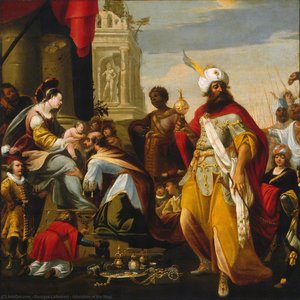
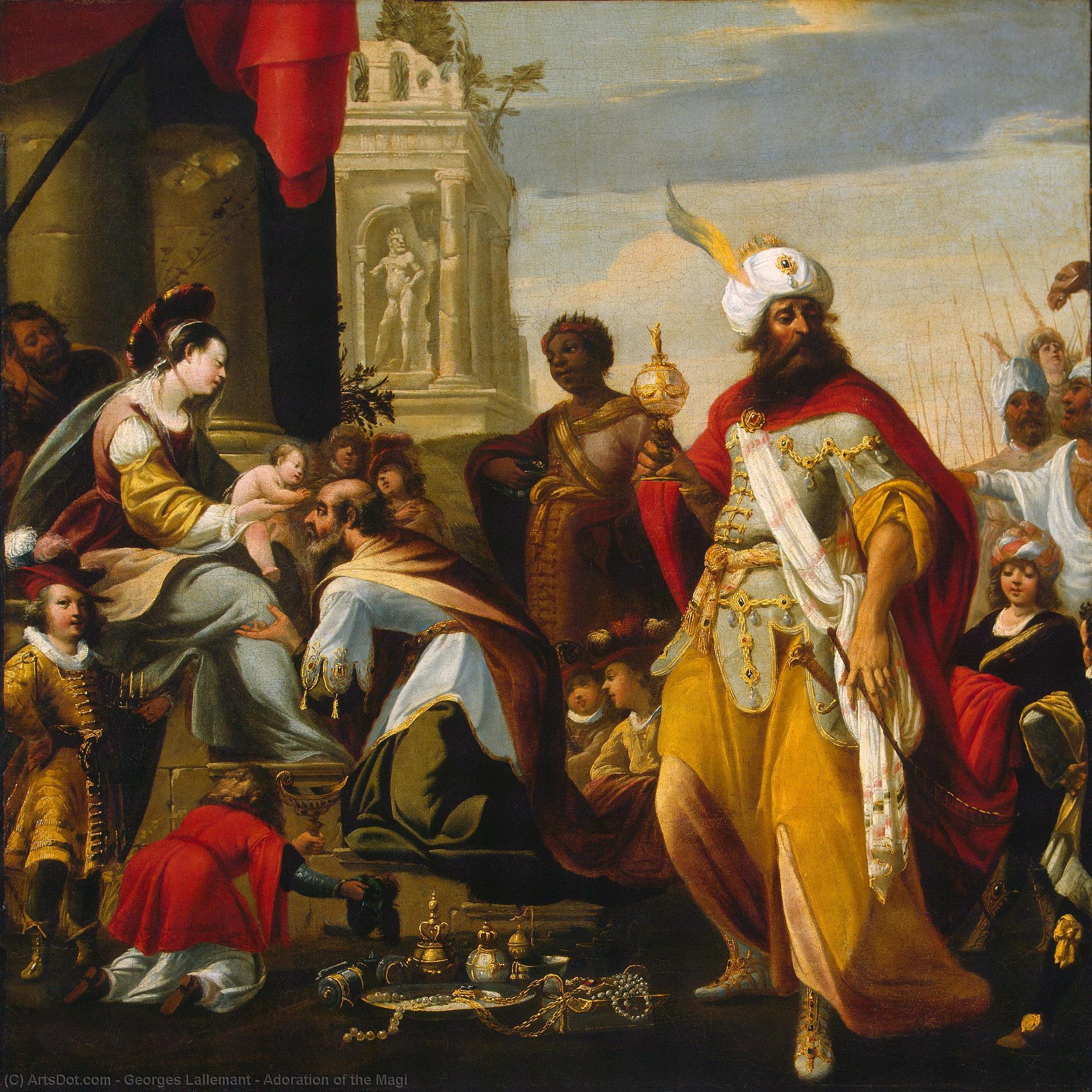
Adoration of the Magi
 Acrylic On Canvas
- WallArt
- Baroque
 74.0 x 92.0 cm
 Hermitage Museum
 Read More
Hand Made Oil Reproduction
Hand-painted oil on canvas in your size and frame, made to order by our artists. ( Buy Print Buy Image)




P118B $10

P118H $10

P118W $10

P438Z $10

P508JH $12

P508YH $12

P805H $10

P805Z $10

P919BZ $10

P919G $10

P919XJ $10

P959ZH $10

P968JZ $12

W106C $8

W218G $10

W218JH $8

W218Y $10

W307PJ $10

W316G $10

W316PJ $8

W316Y $10

W398PJ $8

W4111J $10

W500HY $15

W500JH $15

W692G $12

W849H $8

W940BG $15

W953PJ $8




Pick from our preset sizes that match the artwork's original proportions.

You may enter your own dimensions to fit a specific frame or space. If your selected size does not match the original image's proportions, we will either crop the artwork or extend the painting with additional hand-painted elements. A digital mockup will be sent for your approval before production begins.
Please note that the on-screen preview does not reflect the actual cropping or extension. Only the mockup will accurately show the final composition.
While custom sizes are available, we recommend selecting a dimension from the predefined list to preserve the original proportions.
After order, ArtsDot.com team will email client for instructions and provide a mockup preview
Worldwide Delivery () in 3/4 weeks instead of standard 5 weeks. (29 August). No compromise on quality.

Free Worldwide Express Shipping

High-Quality Linen Canvas

Full Shipping Insurance

Customs Tax Refund Guarantee

True Color Matching Guarantee

60-Day Return Policy (Defects Only)

100% Money-Back Guarantee

Bulk Discount Offer
 Glass option is only available in size under 110 CM

Adoration of the Magi
Reproduction Medium
Reproduction Size
-


Total Price
$ 263
Georges Lallemant’s L’Adoration des Mages – A Flemish Renaissance Masterpiece
Georges Lallemand (1575–1636) remains an artist shrouded in artistic obscurity—a testament to the capricious nature of art history and the unfortunate fate that befell many talented artists during the turbulent era of Louis XIV. Despite the scarcity of surviving paintings and biographical details, Lallemant’s legacy persists through his masterful woodcuts and the enduring impact of his stylistic innovations on a generation of painters. His artistic education is largely unknown, yet speculation suggests he was influenced by Jacques Bellange, whose distinctive style—characterized by bold color palettes and expressive brushwork—clearly resonated within Lallemand's oeuvre. Around 1601, Lallemant relocated to Paris, establishing himself as a prolific artist and fostering a studio that nurtured the talents of luminaries like Philippe de Champaigne, Laurent de la Hyre, and Nicolas poussin. This Parisian envirThe Subject: The Magi Revisited
The Adoration of the Magi or Adoration of the Kings or Visitation of the Wise Men is the name traditionally given to the subject in the Nativity of Jesus in art in which the three Magi, represented as kings, especially in the West, having found Jesus by following a star, lay before him gifts of gold, frankincense, and myrrh, and worship him. It is related in the Bible by Matthew 2:11: “On entering the house, they saw the child with Mary his mother; and they knelt down and paid him homage. Then, opening their treasure chests, they offered him gifts of gold, frankincense, and myrrh. And having been warned in a dream not to return to Herod, they left for their own country by another path”. Christian iconography considerably expanded the bare account of the Biblical Magi described in the Gospel of Matthew (2:1–22). By the later Middle Ages this drew from non-canonical sources like the Golden Legend by Jacobus de Voragine. Artists used the expanded Christian iconography to reinforce the idea that Jesus was recognized, from his earliest infancy, as king of the earth. The adoration scene was often used to represent the Nativity, one of the most indispensable episodes in cycles of the Life of the Virgin as well as the Life of Christ. Stories throughout the Middle Ages started circulating, which speculated who exactly were the three kings who were famous for visiting the Christ child. Many people assumed that they came from somewhere in the east. Eventually it was decided that the three kings would represent the three main continents at the time; Europe, Asia, and Africa. The three names that prevailed over the centuries for the three kings were Gaspar (or Caspar), Melchior, and Balthasar. The prominence of this story, as well as the three kings or magi, is due to the great theological significance that the Biblical story holds, their exotic clothes and looks, as well as their great and expensive gifts.Style & Technique: Flemish Realism Meets Mannerist Drama
Georges Lallemand’s style was eclectic, combining Flemish realist and mannerist influences. He was greatly influenced by Jacques Bellange, whose work seems to have had a significant impact on him. His artistic education is largely unknown, yet speculation suggests he was influenced by Jacques Bellange, whose distinctive style—characterized by bold color palettes and expressive brushwork—clearly resonated within Lallemand's oeuvre. The artist’s meticulous attention to detail—evident in the rendering of textures like silk, fur, jewels and gold—contrasts sharply with the stylized poses and elongated figures typical of Mannerism. This stylistic fusion reflects the broader artistic currents of his time, demonstrating a desire for grandeur and emotional intensity while retaining a grounding in observation and naturalistic representation. The painting’s perspective is carefully constructed, drawing inspiration from Flemish masters like Rogier van der Weyden, creating an illusion of depth that draws the viewer into the scene.Historical Context & Symbolism: Pagan Ruins and Divine Revelation
The Adoration of the Magi was especially popular with the artists of Antwerp Mannerism from about 1500 to 1530. These mostly anonymous artists lived in the Golden Age of Flemish painting, a period marked by unprecedented artistic innovation and prosperity. Lallemand’s depiction incorporates symbolic elements that underscore the narrative's theological significance: The ruins represent the pagan world supplanted by the Christian world inaugurated by the events in the foreground. On the right side, the most credible self-portrait of Leonardo da Vinci as a 30-year-old can be seen, according to several critics. The palm tree symbolizes triumph over death—a reference to the Song of Solomon and its depiction of Mary as “You are stately as a palm tree.” The gifts themselves – gold, frankincense and myrrh – represent spiritual riches and earthly treasures, symbolizing divine grace and human piety.A Legacy Preserved: Rediscovering Lallemand’s Vision
Georges Lallemand's work is mostly known from a series of chiaoscuro woodcuts made by Ludolph Büsinck in the 1620s after his smaller religious and genre compositions. His meticulous attention to detail—evident in the rendering of textures like silk, fur, jewels and gold—contrasts sharply with the stylized poses and elongated figures typical of Mannerism. This stylistic fusion reflects the broader artistic currents of his time, demonstrating a desire for grandeur and emotional intensity while retaining a grounding in observation and naturalistic representation. The painting’s perspective is carefully constructed, drawing inspiration from Flemish masters like Rogier van der Weyden, creating an illusion of depth that draws the viewer into the scene.Related Artworks

Artist Biography
Georges Lallemant (1575-1636): A Parisian Mannerist Painter
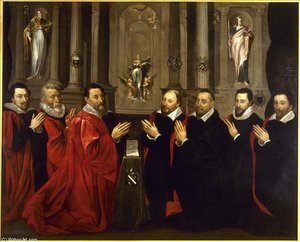
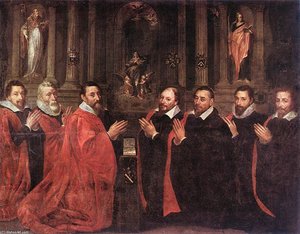
Georges Lallemand, born around 1575 in Nancy, France, remains a figure shrouded in artistic obscurity—a testament to the capricious nature of art history and the unfortunate fate that befell many talented artists during the turbulent era of Louis XIV. Despite the scarcity of surviving paintings and biographical details, Lallemand’s legacy persists through his masterful woodcuts and the enduring impact of his stylistic innovations on a generation of painters. His artistic education is largely unknown, yet speculation suggests he was influenced by Jacques Bellange, whose distinctive style—characterized by bold color palettes and expressive brushwork—clearly resonated within Lallemand's oeuvre. Around 1601, Lallemand relocated to Paris, establishing himself as a prolific artist and fostering a studio that nurtured the talents of luminaries like Philippe de Champaigne, Laurent de la Hyre, and Nicolas poussin. This Parisian environment proved pivotal in shaping his artistic vision, propelling him into the heart of the burgeoning Baroque movement. His style was remarkably eclectic, deftly blending Flemish realism with Mannerist tendencies—a fusion that produced images imbued with both meticulous detail and a heightened sense of drama and emotion. The resulting paintings are notable for their dynamic compositions and masterful use of chiaroscuro, techniques borrowed directly from Bellange’s work. Few of Lallemand's canvases survive today; many were dispersed during the French Revolution when church property was seized, erasing much of his artistic output from public view. However, his earliest known masterpiece, “The Mayor and Aldermen of Paris” (circa 1611), housed in Musée Carnavalet, offers a glimpse into his early stylistic explorations—a scene rendered with remarkable precision and imbued with subtle psychological nuance. In 1626, he ascended to the prestigious position of peintre ordinaire du roi, securing royal patronage and furthering his artistic endeavors. During his final years, Lallemand undertook ambitious commissions for altarpieces and tapestries destined for Notre Dame Cathedral, alongside six monumental paintings commissioned for Saint Geneviève Church in Paris—works that exemplify the grandeur and sophistication of Baroque art. Furthermore, his contributions can be appreciated in St Joseph’s Carmelite Church in Lille and another version of “The Adoration of Magi” resides in The Hermitage Museum. Lallemand's artistic reputation gained considerable traction through the collaborative efforts of Ludolph Büsinck, who produced a series of striking woodcuts based on Lallemand’s smaller religious and genre compositions. These prints—characterized by their dramatic lighting effects and expressive linework—served as an invaluable conduit for disseminating Lallemand’s artistic vision beyond the confines of Parisian ateliers and solidified his place within the broader artistic landscape of 17th-century France. His enduring influence can be seen in the stylistic choices of subsequent artists, cementing his position as a significant figure in the history of Mannerist painting and Baroque printmaking.- Notable Works: “The Mayor and Aldermen of Paris”, “Jesus At The Temple”, “Adoration of Magi”
- Influences: Jacques Bellange
- Style: Flemish Realism & Mannerism
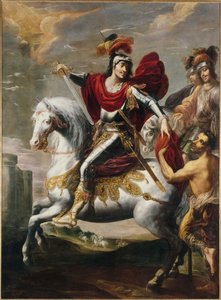
Georges Lallemant
1575 - 1636 , France
Quick Facts
- Artistic Movement Or Style: Mannerist & Flemish Realist
- Artists Or Movements Influenced By This Artist: Philippe de Champaigne
- Artists Who Influenced This Artist: Jacques Bellange
- Date Of Birth: Nancy, France (1575)
- Date Of Death: 1636
- Full Name: Georges Lallemant
- Nationality: French
- Notable Artworks:
- The Mayor and Aldermen of Paris
- Jesus At The Temple
- Adoration of Magi
- Place Of Birth: Nancy, France
Related Articles

Georges Braque's Masterpieces: 25 Paintings That Defined Cubism & Modern Art | ArtsDot
Explore 25 iconic Georges Braque paintings that revolutionized Cubism & modern art. Discover the stories behind his masterpieces, from Fauvism to Analytical Cubism. Find museum-quality reproductions & elevate your home decor with ArtsDot.com.

Georges Seurat's Masterpieces: 25 Paintings That Defined Pointillism | ArtsDot
Explore 25 iconic Georges Seurat paintings & discover the brilliance of Pointillism. From 'La Grande Jatte' to his harbor scenes, delve into art history with ArtsDot.com. Find museum-quality reproductions for your home decor. Explore the full collection online!

The Dramatic Flourish: Exploring the Baroque Movement's Enduring Legacy in Art History
Explore the dramatic world of Baroque art! Discover iconic artists like Caravaggio & Rubens, defining techniques, and its lasting impact on art history. Expert insights for collectors & enthusiasts at ArtsDot.

Baroque Masterpieces: 10 Paintings That Defined an Era |
Journey through the drama & grandeur of Baroque art! Explore 10 masterpieces by Caravaggio, Rembrandt, Rubens & more. Discover stunning oil paintings, rich colors & timeless stories. Find museum-quality reproductions at .

The Visceral Stage: Exploring Dramatic Narratives & Emotional Intensity in Baroque Art
Explore the dramatic world of Baroque art! Discover iconic masters like Caravaggio & Rembrandt, their techniques, and the movement's lasting impact. Expert insights for collectors & enthusiasts at ArtsDot.