

 Preview
 Send
Send Share
Share
 Details

 Download
 Similars
 X-Ray
X-Ray Diaporama
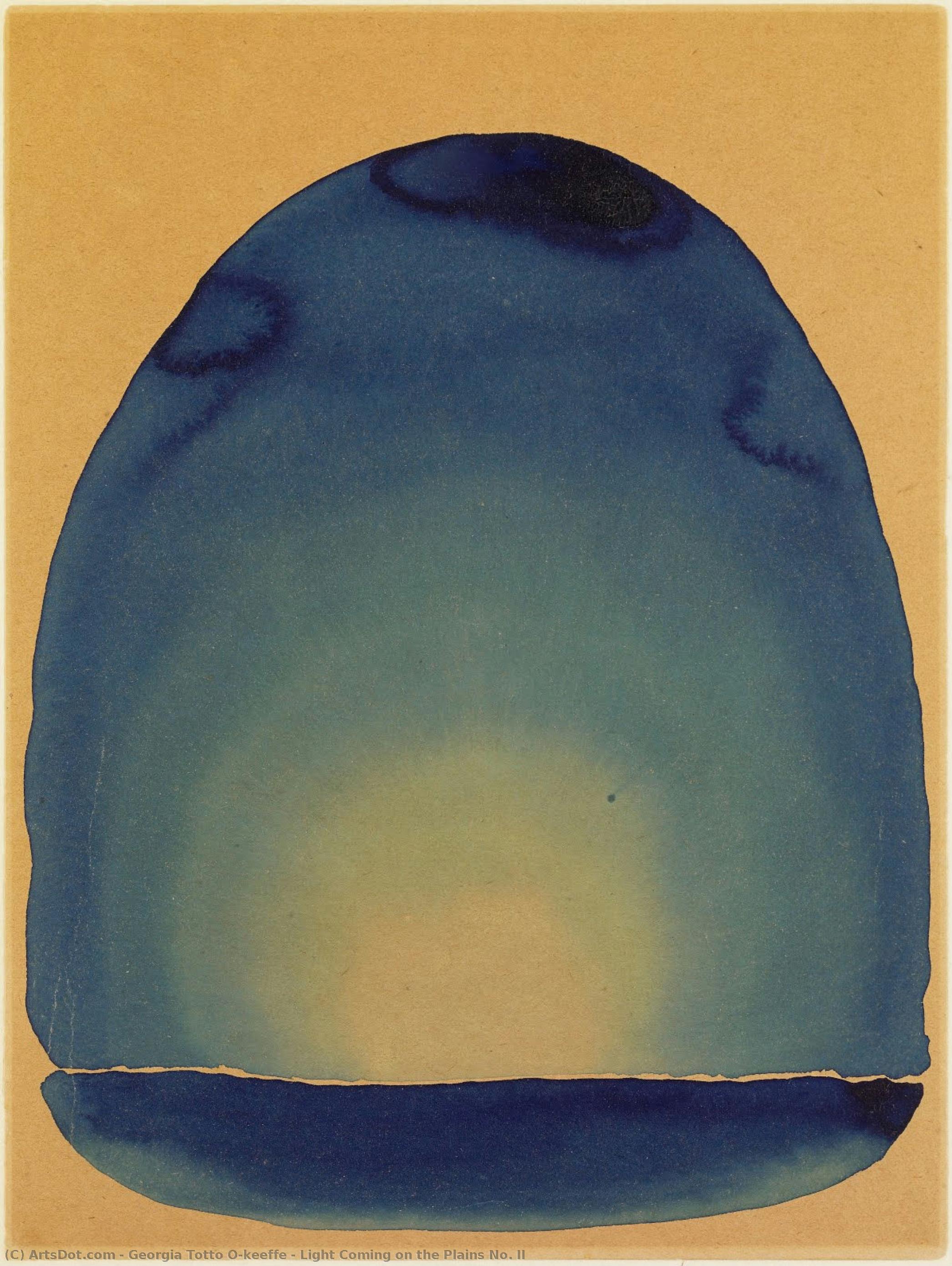
Light Coming on the Plains No. II
 Watercolor
- WallArt
- Modernism
 1917
1917 22.0 x 30.0 cm
 Amon Carter Museum of American Art
 Read More
Purchase a high-resolution, enhanced digital image, far superior to the online preview.
Each file is meticulously prepared by our in-house specialists using advanced tools and expert manual retouching. We ensure every image has exceptional clarity, precise color accuracy, and fine detail.
The final file is delivered via email within 72 hours, optimized for immediate use in professional, editorial, and print environments. This is the same quality trusted by top-tier design studios, publishers, and galleries.
Digital Image
Download a high-resolution file for personal display, printing, and creative projects. ( Buy Print Buy Hand Made Painting)
Included in Every Digital Image Order
Expert Digital Delivery, Guaranteed
When you choose ArtsDot.com, you're not just getting an image - you're receiving a professionally enhanced digital artwork, crafted with precision and backed by a satisfaction guarantee. Here's everything that comes with your order, automatically:

Fast Email Delivery
Your high-resolution digital image file will be emailed to you within 72 hours of ordering - ready for immediate use.

AI-Enhanced Digital File
Your artwork is professionally optimized using advanced AI tools and manual editing, ensuring maximum detail, clarity, and color accuracy.

Free Lifetime Re-Delivery
Accidentally deleted or lost your file? No worries - we'll resend it to you anytime, free of charge.

No Import Fees - Ever
Enjoy your artwork instantly with zero customs, duties, or delivery fees - digital downloads are always tax-free.

Color Accuracy Guarantee
We ensure your digital image reflects the original colors as closely as possible using professional tools and color management.

60-Day Satisfaction Guarantee
If you're not satisfied with your digital image, we'll revise it or refund 100% within 60 days - no questions asked.

100% Money-Back Guarantee
Not satisfied? Get a full refund within 60 days of receiving your digital file - no questions asked.

Bulk Order Discounts
Buy 3 images, save 10% - Buy 5, save 15% - Buy 10+, save 20%. Great for creative projects, galleries, and agencies.
Collectible Description
The Genesis of a Southwestern Dream
Georgia O’Keeffe’s “Light Coming on the Plains No. II,” painted in 1917, isn't merely a depiction of a sunrise; it’s an immersion into the heart of the Texas landscape and a profound exploration of light itself. Born amidst the dairy farms of Sun Prairie, Wisconsin, O’Keeffe’s artistic journey began with a deliberate rejection of academic realism, guided by the principles of Arthur Wesley Dow – prioritizing personal expression and the harmonious balance of color and line. This early influence is strikingly evident in this work, where the familiar subject matter of a sunrise is transformed into an abstract meditation on its essence.
The painting’s creation coincided with O'Keeffe’s teaching position at West Texas State Normal College in Canyon, a pivotal moment that brought her face-to-face with the vast, dramatic skies of the region. It was during a particularly memorable bus ride from Amarillo to Canyon—a journey punctuated by an extraordinary display of dawn—that she felt compelled to capture this fleeting spectacle on canvas. This experience became the catalyst for what would become a series of watercolors dedicated to the beauty and intensity of Texas sunrises, each one a testament to her evolving artistic vision.
A Symphony of Color and Form
Executed in watercolor on newsprint—a choice that speaks volumes about O’Keeffe's deliberate simplicity and her desire to capture the ephemeral nature of light—“Light Coming on the Plains No. II” is a masterclass in tonal abstraction. The composition centers around a luminous, circular form, rendered in washes of deep indigo blue, suggesting the deepening twilight as the sun ascends. This central orb isn’t a literal representation but rather an embodiment of the feeling – the sense of anticipation and quietude—that accompanies the first hints of dawn. Subtle shifts in color and texture create a dynamic interplay of light and shadow, evoking the subtle gradations of luminosity that define a sunrise.
Notice how O’Keeffe eschews sharp outlines or detailed rendering. Instead, she employs loose brushstrokes and layered washes to build atmosphere and suggest form. The painting's intimacy—measuring just 24 x 18 7/8 inches—draws the viewer in, inviting a close examination of its delicate nuances.
Symbolism and the Essence of Place
Beyond its purely aesthetic qualities, “Light Coming on the Plains No. II” is deeply rooted in the landscape and culture of West Texas. The vastness of the plains, the dramatic interplay of light and shadow, and the subtle hints of vegetation all contribute to a sense of place—a feeling of being utterly immersed in the natural world. O’Keeffe's work often explored themes of isolation and connection with nature, and this painting is no exception.
Furthermore, some art historians have interpreted the circular form as representing the sun itself, while others suggest a more personal symbolism—a visual metaphor for O’Keeffe’s own inner world. The deliberate abstraction allows for multiple interpretations, inviting viewers to project their own emotions and experiences onto the canvas.
A Legacy of Modernism
“Light Coming on the Plains No. II” stands as a crucial work in Georgia O'Keeffe’s artistic development—a bridge between her early explorations of abstraction and her later, more iconic paintings of flowers and desert landscapes. It exemplifies her pioneering approach to landscape painting, prioritizing emotional resonance over literal representation. The painting’s influence can be seen in the works of subsequent generations of American artists who sought to capture the essence of nature through innovative techniques and a deeply personal vision.
Today, “Light Coming on the Plains No. II” resides within the Amon Carter Museum of American Art in Fort Worth, Texas, where it continues to captivate viewers with its ethereal beauty and profound sense of place. Reproductions offer an accessible way to experience this remarkable work of art, bringing a touch of Southwestern serenity into any space.
Related Artworks
Artist Biography
Early Life and Artistic Foundations
Georgia Totto O'Keeffe, a name synonymous with American modernism, emerged from the unassuming landscape of Sun Prairie, Wisconsin, in 1887. Born into a family of Irish and Hungarian descent engaged in dairy farming, young Georgia displayed an artistic inclination early on, deciding by age ten that she would dedicate her life to art. This determination was nurtured through lessons with local watercolorist Sara Mann, followed by formal studies at the School of the Art Institute of Chicago from 1905 to 1906 and later at the University of Virginia. However, it was her encounter with Arthur Wesley Dow’s principles – emphasizing personal expression and a harmonious balance of color and line – that truly ignited her artistic path. Dow's teachings steered O'Keeffe away from strict realism toward a more subjective and emotionally resonant approach to art, an approach that would define her career. These formative years weren’t without their challenges; periods of illness and dissatisfaction led her to temporarily abandon painting, but the creative impulse always drew her back, evolving with each new experience and influence.New York and the Stieglitz Circle
A pivotal moment arrived in 1916 when O'Keeffe’s abstract charcoal drawings were discovered by Alfred Stieglitz, a renowned photographer and art dealer. He exhibited her work without her prior knowledge, sparking a dialogue that would profoundly shape both their lives and the course of American art. Stieglitz recognized an exceptional talent in O'Keeffe, one that resonated with his own modernist sensibilities. He invited her to New York City in 1918, providing not only professional support but also fostering a deep personal connection. Their relationship blossomed into marriage in 1924, creating a dynamic artistic partnership and intellectual exchange. Stieglitz championed O'Keeffe’s work, showcasing it at his gallery “291” and promoting her as a leading figure in the American avant-garde. During this period, she began to develop her signature style – bold, simplified forms and intensely saturated colors – initially expressed through depictions of New York skyscrapers and, most famously, magnified flower paintings. These floral works, often interpreted (though consistently denied by O'Keeffe herself) as veiled representations of female anatomy, challenged conventional notions of beauty and sexuality in art.The Allure of the Southwest
While New York provided a crucial platform for her early success, it was the landscapes of the American Southwest that truly captured O’Keeffe’s imagination and profoundly influenced her artistic vision. Her first visit to New Mexico in 1929 marked the beginning of a lifelong love affair with the region's stark beauty, vibrant colors, and unique cultural heritage. The vastness of the desert, the dramatic rock formations, and the ancient Pueblo architecture resonated deeply within her, inspiring a new series of paintings that reflected the spirit of the land. Works like *Cow’s Skull: Red, White, and Blue* (1931) and *Summer Days* (1936) are powerful testaments to this influence, transforming seemingly mundane objects into iconic symbols of the American West. She eventually settled permanently in New Mexico in 1949 following Stieglitz’s death, establishing a home and studio in Abiquiu that became integral to her artistic process and identity.Legacy and Enduring Influence
Georgia O'Keeffe continued to paint prolifically throughout her life, experimenting with new subjects and pushing the boundaries of abstraction. Her later works included aerial views of clouds and skies, reflecting a fascination with the vastness and ethereal quality of the natural world. She remained fiercely independent and uncompromising in her artistic vision, refusing to be categorized or defined by prevailing art movements. O'Keeffe’s impact on American art is immeasurable. She paved the way for future generations of female artists, challenging societal norms and asserting her own unique voice in a male-dominated field. Her paintings continue to captivate audiences with their bold simplicity, emotional depth, and evocative power. The establishment of the Georgia O'Keeffe Museum in Santa Fe in 1997 further solidified her legacy, preserving her art and providing a space for ongoing scholarship and appreciation. In 2014, *Jimson Weed/White Flower No. 1* sold for $44.4 million, setting a record price for a work by a female artist – a testament to the enduring value and significance of her artistic contribution. O’Keeffe's influence extends beyond painting; she became an icon of American individualism and self-reliance, inspiring countless artists and admirers with her unwavering commitment to her craft and her unique perspective on the world. Her work remains a powerful reminder of the transformative power of art and the enduring beauty of the natural world.Key Works & Museum Presence
- Red Canna: Exemplifies her early exploration of floral abstraction.
- Cow’s Skull: Red, White, and Blue (1931): A powerful symbol of the American Southwest and a meditation on mortality.
- Summer Days (1936): Captures the essence of the New Mexico landscape with its vibrant colors and simplified forms.
- Jimson Weed/White Flower No. 1: A monumental floral painting that showcases her mastery of scale and composition.
- Georgia O'Keeffe Museum (Santa Fe)
- Museum of Modern Art (New York)
- Art Institute of Chicago
- National Gallery of Art (Washington, D.C.)

Georgia O'Keeffe
1887 - 1986 , United States of America
Quick Facts
- Artistic Movement Or Style: Modernism, Precisionism
- Artists Who Influenced This Artist:
- Arthur Wesley Dow
- Alfred Stieglitz
- Date Of Birth: November 15, 1887
- Date Of Death: March 6, 1986
- Full Name: Georgia Totto O'Keeffe
- Nationality: American
- Notable Artworks:
- Red Canna
- Cow's Skull: Red, White, Blue
- Summer Days
- Jimson Weed/White Flower No. 1
- Place Of Birth: Sun Prairie, USA

