 Preview
 Send
Send Share
Share
 Details

 Download
 Similars
 X-Ray
X-Ray Diaporama
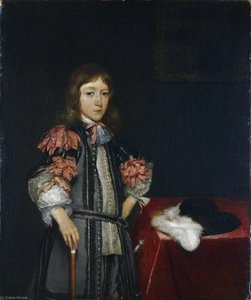
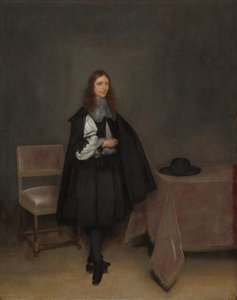
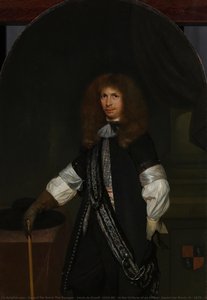
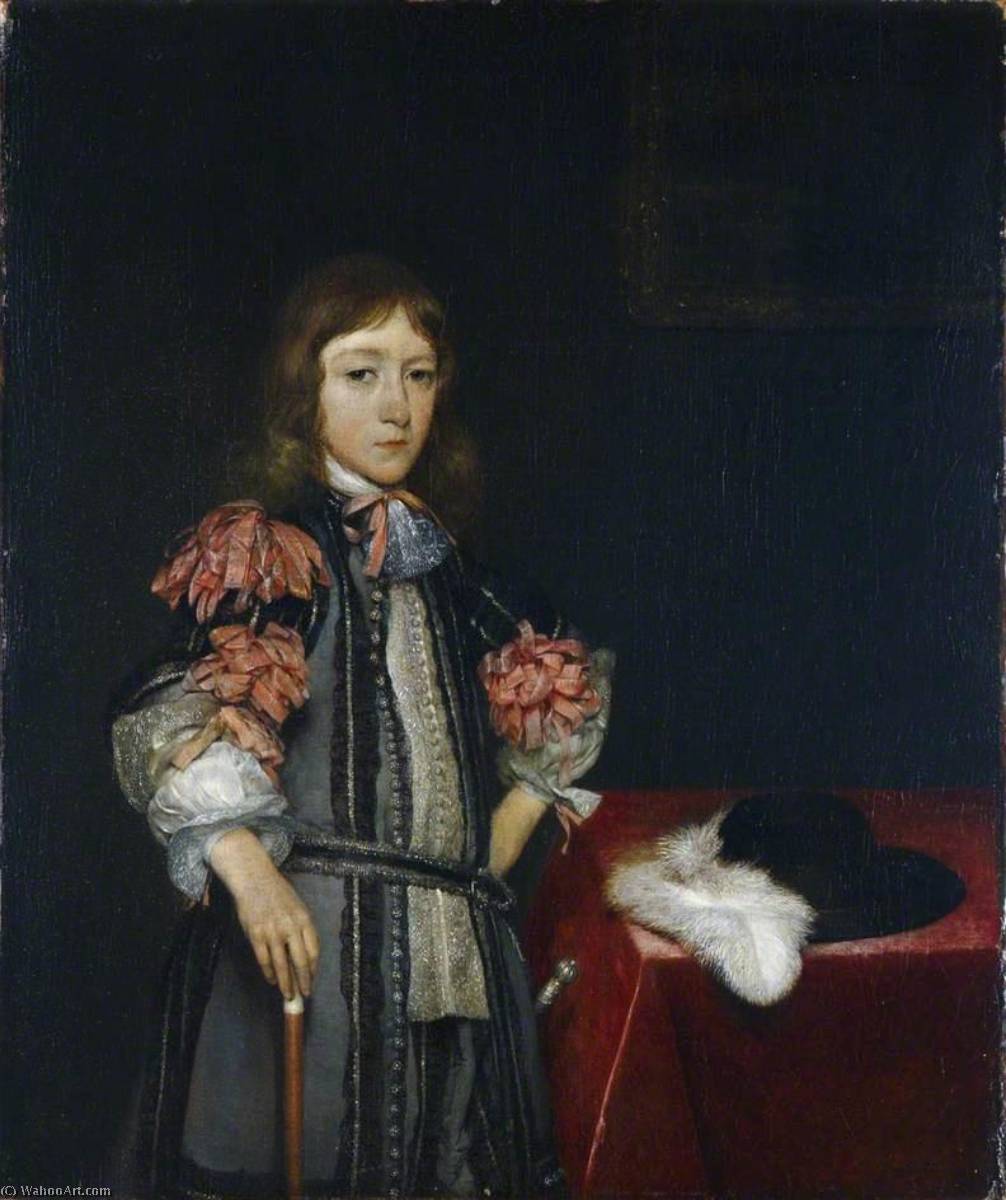
Gerbrand Pancras, Prince of Nassau Dietz


 Read More
Hand Made Oil Reproduction
Hand-painted oil on canvas in your size and frame, made to order by our artists. ( Buy Print Buy Image)




P118B $10

P118H $10

P118W $10

P438Z $10

P508JH $12

P508YH $12

P805H $10

P805Z $10

P919BZ $10

P919G $10

P919XJ $10

P959ZH $10

P968JZ $12

W106C $8

W218G $10

W218JH $8

W218Y $10

W307PJ $10

W316G $10

W316PJ $8

W316Y $10

W398PJ $8

W4111J $10

W500HY $15

W500JH $15

W692G $12

W849H $8

W940BG $15

W953PJ $8




Pick from our preset sizes that match the artwork's original proportions.

You may enter your own dimensions to fit a specific frame or space. If your selected size does not match the original image's proportions, we will either crop the artwork or extend the painting with additional hand-painted elements. A digital mockup will be sent for your approval before production begins.
Please note that the on-screen preview does not reflect the actual cropping or extension. Only the mockup will accurately show the final composition.
While custom sizes are available, we recommend selecting a dimension from the predefined list to preserve the original proportions.
After order, ArtsDot.com team will email client for instructions and provide a mockup preview
Worldwide Delivery () in 3/4 weeks instead of standard 5 weeks. (4 September). No compromise on quality.

Free Worldwide Express Shipping

High-Quality Linen Canvas

Full Shipping Insurance

Customs Tax Refund Guarantee

True Color Matching Guarantee

60-Day Return Policy (Defects Only)

100% Money-Back Guarantee

Bulk Discount Offer
 Glass option is only available in size under 110 CM

Gerbrand Pancras, Prince of Nassau Dietz
Reproduction Medium
Reproduction Size
-


Total Price
$ 263
Gerbrand Pancras, Prince of Nassau Dietz: A Portrait of Quiet Majesty
Gerard ter Borch’s “Gerbrand Pancras, Prince of Nassau Dietz,” painted in 1670, is not a grand, theatrical display of royal power. Instead, it offers a remarkably intimate glimpse into the life and character of a young nobleman—a study in restrained dignity and thoughtful contemplation. This captivating portrait, housed within Manchester Art Gallery, transcends mere likeness; it’s a masterful exploration of human psychology rendered with the subtle brushstrokes characteristic of the Dutch Golden Age.
The subject, Gerbrand Pancras, is depicted seated in a richly appointed interior, though details are deliberately muted. He wears a dark, velvet coat embroidered with intricate patterns—a clear indication of his status and wealth. The lace trim on his collar and cuffs speaks to the formality of courtly life, while the carefully arranged bouquet of flowers in his hand suggests an appreciation for beauty and nature. His gaze is direct, almost challenging, yet there’s a profound serenity about him; he isn't posing dramatically, but rather engaging with the viewer as if sharing a private thought. The lighting, skillfully employed by ter Borch, casts gentle shadows that accentuate the contours of his face and clothing, lending depth and realism to the scene.
The Painter’s Technique: Nuance and Psychological Depth
Ter Borch was renowned for his ability to capture not just physical appearance but also the inner lives of his subjects. This portrait exemplifies this skill perfectly. Notice how he avoids overly bright colors or dramatic poses, instead relying on a muted palette and carefully observed details. The texture of the velvet, the folds in the fabric, and the delicate petals of the flowers are rendered with astonishing precision—a testament to ter Borch’s meticulous technique. He employed a technique known as “clair-obscur,” using light and shadow to create volume and form, further enhancing the sense of realism. The subtle variations in tone suggest a deep understanding of how light interacts with different surfaces.
Furthermore, the composition itself is remarkably restrained. The figure occupies a central position within the frame, but there’s no overwhelming sense of grandeur or spectacle. Instead, the focus remains firmly on Pancras himself—his expression, his posture, and the quiet intensity of his gaze. This deliberate simplicity allows the viewer to connect with the subject on a more personal level.
Historical Context: Nassau-Dietz in the 17th Century
To fully appreciate “Gerbrand Pancras,” it’s essential to understand the historical context in which it was created. The portrait depicts Gerbrand Pancras, later known as Hendrick Casimir II, Prince of Nassau-Dietz, a prominent figure within the House of Orange-Nassau. The 17th century was a period of immense political and social change in Europe, marked by wars, shifting alliances, and the rise of powerful merchant families like the Nassaus. The Prince’s position as Stadtholder of Friesland and Groningen placed him at the heart of this complex landscape.
The portrait reflects the importance of lineage and status during this era. The elaborate clothing and furnishings serve to emphasize Pancras's noble birth and his role within the political hierarchy. However, ter Borch subtly resists portraying him as a mere symbol of power—instead, he presents him as a thoughtful individual grappling with the responsibilities of leadership.
Symbolism and Emotional Resonance
Beyond its technical brilliance, “Gerbrand Pancras” is rich in symbolic meaning. The bouquet of flowers, for example, traditionally represents beauty, love, and remembrance—suggesting a connection to personal relationships and perhaps even a reflection on mortality. The young man’s contemplative expression invites the viewer to contemplate his thoughts and feelings. There's an air of quiet introspection about him, as if he is weighing important decisions or reflecting on past events.
Ultimately, this portrait transcends its historical context to offer a timeless meditation on human nature—a poignant reminder that even in the midst of power and privilege, there’s always room for quiet contemplation and personal reflection. It's a work that rewards repeated viewing, revealing new layers of meaning with each encounter.
Related Artworks

Artist Biography
A Life Illuminated: The World of Gerard ter Borch the Younger
Gerard ter Borch the Younger, a name that resonates with the quiet intimacy and refined realism characteristic of the Dutch Golden Age, was born in Zwolle, Netherlands, in December 1617. He emerged from an artistic family—his father, Gerard ter Borch the Elder, instilled in him foundational draftsmanship skills, while his sister, Gesina, also demonstrated a remarkable talent for painting. This nurturing environment fostered a sensibility attuned to visual detail and the subtle nuances of human interaction, qualities that would come to define his celebrated oeuvre. Ter Borch’s early education extended beyond the studio; formative travels beginning in 1632 took him through Amsterdam, Haarlem under Pieter Molijn, and even London in 1635. These journeys exposed him to diverse artistic currents and broadened his understanding of patronage, laying the groundwork for a career that would capture the essence of domestic life with unparalleled sensitivity. The influence of Willem Cornelisz Duyster is readily apparent in his early works, particularly in their meticulously rendered interiors and atmospheric lighting, hinting at the artist’s developing mastery of light and shadow.The Painter of Everyday Moments
Ter Borch distinguished himself through an unwavering focus on genre painting—scenes depicting everyday life. However, he wasn't merely recording these moments; he was imbuing them with a psychological depth rarely seen in his contemporaries. His paintings aren’t grand historical narratives or dramatic religious scenes, but rather glimpses into the private worlds of Dutch burghers: a woman pausing as she writes a letter, a couple engaged in polite conversation, a soldier on horseback. These seemingly simple subjects become vehicles for exploring human relationships and the quiet dramas that unfold within domestic settings. The Letter, perhaps his most famous work, exemplifies this mastery; it’s not just a depiction of a woman writing, but an exploration of anticipation, longing, and the power of communication. His technique is characterized by meticulous realism—the textures of fabrics are rendered with astonishing accuracy, light falls naturally across surfaces, and facial expressions convey subtle emotions. He possessed an exceptional ability to capture fleeting moments, transforming them into enduring works of art. Beyond his celebrated genre scenes, Ter Borch also gained recognition for his miniature portraits in the 1640s, demonstrating a remarkable skill in capturing likenesses with precision and delicacy. These smaller works showcase the same attention to detail and psychological insight as his larger compositions, solidifying his reputation as a master of observation.Influences and Artistic Development
The artistic journey of Gerard ter Borch was one of continuous evolution, shaped by exposure to diverse influences. Pieter Molijn’s landscape painting undoubtedly impacted his early compositions, while the detailed interiors of Willem Cornelisz Duyster provided a crucial foundation for his meticulous realism. Some scholars suggest a possible visit to Italy, though concrete evidence remains elusive; if he did travel there, it likely exposed him to the techniques and compositional principles of the Italian Renaissance masters. Later in his career, Ter Borch demonstrated an appreciation for the Spanish painter Diego Velázquez, particularly evident in his masterful use of light and shadow—a technique that added depth and drama to his scenes. He was also part of a vibrant circle of Dutch Golden Age painters who shared similar interests in genre painting and detailed realism, including Gabriel Metsu and Gerrit Dou. However, Ter Borch wasn’t simply imitating these artists; he synthesized their influences into a unique style characterized by its psychological insight and refined technique. His ability to capture the subtle nuances of human interaction set him apart from his contemporaries, establishing him as a leading figure in Dutch genre painting.Legacy and Historical Significance
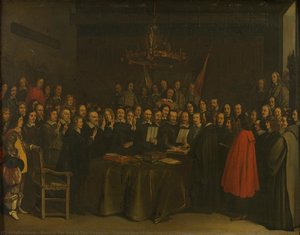
Gerard ter Borch the Younger stands as one of the leading figures of the Dutch Golden Age—a period of unprecedented artistic flourishing in the Netherlands. His innovative approach to genre painting, his focus on psychological realism, and his technical virtuosity profoundly influenced subsequent generations of artists. He elevated everyday life to a subject worthy of serious artistic consideration, paving the way for future explorations of domesticity and human interaction. His works are now held by prestigious museums worldwide, including the Royal Picture Gallery Mauritshuis in The Hague, the National Gallery in London, and the Hermitage Museum in St. Petersburg—testaments to his enduring appeal and historical importance. Adrian Pauw's Arrival in Münster, for example, showcases not only his technical skill but also his ability to capture a significant historical event with an intimate, human perspective. Ter Borch’s legacy extends beyond the canvas; he left behind a body of work that continues to captivate and inspire, offering viewers a glimpse into the lives and emotions of 17th-century Dutch society. He remains a master of observation, a painter who understood the power of quiet moments and the beauty of everyday life. His sister Gesina ter Borch, though less known, also contributed significantly to the artistic landscape of the time, further enriching the family’s legacy within the Dutch Golden Age.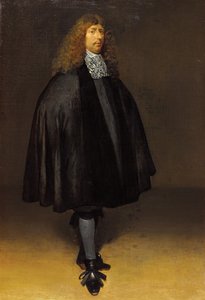
Gerard ter Borch the Younger
1617 - 1681 , Netherlands
Quick Facts
- Artistic Movement Or Style: Dutch Golden Age, Genre painting
- Artists Or Movements Influenced By This Artist:
- Gabriel Metsu
- Gerrit Dou
- Artists Who Influenced This Artist:
- Pieter Molijn
- Willem Cornelisz Duyster
- Diego Velázquez
- Date Of Birth: December 1617
- Date Of Death: 1681
- Full Name: Gerard ter Borch the Younger
- Nationality: Dutch
- Notable Artworks:
- The Letter
- Adrian Pauw's Arrival
- The Gallant Conversation
- Place Of Birth: Zwolle, Netherlands
Related Articles
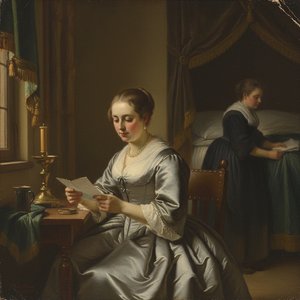
Gerard ter Borch: Intimacy & Light in the Dutch Golden Age
Explore the captivating world of Gerard ter Borch, a master of Dutch Golden Age genre painting. Discover his intimate scenes, masterful light, and lasting influence on art history. Learn more at ArtsDot.

Golden Age Reflections: Dutch Baroque Painting & Cultural Innovation
Explore the Dutch Golden Age of painting! Discover key artists like Vermeer & ter Borch, their innovative techniques, and the rich cultural context behind these Baroque masterpieces. Learn about collecting & appreciating this iconic art period.
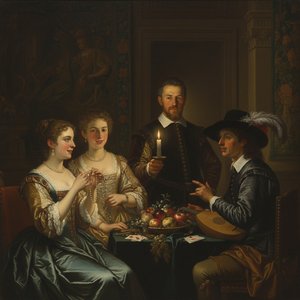
Gerard van Honthorst: Illuminating the Dutch Golden Age with Caravaggism & Courtly Grace
Explore the captivating world of Gerard van Honthorst, a Dutch Golden Age master renowned for his dramatic chiaroscuro & courtly portraits. Discover his life, art, and lasting influence on Baroque painting.
Rijksmuseum's Masterpieces: 25 Iconic Artworks for Your Home | ArtsDot
Explore 25 iconic artworks from Amsterdam's Rijksmuseum! Discover Rembrandt, Vermeer & Dutch Masters’ stories. Find museum-quality art reproductions and elevate your home decor with timeless paintings on ArtsDot.com.

Illuminating Innovation: Exploring the Dutch Golden Age of Painting
Explore the Dutch Golden Age of painting with ArtsDot. Discover Rembrandt, Vermeer & other Masters. Learn about key characteristics, iconic artworks, and lasting influence. Expert insights for collectors & enthusiasts.