

 Preview
 Send
Send Share
Share
 Details

 Download
 Similars
 X-Ray
X-Ray Diaporama
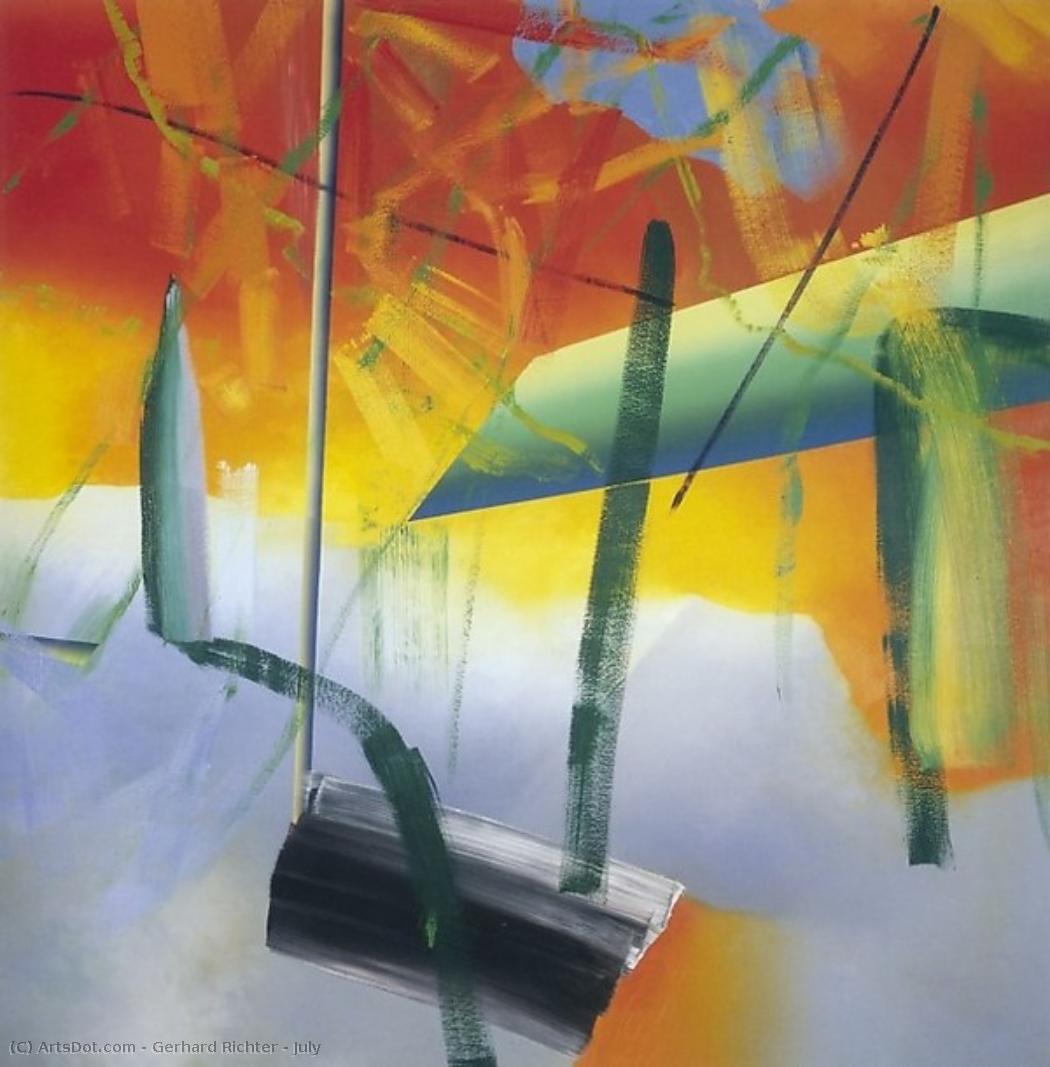
July
 Acrylic On Canvas
- WallArt
- Contemporary Realism
 1983
1983- Contemporary
 250.0 x 250.0 cm
 Read More
Purchase a high-resolution, enhanced digital image, far superior to the online preview.
Each file is meticulously prepared by our in-house specialists using advanced tools and expert manual retouching. We ensure every image has exceptional clarity, precise color accuracy, and fine detail.
The final file is delivered via email within 72 hours, optimized for immediate use in professional, editorial, and print environments. This is the same quality trusted by top-tier design studios, publishers, and galleries.
Digital Image
Download a high-resolution file for personal display, printing, and creative projects. ( Buy Print Buy Hand Made Painting)
Included in Every Digital Image Order
Expert Digital Delivery, Guaranteed
When you choose ArtsDot.com, you're not just getting an image - you're receiving a professionally enhanced digital artwork, crafted with precision and backed by a satisfaction guarantee. Here's everything that comes with your order, automatically:

Fast Email Delivery
Your high-resolution digital image file will be emailed to you within 72 hours of ordering - ready for immediate use.

AI-Enhanced Digital File
Your artwork is professionally optimized using advanced AI tools and manual editing, ensuring maximum detail, clarity, and color accuracy.

Free Lifetime Re-Delivery
Accidentally deleted or lost your file? No worries - we'll resend it to you anytime, free of charge.

No Import Fees - Ever
Enjoy your artwork instantly with zero customs, duties, or delivery fees - digital downloads are always tax-free.

Color Accuracy Guarantee
We ensure your digital image reflects the original colors as closely as possible using professional tools and color management.

60-Day Satisfaction Guarantee
If you're not satisfied with your digital image, we'll revise it or refund 100% within 60 days - no questions asked.

100% Money-Back Guarantee
Not satisfied? Get a full refund within 60 days of receiving your digital file - no questions asked.

Bulk Order Discounts
Buy 3 images, save 10% - Buy 5, save 15% - Buy 10+, save 20%. Great for creative projects, galleries, and agencies.
Collectible Description
A Symphony of Abstraction: Decoding Gerhard Richter’s “July”
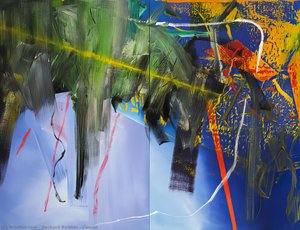
Gerhard Richter's "July," created in 1983, is not a painting that readily reveals its secrets. Measuring an impressive 250 x 250 cm, it commands attention with its sheer scale and the complex interplay of color and texture across its surface. This isn’t a landscape rendered with photographic precision – Richter famously explored both photorealism and abstraction – but rather a distillation of sensation, a visual echo of a summer moment captured not in detail, but in feeling. The painting presents a dynamic composition centered around a vertical element, often described as a pole or stick, which acts as an anchor amidst swirling forms. A boat appears on the right, suggesting a waterscape, while hints of foliage and even avian life emerge from the layered paint. Two figures are subtly integrated into the scene, their presence adding a human scale to the abstract expanse. It’s a work that invites prolonged contemplation, rewarding the viewer with new discoveries upon each encounter.The Master of Multiple Styles: Richter's Artistic Journey
Born in Dresden, Germany, in 1932, Gerhard Richter has become one of the most significant and influential artists of our time. His life story is deeply intertwined with the tumultuous history of post-war Germany, a context that profoundly shaped his artistic vision. Initially trained as a sign painter and stage-set designer, he later pursued formal studies at the Dresden Academy of Fine Arts. Richter’s early work demonstrated an engagement with abstraction, influenced by artists like Picasso and Arp, but it was his subsequent exploration of photorealism – painstakingly recreating photographs in paint – that first brought him international recognition. However, to define Richter by a single style is to misunderstand his artistic ambition. He deliberately resists categorization, constantly shifting between approaches, blurring the boundaries between representation and abstraction. “July” exemplifies this restless experimentation; it’s part of a series of abstract paintings created in the early 1980s, where he employed squeegees and layered applications of paint to create surfaces that are both chaotic and controlled.Technique as Exploration: The Squeegee and the Layered Surface
The distinctive visual character of “July” is inextricably linked to Richter’s innovative technique. He doesn't approach the canvas with a preconceived image, but rather allows the painting to emerge through a process of layering and manipulation. Applying paint thickly, he then drags a squeegee across the surface, scraping away portions of the pigment and creating a textured, almost blurred effect. This method introduces an element of chance and unpredictability, challenging traditional notions of artistic control. The resulting surface is rich with depth and nuance, revealing glimpses of underlying colors and forms beneath the top layers. It’s a technique that evokes both the fluidity of water and the density of memory – suggesting that the painting isn't simply *of* something, but rather embodies a process of recollection and reconstruction. This method allows for an incredible amount of depth and complexity within the work, making each viewing experience unique.Beyond Representation: Symbolism and Emotional Resonance
While “July” doesn’t offer a clear narrative or symbolic program, its emotional impact is undeniable. The painting evokes a sense of atmosphere – perhaps the hazy heat of a summer afternoon, or the fleeting quality of a cherished memory. The ambiguous forms invite viewers to project their own interpretations onto the canvas, creating a deeply personal connection with the work. The presence of figures and natural elements hints at human interaction with the environment, but these elements are fragmented and indistinct, suggesting a sense of alienation or detachment. Ultimately, “July” is not about depicting a specific scene, but rather about exploring the subjective experience of perception and the elusive nature of reality itself. It’s a painting that speaks to the complexities of modern life, inviting us to question our assumptions about representation and meaning.Related Artworks
Artist Biography
A Life Shaped by Division: The Early Years and Artistic Formation of Gerhard Richter
Gerhard Richter’s story is inextricably linked to the fractured history of 20th-century Germany. Born in Dresden in 1932, his childhood unfolded under the shadow of a rising National Socialist regime. This formative period, marked by displacement – his family moved several times during the war years – instilled within him a profound sense of uncertainty and a questioning spirit that would permeate his artistic practice for decades to come. The idyllic landscapes of his early upbringing in Reichenau and Waltersdorf were soon disrupted by conflict, leaving an indelible mark on his psyche. His father, though not a fervent supporter of the Nazi party, navigated the complexities of life under authoritarian rule as a schoolteacher, while his mother fostered a love for literature and music within the family. This duality – a pragmatic acceptance of circumstance alongside a yearning for cultural expression – became a defining characteristic of Richter’s own artistic approach. He began formal training at the Dresden Academy of Fine Arts in 1951, initially immersed in the tradition of socialist realism demanded by the East German state. However, even within this constrained environment, a desire for artistic freedom simmered beneath the surface, fueled by a growing dissatisfaction with ideological constraints and a longing to explore more expansive creative possibilities.Escaping Constraints: Düsseldorf and the Exploration of Style
The year 1961 proved pivotal. Richter, along with his wife Marianne Eufinger, made the daring decision to flee East Germany, seeking refuge in the burgeoning art scene of Düsseldorf. This move marked a radical shift in his artistic trajectory. The West German landscape offered a liberating environment where experimentation and innovation were not only permitted but actively encouraged. In Düsseldorf, he encountered a vibrant community of artists grappling with questions of identity, representation, and the legacy of history. He quickly began to dismantle the rigid stylistic conventions of socialist realism, embarking on a period of intense exploration that would define his early mature work. This era saw him oscillate between seemingly disparate approaches – from photorealism, meticulously recreating photographic images with astonishing precision, to abstract compositions characterized by bold colors and dynamic brushstrokes. His collaboration with Sigmar Polke led to the coining of the term ‘Capitalist Realism,’ a deliberately ambiguous label that reflected their shared skepticism towards established artistic norms and their appropriation of imagery from advertising and mass media. This period wasn’t about finding *a* style, but rather questioning the very notion of stylistic coherence, embracing contradiction as a fundamental principle.Blurring Boundaries: Photorealism, Abstraction, and the Power of Chance
Richter's artistic vocabulary expanded throughout the 1960s and beyond, encompassing a remarkable range of techniques and themes. His photorealistic paintings, often based on family photographs or newspaper images, are not merely copies of reality but rather investigations into the nature of perception and representation. By meticulously rendering these images with an almost clinical detachment, he forces viewers to confront the inherent ambiguity of photographic truth. Simultaneously, Richter delved deeper into abstraction, creating canvases layered with vibrant colors and gestural marks. These abstract works are often created using a unique technique involving squeegees – tools typically used for cleaning windows – which he drags across the surface of the canvas, manipulating the paint in unpredictable ways. This embrace of chance and spontaneity is central to his artistic philosophy, allowing him to relinquish control and invite unexpected outcomes. His ‘Color Charts,’ systematic arrangements of colored squares, further challenge traditional notions of artistic expression, questioning the very definition of painting itself. These works are not about individual aesthetic preferences but rather about exploring the inherent properties of color and its organizational possibilities.Legacy and Influence: A Master of Contemporary Art
Gerhard Richter’s impact on contemporary art is undeniable. His willingness to challenge conventions, his relentless experimentation with technique, and his profound engagement with historical and political themes have established him as one of the most important artists of our time. He has consistently resisted easy categorization, defying attempts to pigeonhole his work into a single stylistic framework. This refusal to be defined, coupled with his technical virtuosity and intellectual rigor, has earned him widespread critical acclaim and commercial success – his paintings regularly fetch record prices at auction. Beyond the market value, however, lies a deeper significance. Richter’s art speaks to the complexities of modern existence, grappling with issues of memory, identity, and the search for meaning in a fragmented world. He doesn't offer answers but rather poses questions, prompting viewers to confront their own preconceptions and engage in critical dialogue. His influence can be seen in the work of countless artists who have followed in his footsteps, drawn to his innovative techniques and his unwavering commitment to artistic exploration. Richter’s legacy is not simply about creating beautiful objects; it's about expanding the possibilities of painting itself. He remains a vital force in contemporary art, continuing to inspire and provoke audiences with his challenging and deeply resonant work.
Gerhard Richter
1932 - , Germany
Quick Facts
- Artistic Movement Or Style:
- Photorealism
- Abstraction
- Capitalist Realism
- Artists Or Movements Influenced By This Artist: Contemporary painters
- Artists Who Influenced This Artist:
- Pablo Picasso
- Jean Arp
- Date Of Birth: February 9, 1932
- Full Name: Gerhard Richter
- Nationality: German
- Notable Artworks:
- Abstract Painting 610-1
- Gilbert
- S. with Child
- October 18, 1977
- Place Of Birth: Dresden, Germany

